Executive Overview
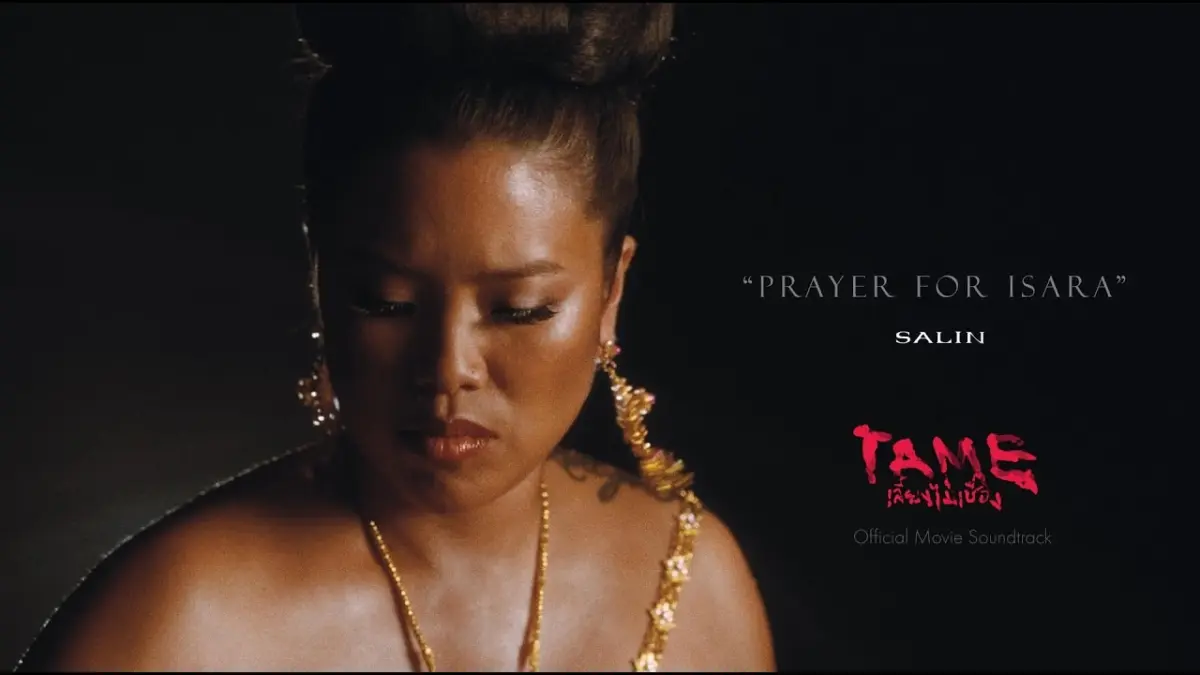
In the rapidly evolving landscape of contemporary global music, few artists manage to bridge ancient ethnomusicological preservation with cutting-edge cinematic storytelling quite as seamlessly as Montreal-based, Thai-born drummer and producer Salin. With the release of her latest single, “Prayer for Isara”—written as the haunting anchor for the Thai psychological horror film Tame (directed by Thamuya Thasananukulkij for BrandThink Cinema)—Salin has crafted a sonic artifact that defies easy categorization.
Released independently on streaming platforms and accompanied by an official music video, the track serves as both a pivotal narrative device within the film and a masterclass in cross-cultural sound design. At its core, “Prayer for Isara” is built upon a chilling foundation: a direct sample of "Kao Thap," a traditional funeral dirge derived from the pi phat mon musical repertoire. By weaving this centuries-old mourning ritual with rare field recordings of Nyah Kur folk singers, traditional Isan instrumentation, and contemporary western drum kits, Salin has constructed a musical bridge spanning over a millennium of Southeast Asian history.
This release follows hot on the heels of her critically acclaimed album Rammana, which earned a prestigious nomination for Global Music Album of the Year at Canada’s 2026 Juno Awards. As the lead single from an eagerly anticipated EP slated for 2027, “Prayer for Isara” not only solidifies Salin’s reputation as an innovative force in world music and soundtrack composition, but it also shines a global spotlight on the marginalized histories, vanishing languages, and deep-seated cultural anxieties embedded within the landscapes of rural Thailand.
Detailed Chronology: From Dvaravati Spirits to the Silver Screen
To fully grasp the magnitude of “Prayer for Isara,” one must trace a timeline that stretches from prehistoric Southeast Asian civilizations to the modern recording studio.
The Historical Anchor: The Dvaravati Era and the Mon People
The thematic and sonic DNA of Tame and its accompanying soundtrack is rooted deep in antiquity. The central spirit governing the film’s plot dates back to the Dvaravati civilization, a flourishing Mon culture that dominated the central plains of what is now Thailand long before the establishment of the Sukhothai Kingdom. During this epoch, the region was a rich, multicultural tapestry where Mon, Khmer, Lao, Malay, and Thai populations interacted and coexisted.
The Mon people left an indelible mark on the region’s cultural heritage, not least through their musical traditions. Among these is the pi phat mon, a variation of Thailand’s classical pi phat ensemble—traditionally comprising reed oboes (pi), gongs, xylophones, and drums—that is distinctively utilized for contemporary Thai funeral rites. Because the supernatural entity haunting the protagonist of Tame originates from this ancient Mon lineage, Salin recognized that the film demanded an authentic, historical sonic touchstone rather than a synthesized Hollywood horror score.
The Narrative Arc of Tame
The cinematic vehicle for Salin’s composition, Tame, premiered in Thai cinemas on October 29. Directed by Thamuya Thasananukulkij under the banner of BrandThink Cinema, the film is set against the gritty, visceral backdrop of a traditional bull-fighting village in Sukhothai.
The narrative follows a young woman trapped in a state of domestic subjugation, relentlessly controlled by her grandmother and uncle. Desperate for agency and an escape from her cyclical abuse, she journeys to a sacred local shrine. Her goal is to harness the dark, ancient power of the Dvaravati spirit to "tame" her abusers in the same brutal, systematic way the villagers tame their fighting bulls. In Thai, Isara translates directly to "freedom"—making it both the name of the supernatural force and the singular, desperate prayer of the film’s protagonist.
The Genesis of the Track
For Salin, the creative process began immediately following her very first creative consultation with the film’s directors and producers. Rather than enduring a protracted period of drafting and structural experimentation, the song arrived in her consciousness fully formed.
"I heard the whole song, I heard the lyrics," Salin recalls of that initial flash of inspiration.
Recognizing the gravity of the film’s themes—captivity, generational trauma, and the yearning for liberation—she immediately began unspooling a tapestry of traditional and modern sounds that would eventually become “Prayer for Isara.” Released independently via her own channels, the track marks the opening salvo of a new creative era, paving the way for her forthcoming EP scheduled for release in 2027.
Supporting Context & Metrics: Deconstructing the Soundscape
The sonic architecture of “Prayer for Isara” is a complex matrix of ethnomusicological research, rare archival preservation, and modern production techniques. Salin’s background as a percussionist is evident in every bar, yet the track transcends mere rhythm to become a living, breathing historical document.
+-----------------------------------------------------------------+
|                  SONIC LAYERS OF "PRAYER FOR ISARA"             |
+-----------------------------------------------------------------+
|  1. Foundational Core: "Kao Thap" (Pi Phat Mon funeral dirge)   |
|  2. Vocal Preservation: Field recordings of Nyah Kur folk singers|
|  3. Percussive Drive: Mon taphon, pengmang, drum kit, Thai gong  |
|  4. Regional Textures: Khene (bamboo mouth organ), Pin (lute)    |
|  5. Narrative Voice: Rachael McMillan (Lead Vocals)             |
+-----------------------------------------------------------------+
Ethnomusicological Elements and Instrumentation
At the foundational bedrock of the track lies the sampled funeral piece "Kao Thap." Played on instruments native to the pi phat mon ensemble, this dirge immediately establishes an atmosphere of grief, finality, and impending dread.
However, Salin refuses to let the track remain a passive historical exhibit. She layered over this funeral piece rare, authorized recordings of Nyah Kur folk singers. The Nyah Kur are an indigenous, tight-knit community residing in northeastern Thailand, and their endangered language holds the distinction of being the closest living relative to ancient Mon. By integrating their voices, Salin bridges the gap between dead history and living, breathing indigenous culture.
The rhythmic heartbeat of the song is propelled by a combination of historical and modern percussion. The Mon taphon (a sacred two-headed barrel drum) and the pengmang (a circular frame of tuned drums) set a relentless, hypnotic pace. Salin anchors these traditional elements with her own western drum kit and a traditional Thai gong, creating a bridge between acoustic worlds.
Furthermore, the track incorporates the khene (a multi-piped bamboo mouth organ) and the pin (a traditional northeastern Thai lute)—instruments native to the Isan region whose haunting tones heavily defined Salin’s celebrated album Rammana.
Vocal Performance and Lyrical Narrative
While the instrumental arrangement evokes the ancient landscapes of the Dvaravati civilization and the oppressive heat of a Sukhothai bull-fighting ring, the human element of the song is brought to life by vocalist Rachael McMillan.
McMillan assumes the persona of the film’s protagonist, singing from the perspective of a young woman pushed to the absolute brink of endurance. Her lyrics articulate the agonizing desire to purge emotional pain, to escape the physical and psychological confines of her oppressive household, and to finally reclaim her voice. The interplay between McMillan’s soaring, emotive vocal delivery and the funereal weight of the underlying instrumentation encapsulates the central tension of Tame: a desperate, dangerous lurch toward freedom against insurmountable odds.
Critical Acclaim and the Juno Nomination Momentum
“Prayer for Isara” arrives at a pivotal moment in Salin’s career. Her previous release, the full-length album Rammana, caught the attention of international music critics and awards committees alike, earning her a coveted nomination for Global Music Album of the Year at Canada’s prestigious 2026 Juno Awards.
This recognition underscored the viability of blending deeply localized Southeast Asian folk traditions with western production sensibilities for a global audience. With “Prayer for Isara,” Salin builds directly upon the momentum of the Juno nomination, proving that her unique artistic vision is not a fleeting novelty, but a sustained, highly sophisticated exploration of transnational sound.
Official Statements & Industry Perspectives
The convergence of traditional Thai ethnography, modern indie-horror cinema, and Canadian-based global music production has generated significant interest within both film and music circles.
Industry analysts have praised BrandThink Cinema for taking bold risks in partnering with avant-garde artists like Salin for Tame, noting that the film’s atmospheric dread is elevated tenfold by its sound design. By refusing to rely on generic Hollywood jump-scare orchestration, the production team has cultivated a distinctively regional, folkloric terror that resonates far beyond Thai borders.
For her part, Salin has consistently emphasized the intuitive and spiritual nature of her creative process. Speaking on the immediate clarity with which “Prayer for Isara” manifested, she noted that the song felt less like a composition she had to painstakingly construct and more like a transmission from the historical narratives explored in the film:
"I heard the whole song, I heard the lyrics," Salin reflected when discussing her initial meeting with the filmmakers.
By obtaining explicit permissions from the Nyah Kur folk singers to feature their endangered language on a globally distributed commercial release, Salin has also opened up crucial conversations regarding the ethical utilization and preservation of indigenous heritage in modern media. Ethnomusicologists have lauded the project for bringing visibility to the Nyah Kur people and the Mon diaspora, whose cultural contributions are frequently overshadowed by dominant national narratives in mainland Southeast Asia.
Future Outlook: The Road to the 2027 EP
As Tame continues its theatrical run and "Prayer for Isara" steadily climbs streaming charts worldwide, all eyes are turning toward Salin’s next major career milestones.
The single serves as the official lead-off track for a forthcoming EP slated for release in 2027. While details regarding the tracklist and thematic focus of the upcoming EP remain closely guarded, industry insiders anticipate that Salin will continue to mine the intersections of Southeast Asian folk history, rare linguistic preservation, and contemporary percussion-driven electronica/world music.
Key Milestones on the Horizon:
- The 2027 EP Release: A multi-track collection that will expand upon the sonic universe established by Rammana and "Prayer for Isara."
- Expanded International Tour Dates: Building on her Juno Award-nominated profile, Salin is expected to bring her immersive live drumming and multi-instrumental performances to global festival stages.
- Continued Film Scoring Collaborations: Following the critical success of her work on Tame, Salin’s distinct cinematic voice has positioned her as an in-demand composer for narrative projects exploring dark folklore, historical drama, and psychological tension.
Ultimately, "Prayer for Isara" is much more than a mere promotional tie-in for a horror movie. It is a striking testament to the power of music to resurrect forgotten histories, give voice to the silenced, and transform ancient grief into modern art. As Salin marches toward her 2027 EP release, she stands at the vanguard of a new generation of artists who refuse to let the echoes of the past fade into silence.
To experience the haunting atmosphere of the project yourself, you can watch the official music video for "Prayer for Isara" HERE, listen to the single via Bandcamp, and explore her Juno-nominated album Rammana through THIS LINK.