Executive Overview
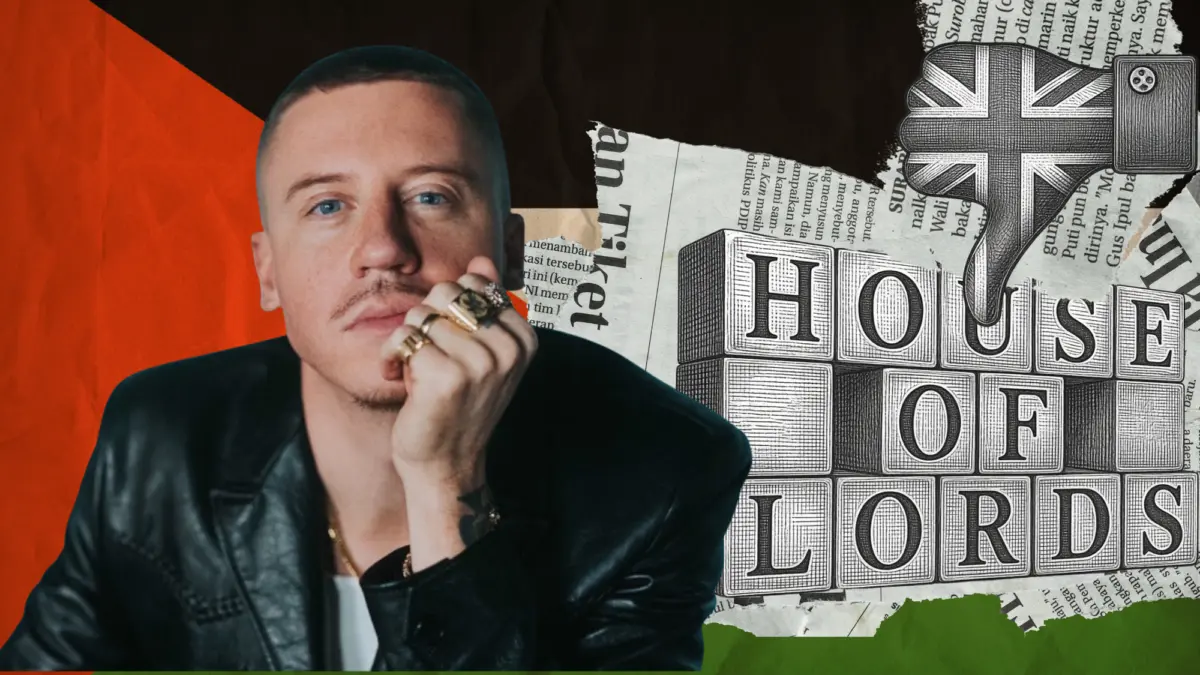
UK Home Secretary Shabana Mahmood is facing mounting political pressure to intervene and block American rapper Macklemore from entering the United Kingdom ahead of his scheduled performance at London’s Wembley Arena. A coalition of 50 members of the House of Lords has formally urged the Home Secretary to deny the artist entry, focusing their objections not on his vocal criticisms of Israel, but on his financial ties to a controversial pro-Palestine advocacy group.
The controversy centers on the Free Palestine tour, a newly organized three-date European run intended to funnel a share of its ticket sales profits to the Palestinian Youth Movement (PYM). The PYM, which describes itself as an independent grassroots network mobilizing Arab and Palestinian youth for liberation, has previously drawn fierce international condemnation. Critics and parliamentarians have highlighted past statements from figures associated with the group that appeared to justify or legitimate the October 7, 2003, attacks by Hamas against Israel, as well as the taking of civilian hostages.
Compounding the controversy are allegations surrounding the PYM’s campaign methodologies within the UK, specifically a "siege on Labour" toolkit that encouraged intense local lobbying and protests outside the constituency offices of Members of Parliament. House of Lords signatories, led by figures including Lord John Woodcock, argue that such actions constitute an intimidation campaign designed to coerce elected officials through fear rather than legitimate democratic protest.
If the government acts to block Macklemore’s entry, it would likely do so by revoking his electronic travel authorisation—a mechanism previously utilized to bar foreign artists like Kanye West. However, navigating this diplomatic and cultural minefield presents a delicate tightrope for the Home Office. While parliamentarians maintain that the intervention is strictly about curbing fundraising for an organization accused of glorifying terrorism, free speech advocates and music industry observers are watching closely, aware of the profound implications this could have for international artists performing political material on British soil.
Detailed Chronology: From US Tour Fallout to British Political Crisis
To fully understand the current standoff in London, it is necessary to trace the chain of events that thrust Macklemore into the center of a geopolitical firestorm spanning two continents.
The Ed Sheeran Tour Fallout
The genesis of the Free Palestine tour lies in Macklemore’s abrupt removal from Ed Sheeran’s high-profile United States stadium tour. Macklemore had been serving as a supporting act when his on-stage commentary—consisting of sharp criticisms of Israeli military actions and outspoken solidarity with Palestinians—sparked intense corporate and public pushback.
The tipping point occurred when venues on the tour itinerary expressed deep reservations. Most notably, the Gillette Stadium in Foxborough, Massachusetts—owned by billionaire philanthropist and prominent Israel supporter Robert Kraft—raised objections. Under mounting pressure, Sheeran and his tour promoters capitulated, dropping Macklemore from the lineup.
The decision triggered a severe crisis for the tour. In an unprecedented show of solidarity, all other remaining support acts pulled out of the venture. Despite being stripped of his supporting roster, Sheeran elected to push forward as a solo act. Ironically, his scheduled performances at Kraft’s Gillette Stadium were ultimately canceled due to severe weather, underscoring the chaotic fallout of the censorship dispute.
The Resurgence at Red Rocks
Undeterred by his dismissal from the Sheeran tour, Macklemore leaned further into his activism. Last week, he took the stage at Colorado’s legendary Red Rocks Amphitheatre to deliver his first live performance since the sacking.
Addressing a rapturous crowd, Macklemore framed his stance not as a partisan political maneuver, but as a fundamental humanitarian imperative:
"Being a human being in this moment is not complicated. It is not political. It is human to have a heart, to watch others suffering and to say, ‘not anymore!’ So I say, free Palestine. I say, free Palestine!"
Expanding his platform to encompass other global humanitarian crises, the rapper added references to Sudan, the Congo, Lebanon, Haiti, and the anxieties faced by undocumented immigrants targeted by ICE in the United States. He concluded his remarks with a sweeping declaration: "The message will always be love."
The European Mini-Tour and the London Destination
Capitalizing on the momentum of his independent stance, Macklemore announced a compressed three-date European run under the Free Palestine banner. The itinerary kicked off with an opening night in Dublin, Ireland, followed by a performance in Paris, France. The final, most contentious leg of the journey is slated for London’s Wembley Arena.
However, the announcement immediately galvanized opposition among Jewish community organizations and cross-party parliamentarians in the UK. The convergence of an international artist with a controversial domestic beneficiary has transformed a routine commercial concert into a major national security and free-speech flashpoint.
Supporting Context & Metrics: The Core Allegations and Key Figures
The campaign to bar Macklemore from the UK rests on specific, documented grievances regarding the ideological alignments and operational tactics of the Palestinian Youth Movement (PYM).
The Palestinian Youth Movement Under Scrutiny
At the heart of the House of Lords letter is the financial nexus between ticket sales at Wembley Arena and the PYM. While Macklemore has maintained that his concerts are designed to offer humanitarian aid and foster peace, parliamentary critics argue that the institutional nature of the PYM compromises those assertions.
- Past Statements: Investigators and political critics have pointed to public statements and social media communications from PYM affiliates surrounding the events of October 7, 2023. Commentary describing the Hamas-led incursions as "justified" and the seizure of hostages as "legitimate and effective" has been cited by British lawmakers as evidence of an underlying glorification of terrorism.
- The "Siege on Labour" Toolkit: Beyond foreign policy alignment, domestic political tactics have drawn intense ire. The PYM circulated a tactical advocacy manual colloquially known as the "siege on Labour" toolkit. This document advised activists on aggressive lobbying strategies targeting members of the governing Labour Party, explicitly encouraging demonstrations outside local constituency offices.
In their formal correspondence to the Foreign Secretary and Home Secretary, the 50 peers emphasized the physical and psychological vulnerability of parliamentary staff:
"Constituency offices are where MPs and their staff are most exposed… organizing crowds to lay ‘siege’ to those offices is not ordinary protest. It is an attempt to coerce members of Parliament through fear."
The Political Backing and Counter-Controversies
The letter demanding Home Secretary Shabana Mahmood’s intervention was orchestrated by prominent figures across the political spectrum, though it has not been without its own internal controversies.
- Lord John Woodcock: The primary author of the letter, Lord Woodcock, has himself faced scrutiny. He was the subject of an official complaint filed with the House of Lords Commissioner for Standards by the Good Law Project and Compassion in Politics. The complaint centered on Woodcock’s alleged undisclosed ties to Leonardo, an international arms manufacturer with extensive contracts linked to the Israeli military.
- Cross-Party Signatories: The letter garnered support from a diverse array of senior political figures, including:
- Sir Eric Pickles: Chair of the Conservative Friends of Israel group in the House of Lords.
- Baroness Arlene Foster: Former First Minister of Northern Ireland.
- Sir Graham Brady: Long-serving former chairman of the 1922 Committee of Conservative backbenchers.
- Lord Peter Goldsmith: Former Attorney General for England and Wales.
The Legal Precedent: The Kanye West Case
The mechanism by which the UK government could halt Macklemore’s entry is well-established. Ministers hold the discretionary power to deny or withdraw Electronic Travel Authorisations (ETAs) or standard entry visas to foreign nationals whose presence is deemed "not conducive to the public good."
A prominent precedent occurred earlier this year when authorities effectively blocked rapper Kanye West from entering the country for scheduled performances at London’s Wireless Festival following a series of antisemitic public outbursts.
However, legal and civil liberties experts note a critical distinction in the current case. While West’s ban was rooted in his own direct expressions of hate speech and antisemitism, Macklemore’s lyrics and stage speeches have focused on humanitarian suffering, civilian casualties, and general geopolitical critique. Consequently, the House of Lords signatories have gone to great lengths to frame their demand not as a crackdown on artistic expression, but as a targeted refusal to allow foreign actors to generate funds for an organization accused of inciting domestic harassment and supporting terrorism.
Official Statements & Industry Response
The intersection of live entertainment, corporate sponsorship, and geopolitical activism has placed immense pressure on promoters, Jewish community advocates, and music industry giants.
The Jewish Leadership Council
The Jewish Leadership Council (JLC) issued a carefully measured yet firm statement addressing both the artist and the live entertainment infrastructure hosting the tour.
While acknowledging an artist’s right to engage in political discourse, the JLC drew a sharp line regarding safety and community welfare:
"Macklemore is entitled to advocate for Palestinian rights. However, concerns arising from the imagery that he has used and material in his recent performances must be taken seriously."
Directing its inquiries toward Live Nation, the multinational entertainment giant marketing the Wembley Arena concert, the JLC pressed corporate executives on their risk-assessment protocols:
"How has Live Nation assessed concerns about this event, and what steps is it taking to ensure that Jewish audiences and staff feel safe and welcome?"
Live Nation has not yet released a comprehensive public statement addressing the JLC’s inquiries, leaving event organizers walking a precarious line between fulfilling commercial contracts and ensuring public safety amid escalating tensions.
The Argument Against Censorship
Conversely, free-speech advocates and pro-Palestinian solidarity organizations have condemned the Lords’ intervention as an authoritarian overreach designed to stifle dissent. Representatives argue that attempting to penalize an artist by cutting off his entry visa based on the political affiliations of a designated charity sets a dangerous precedent for international cultural exchange.
Supporters of the tour emphasize that blocking the show:
- Does not prevent British citizens from independently donating to verified humanitarian charities operating in Gaza and the wider Middle East.
- Restricts consumer access to live music under the guise of national security, effectively outsourcing foreign policy decisions to corporate lobbyists and partisan political pressure groups.
Future Outlook: A Legal and Diplomatic Tightrope
As the clock ticks down toward Friday evening’s scheduled performance at Wembley Arena, all eyes remain fixed on Home Secretary Shabana Mahmood.
The decision before the Home Office carries immense weight:
- If Mahmood intervenes and revokes Macklemore’s travel authorization: The government will send a powerful signal regarding its zero-tolerance threshold for foreign entities linked—however indirectly—to organizations accused of promoting violence or domestic intimidation. However, it risks sparking nationwide protests centered on free speech, political censorship, and government overreach in the cultural sphere.
- If Mahmood declines to intervene: The concert will proceed as planned, but the Home Office and Live Nation will face intense logistical and security challenges. Ensuring the safety of performers, concertgoers, and local staff in an intensely polarized environment will require unprecedented police deployments around Wembley Arena. Furthermore, the political fallout for the Labour government—already grappling with internal divisions over foreign policy—could prove severely damaging.
Ultimately, the stand-off over Macklemore’s Free Palestine tour transcends the bounds of the entertainment industry. It has crystallized broader tensions over where the line should be drawn between legitimate artistic activism, corporate accountability, and national security in an increasingly fractured geopolitical landscape.