For a generation defined by the neon-lit, synthesizer-driven excess of the 1980s, few bands encapsulated the era’s pop-culture zeitgeist quite like Wang Chung. Formed in London in 1980, the new wave outfit achieved massive transatlantic success, permanently embedding phrases like "Everybody Wang Chung tonight" into the global lexicon. Yet, beneath the veneer of hook-heavy dance-pop hits such as "Dance Hall Days" and "Everybody Have Fun Tonight" lay a far more complex artistic journey—one defined
by formal musicology, the disruptive shockwaves of 1977 punk, an unrequited love for progressive rock, and unexpected collaborations with cinematic auteurs like William Friedkin.
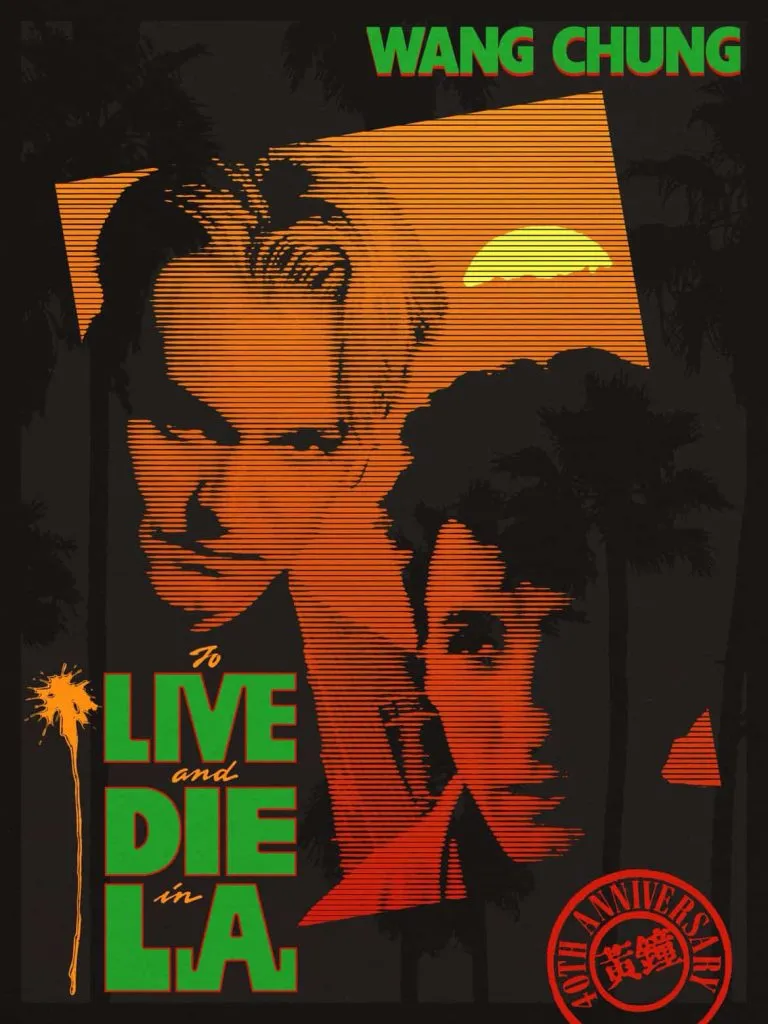
As the band celebrates the 40th-anniversary expanded reissue of their landmark soundtrack to William Friedkin’s neo-noir masterpiece To Live and Die in L.A., founding member Jack Hues sat down to reflect on a career that defied simple categorization. Spanning classical training at the Royal College of Music, early DIY punk iterations, major-label struggles in Los Angeles, and a modern touring renaissance, Hues’ narrative offers a fascinating window into the realities of surviving the music industry’s most volatile decades.
Detailed Chronology: From Gillingham to Global Stardom
Roots in Jazz, The Beatles, and Formal Conservatories
Born in Gillingham in 1954, Jack Hues’ early life was steeped in sound. His father was a professional saxophone player, exposing the young musician to the syncopated rhythms and improvisational freedom of jazz. However, the definitive cultural earthquake that irrevocably altered Hues’ trajectory was the arrival of The Beatles. Captivated by the interplay of melody and instrumentation, Hues picked up the guitar, practicing relentlessly until he achieved a high degree of technical proficiency by his late teens.
Driven by a hunger to understand the mechanics of sound, Hues pursued a music degree at Goldsmiths, University of London, before continuing his advanced studies at the prestigious Royal College of Music. Despite his rigorous classical grounding, Hues maintains a pragmatic view of academic instruction:
"Music’s a strange thing, in that you can’t be taught it in a way, but you can be inspired by all sorts of different influences."
Chief among those early inspirations was the burgeoning progressive rock movement of the early 1970s. Bands like King Crimson and Genesis captivated Hues with their intricate time signatures, ambitious conceptual frameworks, and instrumental virtuosity. It was an aspirational era, he notes, where playing complex arrangements was worn as a badge of honor.
The Punk Explosion and the Birth of The Intellektuals
That intricate, high-minded worldview was shattered in 1977 with the eruption of punk rock in London. The raw energy, anti-establishment ethos, and stripped-down instrumentation of the Sex Pistols provided a necessary counterweight to bloated prog excesses, violently steering Hues back toward rock music.
Sensing a shifting tide, Hues responded to a "musicians wanted" classified advertisement in the legendary music weekly Melody Maker. Placed by guitarist Nick Feldman, the ad catalyzed a creative partnership that would endure for decades. Feldman introduced Hues to drummer Paul Hammond, formerly of prog-adjacent outfit Atomic Rooster.
With the addition of bassist Bud Merrick, the fledgling lineup adopted the moniker The Intellektuals. Though short-lived—surviving for less than a year—the group served as a crucial incubator. Hues and Feldman quickly transitioned into a new project called 57 Men, collaborating with future Heaven 17 frontman Glenn Gregory, bassist Leigh Gorman (later of Adam & the Ants), and drummer Darren Costin.
When 57 Men dissolved, Hues, Feldman, and Costin elected to streamline their vision. In 1980, they rebranded as Huang Chung—a name derived from the primary pitch in the ancient Chinese 12-tone musical system.
The Indie Foothold and the Arista Deal
Operating within the vibrant London post-punk and new wave underground, Huang Chung quickly secured a two-single deal with the independent label Rewind Records. They released two sharp, jittery, art-pop singles: the rattling "Isn’t It About Time We Were On Television?" and the spiky, jagged "Stand Still." Around this period, saxophonist Dave Burnand joined the fold, expanding the group’s sonic palette.
The breakthrough came via the airwaves of BBC Radio 1 broadcaster John Peel. Though Peel was famously ambivalent about the track, spinning "Isn’t It About Time…" on his influential show provided the vital commercial lift-off needed to catch the attention of major labels. Huang Chung soon inked a global recording contract with Arista Records.
The Self-Titled Debut and Creative Friction
In 1982, the band released their self-titled debut album on Arista. To helm the project, they enlisted producer Rhett Davies, renowned for his work with art-rock innovators Roxy Music. The resulting LP was an intriguing exercise in abstract new wave, characterized by sophisticated arrangements and oblique lyricism. However, it failed to make a significant commercial dent.
Looking back, Hues admits that the project suffered from an identity crisis:
"Things got a bit confused. We got Roger Béchirian [Elvis Costello, The Undertones] to try and create a single, because basically I was making a prog record, and that clearly wasn’t what you should have been doing in 1981."
The resulting stylistic dichotomy left their corporate handlers perplexed. The record company struggled to market a hybrid of cerebral art-rock, complex arrangements, and contemporary pop expectations.
Rebranding, Geffen Records, and Points On The Curve
Undeterred, the band set to work on material for a follow-up. They recorded an early version of what would become their signature anthem, "Dance Hall Days," under the guidance of producer Tim Friese-Greene (noted for his work with Talk Talk).
Around this time, David Massey—a close friend of Feldman who would later ascend to high-ranking executive positions at Universal Music Group—stepped in as an advocate. After reviewing the band’s trajectory, Massey delivered a blunt assessment: "You need to be in America."
Relocating their ambitions across the Atlantic, the band officially dropped the spelling "Huang" in favor of the more phonetically intuitive Wang Chung. Dave Burnand parted ways with the group before the transition, leaving Hues, Feldman, and Costin as a core trio. Armed with Massey’s representation, Wang Chung signed a lucrative deal with David Geffen’s prestigious Geffen Records.
Released in 1983, their second studio album, Points On The Curve, signaled their commercial arrival. Propelled by a newly polished, high-energy recording of "Dance Hall Days," the album climbed to No. 30 on the Billboard 200. "Dance Hall Days" itself became an international smash, peaking at No. 16 on the Billboard Hot 100 and No. 21 on the UK Singles Chart.
Suddenly, Wang Chung found themselves vaulted into the upper echelons of global pop stardom. Touring opportunities followed on an arena scale, including high-profile dates supporting Elton John at Wembley Stadium and a massive US tour alongside new wave heavyweights The Cars.
William Friedkin and To Live and Die in L.A.
At the height of their pop momentum, Wang Chung received an unexpected telephone call that would forever cement their cinematic legacy. On the other line was legendary film director William Friedkin, the visionary behind cinematic milestones such as The French Connection and The Exorcist. Friedkin was deep in production on his gritty, nihilistic 1985 neo-noir thriller To Live and Die in L.A.
Friedkin had heard the band’s moody track "Wait" and declared it possessed the exact atmosphere he required for his film. In a rare creative inversion, the band did not score existing footage; rather, they provided atmospheric, synth-driven compositions based on initial conversations with Friedkin. The director then took their sonic landscapes and edited his film directly around the music.
The resulting soundtrack remains a masterclass in tension, blending driving electronic pulses with melancholic undertones. Decades later, its cultural footprint endures, celebrated through expanded archival releases that showcase the depth of Wang Chung’s instrumental capabilities.
Mosaic, Peter Wolf, and the Peak of "Wang Chung"
In 1986, the band returned to the studio to record their third Geffen album, Mosaic. To maximize their commercial footprint, the label paired them with producer Peter Wolf, a hitmaker renowned for steering Jefferson Starship to the top of the charts with "We Built This City."
Wolf’s mandate was clear-cut: engineer a guaranteed No. 1 hit. The result was "Everybody Have Fun Tonight," an explosive, hyper-kinetic dance-pop anthem powered by an instantly recognizable guitar hook and an infectious groove.
To accompany the single, directing duo Godley & Creme delivered a striking, high-contrast promotional video that became an MTV staple. The track peaked at No. 2 on the Billboard Hot 100, narrowly missing the top spot. More importantly, its central refrain—"Everybody Wang Chung tonight"—instantly transcended the charts to become a permanent piece of 1980s pop-culture slang.
Reflecting on the track’s polarizing nature, Hues admits:
"At the time, I thought, this is polarising, really, from what we’ve done before, but it established Wang Chung as a force in America."
Supporting Context & Metrics
To fully appreciate Wang Chung’s commercial and cultural footprint during their 1980s peak, it is useful to examine their chart metrics and industry positioning:
Transatlantic Reach: While many new wave acts found success exclusively in their home market or abroad, Wang Chung achieved balanced chart success, cracking both the UK Top 40 and the US Billboard Hot 100 multiple times.
Peak Chart Positions:
"Dance Hall Days" (1984): US Billboard Hot 100 – No. 16 | UK Singles Chart – No. 21
Points On The Curve (1983): US Billboard 200 – No. 30
"Everybody Have Fun Tonight" (1986): US Billboard Hot 100 – No. 2
The Geffen Era shift: Geffen Records represented the apex of corporate rock and pop crossover in the mid-to-late ’80s, housing acts ranging from Donna Summer and Peter Gabriel to Guns N’ Roses and Nirvana. Wang Chung’s tenure on the label reflects the dramatic stylistic shifts of the decade—transitioning from sophisticated synth-pop to arena-ready dance anthems, right on the cusp of the alternative rock explosion.
Official Statements & Reflections
Speaking from his current home in Austin, Texas, Jack Hues maintains an illuminating perspective on his anomalous career path. Far from harboring bitterness over the commercial demands that shaped records like Mosaic, Hues embraces the inherent unpredictability of his artistic journey.
On his lifelong compulsion toward complex composition:
"I was still trying to make a prog album and there was a sort of sea change in the music. Guns N’ Roses and Nirvana had signed to Geffen. The whole approach that we’d grown up with, which was this hybrid of funk and rock and prog, was no longer the thing."
On the eclectic ways fans continue to discover the band’s catalog:
"We played the Hollywood Bowl last year for the first time. We’ve had lots of songs in movies, so people came to us through all sorts of different ways. I never had a plan, but I think I have a sound. I have an approach that’s pretty unique, and my voice is pretty unique, for better or worse, you know."
Future Outlook & Continuing Legacy
By 1989, following the release of their fifth studio album, The Warmer Side Of Cool, the musical landscape had shifted dramatically. Grunge and heavy metal dominated the Geffen roster, and Wang Chung mutually decided to call it a day. Nick Feldman transitioned into a highly successful A&R career, while Jack Hues focused on record production.
However, creative partnerships of that magnitude are rarely extinguished permanently. In 1997, the duo reunited to record a brand-new track, "Space Junk," for a career-spanning Greatest Hits compilation. That spark reignited a sustained creative engine. The 2000s saw the release of fresh studio material, including the albums Tazer Up! and Orchesography.
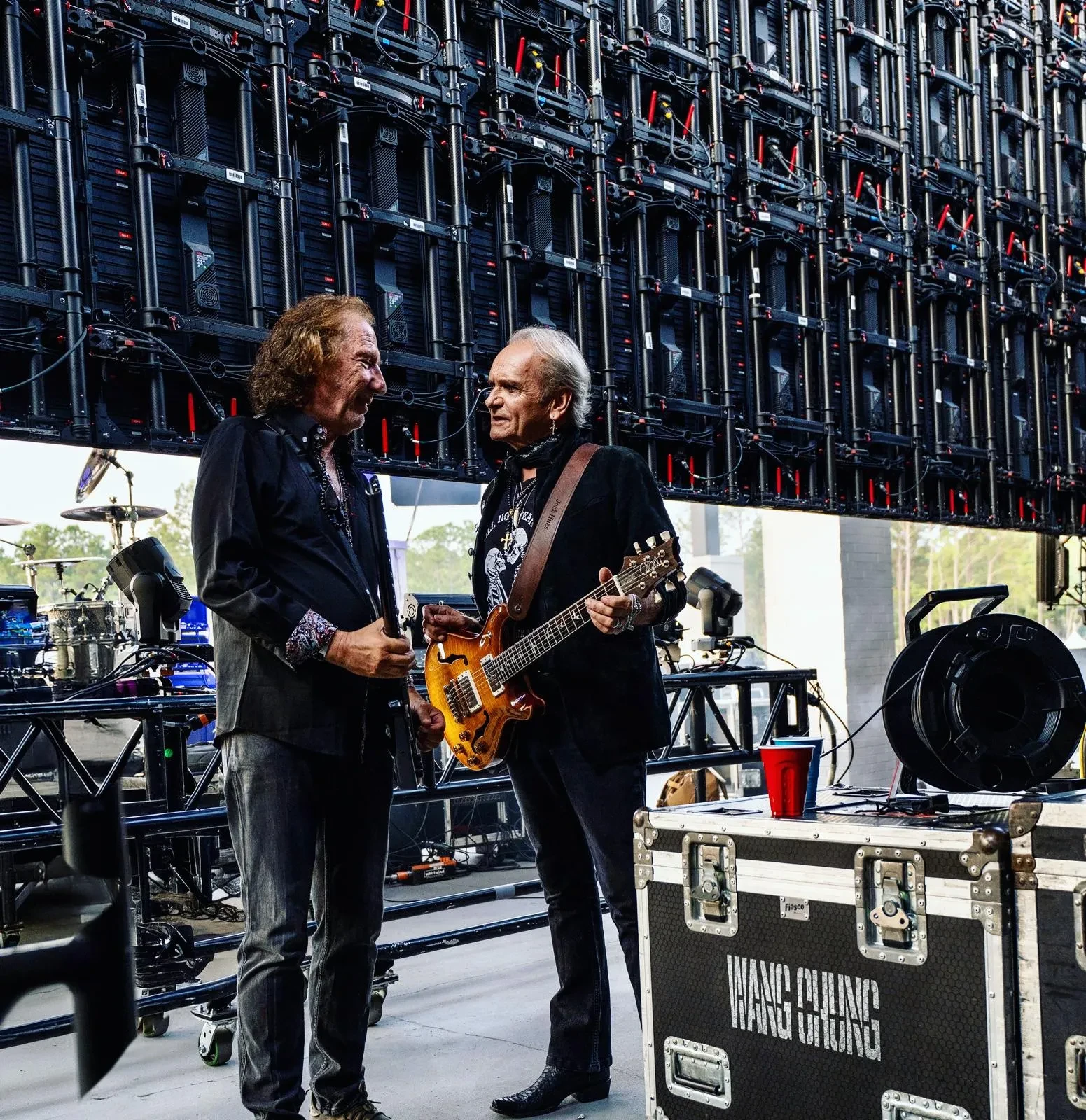
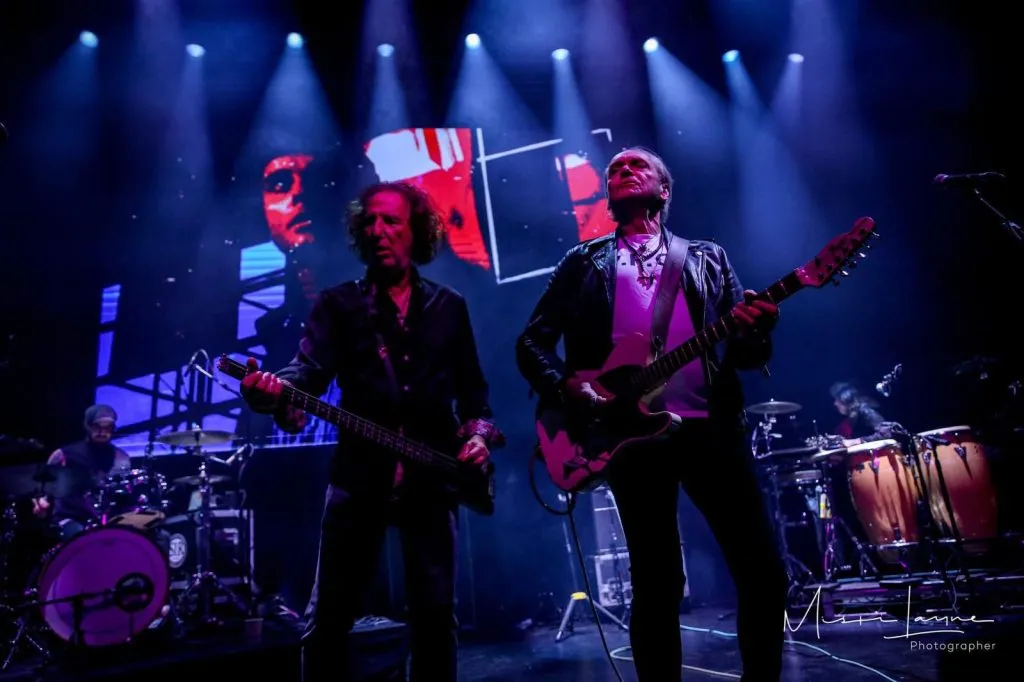
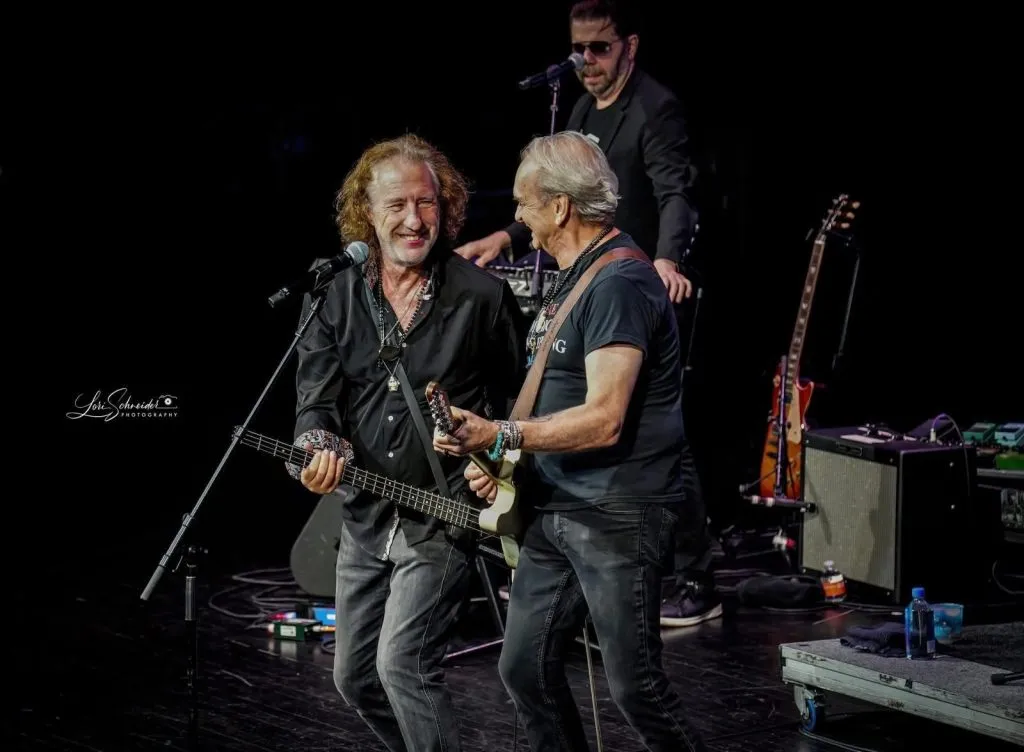
Today, Wang Chung remains an active, vibrant touring entity, taking their catalog to international audiences and prestigious venues like the Hollywood Bowl. Meanwhile, archival appreciations—most notably the definitive 40th-anniversary expanded edition of the To Live and Die in L.A. soundtrack via Interscope—continue to reintroduce critics and younger listeners to the intricate musicianship that always underpinned the band’s pop sheen.
Ultimately, Wang Chung’s legacy extends far beyond a catchy 1980s catchphrase. They stand as a testament to the friction between high-art ambition and commercial pop execution—a rare hybrid where royal conservatory theory, post-punk energy, and Hollywood cinematic grit successfully collided.