Executive Overview
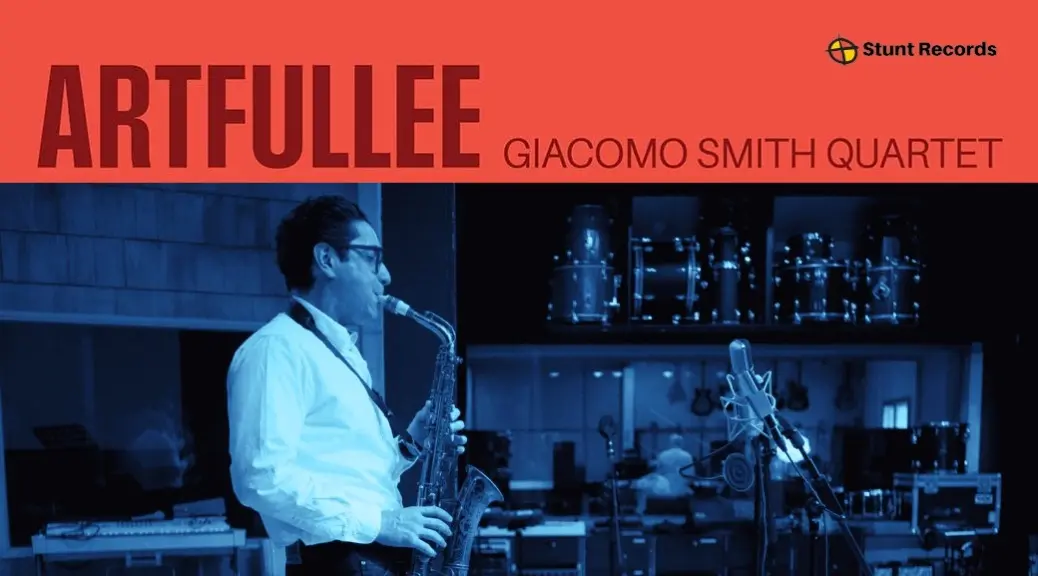
In the fast-evolving landscape of contemporary European jazz, true artistic milestones are frequently born not out of radical reinvention, but from deep, sustained collaboration and retrospective maturity. Such is the case with Artfullee, the bold new album from reed virtuoso Giacomo Smith. Released on both LP and CD, the album marks a significant professional watershed: it is the first time Smith has recorded a full-length project entirely dedicated to his own original compositions.
Long celebrated for his work as the driving force behind the renowned London collective Kansas Smitty’s and his collaborative efforts alongside Dutch Sinti guitarist Mozes Rosenberg on the 2025 tribute Manouche, Smith has spent over a decade quietly shaping the contours of the modern British and European jazz scenes. Yet, Artfullee represents an unadulterated distillation of his personal voice. Recorded in Copenhagen alongside Snorre Kirk’s esteemed European Quartet—featuring pianist Joe Webb, bassist Anders Fjeldsted, and bandleader/drummer Snorre Kirk—the album is a masterclass in intuitive communication. Stripping away exhaustive pre-production, Smith brought six stark original frameworks into the studio, teaching the pieces entirely by ear.
The resulting music has been widely characterized as "night music"—a deeply evocative collection of minor-key explorations born from the quiet, contemplative hours following a live performance. Blending post-bop agility, modal explorations, and subtle nods to jazz royalty like Duke Ellington, Artfullee captures an artist stepping boldly out of the ensemble framework and firmly into the vanguard of modern acoustic jazz.
Detailed Chronology: From Sideman to Bandleader
To understand the weight of Artfullee, one must trace the winding trajectory of Giacomo Smith’s career across the European jazz circuit. A retrospective look through the UKVibe archives reveals how deeply embedded Smith has been in the international jazz community for well over a decade. In October 2014, a young Smith was noted sharing a stage at Battersea’s Le Quecumbar with Daniel-Sidney Bechet—the only child of soprano saxophone and clarinet pioneer Sidney Bechet. The occasion was the launch of the elder Bechet’s biographical volume, Sidney Bechet: My Father, where Smith handled reed duties with a reverence that belied his years.
Born in the Calabrian town of Rossano Calabro, Italy, and subsequently raised in New York State, Smith eventually gravitated toward London, where he established himself as a cultural curator and instrumental powerhouse through Kansas Smitty’s. Over the ensuing years, Smith cultivated a reputation as a peerless sideman and stylistic chameleon, equally at home navigating the high-energy swing of the Django Reinhardt tradition or executing intricate modern arrangements.
His partnership with Danish drummer and composer Snorre Kirk proved to be a particularly fertile training ground. Prior to the sessions for Artfullee, Smith had logged well over a hundred live performances as the sole horn player in Snorre Kirk’s European Quartet. This rigorous road-testing forged a telepathic musical bond among the ensemble’s members. When Smith finally decided to step forward with his own book of music, the transition was organic; he turned not to hired guns, but to the trusted comrades already standing shoulder-to-shoulder with him on the bandstand: Webb, Fjeldsted, and Kirk.

Supporting Context & Metrics: The Anatomy of Artfullee
The creation of Artfullee breaks sharply with contemporary commercial recording practices, which often rely on heavily produced charts and exhaustive pre-recording iterations. Instead, Smith opted for an organic, highly vulnerable methodology. Entering a Copenhagen studio without a single fully written chart, Smith taught six original compositions to his rhythm section entirely by ear. The musicians worked exclusively from skeletal frameworks and structural sketches, allowing their collective musical history and deep understanding of one another’s expressive tendencies to fill in the gaps.
This improvisational trust yields an album defined by atmospheric intimacy. Smith frequently describes the material as "night music"—compositions predominantly set in minor keys that evoke the stillness and introspection of transit in the small hours after a gig. At its finest moments, the instrumentation glows with the quiet, focused intensity of a candle flickering in a darkened room.
Track-by-Track Breakdown
- "Artfullee" (Title Track): Serving as the album’s calling card, the title track thrusts Smith’s clarinet—an instrument he often describes as his truest musical voice—front and center. Supported by an infectious rhythmic foundation laid down by Snorre Kirk, the track highlights the distinct textural interplay between Smith’s fluid reed work and Joe Webb’s harmonic backing.
- "Minnow Games": Named in honor of a source of personal joy and inspiration, this track shifts the dial toward a fast-stepping, high-velocity post-bop style infused with a potent lyrical streak. Webb shines particularly bright here, serving as an ideal harmonic and rhythmic foil to Smith’s darting melodic lines.
- "Largo Montebello": Drummer Snorre Kirk takes center stage conceptually on this piece, channeling the rhythmic legacy of Art Blakey’s historic 1962 release The African Beat. Kirk deconstructs and reshapes jazz percussion history, driving the quartet through an explosive rhythmic landscape.
- "Take Off Make Off": This composition acts as a stylistic bridge, summoning the adventurous "jungle sound" cultivated by Duke Ellington during his legendary Cotton Club tenure before seamlessly transitioning into a broader exploration of historical idioms.
- "Reflections In D": A bold nod to Ellington’s legendary 1953 solo piano sessions for Capitol Records, this track is re-imagined here utilizing a low C bass clarinet. The result is a dark, amber-hued exploration of a familiar melody, offering a striking study in timbre and low-register resonance.
- "The Round Tower" (Rundetårn): An undisputed highlight of the album, this modal jazz gem draws direct inspiration from Copenhagen’s iconic 17th-century tower. Its intricate modal architecture and hypnotic phrasing elevate it to a standalone masterwork that encapsulates the cross-cultural aesthetic of the quartet.
- "Two Four No More": Bringing the physical LP and CD journey to a close, the album’s final track serves as a concise, swinging exclamation point, rounding out a cohesive and daringly conceived body of work.
Official Perspectives & Critical Reception
The transition from esteemed sideman and stylistic interpreter to fully realized composer is rarely without friction, yet Smith has navigated the shift with characteristic grace and critical acclaim. Speaking on the collaborative ethos of the sessions, members of the quartet have emphasized the liberating nature of learning the material by ear. Rather than reading from rigid orchestrations, the musicians were forced to listen intently, reacting to the emotional undercurrents of the room rather than the dictates of a manuscript.
Jazz critics and industry observers have been quick to note the maturity of Smith’s compositional voice. Where past projects like Manouche leaned heavily into historical idioms and specific genre tributes, Artfullee successfully bridges the gap between classic acoustic jazz aesthetics and modern European harmonic sensibilities. The chemistry between Smith, Webb, Fjeldsted, and Kirk has been cited by reviewers as a benchmark for contemporary small-ensemble interplay, proving that decades of rigorous live performance can forge an artistic bond capable of elevating spontaneous studio creation into high art.
Future Outlook
With the physical release of Artfullee on both LP and CD now circulating among global jazz aficionados, Giacomo Smith’s professional trajectory has entered an exhilarating new chapter. No longer viewed simply as the dynamic ringleader of Kansas Smitty’s or a brilliant custodian of early jazz traditions, Smith has established himself as a formidable contemporary composer with a distinct, personal sonic signature.
Looking ahead, the success of Artfullee paves the way for expanded touring opportunities for Snorre Kirk’s European Quartet, with audiences eager to witness how these unscripted studio frameworks continue to evolve and breathe in a live concert environment. For a musician whose name once quietly slipped past casual observers in historical gig listings, Artfullee ensures that Giacomo Smith will command the attention of the international jazz community for years to come.