Executive Overview
The landscape of modern television is continuously haunted by the inexplicable, yet few real-life accounts command the gripping psychological gravity of The Witch Farm. Slated for release across BBC iPlayer, BBC One, and BBC One Wales on Sunday, November 22, this compelling four-part drama explores one of the most chilling and protracted
modern haunting cases in British history.
At the helm of the project is creator, writer, and executive producer Danny Robins. Known for his uncanny ability to weave investigative journalism with atmospheric storytelling—most notably through his global audio sensation The Battersea Poltergeist—Robins has once again turned his lens toward the supernatural. However, The Witch Farm is far more than a simple campfire ghost story. It is a deeply intimate, emotionally resonant exploration of trauma, isolation, and the profound ways in which inexplicable phenomena can rupture both an individual psyche and a tight-knit rural community.
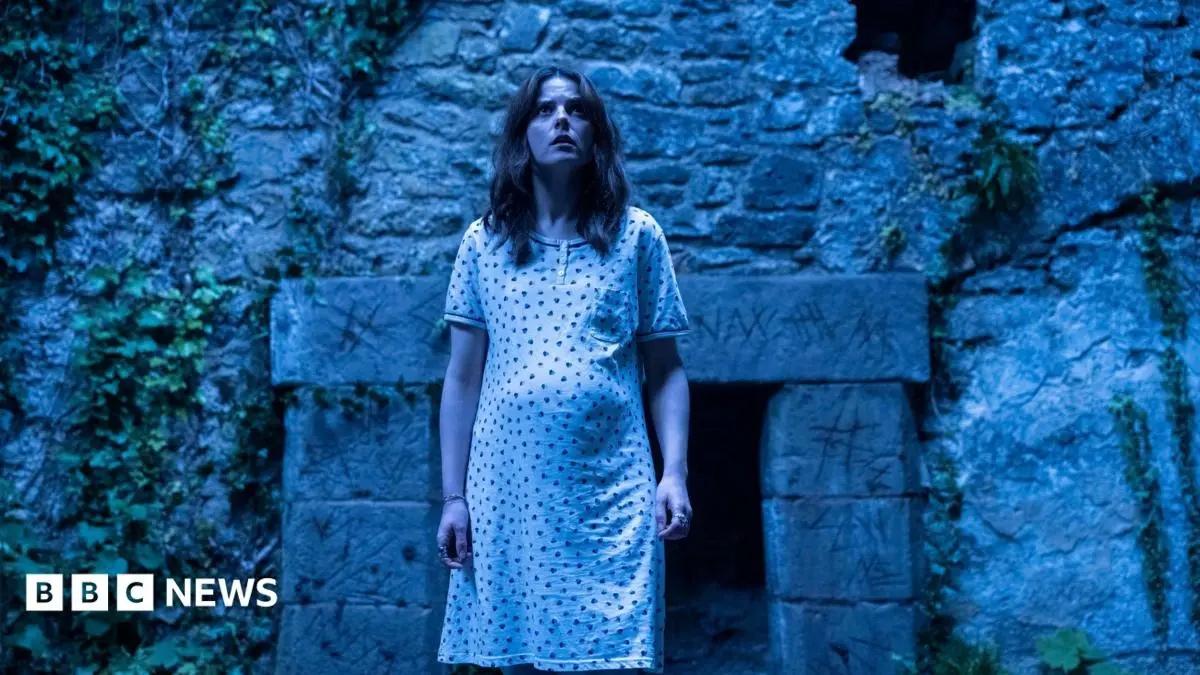
The series chronicles the harrowing seven-year ordeal endured by Liz and Bill Rich. In 1989, the young couple relocated their family to a remote farmhouse nestled at the foot of a brooding Welsh mountain, seeking a quiet life. Instead, they walked into what they would later describe as a relentless nightmare of poltergeist activity, terrifying apparitions, alleged demonic possessions, and unexplained physical injuries.
Shot entirely on location in Wales and featuring a predominantly Welsh production crew alongside Port Talbot-born star Gabrielle Creevy, The Witch Farm aims to immerse audiences in the suffocating isolation of the landscape while sparking a timeless cultural debate: Do ghosts truly exist, or are we simply haunted by the limits of our own understanding?
Detailed Chronology: Seven Years at the Foot of the Mountain
1989: The Move to Isolation
The origins of The Witch Farm trace back to the late autumn of 1989. Seeking an escape from the frantic pace of modern life, Liz and Bill Rich made the fateful decision to move their family into a secluded farmhouse. Situated dramatically at the base of a Welsh mountain, the property offered breathtaking vistas and a profound sense of solitude. To the young couple, it felt like the beginning of an idyllic chapter.
However, the geographical isolation that initially drew them to the property quickly transformed into a claustrophobic trap. Almost immediately after settling in, the family began to notice subtle shifts in the atmosphere of the house. What started as inexplicable drafts and faint, disjointed noises soon escalated into a relentless barrage of anomalous events that would stretch across the better part of a decade.
Escalation: Poltergeists, Apparitions, and Physical Trauma
According to the accounts provided by Liz and Bill Rich—and meticulously cross-referenced by investigators and documentarians—the activity within the farmhouse did not manifest all at once; rather, it bled into their lives with calculated cruelty.
Initially, the phenomena aligned with classic poltergeist tropes: objects moving independently, inexplicable cold spots, and heavy footsteps echoing through empty corridors. Yet, as the months rolled into years, the manifestations grew increasingly hostile and invasive. The family reported startling apparitions that seemed tethered to the architecture of the ancient home. More alarming still were the accounts of alleged possessions and direct physical injuries sustained by the inhabitants.
For seven long years, the Rich family lived in a state of hyper-vigilance. The haunting did not merely terrorize the household behind closed doors; it slowly bled out into the surrounding community. Local residents, tradespeople, and acquaintances were reportedly drawn into the widening gyre of strange occurrences, cementing the farmhouse’s grim reputation. By the time the ordeal finally subsided, the lives of Liz and Bill Rich had been altered irrevocably. The trauma of those seven years fractured their sense of reality and left psychological scars that would take decades to articulate.
The Genesis of the Project: From Viral Podcast to Prestige Television
The Success of The Battersea Poltergeist
To understand the meticulous craftsmanship behind The Witch Farm, one must examine the trajectory of its creator. Danny Robins first captured international attention with the BBC podcast The Battersea Poltergeist, an immersive investigative series that dissects a famous mid-20th-century haunting. The podcast became a runaway global hit, captivating millions of listeners and redefining how supernatural narratives are consumed in the digital age.
Following the monumental success of The Battersea Poltergeist, Robins faced immense pressure from audiences and network executives alike to deliver a sequel. However, forcing a follow-up without authentic, compelling source material was never an option. The search for a suitable successor led Robins down countless archival rabbit holes until he stumbled upon the staggering case of Liz and Bill Rich.
Excavating the Past: The Birth of The Witch Farm podcast
"The more I dug into it, the more it felt like something that merited a long-form approach," Robins explained during discussions surrounding the project’s development. Recognizing the depth and complexity of the Rich family’s ordeal, he spearheaded the creation of a dedicated podcast series titled The Witch Farm.
Through the rigorous investigative process required for the audio series, Robins finally came face-to-face with Liz Rich. Sitting down with her allowed him to access the raw, unfiltered emotional truth of her experiences.
"Through that process, I met Liz and she told me her incredible story," Robins recalled. "We also found other witnesses and pieced everything together through a mix of audio drama and documentary."
Why Television Dramatisation?
Once the podcast concluded, Robins confronted a creative crossroads. He asked himself the inevitable question: What’s next?
While a traditional television documentary about the farmhouse was considered, Robins quickly realized it was insufficient for the sheer emotional weight of the material. "Telling the story as a TV documentary just didn’t feel right," he admitted. The inherent limitations of documentary formats—talking heads, archival footage, and detached narration—threatened to flatten the visceral, claustrophobic reality of what the family endured.
Instead, Robins made the decisive leap toward full dramatic fictionalization based on real events. By transforming the audio investigations into a scripted television drama, he could place viewers directly inside the farmhouse. The medium allowed for a nuanced exploration of atmosphere, pacing, and psychological breakdown that standard documentary formats simply cannot achieve.
Supporting Context & Metrics: Authenticity and Cultural Resonance
Filming in the Heart of Wales
A core pillar of The Witch Farm‘s production ethos is its unwavering commitment to geographical and cultural authenticity. The series was filmed entirely on location in Wales, utilizing the rugged, moody terrain to mirror the internal psychological states of its characters.
This localized approach extended far beyond the camera lenses. Robins insisted on employing an "almost entirely Welsh" crew to bring the production to life. In an industry where regional stories are frequently co-opted by major metropolitan production hubs, maintaining Welsh roots was paramount to the integrity of the project.
"It’s been important that this feels like a story made and told in Wales," Robins emphasized. This localized collaboration ensured that the cadence, cultural nuances, and atmospheric gloom of the setting were captured with absolute precision.
Casting Gabrielle Creevy: Bringing Truth to Terror
At the heart of the on-screen narrative is Port Talbot-born actress Gabrielle Creevy, who takes on the heavy lifting of portraying the psychological deterioration and resilience of the lead role. Creevy’s deep connection to the region provided an immediate layer of grounding for the production.
"I’m from Wales and I love working here," Creevy shared. "It’s always a pleasure and crews are always so great. I love working in the middle of nowhere in the fresh air—I think I’ll always feel the same."
Robins was quick to praise the actress’s contribution, noting that her casting was instrumental in establishing the show’s gritty realism. According to the creator, Creevy brought "absolute authenticity to the role" not only through her commanding performance but through her natural Welsh accent.
Creevy’s involvement in The Witch Farm follows a hot streak of high-profile projects, including her recent, critically praised appearance in the spy thriller Black Doves, where she similarly championed her native accent. Her ability to anchor high-stakes dramatic narratives makes her the ideal conduit for the harrowing experiences of the Rich family.
Official Statements and Creator Vision
Balancing Fear, Emotion, and Humor
When crafting a horror-adjacent drama, creators often fall into the trap of relentless, suffocating dread. However, Robins approached The Witch Farm with a sophisticated understanding of human psychology, recognizing that even in the darkest circumstances, humanity persists through contrasting emotional registers.
Asked what he ultimately hopes viewers will feel when they sit down to watch the series, Robins offered a multifaceted vision:
"I absolutely want people to feel scared, but I also want them to be moved by it. It’s an incredibly powerful and emotional story, that was one of the things that grabbed me when I first came across it for the podcast."
Beyond the terror and the tears, Robins injected a surprising element into the narrative mix: levity. He noted that he hopes viewers will "laugh a little," firmly believing that "humour has always been important" to his work. This tonal balance ensures that the characters feel fully realized—real people coping with the surreal through gallows humor, familial warmth, and ordinary human interactions before the abnormal shatters their reality.
The Age-Old Question: Do Ghosts Exist?
Perhaps the most enduring legacy of Danny Robins’ work is his refusal to act as a dogmatic judge. Rather than delivering a neat, prepackaged conclusion regarding the supernatural, Robins aims to use The Witch Farm as a cultural catalyst.
The series is deliberately designed to provoke a fundamental question in the minds of its audience: Do ghosts exist? By laying out the staggering testimonies, the physical evidence, and the psychological fallout, Robins thrusts viewers directly into the timeless debate between hard-nosed scientific scepticism and unyielding human belief.
"What’s crucial for me is that I want viewers to think about it and reach their own conclusions," Robins stated.
This agnostic approach respects the intelligence of the audience, transforming passive television viewing into an active, conversational experience that extends long after the credits roll.
Future Outlook and Broadcast Details
As the broadcasting landscape prepares for the arrival of The Witch Farm, expectations are understandably high. Building upon the monumental cultural footprint carved out by The Battersea Poltergeist, this new drama represents a maturation of Danny Robins’ storytelling style—shifting from audio investigation to prestige, cinematic television.
The series arrives at a time when audiences are increasingly hungry for elevated horror and psychological thrillers that explore real-world trauma. By marrying the chilling accounts of Liz and Bill Rich with top-tier Welsh talent, authentic regional production values, and an emotionally intelligent script, The Witch Farm is positioned to be one of the defining television events of the winter season.
Whether viewers approach the series as ardent believers in the paranormal or staunch sceptics looking for a masterclass in atmospheric tension, the journey promises to be unforgettable. The farmhouse at the foot of the mountain is ready to open its doors once more.
Viewing Information:
The Witch Farm will be available to stream and broadcast across BBC iPlayer, BBC One, and BBC One Wales starting from Sunday, November 22.