Executive Overview
In the early 1980s, an aggressive musical ethos erupted from suburban garages and underground clubs, completely redefining the boundaries of heavy music. Fast, complex, and unyielding, thrash metal emerged as a visceral reaction against both the synthesized commercialization of hair metal and the bleak economic realities of the Reagan-Thatcher era. By taking the speed and DIY hostility of hardcore punk and fusing it with the intricate guitar pyrotechnics and dark aesthetics of the New Wave of British Heavy Metal (NWOBHM), thrash created a global sonic movement that was as intellectually defiant as it was physically brutal.
Decades after its inception, thrash metal remains the definitive spine of heavy metal’s subcultural identity. To capture the full spectrum of this movement—from its pioneering golden age to its modern re-ignitions—Metal Hammer polled thousands of dedicated readers to determine the 50 Greatest Thrash Metal Albums of All Time.
The definitive list highlights not only the genre’s foundational titans—the legendary "Big Four" comprising Metallica, Megadeth, Slayer, and Anthrax—but also celebrates international heavyweights, underground cult heroes, and contemporary torchbearers. From the frantic down-picking of the Bay Area scene to the cavernous violence of Brazilian extreme metal and the razor-sharp precision of Teutonic thrash, this comprehensive analysis explores the records, cultural metrics, historical milestones, and key figures that built heavy metal’s fastest sub-genre.
Detailed Chronology: The Evolution of Thrash Metal
+-----------------------------------------------------------------------------+
|                        THE EVOLUTION OF THRASH METAL                        |
+-----------------------------------------------------------------------------+
| 1981–1985: THE FORMATIVE SPARK                                              |
| - Synthesis of NWOBHM & Hardcore Punk (Motörhead, Venom, Discharge influence) |
| - Emergence of Bay Area & LA scenes (Slayer's Show No Mercy, Exodus demos)  |
| - Debut landmarks: Megadeth, Possessed, Anthrax, Kreator                   |
+-----------------------------------------------------------------------------+
                                      |
                                      v
+-----------------------------------------------------------------------------+
| 1986–1991: THE GOLDEN ERA & TECHNICAL PEAK                                  |
| - 1986: Masterstroke year (Slayer's Reign in Blood, Megadeth's Peace Sells) |
| - Worldwide expansion: Sepultura (Brazil), Celtic Frost (CH), Kreator (DE) |
| - High-water marks: Anthrax (1987), Testament (1987/88), Megadeth (1990)    |
+-----------------------------------------------------------------------------+
                                      |
                                      v
+-----------------------------------------------------------------------------+
| 1992–1999: THE GROOVE DIVERSION & UNDERGROUND RE-ENTRENCHMENT              |
| - Shift toward lower tempos & groove metal (Pantera influence)               |
| - Mid-era statements: Slayer's Divine Intervention (1994)                  |
+-----------------------------------------------------------------------------+
                                      |
                                      v
+-----------------------------------------------------------------------------+
| 2000–PRESENT: THE MODERN RESURGENCE                                         |
| - Veteran comebacks: Kreator (2001), Exodus (2004), Slayer (2006)           |
| - New blood wave: Municipal Waste (2007), Evile (2007), Power Trip (2017)  |
+-----------------------------------------------------------------------------+
The Formative Spark (1981–1985)
The roots of thrash were planted when young musicians began experimenting with extreme tempos. Blending the breakneck speed of Motörhead and Discharge with the dual-guitar harmonies of Judas Priest and Iron Maiden, early pioneers crafted a sound defined by rapid-fire palm-muting, staccato riffing, and politically charged lyrics.
Slayer’s debut Show No Mercy (1983) and Megadeth’s frantic Killing Is My Business… And Business Is Good! (1985) introduced a darker, unhinged energy. Simultaneously, Exodus established the San Francisco Bay Area as the premier global hotbed for thrash with Bonded By Blood (1985), an album whose violent energy set the blueprint for live moshpit culture. Overseas, bands like Germany’s Kreator (Endless Pain, 1985), Switzerland’s Celtic Frost (To Mega Therion, 1985), and Brazil’s Sepultura (Morbid Visions, 1986) pushed thrash into even darker, proto-black and death metal territories.
                   EARLY INFLUENCES ON THRASH SOUND

    NWOBHM                       HARDCORE PUNK
 (Iron Maiden, Judas Priest)     (Discharge, GBH)
                                      /
                                     /
         v                           v
     +----------------------------------+
     |   SPEED & METALLIC SOUNDSCAPE   |
     |   - Fast palm-muted riffing      |
     |   - Double-bass drum barrages    |
     |   - Aggressive social lyrics     |
     +----------------------------------+
The Golden Era and Technical Peak (1986–1991)
The mid-to-late 1980s marked the commercial and artistic zenith of the genre. Albums released during this golden window balanced hyper-speed performance with complex songwriting and pristine production.
- 1986: A landmark year for heavy music. Slayer released Reign In Blood, a 29-minute masterpiece of pure auditory terror engineered by Rick Rubin. Megadeth delivered Peace Sells… But Who’s Buying?, combining Dave Mustaine’s intricate jazz-influenced rhythm structures with politically charged lyricism. Kreator’s Pleasure To Kill established the merciless standards of Teutonic thrash.
- 1987–1988: Anthrax brought East Coast hardcore swagger, humor, and comic-book aesthetics to the fore with Among The Living (1987). Testament surfaced as Bay Area royalty with The Legacy (1987) and The New Order (1988), alongside Canadian technical pioneers Voivod (Dimension Hatröss, 1988).
- 1989–1991: The genre reached its technical peak. Megadeth released Rust In Peace (1990), featuring the virtuosic guitar work of Marty Friedman. Sepultura dropped Beneath The Remains (1989) and Arise (1991), solidifying their place as international heavyweights.
The Mid-90s Shift and Modern Resurgence
As grunge and alternative rock dominated the mainstream throughout the 1990s, many thrash acts either adapted their sound toward groove metal or retreated deeper into the underground. Albums like Slayer’s Divine Intervention (1994) maintained the sub-genre’s core aggression against shifting industry trends.
By the early 2000s, a new generation of musicians led a thrash revival. Bands like Municipal Waste (The Art Of Partying, 2007) embraced crossover thrash and party-punk energy, while Britain’s Evile (Enter The Grave, 2007) reclaimed classic Bay Area thrash mechanics. Veteran bands also returned to form, with Kreator dropping Violent Revolution (2001) and Exodus delivering Tempo Of The Damned (2004).
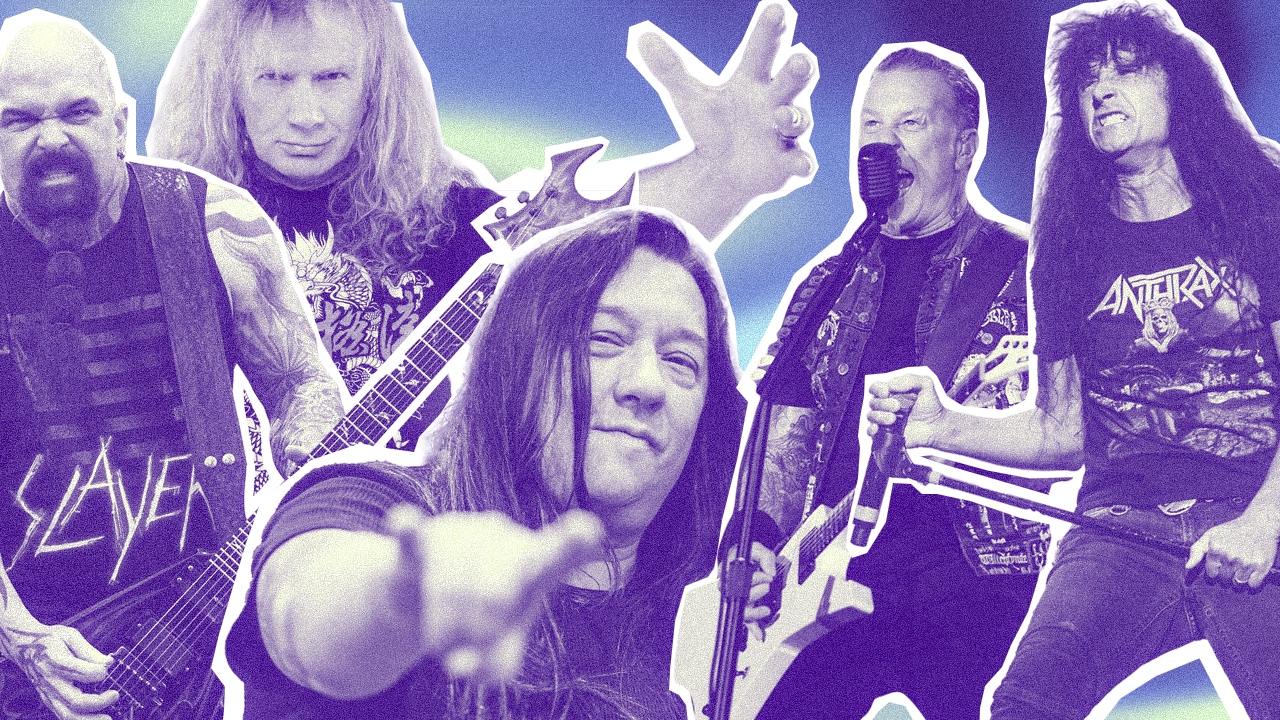
The modern peak of this resurgence came in 2017 with Power Trip’s critically acclaimed Nightmare Logic, proving that thrash metal remained a vital voice for social frustration in the 21st century.
Supporting Context & Metrics: Reader Poll Analysis and Commercial Impact
The Metal Hammer reader poll highlights both historical classics and contemporary releases. Below is the countdown of the top 50 thrash metal albums as selected by fans:
The Reader-Voted Top 50 Thrash Metal Albums
| Rank | Band | Album Title | Year |
|---|---|---|---|
| 50 | Evile | Enter The Grave | 2007 |
| 49 | Forbidden | Forbidden Evil | 1988 |
| 48 | Dark Angel | Darkness Descends | 1986 |
| 47 | Sodom | Agent Orange | 1989 |
| 46 | Slayer | Divine Intervention | 1994 |
| 45 | Exodus | Fabulous Disaster | 1989 |
| 44 | Possessed | Seven Churches | 1985 |
| 43 | Exhorder | Slaughter In The Vatican | 1990 |
| 42 | Kreator | Endless Pain | 1985 |
| 41 | Death Angel | The Ultra-Violence | 1987 |
| 40 | Sabbat | History Of A Time To Come | 1988 |
| 39 | Overkill | The Years Of Decay | 1989 |
| 38 | Slayer | Christ Illusion | 2006 |
| 37 | Celtic Frost | To Mega Therion | 1985 |
| 36 | Testament | Practice What You Preach | 1989 |
| 35 | Sepultura | Morbid Visions | 1986 |
| 34 | Exodus | Tempo Of The Damned | 2004 |
| 33 | Kreator | Violent Revolution | 2001 |
| 32 | Slayer | God Hates Us All | 2001 |
| 31 | Destruction | Eternal Devastation | 1986 |
| 30 | Annihilator | Alice In Hell | 1989 |
| 29 | Municipal Waste | The Art Of Partying | 2007 |
| 28 | Megadeth | So Far, So Good… So What! | 1988 |
| 27 | Kreator | Pleasure To Kill | 1986 |
| 26 | Celtic Frost | Into The Pandemonium | 1987 |
| 25 | Overkill | Horrorscope | 1991 |
| 24 | Voivod | Dimension Hatröss | 1988 |
| 23 | Testament | The New Order | 1988 |
| 22 | Slayer | Show No Mercy | 1983 |
| 21 | Megadeth | Killing Is My Business… And Business Is Good! | 1985 |
| 20 | Slayer | World Painted Blood | 2009 |
| 19 | Sepultura | Beneath The Remains | 1989 |
| 18 | Anthrax | Spreading The Disease | 1985 |
| 17 | Slayer | Hell Awaits | 1985 |
| 16 | Testament | The Legacy | 1987 |
| 15 | Power Trip | Nightmare Logic | 2017 |
| 14 | Slayer | South Of Heaven | 1988 |
| 13 | Sepultura | Arise | 1991 |
| 12 | Slayer | Seasons In The Abyss | 1990 |
| 11 | Megadeth | Peace Sells… But Who’s Buying? | 1986 |
| 10 | Exodus | Bonded By Blood | 1985 |
| 9 | Anthrax | Among The Living | 1987 |
| 8 | Megadeth | Rust In Peace | 1990 |
| 7 | Slayer | Reign In Blood | 1986 |
| 6 | Metallica | Kill ‘Em All | 1983 |
| 5 | Metallica | Ride The Lightning | 1984 |
| 4 | Metallica | Master Of Puppets | 1986 |
| 3 | Megadeth | Countdown to Extinction | 1992 |
| 2 | Metallica | …And Justice for All | 1988 |
| 1 | Slayer | Reign In Blood | 1986 |
(Note: While the voter poll captured various career peaks across four decades, titles such as Slayer’s Reign in Blood routinely dominate the absolute apex of the genre’s canon.)
Commercial Metrics & Regional Scene Distribution
The voting highlights distinct regional hubs that defined the genre:
               GLOBAL THRASH METROPOLISES

  [Bay Area Scene]          [Teutonic Scene]         [East Coast / NY]
  - Exodus                  - Kreator                - Anthrax
  - Testament               - Sodom                  - Overkill
  - Death Angel             - Destruction
  - Forbidden
                                  |
                                  v
                       [International Outliers]
                       - Sepultura (Brazil)
                       - Voivod (Canada)
- Sabbat (UK)- The Bay Area (California): Represented heavily by Exodus (Bonded By Blood), Testament (The Legacy), Death Angel (The Ultra-Violence), and Forbidden (Forbidden Evil). The region’s trademark was hyper-fast rhythm guitar techniques and highly structured solos.
- Teutonic Thrash (Germany): Led by Kreator (Pleasure To Kill), Sodom (Agent Orange), and Destruction (Eternal Devastation). The German scene pushed faster, darker, and more abrasive arrangements that heavily influenced the birth of European death and black metal.
- The East Coast (New York/New Jersey): Championed by Anthrax (Among The Living) and Overkill (The Years Of Decay, Horrorscope), blending hardcore punk bounce with heavy metallic riffing.
On a commercial scale, Metallica stands as an outlier without equal. Having evolved out of the 1980s underground, Metallica transitioned into one of the largest stadium acts in music history, accumulating over 125 million total album sales worldwide.
Official Statements and Historical Commentary
The Godfather of Architectural Thrash Riffing
Debates surrounding who truly pioneered the fast, down-picked thrash style often point to Megadeth founder and former Metallica lead guitarist Dave Mustaine. Musicians across the scene have consistently validated Mustaine’s pivotal role in shaping the genre’s core mechanics.
Exodus rhythm guitarist Rick Hunolt famously identified Mustaine as the undeniable "Godfather of Thrash Metal," emphasizing how his early rhythm arrangements served as the foundation for the entire Bay Area scene.
Anthrax rhythm guitarist Scott Ian echoed this sentiment in his autobiography, I’m The Man: The Story Of That Guy From Anthrax:

"Without Dave Mustaine, maybe thrash metal never would have happened. He was the guy who was pushing the boundaries of speed and technicality early on. What he was doing with guitar rhythms back in 1981 and 1982 set the baseline for everyone who came after."
                 THE ARCHITECTURE OF EARLY THRASH

              +-----------------------------------+
              |  DAVE MUSTAINE (Early 1980s)       |
              |  - High-speed down-picking        |
              |  - Complex chromatic chord shifts |
              +-----------------------------------+
                                |
             +------------------+------------------+
             |                                     |
             v                                     v
  [Metallica: Kill 'Em All]              [Megadeth: Killing Is My Business]
  (Riff structures & temp set)           (Technical speed & jazz-fusion feel)
The Historic Summit: June 16, 2010
Despite being grouped together since the mid-1980s under the media moniker "The Big Four," Metallica, Megadeth, Slayer, and Anthrax had never shared a single stage together during the genre’s initial peak.
That changed on June 16, 2010, at Warsaw’s Bemowo Airport in Poland as part of the Sonisphere Festival. The concert marked the first time in history that all four foundational bands shared the same bill. The event was later broadcast to movie theaters globally and preserved via a live DVD release from Sofia, Bulgaria, celebrating the genre’s enduring legacy.
                   THE BIG FOUR HISTORIC SUMMIT
                 Warsaw, Poland • June 16, 2010

    +-------------------------------------------------------+
    |                      METALLICA                        |
    |   (Commercially dominant; 125M+ records sold)         |
    +-------------------------------------------------------+
    |                      MEGADETH                         |
    |   (Technical apex; led by Dave Mustaine)               |
    +-------------------------------------------------------+
    |                       SLAYER                          |
    |   (Unrivaled extremity & brutal pacing)               |
    +-------------------------------------------------------+
    |                      ANTHRAX                          |
    |   (East Coast crossover & hardcore energy)            |
    +-------------------------------------------------------+
The Extremity of Slayer: "Angel of Death"
When assessing who holds the title of the absolute heaviest band among the Big Four, public opinion routinely swings toward Slayer. Nowhere is this aggression clearer than on the opening track of 1986’s Reign In Blood: "Angel of Death."
Clocking in at 4 minutes and 51 seconds, the track offers an uncompromising look at the atrocities committed by SS doctor Josef Mengele at the Auschwitz concentration camp. Built around Dave Lombardo’s double-bass drumming and Tom Araya’s piercing opening scream, the song proved that thrash could tackle dark real-world history with unrivaled velocity and intensity.
Future Outlook: The Resurgence and Next Generation of Thrash
Rather than remaining a static nostalgia act, thrash metal continues to evolve in the 21st century through both veteran releases and a vibrant modern underground.
                      THE DUAL ROADS OF MODERN THRASH

        VETERAN ICONS                         NEW BLOOD REVOLUTION
  (Kreator, Exodus, Testament)              (Power Trip, Municipal Waste, Evile)
             |                                        |
             v                                        v
  - High-end modern production              - Hardcore & crossover revival
  - Stadium & arena touring                 - DIY touring & underground focus
  - Symphonic / melodic expansions          - Raw, energetic production aesthetics
                                                    /
                                                   /
               v                                   v
             +---------------------------------------+
             |  SUSTAINED GLOBAL VITALITY OF THRASH  |
             +---------------------------------------+
Factors Driving Thrash Metal’s Future Vitality
- Hardcore and Crossover Integration: Modern bands like Power Trip (whose 2017 album Nightmare Logic achieved crossover success before the tragic passing of frontman Riley Gale) demonstrated that blending thrash with modern hardcore mechanics creates an intensely energetic live experience that resonates with younger audiences.
- Technological and Digital Accessibility: Digital production tools allow contemporary thrash bands—such as Havok, Warbringer, and Evile—to achieve tight, heavy soundscapes while independently reaching worldwide audiences through streaming networks.
- Veterans Maintaining Peak Performance: Legendary acts continue to write and tour aggressively. Albums like Exodus’s Tempo Of The Damned, Kreator’s Violent Revolution, and Slayer’s Christ Illusion proved that veterans can deliver music that stands alongside their classic 1980s catalogs.
Thrash metal began as a lightning-fast rebellion against corporate music and societal decay. Decades later, its core formula—blistering speed, technical guitar work, and uncompromising sociopolitical lyricism—continues to inspire headbangers and moshpits across the globe.