London’s cultural landscape is undergoing a profound period of critical reexamination, anchored by major gallery retrospectives, radical architectural histories, and the deliberate literary reclamation of marginalized voices. Across the city’s leading institutions, a deliberate effort is underway to dismantle monolithic art-historical narratives and challenge the traditional framing of historical icons.
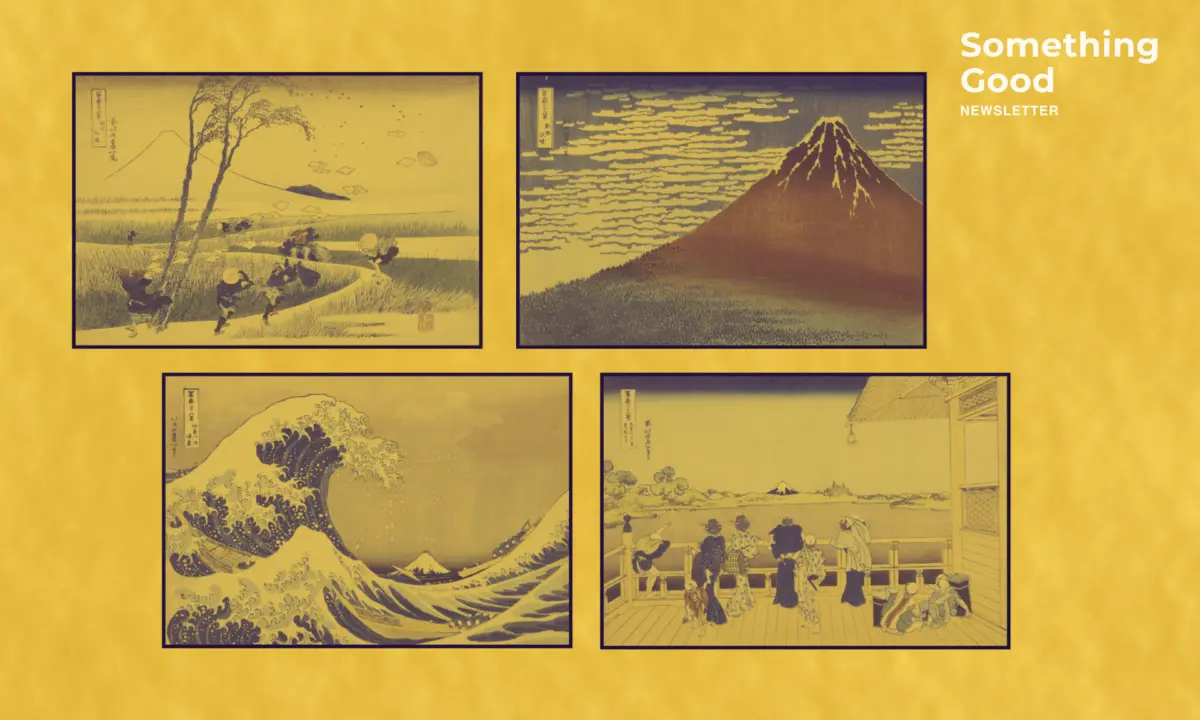
At the Dulwich Picture Gallery, Katsushika Hokusai’s universally recognized masterpiece, Under the Wave off Kanagawa—commonly known as The Great Wave—is being exhibited not in isolation, but alongside the complete series of 46 prints from Thirty-six Views of Mount Fuji. This rare collective showing fundamentally alters the viewer’s relationship with a work that has long been commodified and decoupled from its broader artistic context.
Simultaneously, the Opera Gallery is staging Fernando Botero, in Praise of an Amplified World, a major retrospective celebrating the late Colombian master’s 70-year career. By placing Botero’s playful, voluminous figurative works in dialogue with his biting political commentary on violence and state power, the exhibition challenges simplistic dismissals of his signature style.
Complementing these visual arts milestones, the William Morris Gallery’s Earthly Paradise: Radical Living in the UK investigates two centuries of communal living, domestic architecture, and socio-political resistance. Concurrently, the literary sphere is experiencing a parallel awakening. Philippa Gregory’s latest historical fiction, Royal Witch, interrogates the systemic weaponization of witchcraft against ambitious women in fifteenth-century England, while independent publisher Persephone Books continues its vital mission of resurrecting lost twentieth-century masterpieces by women—exemplified by its reissue of Dorothy Canfield Fisher’s 1926 near-Pulitzer nominee, Her Son’s Wife.
This comprehensive report examines these concurrent cultural events, mapping out how contemporary curation and publishing are rewriting the parameters of art history, social history, and literary canonization.
Detailed Chronology and Exhibition Analysis
Hokusai’s Mount Fuji: The Complete Vision (Dulwich Picture Gallery)
The exhibition Hokusai: Thirty-six Views of Mount Fuji from the Iuchi Collection, running at the Dulwich Picture Gallery until January 17, 2027, marks a historic milestone for British museum curation. It is the first time the complete set of 46 polychrome woodblock prints—comprising the core thirty-six views alongside ten supplementary prints added due to the series’ immense popularity—has been exhibited together in the United Kingdom.
Created between 1830 and 1834, when Hokusai was already in his seventies, the series captures Japan’s most sacred peak from an astonishing variety of geographical vantage points, meteorological conditions, and seasonal moments. The prints reveal a master deeply engaged with the dynamic interplay between human endeavor and the eternal, immutable presence of nature.
[1830-1834: Hokusai creates the 46 prints]
       │
       ▼
[Decades of decontextualization (The Great Wave viewed in isolation)]
       │
       ▼
[Present Day: Dulwich Picture Gallery reunites the Iuchi Collection (UK First)]
       │
       ▼
[Critical Shift: Restoration of ecological, social, and narrative context]
Art critic and reviewer Dominik Havsteen-Franklin noted that seeing The Great Wave within the context of the wider series fundamentally transforms the viewer’s psychological engagement with the image. When viewed independently, The Great Wave operates as an autonomous monument to nature’s terrifying sublimity. Within the series, however, the towering wall of water frames Mount Fuji as a tiny, distant triangle—a visual juxtaposition that anchors the viewer’s thoughts in the human realities of the fishing boats caught in the swell, the coastal villages dotting the base, and the changing agricultural rhythms of the Edo period. The exhibition forces a critical pivot away from the fetishization of a single iconic image toward an appreciation of Hokusai’s sprawling, encyclopedic topographical study.
Botero’s Amplified World (Opera Gallery, London)
Running until November 22, Fernando Botero, in Praise of an Amplified World at the Opera Gallery offers a comprehensive overview of the Colombian figurative artist’s seven-decade career. Botero, who passed away in September 2023, remains one of Latin America’s most celebrated and distinct visual voices, immediately recognizable by his signature inflation of human and animal forms.
The exhibition features a rich array of paintings and sculptures that showcase Botero’s mastery of volume and scale. Works such as Nudo, Donna in abito rosso (2013) and En La Plaza (1987) present female figures whose ornate garments and swelling contours evoke comparisons to multi-tiered pastries. These figures balance monumentality with an unexpected gentleness, prompting stylistic comparisons to British figurative painter Beryl Cook, albeit executed with a rigorous, sculptural command of surface and color.
However, the retrospective avoids hagiography by confronting visitors with Botero’s darker, politically charged output. Canvases depicting militarized police forces, violent bullfighting scenes, and the grim aftermath of state oppression utilize the artist’s characteristic corpulence to convey grotesque weight and institutional corruption. By juxtaposing the playful with the horrifying, the exhibition reveals an artist acutely aware of how physical mass can be deployed to symbolize political power, vulnerability, and systemic violence.
Earthly Paradise: Radical Living in the UK (The William Morris Gallery)
At the William Morris Gallery in Walthamstow, Earthly Paradise: Radical Living in the UK (running until March 28, 2027) expands the definition of art history into the realms of architecture, sociology, and political activism. Spanning the last 200 years, the exhibition uses archival materials, contemporary photography, and historical artifacts to chart how British communities have continuously reimagined the concept of home as a site of political and social resistance.
The exhibition juxtaposes canonical sites of alternative living—such as William Morris’s Arts and Crafts manifesto manifest in the Red House, and the bohemian, pacifist sanctuary of the Bloomsbury Group at Charleston—with marginalized and overlooked histories of domestic radicalism. Notable among these are Danièle Lamarche’s evocative 1980s photographic documentation of Bangladeshi squatters establishing communities in east London. Through these contrasting lenses, the exhibition interrogates the persistent friction between class, generational wealth, and access to alternative, self-determined modes of domestic existence.
Supporting Context & Metrics
To fully understand the structural weight of these cultural offerings, it is necessary to examine the institutional scales, temporal spans, and archival scopes involved:
Exhibition / Publication
Venue / Publisher
Key Focus
Duration / Release Date
Hokusai: Thirty-six Views of Mount Fuji
Dulwich Picture Gallery
Complete 46-print Iuchi Collection of woodblock prints
Until January 17, 2027
Fernando Botero: In Praise of an Amplified World
Opera Gallery, London
70-year retrospective of paintings and sculptures
Until November 22
Earthly Paradise: Radical Living in the UK
William Morris Gallery
200 years of communal housing and domestic activism
Until March 28, 2027
Royal Witch (Philippa Gregory)
HarperCollins
Historical fiction reclaiming Eleanor Cobham
Out Now
Her Son’s Wife (Dorothy Canfield Fisher)
Persephone Books
1926 near-Pulitzer nominee republished for 21st-century readers
Out Now (Reissue)
The juxtaposition of these events points to a broader curatorial trend across the United Kingdom: the deliberate reclamation of overlooked frameworks. Whether it is restoring a canonical print to its original series, rescuing a 20th-century American domestic novel from obscurity, or reframing a 15th-century duchess’s treason trial, cultural institutions are increasingly prioritizing contextual depth over isolated spectacle.
Official Statements and Critical Reception
The critical discourse surrounding these exhibitions and literary releases underscores a shared urgency in challenging historical orthodoxies.
In assessing the Hokusai exhibition, reviewer Dominik Havsteen-Franklin noted the transformative impact of institutional framing:
"Seeing the Great Wave not as a solitary masterpiece, but as one panel in an exhaustive, meditative dialogue with Mount Fuji, changes everything. It forces us to reckon with the human labor, the changing seasons, and the topographical humility that Hokusai embedded into the very fabric of the series."
Art historian Lynsey Cowlishaw, writing on the cultural impulse to reduce powerful historical women to caricatures of witchcraft, emphasized the necessity of critical historical revisionism:
"When powerful women like Eleanor Cobham are stripped of their political agency and remembered merely as witches, we fail to interrogate the institutional motives of the men who prosecuted them. Reclaiming these narratives is not just about historical accuracy; it is about challenging the persistent tropes that punish female ambition."
Similarly, literary critics assessing the reissue of Dorothy Canfield Fisher’s Her Son’s Wife have highlighted how contemporary readers are finding profound resonance in the micro-politics of domestic spaces. Far from being trivial "women’s domestic fiction," Canfield Fisher’s 1926 work lays bare the silent, psychological negotiations of middle age, familial duty, and boundary maintenance with surgical precision.
Future Outlook
As London’s cultural institutions look toward the remainder of the decade—with several of these landmark exhibitions extending their runs well into 2027—the trajectory of museum programming points decisively toward interdisciplinary curation.
The success of exhibitions like Hokusai: Thirty-six Views and Earthly Paradise demonstrates that contemporary audiences are no longer satisfied with passive consumption of isolated "masterpieces." Instead, museum-goers increasingly demand exhibitions that contextualize art within ecological, socioeconomic, and political realities.
In the literary sector, independent presses such as Persephone Books and major historical fiction writers like Philippa Gregory continue to dismantle the artificial hierarchies that relegated domestic narratives and women’s histories to the literary periphery. By bridging the gap between archival research and accessible public exhibition, London’s cultural sector is establishing a robust framework for how history, art, and literature will be interrogated, preserved, and re-presented for generations to come.