Executive Overview
To the modern observer, the European rabbit (Oryctolagus cuniculus) is an ubiquitous feature of the British countryside, a familiar pastoral sight scampering through hedgerows or grazing on open fields. Yet, this entrenched familiarity masks a complex, volatile, and deeply political history. Long before they became one of the United Kingdom’s most ecologically destructive and economically costly invasive species—estimates place the annual agricultural damage and control costs in the billions—rabbits were exotic, high-status luxuries tightly controlled by the crown and the Norman aristocracy.
The trajectory of the rabbit in the British Isles offers a fascinating lens through which to examine medieval socioeconomic upheaval. Far from being a mere footnote in agricultural history, the introduction, propagation, and cultural reception of the rabbit trace a direct line from the rigid feudal structures of the 12th century to the chaotic, transformative aftermath of the Black Death. As rabbits transitioned from royal gifts to peasant commodities, they sparked fierce legislative crackdowns, fueled fears of working-class insurrection, and inspired a rich, subversive medieval art form that would not feel out of place in modern satire. This investigation explores how a small lagomorph helped rewrite the social contract of medieval England.
Detailed Chronology: From Roman Curio to Medieval Commodity
The historical timeline of the rabbit in Britain is marked by gradual acclimatization, punctuated by pivotal political and epidemiological crises that permanently altered the species’ status and distribution.
The Early Traces and Norman Introduction (1st Century – 12th Century)
While archaeological excavations have occasionally unearthed isolated rabbit remains dating back to Roman Britain—such as a notable discovery at Fishbourne Roman Palace—these instances represent transient introductions rather than established populations. It was not until the post-Norman Conquest period that the European rabbit established a permanent ecological foothold in the British Isles.
The earliest definitive documentary evidence of rabbits in Britain emerges from the late 12th century. A striking legal dispute from 1176 in the Scilly Isles records a landowner named Richard de Wyka refusing to pay church tithes (a mandatory tenth of produce) on his rabbits. De Wyka argued that "tithes were not payable on things of this kind," reflecting widespread administrative confusion and underscoring the novelty of the animal. At this stage, rabbits were not wild animals of the open landscape; they were carefully managed, highly capitalized livestock kept in enclosed warrens primarily for their prized meat and dense fur.
Royal Patronage and Aristocratic Exclusivity (13th Century)
Throughout the 13th century, rabbits remained rare enough to warrant direct oversight from the crown. They were treated as precious commodities, gifted exclusively among high-ranking nobility.
- 1235: King Henry III presented a gift of ten live rabbits to Geoffrey Despenser, the influential English landowner and Lord of Martley in Worcestershire, sourced directly from the royal park at Guildford.
- The Late 13th Century: Royal dispatches reveal strict inventory controls. When Henry III sent men to capture 30 or 40 rabbits from his Guildford warren, they were explicitly instructed to harvest only if the colony was robustly stocked, ensuring the royal breeding population remained uncompromised.
- December 1240: Highlighting their status as luxury goods reserved for the elite, Henry III officially added rabbits to his requisition lists for royal feasts. Prior to this, his massive Christmas banquets featured venison, wild boar, swans, peacocks, and hares, but rabbits had been too exclusive to feature on the menu.
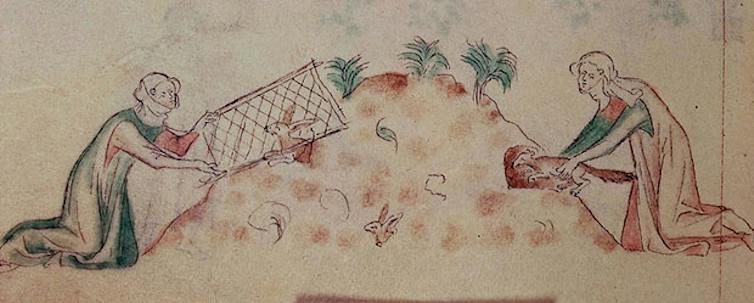
During this era, a rabbit was worth four to five times the price of a chicken. To protect these valuable assets from poachers and predators, landowners constructed specialized defensive architecture, including stone lodges and elevated watchtowers overlooking the warrens.
The Black Death and Socioeconomic Upheaval (1346–1353)
The arrival of the Black Death between 1346 and 1353 decimated the European population, killing between one-third and two-thirds of the inhabitants. This catastrophic demographic collapse paradoxically triggered a golden age for the surviving peasantry.
With labor scarce, surviving laborers and artisans were able to command significantly higher wages. Simultaneously, land became abundantly available, breaking the absolute monopoly of the traditional feudal lords. As living standards rose, lower-income groups began adopting lifestyles, clothing, and dietary habits previously restricted to the nobility. Rabbit meat began appearing on the tables of wealthy peasants, while aspiring craftsmen adorned themselves with rabbit fur.
Legislative Backlash and Sedition Fears (1363–1390)
The blurring of traditional class boundaries alarmed the ruling elite, prompting swift legislative intervention to maintain the social hierarchy.
- October 1363: Parliament introduced strict sumptuary laws designed to regulate apparel and consumption according to social status, explicitly citing "the excess of dress of people beyond their estate, to the very great destruction and impoverishment of the land."
- The Post-Peasants’ Revolt Era (1390): Following the trauma of the Peasants’ Revolt of 1381, the crown viewed rural populations with extreme paranoia. In January 1390, parliament enacted sweeping anti-poaching legislation. Lawmakers feared that ordinary laborers and artisans, under the benign guise of hunting game like hares and rabbits, would use the opportunity to "make plots and conspiracies of rebellion" against the king. King Richard II consented to legislation banning lower-class subjects from possessing "hounds and ferrets, hays, nets, hair-pipes, cords and all other devices" capable of taking forest game.
Widespread Ecological Integration (15th Century – 1555)
Despite legislative attempts to restrict rabbit consumption and hunting, the species’ prolific breeding habits ensured their spread. Manorial records from the 14th and 15th centuries are filled with persistent complaints from lords and tenants alike regarding the destruction of crops caused by expanding rabbit populations.
By the mid-16th century, the ecological transformation of the island was complete. Writing in 1555, the renowned Swiss naturalist Conrad Gesner observed that while rabbits bred in many parts of Europe, "the most plenty of all is in England."
Supporting Context & Metrics: The Economics of Medieval Warrening
To fully understand why rabbits were so fiercely guarded—and why their escape into the wider ecosystem caused such profound socioeconomic ripples—it is necessary to examine the operational mechanics of medieval warrening.
The High Cost of the Coney
In 13th-century England, food pricing was heavily stratified. While standard poultry such as chickens were accessible to ordinary households, rabbits (coneys) occupied the luxury tier alongside venison and imported spices.
- Market Value: A single rabbit commanded a price roughly equivalent to four or five chickens.
- The Fur Trade: Beyond gastronomy, rabbit pelts were vital to the medieval textile economy. While grey rabbit fur provided accessible warmth, specialized warrens bred rare silver-grey and black mutations. These pelts were prized by royalty; historical records confirm that King Henry VII commissioned custom night attire tailored specifically with black rabbit fur.
- Infrastructure Investment: Because warrens were lucrative commercial enterprises, landlords invested heavily in specialized infrastructure. Artificial warrens—mounded earth structures designed to encourage burrowing—were paired with fortified watchtowers. Gamekeepers lived on-site in stone lodges to deter nocturnal poachers, reflecting an economic asset protection strategy comparable to modern industrial security.
Ecological Impact Then and Now
While modern ecological assessments focus on the millions of pounds in agricultural damage caused by feral rabbits eroding riverbanks and destroying crops, their medieval predecessors represented a double-edged sword. Initially, managed warrens allowed landowners to monetize marginal, sandy coastal soils that were useless for arable farming. However, as populations spilled out of managed enclosures, they became agricultural pests, destroying cereal crops and prompting the extensive manorial litigation recorded throughout the late medieval period.
Official Statements & Historical Perspectives
The cultural anxiety surrounding rabbits is preserved not only in dry legislative statutes and manorial rolls, but also in the vibrant, subversive marginalia of medieval manuscripts. Historians and literary scholars point to these texts as windows into the psychological landscape of a changing society.
Parliamentary rolls from the 14th century explicitly connect the regulation of hunting gear to the preservation of public order. The 1390 statute banning ferrets and nets among laborers was framed as a direct defense against sedition:
“…it is doubted that many artificers and labourers keeping [hunting dogs]… do keep greyhounds and other dogs, and on the holidays when good Christian folk be at church, hearing divine service, go in the woods, warrens and closes and take [game]… and sometime under such color they make plots and conspiracies of rebellion and other felonies…”
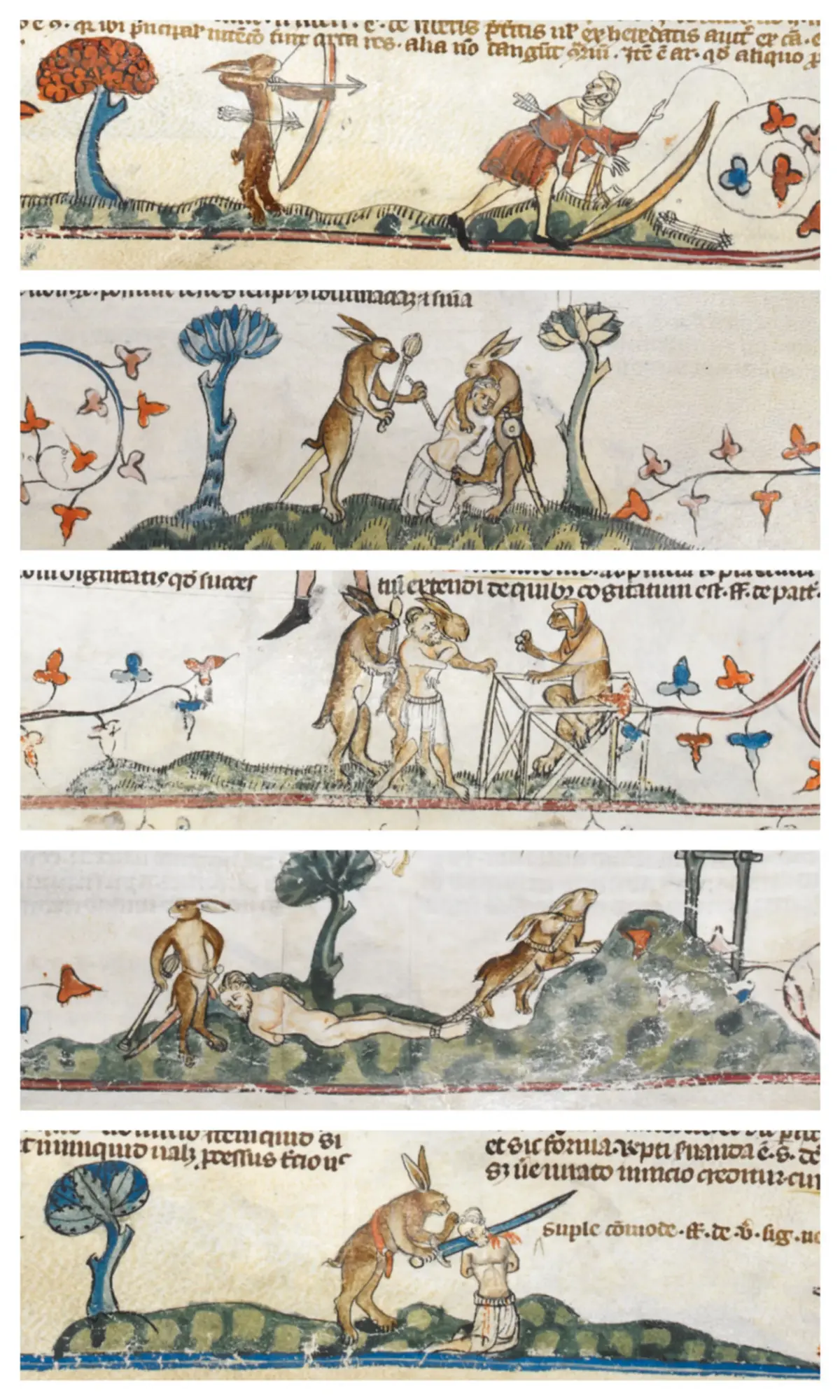
In stark contrast to the paranoid prose of the lawmakers, medieval manuscript illuminators adopted a vastly different tone, weaponizing humor to invert the social order. The most striking example of this is found in The Smithfield Decretals, illuminated in London during the 1340s. Rather than cowering before their human masters and hunting hounds, the manuscript’s illustrations depict rabbits waging total war: capturing human hunters, staging mock trials, and ultimately executing both men and their greyhounds.
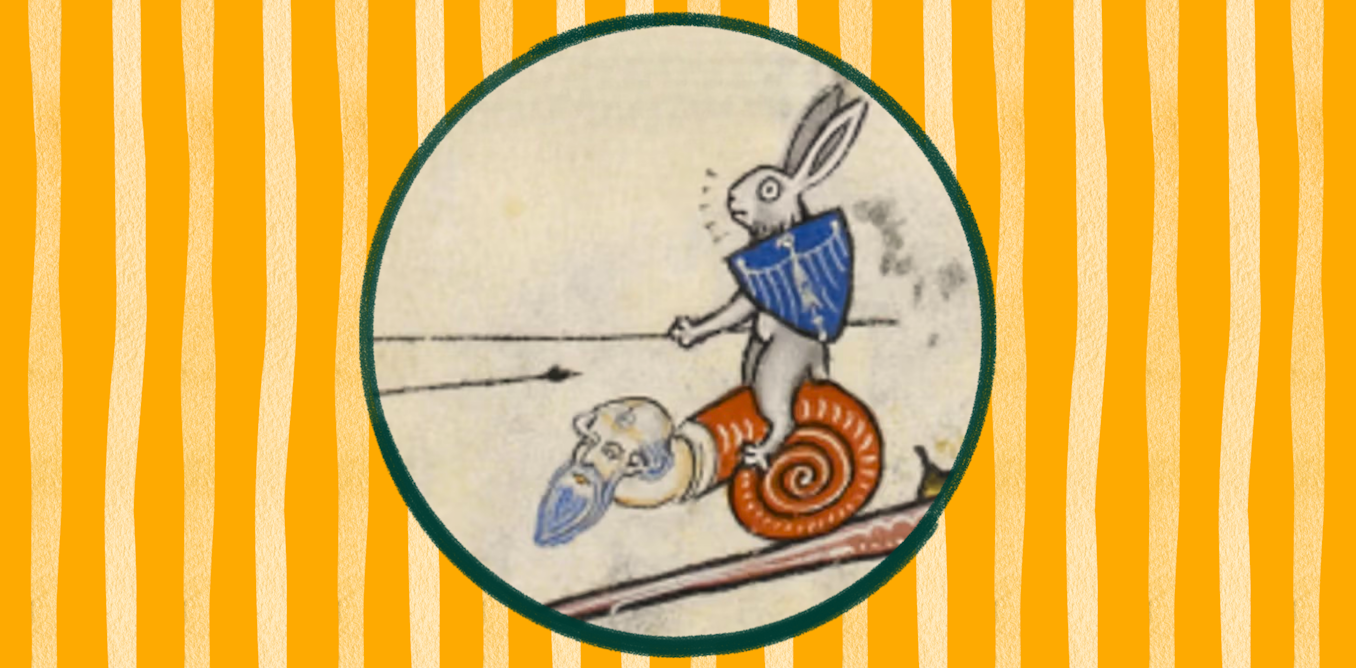
Scholars emphasize that these illustrations reflect the deeply ingrained medieval tradition of the mundus inversus (the world turned upside down). Much like the election of a "boy bishop" or a "lord of misrule" during festive seasons, the killer rabbit trope provided a socially acceptable outlet for gallows humor, allowing the oppressed peasantry and lower orders to safely mock the rigid hierarchies of church, crown, and chivalry. This rich cultural legacy directly bridges the gap between 14th-century manuscript margins and modern pop-culture touchstones, such as the infamous Killer Rabbit of Caerbannog in Monty Python and the Holy Grail (1975).
Future Outlook: Lessons from the Medieval Warren
As contemporary ecologists continue to grapple with the management of invasive species across the British landscape, the historical trajectory of the European rabbit offers a poignant reminder of how human agency shapes ecosystems.
What began as a heavily guarded, elite status symbol introduced by Norman lords ultimately broke free of human control, transforming through sheer demographic pressure and biological resilience into a ubiquitous fixture of rural life. The medieval transition—wherein a luxury import became a widespread peasant commodity, sparked class warfare, and inspired centuries of subversive satire—demonstrates that the rabbit has never been "just an animal" in the British consciousness.
Future historical and ecological research will undoubtedly continue to unearth how shifting trade routes, climate pressures, and changing land-use policies shaped the fortunes of Oryctolagus cuniculus. Yet, the primary lesson remains timeless: whenever human societies attempt to tightly regulate nature for wealth and status, nature has an uncanny knack for biting back—or, as the medieval illuminators so gleefully imagined, putting the hunters on trial.