Executive Overview
Few figures in modern cultural history embody the volatile, boundary-pushing ethos of the late-1960s and 1970s quite like Marsha Hunt. Born in Philadelphia in 1946, Hunt’s trajectory from a classically trained American expatriate to a ubiquitous fixture of London’s swinging counterculture remains a masterclass in artistic defiance. Across a career spanning over half a century, Hunt challenged the rigid categorizations of the entertainment industry, operating fluidly as a soul-inflected rock vocalist, a trailblazing Black model who shattered American Vogue color barriers, a magnetic West End and cinematic actress, and an acclaimed literary author.
Yet, Hunt’s remarkable versatility often proved to be a commercial paradox. While industry executives struggled to pigeonhole her—frequently attempting to market her through the limiting lens of a manufactured pop persona—Hunt demanded absolute intellectual and creative autonomy. Working alongside titans of the era such as Jimi Hendrix, Mick Jagger, Marc Bolan, and Tony Visconti, she rejected the passive tropes assigned to women of color in the media. Instead, she forged a fiercely independent path.
This retrospective examines the extraordinary life and career of Marsha Hunt: a cultural architect whose fearless approach to art, body politics, and identity anticipated the modern intersectional framework by decades. Through a granular examination of her musical output, her intersections with rock royalty, her theatrical triumphs, and her profound transition into literature, this feature maps the contours of a true renaissance woman who refused to be defined by anyone other than herself.
Detailed Chronology: From Philadelphia to London’s Countercultural Epicenter
1966–1968: The Arrival and the Blues Circuit
Marsha Hunt’s migration to London in February 1966 marked the ignition of a rapid ascent into the city’s burgeoning bohemian underground. Armed with an intellect that matched her striking physical presence, Hunt initially dipped her toes into the visual arts, securing a subtle, iconic extra role in Michelangelo Antonioni’s landmark 1966 film Blow-Up. However, the kinetic energy of London’s music scene quickly pulled her toward the stage.
Transitioning to music, she secured a position as a backing singer in Alexis Korner’s ensemble, Free At Last. This gig thrust her into the inner sanctum of the British blues revival. Her magnetic presence soon caught the attention of blues icon John Mayall. During a brief, intense romantic involvement, Hunt served as Mayall’s muse. On his landmark 1967 LP, The Blues Alone, Mayall penned and dedicated two tracks directly to her: "Marsha’s Mood" and "Brown Sugar."
Before long, Hunt moved on to join Bluesology, a group featuring Long John Baldry and a heavily bearded keyboardist named Reg Dwight—who would later adopt the moniker Elton John. Following a brief, unfulfilling stint with the soul outfit Ferris Wheel, Hunt found the vehicle that would launch her into the national consciousness: the original London stage production of Hair.
1969–1971: Hair, Track Records, and Rock Royalty
The London production of the rock musical Hair was more than a theatrical hit; it was a socio-cultural lightning rod. Celebrating the countercultural hippie ethos, the production famously featured a nude scene designed to challenge puritanical standards and celebrate the body as an instrument of liberation. Hunt stepped into the role with characteristic fearlessness, taking lead vocals on "White Boys," a biting, psychedelic send-up of the Supremes.
Her face on the musical’s promotional posters served as an inadvertent cultural pivot. It caught the eye of Patrick Anson, the Earl of Lichfield, who invited Hunt to pose nude for American Vogue. At a time when Black models were virtually invisible within the pages of high-fashion glossies, Hunt accepted the commission not merely as a modeling job, but as an explicit, unapologetic act of political and personal empowerment.
Capitalizing on her rising profile, Hunt signed a recording contract with Track Records—the prestigious home of The Who and The Jimi Hendrix Experience. Hunt held a profound artistic and personal admiration for Hendrix, whose ability to channel deep emotional truths through visceral guitar work and lyricism mirrored her own artistic philosophy.
Collaborating with legendary producer Tony Visconti, Hunt released her debut single in 1969: a searing, swamp-funk cover of Dr. John’s "Walk On Gilded Splinters." While the single earned critical acclaim and a cult following, it functioned commercially as a calling card for Dr. John (the "Night Tripper") rather than establishing Hunt as a mainstream pop chart fixture.
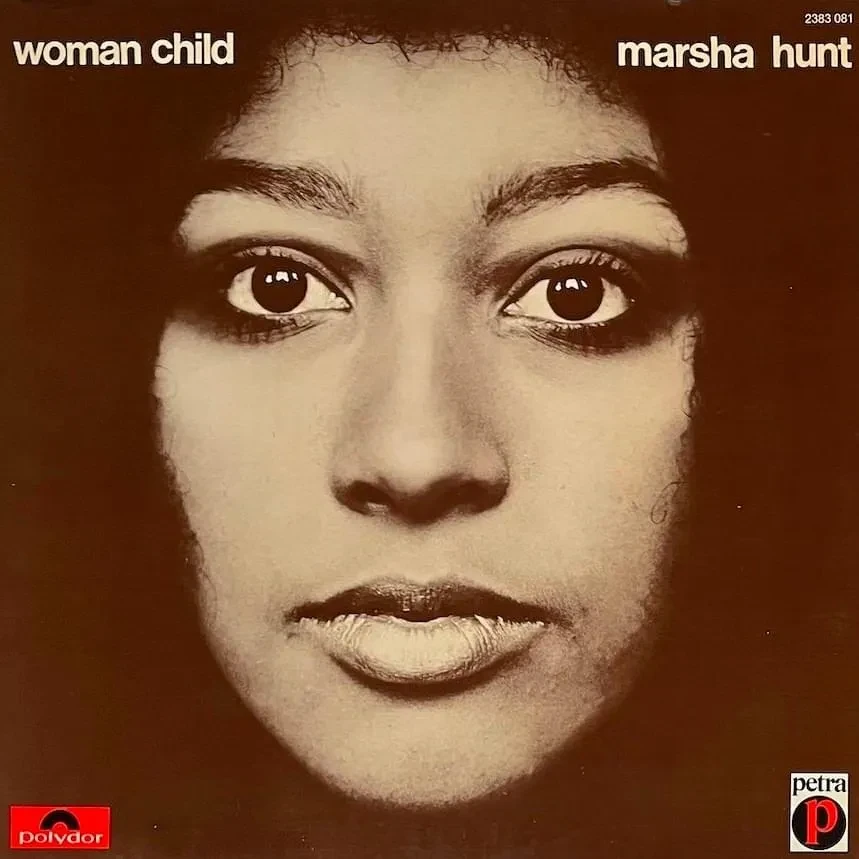
During her sessions with Visconti, Hunt crossed paths with Marc Bolan. Their subsequent passionate affair yielded cover versions of Bolan’s "Desdemona" and recordings of two Tyrannosaurus Rex compositions, seamlessly blending into the sessions for her debut solo album, Woman Child.
Simultaneously, Hunt’s personal life collided with the absolute apex of rock-and-roll mythology through an intense, highly publicized relationship with The Rolling Stones frontman Mick Jagger. The union resulted in a planned pregnancy and the birth of their daughter, Karis. While Jagger initially agreed to function as an "absent father," the situation ultimately required a hard-fought paternity suit before Jagger established a lasting, supportive association with both Hunt and Karis. It is widely noted that Jagger’s composition of the classic rock staple "Brown Sugar" was deeply informed by his awe of Hunt’s fierce, unyielding independence.
Supporting Context & Metrics: The Visconti Sessions and Commercial Realities
Released belatedly in 1971, Hunt’s debut solo full-length, Woman Child, produced by Tony Visconti, stands as a masterclass in stylistic reinterpretation. The record highlighted her extraordinary range as a vocalist, featuring arresting versions of Traffic’s "No Face, No Name, No Number," Bessie Smith’s "Moan You Moaners," and the provocative title track penned by Bobby Goldsboro and Kenny O’Dell.
Despite its critical triumphs, Woman Child underperformed commercially—a trend that would frustratingly plague much of her musical career. Producer Tony Visconti reflected on the disconnect between Hunt’s intellectualized artistic vision and the blinkered perspective of her corporate handlers:
"Marsha was very smart," Visconti recalled. "She approached her music very intellectually. She was totally confident in her innate beauty, but she was also into how we could interpret the material for her album in a very hip, almost psychedelic way. She wanted to make a credible ‘guy’ record, and not come off as a Black Marilyn Monroe, which is how the record company saw her."
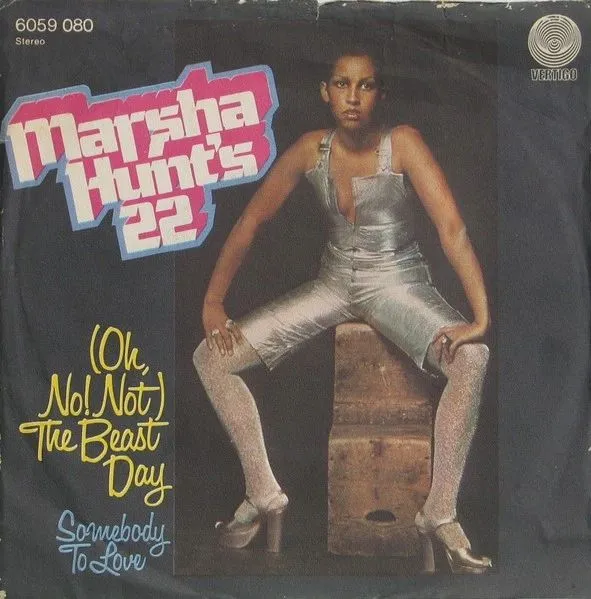
Stymied by major label miscalculations, Hunt pivoted. She signed with Phonogram and formed a four-piece gritty outfit, Marsha Hunt’s 22. In 1972, working with producer Steve Rowland, they released the infectious, Louisiana-infused swamp-rock single "(Oh, No! Not) The Beast Day," paired with a defiant, blistering cover of Grace Slick’s "Somebody To Love." A second single, "Medusa / Bop City"—co-written by Hunt and guitarist Hugh Burns—showcased an ahead-of-its-time psych-funk blueprint. Yet, once again, administrative indifference and a lack of institutional promotional muscle stifled its commercial footprint.
A compiled sophomore collection, Attention! Marsha Hunt!, was assembled hastily from 22’s demo sessions and issued as a limited European release—a ghost record that Hunt herself remained entirely unaware of for over four decades.
Official Statements and Artistic Evolution: Theater, Disco, and Literature
Sensing the shifting tides of the music industry, Hunt executed a seamless pivot back to the dramatic arts. Throughout the mid-1970s and 1980s, she established a formidable presence on both stage and screen.
Theatrical and Cinematic Footprint
- The Stage: She starred alongside PJ Proby and Dana Gillespie in Jack Good’s rock-operatic reimagining of Othello, titled Catch My Soul. She commanded the West End for six months in Melvyn Bragg’s musical Mardi Gras, and in 1976, she shattered glass ceilings by stepping into the iconic role of Sabina (originally made famous by Vivien Leigh) in Thornton Wilder’s The Skin of Our Teeth at Manchester’s newly opened Royal Exchange Theatre.
- The Silver Screen: Hunt cultivated a stellar filmography, appearing in genre classics including the Hammer horror film Dracula AD 1972 alongside screen legends Christopher Lee and Peter Cushing, Lindsay Anderson’s satirical Britannia Hospital (1982), the James Bond installment Never Say Never Again (1983), and the gritty urban crime drama Beyond Soho (1989) opposite Ray Winstone.
The Disco Interlude
Before stepping away from the musical arena entirely, Hunt journeyed to Munich in 1977 to record a high-octane, disco-oriented album simply titled Marsha 77. The project was produced by Pete Belotte, a close associate of Giorgio Moroder who had co-written definitive disco anthems like Donna Summer’s "I Feel Love" and "Hot Stuff." While the record captured the hedonistic pulse of the late-70s club scene, it ultimately signaled the closing chapter of her recording career.
The Literary Triumph
In 1982, Hunt wrote and produced Man To Woman, a musical staged at the now-defunct Zig Zag Club exploring the complex romantic dynamics of four women in a London nightclub. Its ultimate financial underperformance served as a catalyst for a profound vocational reinvention. Recognizing the systemic roadblocks of the music business, Hunt walked away from commercial singing to dedicate herself entirely to literature.
It was an inspired transformation. Her 1986 candid autobiography, Real Life, laid bare the complexities of her journey through international fame, motherhood, and racism. It established her as a vital voice in contemporary non-fiction.
MARSHA HUNT: A MULTI-DISCIPLINARY TIMELINE
┌─────────────────────────┬────────────────────────────────────────────────────────┐
│ Era / Year              │ Primary Artistic Milestone                             │
├─────────────────────────┼────────────────────────────────────────────────────────┤
│ February 1966           │ Relocates from Philadelphia to London; appears in Blow-Up│
│ 1967                    │ Serves as John Mayall's muse; features on The Blues Alone│
│ 1969                    │ Stars in London production of Hair; Vogue nude cover   │
│ 1971                    │ Releases debut solo album Woman Child (Prod. Visconti) │
│ 1972                    │ Forms Marsha Hunt's 22; releases "The Beast Day"       │
│ 1976                    │ Critically acclaimed run in The Skin of Our Teeth      │
│ 1977                    │ Releases disco-centric LP Marsha 77 in Munich          │
│ 1982                    │ Writes/produces stage musical Man To Woman             │
│ 1986                    │ Publishes breakout, critically lauded memoir Real Life │
│ 1990–1998               │ Establishes novelist career with Joy, Free, & More     │
│ 2005                    │ Publishes Undefeated, chronicling her cancer survival  │
└─────────────────────────┴────────────────────────────────────────────────────────┘
Her literary output expanded impressively over the decades:
- Repossessing Ernestine (1996): A deeply moving, investigative memoir tracking her multi-year genealogical search to uncover the fate of her paternal grandmother, who spent 50 years institutionalized in a psychiatric asylum.
- Undefeated (2005): A profoundly brave, life-affirming chronicle detailing her successful, hard-fought battle to overcome breast cancer.
- Novels: Hunt also published critically respected works of fiction, including Joy (1990), Free (1992), and Like Venus Fading (1998)—the latter heavily inspired by the historic trials and triumphs of legendary Black entertainers Adelaide Hall and Josephine Baker.
Future Outlook and Enduring Cultural Legacy
Today, Marsha Hunt stands as an intellectual and artistic titan whose contributions to global counterculture resonate far beyond the sales figures of her mid-century singles. By refusing to conform to the sanitised, compartmentalized boxes constructed by 20th-century entertainment executives, she carved out an autonomous artistic identity defined by absolute integrity.
Reflecting upon her own eclectic career, Hunt frequently acknowledged that her refusal to stay in one lane perplexed contemporary critics and record label accountants alike. Yet, history has vindicated her approach. In an era where modern artists routinely traverse music, fashion, acting, and social activism with fluid impunity, Marsha Hunt was doing precisely that half a century ago.
As archival interest surges—evidenced by the ongoing rediscovery of her Track Records and Phonogram material, alongside reissues of her seminal theatrical work—Hunt’s legacy is undergoing a well-deserved institutional and critical renaissance. She was never simply a "wild child" or a rock-and-roll footnote; she was an independent architect of her own destiny, a brilliant wordsmith, a fearless political body-politic pioneer, and an immortal icon of modern cool.