Executive Overview
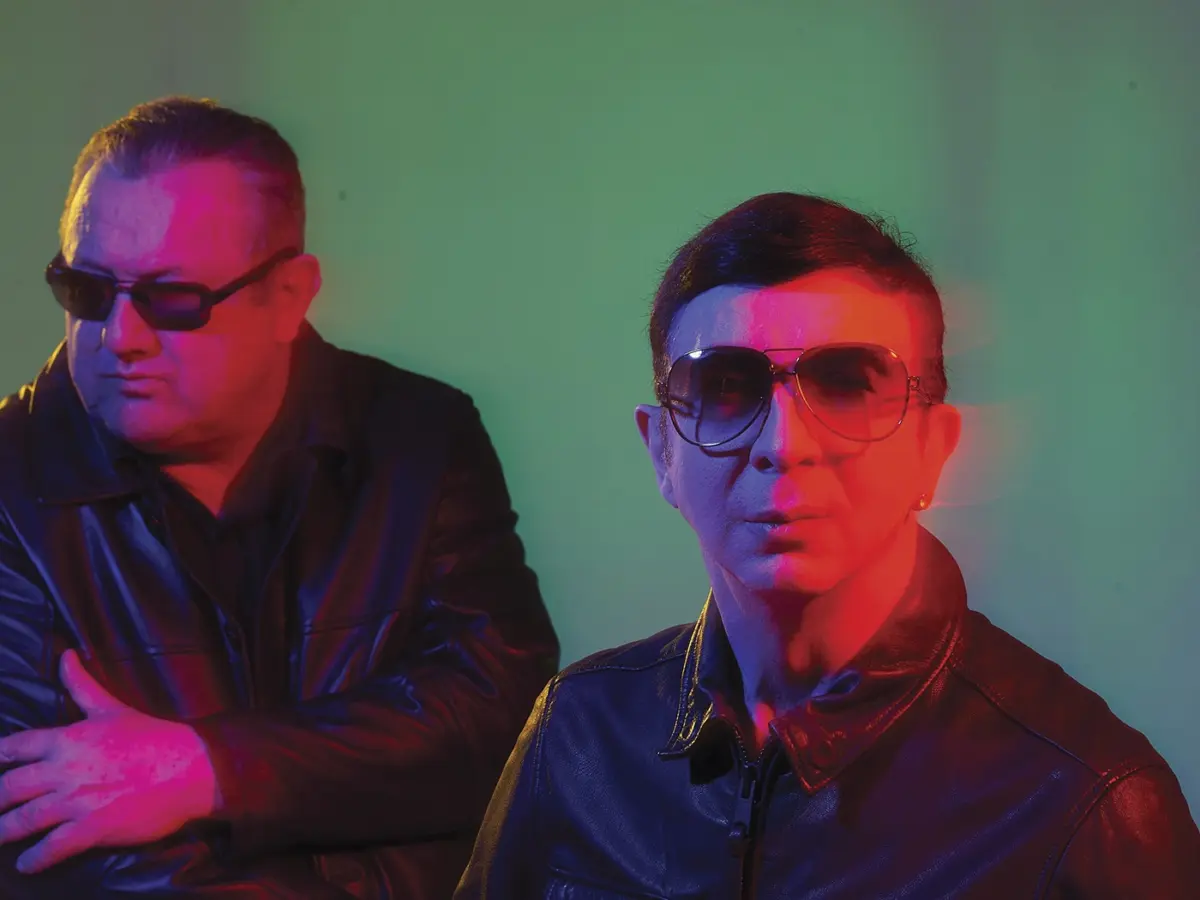
In the grand tapestry of electronic pop history, few acts forged a sonic signature as distinct, transgressive, and influential as Soft Cell. Comprising the enigmatic vocalist Marc Almond and the visionary multi-instrumentalist Dave Ball, the British duo injected a heavy dose of Soho grit, theatrical sleaze, and avant-garde art-pop into the early 1980s mainstream. While their 1981 debut album, Non-Stop Erotic Cabaret, was fundamentally conceived under the garish, flickering neon lights of late-night London, it was their fateful pilgrimage to New York City that truly crystallized their aesthetic. The Big Apple offered an intoxicating injection of trashy street drama, trading British bedsit squalor for the hyper-charged, subterranean pulse of Manhattan club culture.
Decades later, that formative transatlantic romance has culminated in Danceteria, a magnificent and bittersweet final dispatch from the synth-pop pioneers. Serving as both a vibrant celebration of an era defined by unbridled hedonism and an accidental, devastating requiem, the album arrives under the heaviest of shadows. Dave Ball tragically passed away last October at the age of 66, leaving behind a legacy that fundamentally altered the DNA of modern electronic music. Crucially, Ball finished mixing the record just 48 days—or rather, days—before his untimely death, ensuring that Danceteria stands as Soft Cell’s definitive final statement.
Built on a foundation of vintage analogue synthesizers, driving sequencers, and old-school electronica, Danceteria is far more than an exercise in blanket nostalgia. Triggered by memories of meeting Andy Warhol in Union Square in 1982—recalled during the sessions for their 2022 comeback album, *Happiness Not Included—Marc Almond meticulously crafted a cinematic song cycle dedicated to the fearless iconoclasts, artists, and nocturnal creatures who populated Manhattan’s legendary venues. From the ecstatic highs of the dancefloor to the lonely, dimly lit corners of the Meatpacking District, this extensive deep-dive explores how Soft Cell brought their transgressive journey full circle, crafting an authoritative masterclass in late-career artistic resonance.
Detailed Chronology: From Soho Sleaze to Manhattan Madness
The Transatlantic Awakening (1981–1984)
To understand the gravitational pull of New York City on Soft Cell, one must first look at the psychological and physical landscape of the UK at the dawn of the 1980s. Emerging from Leeds Polytechnic, Almond and Ball were artistic outsiders steeped in the grim realities of industrial decline, yet intoxicated by the possibilities of continental cabaret, synthesizer experimentation, and underground sexual liberation. Non-Stop Erotic Cabaret established their commercial viability via sleazy synth-pop masterworks like "Tainted Love" and "Say Hello, Wave Goodbye." Yet, the seeds of their sound had always drawn deep nourishment from American imports: 1960s soul, Suicide’s proto-punk industrial shudder, the Velvet Underground’s avant-garde drone, 1970s disco, and the raw, confrontational energy of CBGB.
When the duo crossed the Atlantic to record subsequent material, the city acted as an accelerant to their creative and personal lives. Post-session recording rituals routinely involved immersing themselves in the city’s nocturnal underbelly, most notably at Danceteria—the legendary multi-story nightspot on West 21st Street frequented by punters of all cravings and persuasions. At a time when New York nightlife operated under a philosophy where "anything went," MDMA (ecstasy) was fast becoming the in-crowd’s drug of choice.
This chemical and cultural baptism directly shaped their discography. They swiftly returned to New York to assemble the remix effort Non Stop Ecstatic Dancing (1982), largely under the influence of the newly emergent club drug. The transatlantic journey was repeated for The Art Of Falling Apart (1983) and much of 1984’s This Last Night In Sodom, a harrowing, claustrophobic record issued just as the duo’s initial, volatile partnership fractured under the weight of exhaustion, substance use, and creative friction.
The Long Hiatus and the 2022 Revival
For nearly four decades, the definitive chapter of Soft Cell appeared permanently closed. Almond forged a celebrated, eclectic solo career traversing chanson, torch songs, and pop covers, while Ball continued his production and electronic explorations (including the Grid). However, the gravitational pull of their collaborative history proved irresistible.
In 2022, Soft Cell returned with *Happiness Not Included, their first studio album in twenty years. A deliberate re-evaluation of their past, the record successfully revived the minimalist, electronic aesthetic of Non-Stop Erotic Cabaret. Looking back on their younger selves and contemplating how they had once imagined the future playing out, Almond and Ball adopted a deeply reflective posture. This retrospection reached an emotional zenith on tracks like "Polaroid," where the duo reminisced about a surreal 1982 afternoon encountering Andy Warhol on Union Square. That single memory acted as a psychological key, unlocking a flood of vivid recollections that would ultimately form the thematic architecture of Danceteria.
The Final Chapter and Dave Ball’s Swan Song
The creation of Danceteria was characterized by a race against time, though its makers were tragically unaware of the finishing line. Working remotely and in the studio, Almond and Ball channeled the spirits of their early-1980s stopovers, paying homage to "the brilliant flaming creatures" of the titular club.
The project assumed an unimaginably poignant gravity when Dave Ball passed away last October at the age of 66. Demonstrating his lifelong dedication to his craft, the multi-instrumentalist finalized the complex mix of the album mere days before his death. Consequently, Danceteria transcends traditional album categorization; it is an accidental requiem disguised as a high-octane dance record. It captures Ball’s peerless ear for analogue sound design—utilizing vintage synths that hum, jink, and pulse with distinctively human warmth—while providing a glorious, unapologetic send-off for one of electronic music’s most unsung architects.
Supporting Context & Metrics: Deconstructing Danceteria
To fully appreciate the artistic triumph of Danceteria, one must examine the specific cultural touchstones, lyrical narratives, and sonic architecture that define the tracklist. The album functions as a multi-sensory time capsule, utilizing musical metrics of mid-tempo disco-funk, driving basslines, and sweeping orchestral synth-strings to map out a lost New York.
The Lyrical Geography of Manhattan
The title track, "Danceteria," serves as the album’s exuberant manifesto. Set to a relentless, clubby groove, Almond unpacks a hedonistic hymn overflowing with historical and cultural specificity. The lyrics read like a roll-call of downtown royalty:
- Andy Warhol: The pop-art titan whose Factory ethos permeated the era’s avant-garde cross-pollination.
- Anita Sarko: The iconic Danceteria and Mudd Club DJ whose genre-defying musical curation defined downtown nightlife.
- John Sex: The charismatic, high-top-sporting performance artist and downtown fixture known for his pet pythons and operatic antics.
- Jim Fouratt: The Danceteria co-founder, actor, and tireless gay rights activist whose radical politics underpinned the club’s egalitarian ethos.
Against a backdrop of confetti, looming skyscrapers, and flashing neon colors, Almond captures a specific cinematic vignette: "Madonna was singing to a boom box beat," nodding to the future pop superstar’s early downtown hustles.
Musical Diversity: From Euphoria to Dissolution
While tracks like "In Heaven (When I Dance With You)" lean into the redemptive, communal properties of music—offering a burst of unadulterated joy that borders on the delirious—Soft Cell’s trademark dark romanticism quickly reasserts itself.
On the post-disco thumper "Wave To America," driven by an unstoppable, panoramic chorus ("From the Rainbow Room / To the Tower of Light / From Apollo moon / To the satellites…"), the duo paints a jubilant depiction of a nation as a multi-sensory palace. Fireworks pop in the arrangement, accompanied by a fleeting, theatrical nod to West Side Story, showcasing Almond’s lifelong love for dramatic musical theater.
Yet, true to the Soft Cell ethos, dissolution and melancholia are never far away. Over a rubbery, ominous synth line, "Times Square" details an illicit afternoon encounter at a rundown B-movie grindhouse:
"I swallowed a pill and you kissed me / You said we have nothing to hide"
Almond sings this line just before he and his companion bolt out into a sudden rainstorm, temporarily transmuting urban squalor into Hollywood romance.
This mood of nocturnal yearning deepens on "The Rainbow Room," a gorgeous moony ballad set in January 1982. Dave Ball deliberately eases the tempo while veteran saxophonist Gary Barnacle—a long-standing collaborator—wails a soft, smoky lullaby sax. Almond loses himself in the bittersweet realization: "We could see tomorrow / It was falling at our feet."
The Shadows and the Margins
Crucially, Danceteria does not merely romanticize the wealthy or the famous; it pays homage to the vulnerable margins of the city. Echoing the stylistic sophistication of the Pet Shop Boys, "The Space Inside" surveys the leather bars, illicit junkie hangouts, and transgender sex workers of the Meatpacking District. Almond frames this milieu as a fragile "tapestry of souls" living transient, beautiful lives in the architectural shadows.
Similarly, the dimly lit parade of strangers on "Losing Yourself" finds individuals seeking fleeting salvation in one another’s embrace. Even Dave Ball’s intricate, Kraftwerk-inspired synthesizer lines cannot entirely stave off the crushing existential loneliness at the song’s core.
The album culminates in a moment of pure, cyclical poetry: a cover of "Out Come The Freaks," the classic Was (Not Was) disco-funk anthem once spun by DJ Mark Kamins at Danceteria. Featuring guest vocals from Almond’s close friend and fellow club regular Nona Hendryx, the track represents Soft Cell coming full circle. They are partying precisely where their American adventure effectively began, proudly bearing the battle scars of a lifetime dedicated to subversion and style.
Official Statements & Critical Perspectives
In the wake of Dave Ball’s passing and the subsequent rollout of Danceteria, figures across the music industry, alongside statements from Marc Almond himself, have contextualized the immense weight of this final release.
Reflecting on the grueling yet life-affirming sessions that produced the record, Marc Almond noted in promotional interviews for the album’s campaign:
"New York didn’t just inspire our music; it rewired our understanding of what art, sexuality, and freedom could look like. Dave and I went there as wide-eyed kids from the north of England, and the city spat us out as something entirely different. Making Danceteria was about honoring those brilliant, flaming creatures who didn’t just survive in the margins—they owned them. The fact that Dave poured every ounce of his remaining genius into these mixes makes this record sacred to me."
Musicologists and electronic music historians have been swift to praise the album’s uncompromising sonic fidelity. Unlike many legacy acts who lean heavily on modern, over-compressed digital production, Ball’s commitment to hardware synthesis gives Danceteria an organic, tactile authenticity. Industry publications have heralded the record as a masterclass in aging gracefully within electronic pop—proving that the icy pulse of vintage drum machines can still convey profound emotional depth, grief, and celebratory remembrance.
Future Outlook: Preserving the Legacy of Soft Cell
As Danceteria takes its place on record store shelves and streaming platforms worldwide, the conversation naturally turns to how the legacy of Soft Cell and Dave Ball will be preserved for future generations of musicians and fans.
While Marc Almond has indicated that Danceteria represents the absolute final chapter for Soft Cell under that moniker—emphasizing that the band cannot continue without Ball’s unique musical counterpart—the cultural shockwaves of their catalog continue to resonate. From the dark synth-pop revival movements of the 2010s and 2020s to the ongoing mainstream appreciation for queer art-pop pioneers, Soft Cell’s blueprint remains ubiquitous.
Plans are currently underway within Almond’s camp to curate archival retrospectives, celebrate the restored visual archives of their early 1980s exploits, and potentially establish academic or artistic grants in Dave Ball’s honor to support young, avant-garde electronic musicians operating on the fringes of the mainstream.
Ultimately, Danceteria ensures that Soft Cell’s final act is not one of quiet fading away, but a triumphant, glittering explosion of sound, memory, and defiance. In the face of mortality, Almond and Ball managed to bottle lightning one last time, proving that while clubs may close and companions may pass, the immortal music forged under the neon lights of Manhattan will echo across the dancefloors of eternity forever.