Executive Overview
In an era defined by festival culture’s relentless pursuit of scale—where headliners perform atop colossal, LED-draped megastructures and sound is measured by the sheer brutality of its decibel output—a quiet revolution is taking root in the margins. It is a movement that prioritizes fidelity over volume, tangibility over sheer impact, and acoustic architectural design over brute-force amplification.
Nowhere was this paradigm shift more evident than at Head Trip 2026, produced by festival powerhouse Goldenvoice. While the festival’s primary stages drew massive, frenzied throngs for a triple-threat single-day lineup of modern electronic royalty—Skrillex, Calvin Harris, and Swedish House Mafia—a much rarer and more specialized attraction hummed quietly away from the mainstream crush: the North American debut of the Sunflower Sound System.
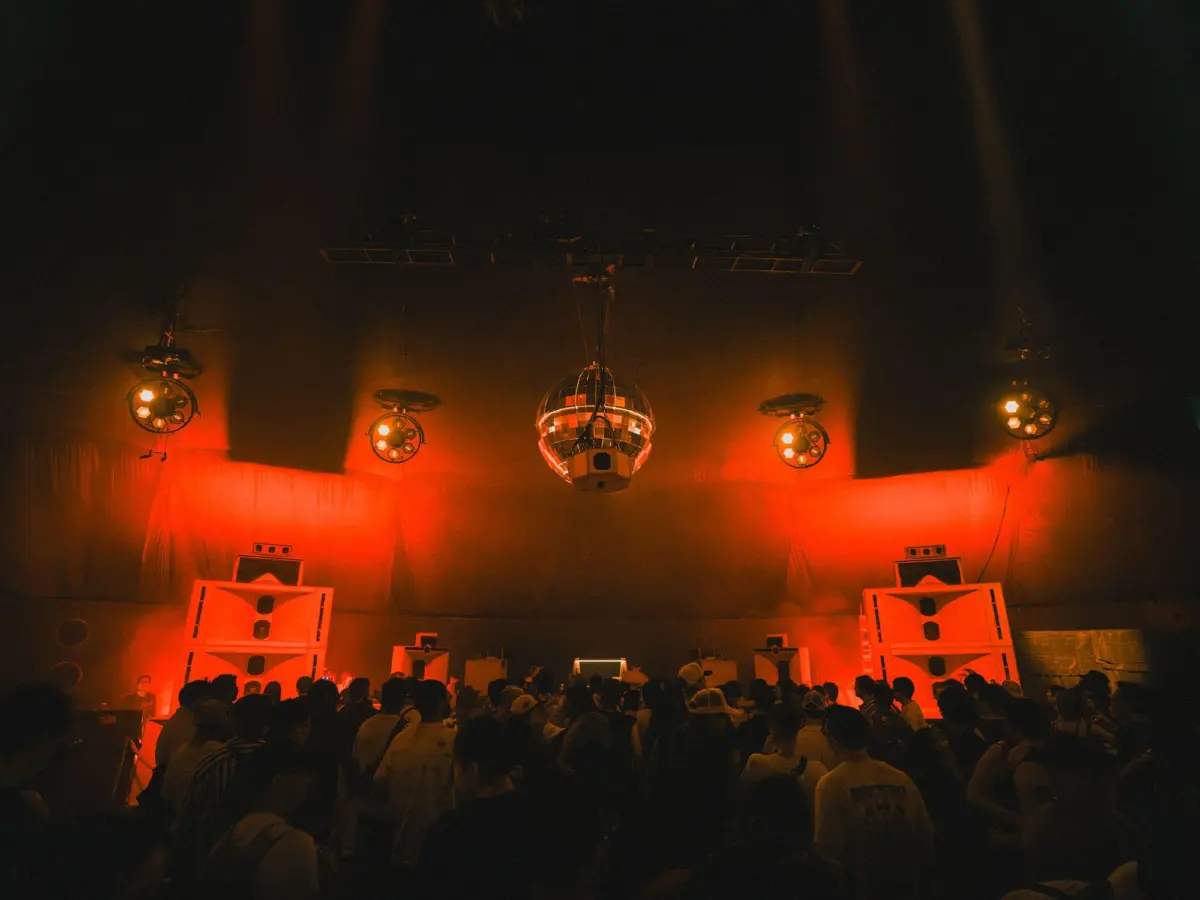
Conceived, engineered, and fine-tuned by Sam Shepherd, better known to the electronic music world as Floating Points, Sunflower represents the culmination of a decade-long global pilgrimage. Shepherd scoured continents for rare components to construct his ideal loudspeaker system—an imposing installation featuring eight towering, 14-foot-tall custom speaker stacks. Marketed not merely as a side-stage attraction, but as a primary headliner in its own right, Sunflower aimed to shift the listener’s focus away from star worship and back toward the fundamental mechanics of acoustic perception.
Yet, despite its monumental engineering and the pedigree of its curator, Sunflower offered a paradox. While main-stage crowds surged into the tens of thousands, Shepherd’s pristine hi-fi enclosure remained remarkably intimate. For the cognoscenti, audiophiles, and dedicated electronic music purists who did venture inside, it was a transcendent masterclass in sound design—a testament to what happens when electronic music is treated not as a blunt instrument of mass euphoria, but as an exercise in high-art acoustic engineering.
Detailed Chronology: A Two-Day Sonic Exploration
Unlike traditional festival environments where set times are aggressively broadcast via mobile applications and rigid timetables, Sunflower’s operations at Head Trip deliberately discarded convention. No official set times were published for the installation, a decision that initially deterred casually curious festival-goers but ultimately rewarded those willing to surrender to the element of surprise.
Curated entirely by Shepherd, the two-day lineup functioned as an exploratory musical odyssey, pushing the boundaries of what a temporary festival installation could achieve.
Day One: The Exploratory Roots and Analog Vanguard
The first day of the Sunflower experience leaned heavily into the historical, acoustic roots of modern dance music, abandoning contemporary tempo expectations in favor of deep-dive curation, dub-plate manipulation, and vinyl-only excavation.

The programming kicked off with legendary dub producer Mad Professor, who brought his bespoke live mixing setup and analog tape machines into the fold. Rather than relying on pre-recorded playback, Mad Professor deconstructed and rebuilt immutable pop and reggae monuments live in front of the audience, reshaping the basslines and vocal arrangements of classics like Michael Jackson’s Billie Jean and Bob Marley’s I Shot the Sheriff. For an audience that had passively consumed these recordings thousands of times throughout their lives, hearing them translated through eight 14-foot columns with live-mixed low-end frequencies created a singular, unreplicable ephemeral art piece.
Following Mad Professor, iconic selector Theo Parrish took command of the rotary mixer, spending hours sifting through crates of rare vinyl. Parrish’s set was a masterclass in genre-fluidity, effortlessly bridging the gaps between subterranean Detroit funk, soulful house, and avant-garde free-form jazz noise. The physical properties of the Sunflower stacks brought out the warmth and dynamic range of Parrish’s analog selections, proving that the system was capable of handling the most delicate acoustic nuances just as effortlessly as a thunderous sub-bass earthquake.
Day Two: The Electronic Vanguard and Tempo Defiance
If Day One was an exercise in acoustic history, Day two leaned into the contemporary electronic underground, functioning as an avant-garde rave space curated by some of the most respected selectors in global club culture.
The roster featured a powerhouse collection of artists including Zach Cowie, Ben UFO, Avalon Emerson, Eris Drew, and Octo Octa. The day culminated in a series of highly anticipated back-to-back performances, pairing Four Tet with Floating Points, and uniting Ben UFO with Avalon Emerson once more. Bathed in atmospheric lighting and subtle laser arrays that complemented rather than overwhelmed the space, these DJs operated at the absolute peak of their technical abilities.
When stepping into the room mid-set, the sheer sonic weight was staggering. Ben UFO closed his rotation with a punishing, heavy old-school dubstep track that rattled the floorboards without a hint of distortion or ear-fatiguing harshness. Shortly after, Eris Drew and Octo Octa unleashed a breakbeat rhythm anchored by what could only be described as the most pristine, chest-compressing snare drum transient imaginable.
A standout moment of the weekend arrived when Avalon Emerson took over the decks following Eris Drew and Octo Octa. Armed with a multi-page PDF manual detailing how to extract maximum fidelity from Shepherd’s custom Isonoe rotary mixer, Emerson chose to deliberately subvert contemporary festival trends. Rather than chasing the perpetual acceleration of modern dance music tempos, she dragged the room’s energy down from a frantic 130 BPM to a hypnotic 90 BPM.
Reflecting on the performance, Emerson noted:

"I’m kind of a long-standing hater of the BPM inflation of everything. I wanted to take the opportunity to play slower… I play a very different set. It’s stuff that I want to hear on it. One of the cool things about a sound system as a headliner is it can be one rare space for different kinds of music."
Weaving in selections from Norwegian electronic auteur Todd Terje alongside fresh alternative compositions from artist Oklou, Emerson’s set showcased how a superior acoustic environment liberates artists to take creative risks that would be swallowed whole by a traditional, wide-dispersion festival rig.
Supporting Context & Metrics: Engineering the Ideal Acoustic Space
The success of Sunflower Sound System cannot be attributed solely to its speakers; it was fundamentally dependent on the symbiotic relationship between acoustic engineering, spatial design, and historical promoter expertise.
Head Trip was produced by Goldenvoice, a promoter with an extensive, multi-decade history in shaping temporary electronic music environments. Goldenvoice’s institutional knowledge in this arena is formidable. Since 2013, the promoter has curated the Yuma tent—a permanent, climate-controlled, nightclub-style structure tucked away in the polo fields of Coachella that prioritizes deep house and techno within an immersive, darkroom environment. Furthermore, Goldenvoice has previously hosted two separate runs of Despacio, the legendary, custom McIntosh-powered sound system designed by LCD Soundsystem frontman James Murphy alongside David and Stephen Dewaele (Soulwax / 2manydjs).
This deep experience in temporary acoustic architecture allowed Goldenvoice to construct a pavilion for Sunflower that rivaled—and, according to some seasoned international festival-goers, surpassed—celebrated European counterparts like Amsterdam’s Dekmantel festival.
At the heart of the technical triumph is Sam Shepherd’s decade-long design philosophy. The Sunflower system utilizes eight custom-built, 14-foot-tall loudspeaker stacks meticulously engineered to deliver flat-frequency response, immense headroom, and zero compression distortion at high volumes. Crucially, the system is paired with bespoke hardware integration, most notably Shepherd’s custom-designed Isonoe rotary mixer. Unlike standard digital or line-fader club mixers that can introduce signal degradation and harsh digital artifacts, the Isonoe unit preserves the absolute integrity of the analog signal path.
For touring DJs accustomed to navigating subpar venue riders where rotary mixers are treated as hidden curiosities kept in back-room closets, playing on Sunflower was transformative. As Emerson described it:

"This is like a new toy. It’s like I get to drive a new car."
Moreover, the physical layout of the Sunflower enclosure at Head Trip was optimized for community retention. Featuring an integrated bar and nearby restroom facilities within the perimeter of the sound architecture, attendees could remain immersed in the acoustic bubble without enduring the friction of leaving the venue space, waiting in endless queues, and breaking the hypnotic spell of the music.
Official Statements and Community Perspectives
The psychological impact of experiencing music through a dedicated hi-fi installation extends far beyond technical metrics; it fosters a distinct counter-cultural community within the broader commercial festival landscape.
While the majority of Head Trip’s audience gravitated toward the main stage to witness the stadium-scale spectacle of Skrillex or Calvin Harris, a dedicated sub-sect of attendees spent their entire weekend anchored to Sunflower.
Jacques Vincent, an avid music enthusiast who traveled to Head Trip specifically to experience Sunflower, emphasized the deep-seated trust fans place in Shepherd’s curatorial vision:
"I love Floating Points. Seeing the Sunflower system is a huge deal for me. I want to support whatever he does. Also, he’s a huge music nerd, so I know whatever he does is going to be exceptional."
This sentiment was echoed by traveling fans Adam Doubleyou and Kellie Kocher—both veterans of the Despacio circuit who met at Goldenvoice’s Portola festival in San Francisco just weeks prior. Wearing merchandise adorned with acoustic-system iconography, the pair praised the festival’s willingness to invest in alternative paradigms of celebration.

"It’s interesting to compare notes to what we consider the gold standard of partying, Despacio, with this iteration of a similar concept," Doubleyou noted. "I’m very glad this is happening, and I hope Goldenvoice brings it back."
Kocher added a perspective that cuts to the core of why these spaces are so vital in modern festival culture:
"I like hearing things that are unexpected. That’s why I like Despacio, and I like this. Surprise me. Give me something new."
Despite the absence of suffocating crowds—a point of statistical curiosity given how difficult it was to enter similar hi-fi spaces at past events—the lack of congestion proved to be Sunflower’s greatest invisible asset. Without the pushing, shoving, and aggressive overcrowding typical of main-stage bottlenecking, the interior of the Sunflower pavilion functioned as a utopian social container. It was a space where listeners could engage in uninhibited movement, appreciate microscopic production details, and share a collective, intentional musical communion.
Future Outlook: The Rise of Hi-Fi Infrastructure in Live Music
The successful North American deployment of the Sunflower Sound System at Head Trip 2026 marks a watershed moment for the future of festival production. As the electronic music market continues to mature, a distinct bifurcation is emerging between stadium-scale EDM spectacles and bespoke, audiophile-centric underground experiences.
For decades, the standard trajectory for successful festival stages has been an upward spiral of scale: bigger LED screens, higher wattage, wider line arrays, and broader sonic dispersal patterns designed to cover football fields of dancing humanity. However, as Sunflower, Despacio, and similar acoustic installations have proven, there is a rapidly expanding market of consumers who are actively experiencing "spectacle fatigue."
Audiences are increasingly exhausted by the sonic compression and ear-shattering distortion inherent to massive, open-air line arrays operating at maximum capacity. They are hungry for spaces that prioritize dynamic range, acoustic warmth, historical reverence, and physical comfort.

The implications for festival promoters moving forward are profound. Curating dedicated hi-fi architectural spaces within massive commercial events requires significant capital expenditure, specialized logistical coordination, and a willingness to cede primary real estate to non-commercial, art-first installations. Yet, as evidenced by the fervent loyalty of fans who travel across borders specifically to experience these systems, the return on investment is measured not just in ticket sales, but in cultural authority and brand equity.
Sam Shepherd’s Sunflower Sound System has proven that sound can indeed be the headliner. As promoters take note of the profound emotional and acoustic connections forged within these 14-foot-tall wooden and electronic monuments, the future of live electronic music may finally pivot away from the race for sheer volume—and return, at long last, to the pure, unadulterated worship of sound itself.