Executive Overview
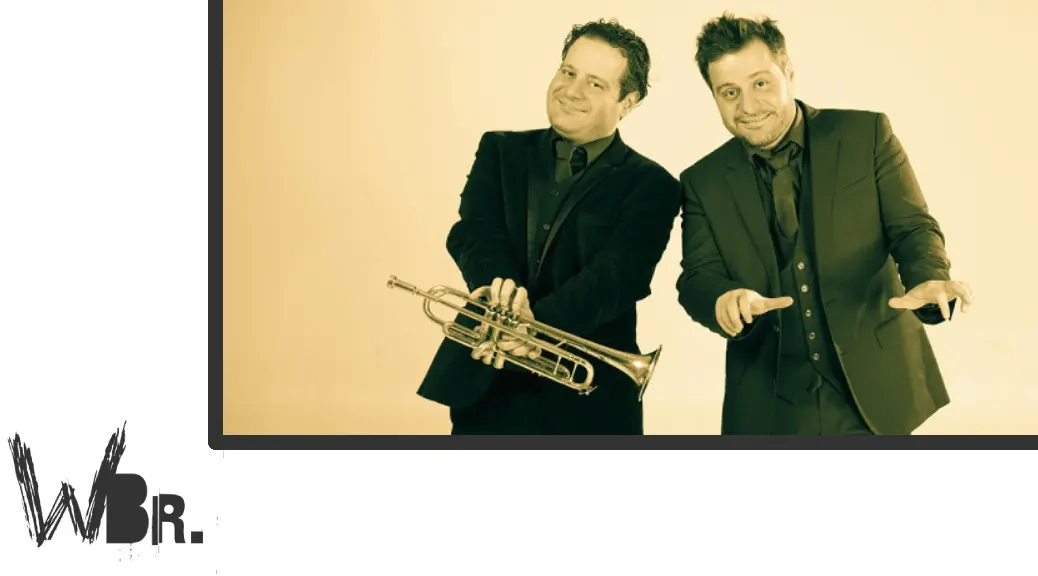
Music is rarely born in a vacuum; more often, it is the living echo of a lineage. For twin brothers Konstantin and Alexander Wladigeroff, musical heritage is not merely a biographical footnote, but a towering monolith that commands both reverence and reinvention. Born in Sofia on August 17, 1978, to the esteemed conductor and composer Alexander Vladigerov, the brothers carry forward one of the most prominent musical names in Bulgarian history. Their grandfather, the legendary Pancho Vladigerov—himself a twin alongside the violinist Lyuben—left an indelible mark on European classical and theatrical composition.
Nearly half a century after their birth, the Wladigeroff brothers have cemented their own vital place in the contemporary transatlantic jazz and world-music landscapes. Their seventh album under their own names, Inspired Songs, is a sprawling, seventy-minute theatrical revue that proudly defies genre boundaries. Featuring a massive ensemble of collaborators from Vienna and Sofia, the fourteen-track project blends big-band swing, Brazilian MPB, contemporary jazz, cabaret, hip-hop, and avant-garde chamber music.
This comprehensive review and investigative feature explores the roots of the Wladigeroff dynasty, deconstructs the sonic architecture of Inspired Songs, examines the mechanics and metrics of its production, and looks ahead to the brothers’ multidisciplinary projects, including their ongoing live-scoring of silent cinema masterpieces.
Detailed Chronology: A Century of Musical Heritage
To fully appreciate the scope of Inspired Songs, one must retrace a century of artistic output that connects early 20th-century Weimar Berlin to the vibrant contemporary scenes of Vienna and Sofia.
The Patriarchs: Pancho and Lyuben Vladigerov (1912–1932)
The story of the Vladigerov musical bloodline began in earnest in 1912, when twin brothers Pancho and Lyuben—composer-pianist and violinist, respectively—left Bulgaria for Berlin on prestigious state scholarships. Their arrival in the German capital coincided with a roaring era of cultural and theatrical experimentation.
In January 1923, the duo achieved a historic milestone by premiering the Bulgarian Rhapsody ‘Vardar’ in Berlin. To this day, Vardar remains Pancho Vladigerov’s most frequently performed and celebrated work, serving as a foundational pillar of Bulgarian national art music. Concurrently, Pancho established himself as a preeminent theater composer, penning incidental music for Max Reinhardt’s legendary productions at the Deutsches Theater. This fruitful creative alliance kept Pancho anchored in Berlin until 1932, when the rising tide of political extremism forced a shifting of the European cultural landscape.
The Next Generation: Alexander Vladigerov (1978)
The lineage continued through Pancho’s son, conductor and composer Alexander Vladigerov. On August 17, 1978, Alexander welcomed twin boys—Konstantin and Alexander—into the world in Sofia. In a poignant twist of fate, just three weeks after the twins’ birth, the patriarch Pancho Vladigerov passed away in the same city, effectively closing one monumental chapter of the family history while opening another.
The Wladigeroff Twins: Training and Transnational Migration
Following in the footsteps of their forebears, Konstantin and Alexander embraced music at an early age, deliberately maintaining half of the original instrumentation of their great-uncles. Konstantin began formal piano studies at age five, while Alexander picked up the trumpet at nine—physically occupying the sonic and spatial role once held by Lyuben’s violin.
After completing their formative musical education in Sofia, the brothers relocated to Vienna, which has since served as their primary creative base. Alexander further burnished his credentials with studies at the prestigious Royal Academy of Music in London. In a nod to their adopted Central European home and international touring identity, they spell their family name in its German form, Wladigeroff, distinguishing themselves from the traditional English-language cataloging of their grandfather (Vladigerov).
Supporting Context & Metrics: Deconstructing Inspired Songs
Inspired Songs represents a massive step forward for the brothers, serving as their seventh self-released album. It arrives on the heels of their critically acclaimed 2022 release, Magie (Aparté), which brilliantly adapted Rainer Maria Rilke’s poetry for singers, choir, and chamber ensemble. While Magie possessed a hushed, contemplative interiority, Inspired Songs throws the theater doors wide open to the elements.

Instrumentation and the Ensemble Cast
Spanning fourteen tracks and nearly seventy minutes of music, the album operates as a massive collaborative ecosystem. The core duo is joined by a shifting lineup of virtuoso instrumentalists and vocalists hailing from their dual homebases of Vienna and Sofia.
- Brass & Reeds: Velislav Stoyanov and Vladislav Michev (trombones); Arnau Garrofé Farràs and Vladimir Karparov (tenor saxophones); Kiril Chobanoff (baritone saxophone); Gueorgui Chachikov (bassoon).
- Harmonic & Textural Color: Flip Philipp (vibraphone); Bertl Mayer (harmonica); Boki Radenkovic (guitar).
- Rhythm Section: Navid Djawadi and Vasil Hajigrudev (double bass/electric bass); a powerhouse rotation of five drummers, prominently featuring Stoyan Yankulov.
- Specialized Ensembles & Guests: The Sofia-based a cappella quintet Spectrum Vocal Band, the Vienna Morphing Quartet, turntable artist DJ Stanchika, and MC Florian Tavernier.
Track-by-Track Review: A Theatrical Revue
Played from start to finish, Inspired Songs behaves less like a traditional jazz record and more like a variety bill, where every single number introduces a fresh theatrical turn.
- "Ode To Joy": The curtain rises with an uplifting explosion of massed voices, a full band, and a classical orchestra, building toward a genuinely thrilling, cinematic crescendo.
- "The Best Things For You": A masterclass in big-band swing featuring a winking vocal delivery, punchy horn statements, and Flip Philipp’s sparkling vibraphone, which steers the listener directly into a state of pure joy.
- "Lyutenichka": Arguably the compositional peak of the record. Steeped in cabaret aesthetics yet entirely native to the band’s cross-cultural identity, it weaves intricate instrumental lines before erupting into a sharp rap toward its conclusion.
- Geographic and Stylistic Detours: The album frequently shifts cultural coordinates. "Lost In Thoughts" drifts into Brazilian MPB, sung fluidly in Portuguese. "The Little White Horse with the Yellow Scarf" introduces playful handclaps, complex scat singing, and a stellar saxophone solo where the vocalists function seamlessly as a horn section. "Love In July" and "Invisible Truly Things" strip away the bombast for soulful, English-language jazz vocal performances.
- Contemporary Explorations: "Like You" represents a contemporary jazz high-water mark, allowing the composition room to breathe with a stripped-down lineup. Meanwhile, "R.Hargroove’s Blues" serves as an energetic, respectful nod to the late trumpet great Roy Hargrove, pairing muted trumpet lines with manouche-style guitar before opening up into clarinet and scat.
- Genre-Bending Crossovers: "Culture Shock" rides a gutsy, driving bass pattern beneath Florian Tavernier’s rapid-fire rap, which is subsequently warped toward R&B by DJ Stanchika’s precise turntable scratching. "Charm" offers smooth soul-jazz led by a rich male vocal, contrasted by the poignant female-led "Don’t Worry About Burned Hopes."
- Comedy and Closure: "Tom Darf Nicht Jerry Werden" (Tom Must Not Become Jerry) is an unhinged, brilliantly comic turn—a madcap musical "kitchen chase" featuring a wild, operatic male voice declaiming in German. Finally, the album drops the house lights with "In Christ Alone," a modern hymn by Keith Getty and Stuart Townend whose folk-shaped melody easily passes for a traditional Irish air.
Official Statements & Production Insights
The realization of a project of this scale requires substantial institutional backing and uncompromising artistic vision. In official statements accompanying the release, the brothers emphasize the collaborative spirit of the sessions, noting that the album was conceived as a living stage play rather than a sterile studio product.
From a production standpoint, Inspired Songs benefits from lavish, high-definition sound engineering. Despite being independently released, the album received crucial financial and infrastructural support from SKE (The Cultural Fund of Austro Mechana, the Austrian mechanical-rights society). This backing allowed the Wladigeroffs to capture the expansive, polished acoustics of a major label production without sacrificing their independent artistic autonomy.
Critics have noted that while fourteen distinct musical turns make for a remarkably long and demanding evening—with perhaps one or two peripheral acts that could have been pruned from the program—the sheer unflagging ambition of the enterprise is undeniable. A consistent, wintry glow permeates the record, driven by bell-like vibraphones, rich choral arrangements, and contemplative phrasing. It is an album built to accompany the listener through dark winter nights, defying seasonal pigeonholing while maintaining an atmosphere of warmth and sophistication.
Future Outlook: Weimar Cinema and Live Scoring
The creative output of Konstantin and Alexander Wladigeroff is not confined to the recording studio or the concert hall. As Inspired Songs makes its way to international audiences, the brothers are simultaneously looking backward and forward through a multidisciplinary lens that bridges silent film and live performance.
This autumn, the brothers are taking their family story full circle, returning conceptually to Weimar Berlin. Joined by Konstantin on clarinet and Stoil Ivanov on drums and percussion, the Wladigeroff trio is set to provide a dynamic, live-scored soundtrack to F.W. Murnau’s silent cinematic masterpiece, Tartuffe, at the CinEast festival in Luxembourg.
This historical alignment is nothing short of poetic: F.W. Murnau famously began his artistic apprenticeship as an actor at Max Reinhardt’s Deutsches Theater—the exact institution where their grandfather, Pancho Vladigerov, was composing groundbreaking theater music during the very era in which Tartuffe was filmed.
As they balance large-scale orchestral-jazz hybrid albums with avant-garde cinematic collaborations, Konstantin and Alexander Wladigeroff prove that musical dynasties are not built on preservation alone, but on relentless, fearless reinvention. Inspired Songs stands as a testament to a rich past and a wildly unpredictable, deeply exciting future.