Executive Overview
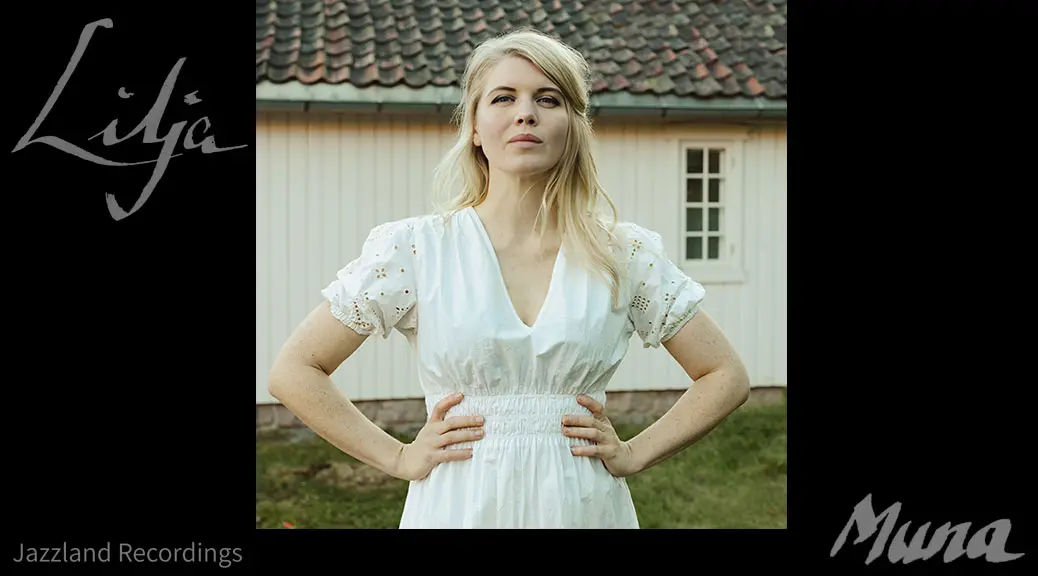
In the continuously shifting landscape where contemporary jazz meets deep-rooted Nordic folk, few artists command the exploratory vision of Norwegian guitarist, composer, and bandleader Oddrun Lilja. With the release of her third studio album, Muna, Lilja solidifies her reputation as a vital sonic anthropologist, weaving together centuries-old literary traditions, personal geography, and boundary-pushing improvisation. Released under her moniker LILJA, the album represents the culmination of a critically acclaimed trilogy that began with 2020’s urban-inspired Marble and continued with the globally collaborative Mirage.
Unlike its predecessors, which looked outward to international metropolitan centers and transnational musical traditions from Sápmi, Brazil, Morocco, and Pakistan, Muna turns courageously inward. Commissioned originally by the prestigious Vossajazz festival in 2023—where it debuted under the title I—the project has been meticulously reworked for record. It stands as a profound meditation on memory, identity, and heritage.
The album’s genesis is rooted in a fascinating cross-cultural tapestry. It draws inspiration from a 14th-century Icelandic devotional poem also titled Lilja, as well as Lilja’s own bicultural upbringing between the valley of Groruddalen in Oslo and Iceland’s capital, Reykjavík. Featuring an all-star cast of Scandinavian musicians—including returning bassist Jo Skaansar, percussionist Helge Norbakken, multi-instrumentalist Anders Røine, vocalist Beate Lech, and legendary keyboardist Bugge Wesseltoft—Muna is an ambitious artistic statement.
Yet, as critics and listeners alike have noted, the album is also a work of intriguing dualities. It balances deeply atmospheric, avant-garde folk-jazz explorations against more accessible, English-language singer-songwriter idioms. This review-driven feature explores the intricate creation of Muna, its rich historical underpinnings, the lineage of festival commissions from which it springs, and the delicate tension that defines its compelling eight-track journey.
Detailed Chronology: From Vossajazz to the Vinyl Master
The trajectory of Muna is inextricably linked to the storied history of Norway’s premier jazz gatherings and the personal artistic evolution of Oddrun Lilja. Understanding the album requires tracing a timeline that moves from a high-stakes festival premiere to the meticulous craft of studio translation.
The 2023 Vossajazz Commission
Every year, Vossajazz—one of Norway’s most revered music festivals—issues a prestigious composition commission to a leading artist. In 2023, that honor fell to Oddrun Lilja. Tasked with writing an extended suite of music to be premiered live on stage, Lilja conceived a piece titled simply I—simultaneously representing the Roman numeral for one, the English first-person singular pronoun, and a thematic dive into selfhood.
The live premiere at Vossajazz showcased a dynamic ensemble tailored for the festival’s expansive acoustic and theatrical environment. However, translating a sprawling live festival commission into a cohesive, enduring recorded artifact is a well-known challenge for contemporary composers. Lilja approached the task not as a mere archival recording of the live show, but as a redesign. She reconfigured her ensemble, swapping personnel to hone the emotional and sonic palette required for a definitive studio statement.
The Evolution of a Trilogy
Muna completes an expansive three-part conceptual journey that has occupied Lilja for much of the decade:
- Marble (The Urban Phase): The first installment drew its thematic inspiration and track titles from the various global cities where Lilja had lived, worked, and absorbed musical languages. It was an outward-looking exploration of urban geography and cosmopolitan interplay.
- Mirage (The Transnational Phase): The second album expanded the canvas by integrating four distinct musical traditions. Collaborating with tradition-bearers from Sápmi, Brazil, Morocco, and Pakistan, Lilja forged a transnational dialogue that celebrated global diversity through an improvisational lens.
- Muna (The Introspective Phase): With the final chapter, the lens snaps sharply back to Scandinavia. By examining her own roots—spanning Groruddalen and Reykjavík—Lilja uses the canvas of her heritage to ask fundamental questions about memory, belonging, and spiritual lineage.
Studio Reworking and Post-Production
Once the dust settled from the Vossajazz premiere, Lilja entered the studio to rebuild the compositions. The ensemble was refined, bringing in vocalist Beate Lech (known for her work with Beady Belle) to take over primary vocal duties, and enlisting veteran keyboard wizard Bugge Wesseltoft to anchor five of the album’s eight tracks. The resulting recording process yielded an immaculately produced record. Mastered with a deep respect for dynamic range, the album allows acoustic instruments to breathe while giving modern electronic textures ample room to operate.
Supporting Context & Metrics: Literary Roots and Musical Lineage
To fully appreciate the depth of Muna, one must examine the dense web of historical, linguistic, and musical references that inform its creation. Lilja’s work is not merely a collection of songs; it is a dense cultural artifact operating on multiple layers of meaning.
The 14th-Century Shadow: Eysteinn Ásgrímsson’s Lilja
At the heart of the album’s conceptual architecture sits Lilja (The Lily), a monumental 1350 poem comprising one hundred stanzas of complex devotional verse. Traditionally attributed—though with historical caveats—to the monk Eysteinn Ásgrímsson, the poem is a cornerstone of medieval Icelandic literature.
A delightful historical irony frames this connection: Eysteinn, having fallen afoul of ecclesiastical authorities, was excommunicated, sent home, and ultimately died at a monastery just outside Nidaros (modern-day Trondheim, Norway)—firmly planting Icelandic spiritual poetry on Norwegian soil. Lilja’s album mirrors this geographical and historical ping-pong, channeling the solemnity, devotion, and structural elegance of the medieval poem through a modern avant-garde jazz filter.
Linguistic Duplications: The Meaning of Muna
The album’s title itself is a linguistic bridge. In modern Icelandic, muna is a verb meaning "to remember"—a fitting anchor for an album exploring personal and collective memory. However, in Elfdalian (Älvdalska)—a distinct, archaic North Germanic language spoken by approximately 3,000 people in the forest valleys of central Sweden—muna translates to "mother."
These two unrelated Old Norse linguistic roots collapsing into the exact same four-letter word provide a poetic framework for the album. It is simultaneously an act of maternal nurturing (drawing from the motherland, the mother tongue, and ancient traditions) and an act of willful remembrance.
The Lineage of Vossajazz and Bugge Wesseltoft
One of the most profound undercurrents of Muna is the invisible thread connecting it to the crowning achievement in the history of Vossajazz commissions: Arild Andersen’s legendary 1990 suite, Sagn. Widely regarded as the single most celebrated work ever produced by the festival, Sagn famously married traditional Norwegian folk songs with the progressive idioms of a modern jazz band.
On Muna, that torch is passed forward by none other than Bugge Wesseltoft. Having played keyboards on Andersen’s Sagn over three decades ago, Wesseltoft steps into Lilja’s ensemble across five tracks, moving fluidly between acoustic piano, Hammond B3 organ, and a Korg MS-20 synthesizer. His presence creates an extraordinary 36-year bridge across generations of Norwegian improvised music, linking the pioneers of Nordic jazz-folk fusion with today’s forward-thinking innovators.
Musical Architecture: A Track-by-Track Breakdown
Muna is a vinyl record structured across two distinct sides, and its physical format plays a crucial role in how its musical narrative unfolds. The album’s tracklist highlights a fascinating tension between avant-garde traditionalism and accessible singer-songwriter pop forms.
+-------------------------------------------------------------------------+
|                          MUNA TRACKLISTING                              |
+-----------------------------------+-------------------------------------+
| SIDE A                            | SIDE B                              |
| - "Stillhetsveldet"               | - "Beloved One"                     |
| - "Slowly, Gently"                | - "Nobody Knows"                    |
| - "Groruddalen"                   | - "Muna"                            |
| - "Lilja"                         | - "Golden Hour"                     |
+-----------------------------------+-------------------------------------+
Side A: The Dominion of Silence and Ancient Tongues
Side A opens with "Stillhetsveldet"—translating roughly to "the dominion of silence," treating silence not as an absence of sound, but as a territory with distinct borders. Eschewing vanity, Lilja cedes the record’s very first vocal lines not to herself, but to Anders Røine. Backed by sparse guitar work and Bugge Wesseltoft’s subterranean piano threads, it stands as the album’s longest and most searching piece, granting folk material profound emotional gravity.

The mood shifts with "Slowly, Gently," where Beate Lech takes the mic to deliver an English-language lyric that acts out its own tempo instruction. Momentum builds sharply on "Groruddalen," a track that plunges deep into Scandinavian folk-prog territory. Here, Røine and Lilja engage in a thrilling call-and-response, locking electric guitar and traditional Norwegian instrumentation into a tight, hypnotic groove.
Side A culminates with its title-track namesake, "Lilja." Infused with an understated Eastern mysticism and an arresting wordless chant, this track represents the moment where the album feels most utterly assured of its unique artistic mission.
Side B: The Pop-Folk Pivot and the Center of Gravity
Flipping the record over introduces a stylistic shift that has sparked considerable debate among critics. Side B opens with "Beloved One," a composition anchored by acoustic guitar and vocals. While carrying the embers of folk music, its structural DNA is unmistakably that of a contemporary pop-singer-songwriter track, pushing jazz and improvisation far into the background.
"Nobody Knows" occupies similar sonic territory, enhanced by the warm swell of Wesseltoft’s Hammond B3. However, just as the album threatens to drift into conventional adult-contemporary formats, the title track "Muna" steers the ship back into bracing, tempestuous waters.
Driven by the unmistakable, nasal bite of the jew’s harp and a distinctly Scandinavian rhythmic propulsion, "Muna" reaches far beyond the preceding two songs. It is raw, genuine, and thrilling—representing, to many purists, the structural bedrock upon which the entire album ought to have been built. While the closing track, "Golden Hour," returns to the singer-songwriter mode with considerable grace, it is ultimately the tracks sung in old languages and driven by traditional modal lines that leave the most indelible mark.
Official Statements and Critical Perspectives
The release of Muna has prompted deep reflections from critics, cultural commentators, and musicians alike regarding the direction of modern Nordic jazz.
Reflecting on the album’s genesis, Oddrun Lilja has emphasized the personal necessity of turning inward after years of looking outward:
"When you spend years exploring global music traditions—from the mountains of Pakistan to the rhythms of Brazil—you inevitably start asking fundamental questions about your own backyard. Muna was an attempt to look into the mirror, to examine the literary and geographical soil that nourished me before I ever picked up a passport."
Jazz critics have universally praised the pristine production values and the caliber of musicianship assembled for the project. The synergy between veteran players like Bugge Wesseltoft and younger innovators has been highlighted as a masterclass in intergenerational collaboration.
However, critical discourse surrounding Muna frequently homes in on its dual nature. Reviewers have pointed out the fascinating friction between the uncompromising, folk-inflected avant-garde material on Side A and the more radio-friendly, English-language singer-songwriter tracks on Side B.
As noted in contemporary reviews, this split personality is both the album’s primary quirk and its most engaging talking point:
"There is a superb record inside Muna—the one where the langeleik, the jew’s harp, and the modal guitar lines set the terms, and the singing follows the old languages. There is also a well-made album of English-language songs that any number of people could have delivered. Putting both on one disc means the vinyl declares its two natures plainly."
Despite this stylistic divergence, no critic has questioned the technical brilliance of the execution. Lilja’s production remains remarkably clean, allowing every transient of the acoustic instruments to ring clear while giving electronic textures a cinematic wash.
Future Outlook: The Legacy of Muna and What Lies Ahead for LILJA
As Muna establishes its place in the 2026 release calendar, its long-term cultural impact is already coming into focus. By successfully bridging medieval Icelandic poetry, Elfdalian linguistics, 20th-century festival commission heritage, and 21st-century jazz improvisation, Oddrun Lilja has carved out a singular niche in European music.
Live Performance and Tour Adaptation
Translating an album as multifaceted as Muna to the live stage presents an exciting challenge for Lilja and her ensemble. While festival appearances are expected to feature expanded arrangements—potentially bringing back guest vocalists and traditional instrument specialists—the core touring unit is designed to capture the intimate, conversational intensity of the studio recordings. Audiences across Europe can anticipate a stage show that moves fluidly between hypnotic folk-drone improvisations and intimate vocal storytelling.
The Evolution of the Composer
Having completed her celebrated trilogy—Marble, Mirage, and Muna—Lilja stands at an important professional crossroads. The trilogy has proven her ability to operate as an urban cosmopolitan, a global musical nomad, and a deeply rooted Scandinavian traditionalist. Observers of the Nordic jazz scene are already speculating on where her restless creative curiosity will lead next. Will she dive deeper into historical Norwegian folk forms, or will she forge entirely new sonic hybrids?
Conclusion
Muna may occasionally pull in opposing directions, caught between the ancient, untamed wilderness of its modal folk arrangements and the polished appeal of modern singer-songwriter pop. Yet, it is precisely this fearless ambition that makes it essential listening. In an era dominated by hyper-segmented genres and algorithm-friendly uniformity, Oddrun Lilja has crafted a work of uncompromising depth, historical resonance, and breathtaking beauty. It is a record that demands to be listened to, remembered, and—above all—cherished.