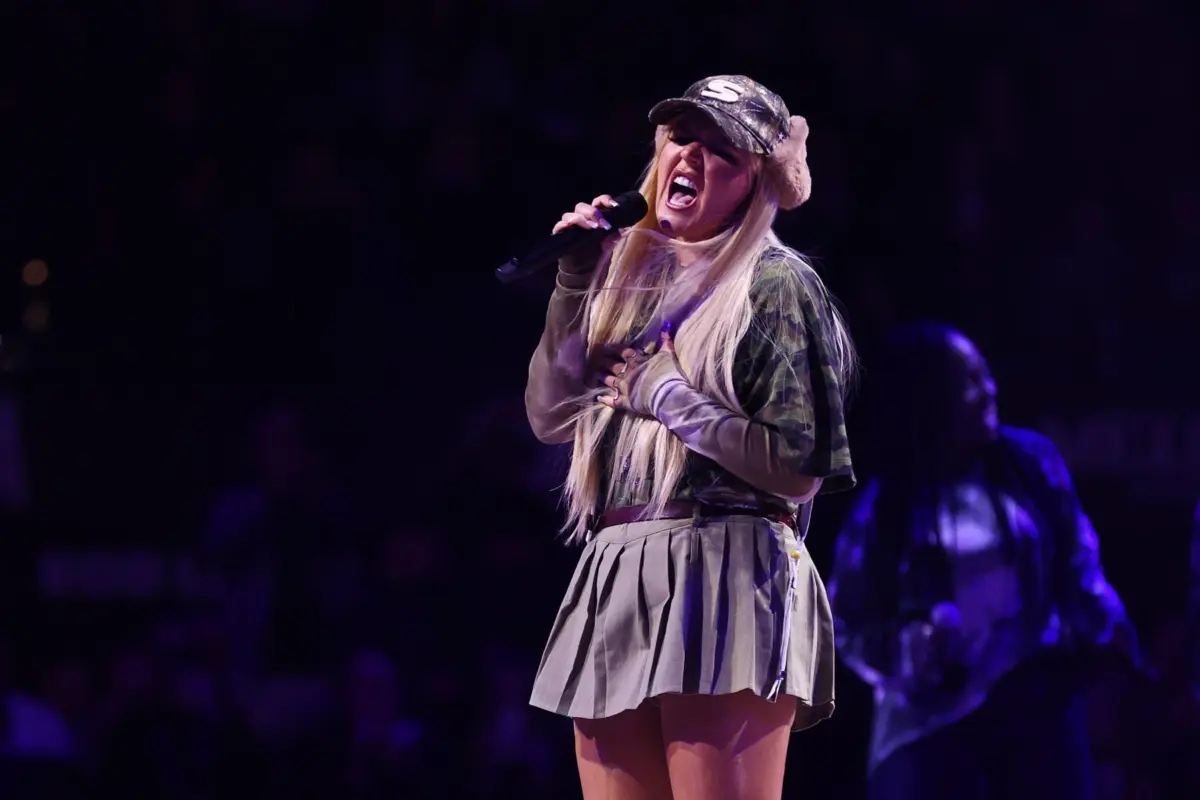
In a stunning break from decades of sporting and entertainment tradition, the Australian National Rugby League (NRL) grand final will proceed without its signature pre-match musical showcase. Negotiations to secure homegrown global pop phenomenon Tones And I (Toni Watson) as the centerpiece for the premier event at Sydney’s Accor Stadium fell through due to irreconcilable scheduling conflicts and last-minute logistical hurdles.
Rather than scrambling to source a replacement act to fill the eleven-minute slot, the Australian Rugby League Commission (ARLC) made the bold and unprecedented decision to scrap the entertainment lineup altogether.
Under the leadership of ARLC Chairman Peter V’landys, the roughly A$1 million entertainment budget is being completely redirected. Instead of paying for a high-profile pop concert, the funds will be funneled directly into community sports programs designed to provide rugby league opportunities for underprivileged children.
While representatives for Tones And I maintain that the artist explored every possible avenue to accommodate the NRL’s late approach, conflicting international commitments—including ongoing collaborative work with American rapper Macklemore—ultimately made the booking impossible. Compounding the situation, media reports have surfaced suggesting creative friction over the league’s push for the performance of her global mega-hit, "Dance Monkey."
This high-stakes cancellation marks a watershed moment for Australian sports entertainment, forcing a broader conversation about the balance between stadium spectacle and grassroots sports development.
Detailed Chronology: How the Grand Final Deal Collapsed
The unraveling of the NRL grand final entertainment package developed rapidly over a three-week window in September, catching industry insiders and fans completely off guard.
Early September: The Approach
According to official statements released by Lemon Tree Management, the artist’s representatives, Tones And I was formally approached to anchor the preshow entertainment for the October 4 grand final event. The official offer was transmitted to management on September 5.
At the time of the approach, Watson’s team recognized the immense cultural significance of the fixture. However, the timing presented an immediate operational challenge. Tones And I was already locked into a series of binding international professional obligations, notably centered around ongoing projects with Macklemore in the United States.
Mid-September: The Logistical Crunch
Over the subsequent fortnight, Tones And I’s management and tour coordinators explored various travel and scheduling permutations to determine if a trans-Pacific dash to Sydney was feasible. Private aviation options and compressed rehearsal schedules were evaluated to make the appearance work.
However, negotiations stalled due to the compressed runway. Representatives emphasized that despite productive dialogues, "nothing was signed or confirmed in writing" before structural hurdles became insurmountable.
Late September: The Breakdown and Creative Friction
As the calendar rolled into late September, negotiations broke down completely. While official statements cited time constraints and pre-existing international commitments, concurrent reporting by The Sydney Morning Herald unveiled deeper complications. According to unnamed sources close to the negotiations, friction arose over the league’s insistence that Watson perform her 2019 global juggernaut, "Dance Monkey."
Watson has famously voiced mixed, sometimes deeply ambivalent feelings about the track in past interviews, noting publicly that "a lot of time, I don’t want to sing it." The impasse over the mandatory inclusion of the career-defining song, compounded by the severely compressed timeline, sealed the fate of the performance.
The Decision to Pivot
Faced with the prospect of rushing to secure a substitute artist at the eleventh hour, the ARLC evaluated its options. Rather than settling for a secondary act or risking a diluted live production, Chairman Peter V’landys pulled the plug on the entertainment segment entirely, choosing instead to reallocate the capital toward community infrastructure.
Supporting Context & Metrics: The Cost of Spectacle vs. Grassroots Impact
The financial and cultural calculus behind the NRL’s decision sheds light on a growing skepticism among sports executives regarding the return on investment for multi-million-dollar pre-match concerts.
The Financial Breakdown
According to disclosures made by ARLC Chairman Peter V’landys to the Australian Broadcasting Corporation (ABC), the cost of staging an elite-level pre-match musical production for the grand final hovers around A$1 million. This figure encompasses artist fees, complex stage design, specialized audio-visual production crews, insurance, and extensive choreography rehearsals inside Accor Stadium.
V’landys challenged the traditional economic model of major sporting events, prioritizing long-term community value over short-term broadcast spectacle:
"I’d prefer to see 20,000 underprivileged kids who can’t afford to play rugby league play rugby league, rather than spend a million dollars on 11 minutes of a musical performance."
A Historic Tradition Interrupted
For decades, the NRL grand final has functioned as one of Australia’s premier cultural crossover events, rivaling the AFL Grand Final Entertainment in scale and television viewership. The stage has historically hosted legendary acts capable of moving millions of viewers, spanning generations and genres:
Tina Turner: The legendary partnership in the late 1980s and 1990s ("Simply the Best") revolutionized sports marketing in Australia.
Billy Idol: Memorably arriving on a stage cart during the 2002 decider, resulting in an infamously delayed kickoff.
The Kid LAROI: Representing the modern wave of global pop-rap crossover success.
Teddy Swims: Headlining the 2025 entertainment showcase.
With the 2026 cancellation, Teddy Swims may retrospectively hold the title of the final artist to occupy this traditional spot, as the league signals a permanent philosophical departure from grand final pop concerts.
Official Statements and Industry Reactions
The fallout from the canceled performance prompted swift commentary from both the league’s administration and the artist’s management team.
Lemon Tree Management Statement
In an official statement provided to Billboard, Tones And I’s management team clarified the sequence of events, emphasizing that the failure to reach an agreement was entirely logistical:
"Tones had a prior commitment with Macklemore in America and explored all avenues to make it work. However, nothing was signed or confirmed in writing. Due to the last-minute nature, and prior commitments by Tones, we were unable to accept the offer. We wish the NRL nothing but the very best for their event."
ARLC Chairman Peter V’landys
Addressing the public via the ABC, V’landys expressed zero animosity toward the artist, affirming his admiration for her musical catalog while doubling down on his vision for the sport:
"I’m a fan of Tones And I. She is a great performer, no doubt about that, and she’s got some great songs, but as I said, we both decided to go a different direction."
V’landys asserted the core philosophy driving the league’s new stance:
"Our game sells itself. People come to watch rugby league. They don’t come to watch a pop concert."
Artist Background & Career Trajectory
Toni Watson, professionally known as Tones And I, remains one of Australia’s most commercially successful and globally recognized musical exports of the streaming era.
The Phenomenon of "Dance Monkey"
Watson’s ascent to superstardom was spearheaded by her 2019 breakout single, "Dance Monkey." The track achieved historic, record-breaking milestones across global charts:
Australia: Dominated the ARIA Charts at No. 1 for an all-time record 24 consecutive weeks.
United Kingdom: Crowned the UK Singles Chart for 11 weeks, setting an all-time record for a solo female artist.
United States: Cracked the top 5 of the Billboard Hot 100.
Global Reach: Reigned supreme on music charts across more than 30 territories worldwide.
Studio Albums and Artistic Evolution
Following her explosive debut, Watson released her full-length debut album, Welcome to the Madhouse, in July 2021, which immediately debuted at No. 1 on the ARIA Charts and featured successful follow-up singles like "Fly Away." Her momentum continued with the release of her sophomore studio album, Beautifully Ordinary, in 2024, which also secured the No. 1 spot on the Australian charts.
The Macklemore Connection
Watson has frequently cited Grammy Award-winning American hip-hop artist Macklemore as a primary artistic inspiration and musical hero. The mutual admiration culminated in their 2022 collaboration on the single "Chant."
Macklemore himself has recently experienced unexpected schedule openings following his high-profile and controversial exit from Ed Sheeran’s Loop tour in the United States, stemming from political remarks made on stage regarding Palestine. This ongoing professional alignment with Macklemore in North America proved to be the decisive logistical barrier preventing her return to Australian soil for the NRL grand final.
Future Outlook: A New Era for Sports Entertainment
The decision by the ARLC to forgo live musical entertainment at Australia’s most-watched rugby league fixture signals a potential paradigm shift for major sporting codes globally.
For decades, sports leagues have escalated spending on halftime and pre-match concerts, often treating them as essential vehicles for mainstream media coverage and cross-demographic audience capture. However, as production costs soar and commercial returns face heightened scrutiny, executives are beginning to question whether multi-million-dollar pop interludes truly drive ticket sales or engage core sporting fans.
By redirecting funds directly into grassroots programs for underprivileged youth, the NRL is attempting to convert short-term entertainment spending into a long-term social and participation dividend. Whether other major sporting codes—such as the Australian Football League (AFL) or international bodies governing the NFL and Premier League—follow suit remains to be seen.
For now, the 2026 NRL Grand Final will be remembered not for who performed on stage, but for the bold administrative gamble to let the game stand entirely on its own athletic merits.