Executive Overview
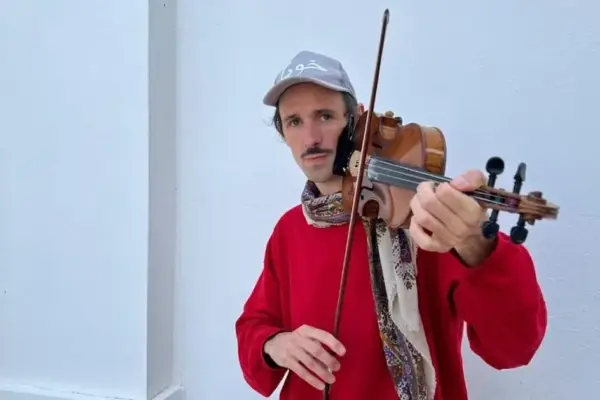
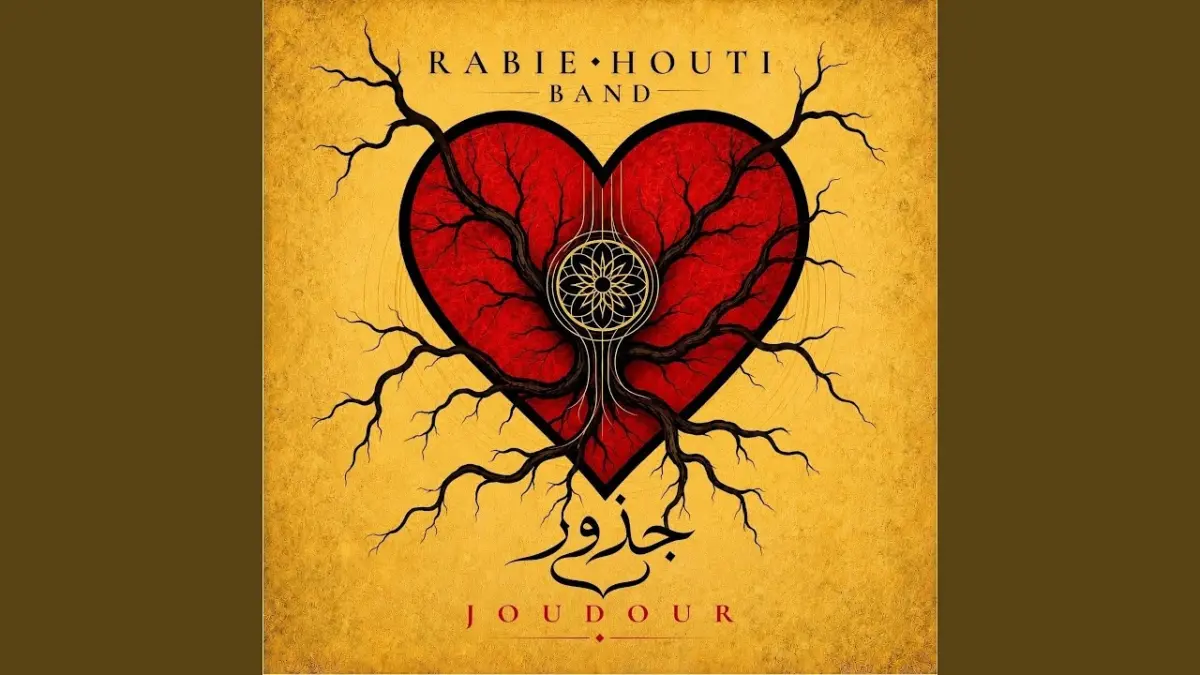
In an era where contemporary global music often leans toward homogenization, the trans-Mediterranean exchange championed by artists like violinist and vocalist Rabie Houti offers a masterclass in cultural preservation through radical reinvention. Based in Montpellier, France, since 2014, the Algerian-born musician has steadily carved out a distinctive niche within the global music ecosystem. His latest artistic statement arrives in the form of Joudour—an Arabic term translating directly to "roots"—the sophomore full-length album by the Rabie Houti Band.
At the pulsating heart of this new release is "Rokia," a narrative-driven single and music video that encapsulates the band’s aesthetic philosophy. The track tells a timeless tale of forbidden youth: a young villager falls deeply in love with his neighbor, only to face the fierce, unyielding opposition of the girl’s mother, the eponymous Rokia. Yet, the narrative weight of the song serves as a vehicle for a far more expansive sonic journey. Collaborating with Gasba Électrique—a collective renowned for seamlessly fusing traditional Maghrebi flutes with cutting-edge electronic textures—Houti constructs a transcontinental bridge.
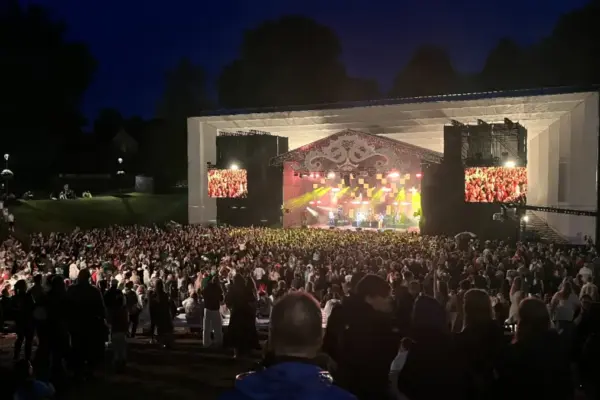
The single marries the intricate, microtonal ornamentations of Arabo-Andalusian violin playing with the driving pulse of electronic beats and the gritty, overdriven edge of rock guitars. As the track progresses, it steadily constructs a mesmerizing, hypnotic crescendo that dissolves cultural and genre boundaries, ultimately culminating in what the ensemble terms a state of "trance." This sonic trance is not merely a studio illusion; it is the foundational ethos of the band’s incendiary live performances. These shows have carried the group far beyond their Mediterranean moorings, captivating audiences across diverse international stages from Canada and Algeria to Kazakhstan.
Joudour, released on October 3, 2026, with a high-energy celebratory free concert at Montpellier’s legendary venue Rockstore, represents a decisive maturation for the ensemble. Following their 2019 debut album, Tahtaha—which Houti characterizes as an exploratory laboratory period—Joudour delivers a fully realized signature sound. Every track on the record is an original composition, leaning deeper into the electrifying fusion of rock instrumentation and electronic soundscapes while firmly anchoring itself in the soil of North African heritage. In doing so, the Rabie Houti Band proudly positions itself as a torchbearer of "Sono Mondiale," the genre-defying, inclusive musical movement famously championed by the late, great Algerian-French rocker Rachid Taha.
Detailed Chronology: From the Opera House of Oran to the Stages of Montpellier
To truly understand the complex architectural integrity of "Rokia" and the Joudour album, one must retrace the geographical and artistic trajectory of Rabie Houti himself. His relationship with music is not merely professional; it is ancestral, visceral, and deeply rooted in the coastal port city of Oran, Algeria—a historic cultural crucible renowned for its raï music, Spanish influences, and classical Arabo-Andalusian conservatory traditions.
The Oran Genesis
Houti’s musical education began at home, enveloped in the rich sonic tapestry curated by his father, an ardent devotee of classical Arabo-Andalusian music. The domestic sphere acted as an informal academy where the modal complexities of the nuba (the classical suite system of North African music) were absorbed organically. However, the catalyst for his instrumental journey came from his older sister, Khedija. It was Khedija who first placed a mandolin into his young hands, patiently guiding his fingers through the basic chords and opening the door to active musical creation.
Recognizing an early, prodigious aptitude, Houti’s training quickly transitioned from the living room to formal institutional spaces. Around the tender age of eight, he achieved a monumental milestone: performing his very first professional concert on the violin. This debut took place under the grand proscenium arch of Oran’s historic opera house, playing alongside the junior orchestra of the prestigious Nassim El Andalous school. Performing in such an august setting at an age when most children are barely navigating primary school instilled in Houti a profound respect for classical discipline, precision, and the weight of musical heritage.
The Transmigration to France
For many North African artists, the pursuit of a sustainable contemporary career often necessitates geographical displacement, allowing them to tap into wider European infrastructure while maintaining a dialogue with their homeland. In 2014, Houti made the decisive move across the Mediterranean, settling in Montpellier, southern France.
Relocating to France presented both immense challenges and creative liberations. Montpellier, with its vibrant cultural scene, bohemian student population, and historical links to North Africa, provided an ideal incubator. Here, Houti found himself immersed in a polyglot community of jazz musicians, rock instrumentalists, and electronic producers. Rather than abandoning his classical training or diluting his Maghrebi identity to appease Western markets, Houti began to experiment. He sought out collaborators who shared his vision of a borderless Mediterranean sound—one that could honor the microtones of the Andalusian violin while engaging in a dialogue with contemporary European club and rock culture.
Formation of the Rabie Houti Band and the Era of "Tahtaha"
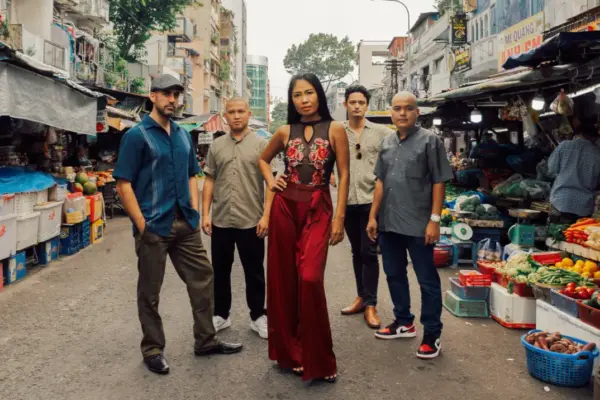
By 2017, this collaborative experimentation crystallized into a formal entity: the Rabie Houti Band. From its inception, the ensemble was designed to challenge orthodoxies. They deliberately set traditional Maghrebi melodies against the heavy, syncopated rhythms of funk and the raw power of rock grooves.
In 2019, the band released their debut album, Tahtaha. Looking back on the project with retrospective candor, Houti describes Tahtaha not as a finished destination, but as a crucial testing ground—a sonic laboratory constructed during a period when the band was actively searching for its collective identity. While the record received critical praise for its bold juxtapositions, it laid bare the growing pains of a young group attempting to reconcile disparate musical worlds. The arrangements were exploratory, sometimes wrestling with how to balance the acoustic purity of North African folk instruments with the sonic dominance of electric guitars and synthesizers.
The Birth of "Joudour" and the Rockstore Triumph
This period of searching culminated in the 2026 release of Joudour. If Tahtaha was the hypothesis, Joudour is the definitive proof. Every track on the album is an entirely original composition, signaling a departure from traditional covers or heavily recycled folkloric tropes. The album title—Joudour—acts as a programmatic statement. By anchoring their sonic experiments firmly in the concept of "roots," the band grants themselves the freedom to soar into uncharted electronic and rock territories without losing their cultural gravity.
To mark the release of Joudour, the band orchestrated a major homecoming of sorts within their adopted French base, staging a high-profile, free public concert at the iconic Rockstore in Montpellier on October 3, 2026. The venue, a legendary temple of alternative rock in the south of France, served as the perfect physical metaphor for the band’s ethos: a space where counterculture meets communal celebration, and where traditional Arabo-Andalusian strings can share a stage with Marshall amplifiers and strobe lights.
Supporting Context & Metrics: The Architecture of "Rokia" and "Sono Mondiale"
To appreciate the cultural and musicological significance of the Rabie Houti Band, one must examine the broader historical currents in which they operate, as well as the technical mechanics of their sound.
Deconstructing "Rokia": Narrative, Flutes, and Electronics
At the center of the band’s current promotional cycle is the single "Rokia." Musically and narratively, the track functions on multiple tiers.
- The Narrative Arc: Lyrically and conceptually, the song addresses a universal human experience—young, impassioned love hindered by generational friction. The protagonist, a young villager, is pitted against the formidable matriarchal authority of Rokia. This domestic drama reflects broader social dynamics within traditional communities, where individual romantic autonomy frequently clashes with collective family expectations.
- The Instrumentation: The sonic realization of this conflict is achieved through an audacious instrumental pairing. Houti’s Arabo-Andalusian violin serves as the emotional voice of the young lover—expressive, weeping, and microtonally agile. This acoustic voice is thrown into a dynamic dialogue with Gasba Électrique. The gasba, a traditional reed flute native to the Maghreb, is renowned for its breathy, earthy timbre and its ability to induce hypnotic states when played in repetitive, cyclical patterns. By prefixing the ensemble with "Électrique," the group signals an intervention: the acoustic breath of the reed is filtered through, amplified by, and fused with electronic textures, sub-bass frequencies, and sequencing.
- The Rock Foundation: Layered beneath the flute and violin are driving rock guitar lines. Rather than acting as background accompaniment, the guitars provide a muscular, driving rhythmic bedrock that pushes the music away from static folkloric preservation and directly into the domain of contemporary alternative rock.
- The Crescendo into Trance: The track’s structural genius lies in its pacing. It builds deliberately, almost imperceptibly, layer by layer. Rhythms lock into a relentless groove, electronic pulses interlock with the rapid articulation of the violin, and the gasba maintains a hypnotic ostinato. The song systematically dismantles the listener’s linear sense of time, guiding them into the state of "trance" that the band regards as the ultimate objective of their art.
The Legacy of "Sono Mondiale" and Rachid Taha
The Rabie Houti Band explicitly situates itself within the lineage of "Sono Mondiale." This term, popularized in the late 1980s and 1990s, describes a musical movement that rejected rigid genre categorizations and Western-centric world music marketing. Its most famous champion was the late Rachid Taha, the iconic Algerian-French singer and activist who famously fused raï and chaâbi music with punk rock, techno, and electronic dance music.
Taha proved that an artist could sing in Arabic, honor North African working-class roots, and simultaneously command the stages of European rock festivals, London clubs, and global alternative radio stations. The Rabie Houti Band inherits this mantle. Like Taha, Houti does not view tradition as a museum artifact preserved under glass; instead, he treats tradition as a living, breathing, mutable organism capable of absorbing the shocks of modernity, electric amplification, and digital production.
Global Footprint and International Mobility
While anchored in Montpellier and deeply tied to the Mediterranean basin, the Rabie Houti Band is a truly international touring entity. The concept of "trance" that they preach in the studio is fully realized on international stages. Their touring itinerary has taken them across vast cultural and geographical divides, including:
- Canada: Engaging with North American multicultural audiences who appreciate genre-fluid global grooves.
- Algeria: Maintaining an vital, ongoing dialogue with home audiences, performing for crowds who instantly recognize the traditional microtones woven into the heavy electronic and rock arrangements.
- Kazakhstan: Demonstrating the universal communicative power of their music by bridging Central Asian and North African musical sensibilities through rhythm, string intonation, and trance-inducing performance dynamics.
Official Statements & Artistic Vision
The philosophy driving the Rabie Houti Band is best articulated through the reflections of its founder regarding the evolution of their sound, the meaning of their work, and their approach to cultural identity.
Reflecting on the turbulent, exploratory phase of the band’s early career and how it contrasted with their current output, Rabie Houti offers candid insight into the maturation process:
"Tahtaha [2019] was very much a test from a time when the band was still searching for its voice. With Joudour, we feel we have finally found our signature."
This statement underscores the artistic rigor required to forge a hybrid genre. Where many fusion projects risk falling into pastiche—simply sticking an electric guitar track on top of a traditional folk recording—Houti and his collaborators spent years refining their compositional approach. Joudour represents a unified vision where rock, electronics, and Maghrebi melodies are no longer separate ingredients forced into the same bowl, but rather mutually constitutive elements of a single, coherent musical language.
Discussing the thematic and linguistic choice behind the album’s title, Houti emphasizes the unbreakable bond between geographical and artistic origins:
"’Joudour’ takes its title from the Arabic word for roots. Every track on the new album is an original composition, leaning further into rock and electronics, yet remaining entirely anchored in where we come from."
This philosophy addresses a central anxiety of modern diasporic artistry: the fear of cultural erasure through assimilation or, conversely, the trap of being reduced to a static, exoticized token of "world music." By naming their album Joudour and filling it with forward-looking, high-energy original compositions, the Rabie Houti Band asserts that true fidelity to one’s roots does not mean standing still. Rather, it means building a vehicle robust enough—and wired high enough—to travel into the future.
Future Outlook: The Global Trajectory of Maghrebi-Electronic Fusion
As the music industry continues to fragment and decentralize away from traditional Western Anglo-American centers, artists who bridge hyper-local heritage with global sonic palettes are finding unprecedented relevance. The release of Joudour and the momentum behind tracks like "Rokia" position the Rabie Houti Band at the vanguard of this movement.
Looking ahead, the band’s trajectory points toward several significant developments:
- Deepening Technological Integration: With Gasba Électrique fully integrated into the compositional framework, future releases are likely to push the envelope of live electronic performance even further, exploring the intersection of modular synthesis, live looping, and classical Arabic modal systems (maqamat).
- Expanded International Touring: Building upon their past successes in Canada, Kazakhstan, and North Africa, the band is well-positioned to capitalize on the growing global appetite for alternative cross-cultural collaborations, targeting major international festival circuits in Europe, the Americas, and Asia.
- Pedagogical and Cultural Mentorship: Given Houti’s early grounding in classical conservatories like the Nassim El Andalous school in Oran, there is immense potential for the band to engage in educational outreach, masterclasses, and cross-generational knowledge transfer, teaching young musicians how to respect traditional forms while embracing contemporary sonic disobedience.
In conclusion, the Rabie Houti Band’s Joudour and the hypnotic pull of "Rokia" remind us that music remains our most potent medium for cultural translation. By refusing to choose between the ancient breath of the gasba, the classical discipline of the Arabo-Andalusian violin, and the rebellious roar of the electric guitar, Rabie Houti and his collaborators have built a bridge across generations, geographies, and genres. It is a bridge that invites listeners not just to hear a story of forbidden love in an Algerian village, but to lose themselves entirely in a shared, borderless trance.
For those wishing to experience the sonic journey firsthand, "Rokia" and the full-length album Joudour are available for streaming directly through the Rabie Houti Band Bandcamp page.