Executive Overview
In the volatile landscape of early-2000s British pop music, the line between superstardom and sudden obscurity was razor-thin. Few pop cultural artifacts illustrate this better than the high-stakes chess match surrounding the 2003 release of "Jump"—a high-octane cover of the Pointer Sisters’ 1984 classic.
Long before it became an iconic cinematic centerpiece on the Love Actually soundtrack and a career-saving lifeline for Girls Aloud, the track was offered to their Y2K chart rivals, Liberty X. In a twist of fate that changed the trajectory of two major British girl groups, Liberty X turned the song down to protect their artistic integrity, inadvertently handing Girls Aloud the golden ticket they desperately needed to secure their second album and cement their legacy.
This deep-dive investigation explores the precarious early days of Girls Aloud at Polydor Records, the strategic rejection that haunted a Liberty X member years later, and the broader cultural mechanics of the British pop industry at the turn of the millennium. By examining archival commentary, unearthed interview clips, and retrospective reflections from the artists themselves, we unpack how a single publishing decision reshaped 2000s chart history.
Detailed Chronology: From Reality TV Roots to the Brink of Cancellation
The Class of 2002: Reality Television and the Birth of Rival Factions
The modern British pop landscape of the early 2000s was largely forged in the crucible of reality television. ITV’s pioneering talent search Popstars: The Rivals gripped the nation in late 2002, tasked with creating a boy band and a girl group to battle for the coveted Christmas #1 spot.
Out of this grueling televised process emerged Girls Aloud—comprising Cheryl Tweedy, Kimberley Walsh, Sarah Harding, Nicola Roberts, and Nadine Coyle. Armed with the edgy, Xenomania-produced powerhouse track "Sound of the Underground," the newly minted five-piece dominated the UK Singles Chart during the Christmas period of 2002.
However, commercial success on a debut single did not guarantee long-term label security in an era notorious for disposable pop acts. Polydor Records, running the operation, remained deeply skeptical about the group’s long-term viability. While "Sound of the Underground" was a massive cultural moment, industry executives viewed girl groups as high-risk investments with notoriously short shelf lives.
The Sophomore Slump Anxiety at Polydor Records
Following their chart-topping debut, Girls Aloud released subsequent singles "No Good Advice" and "Life Got Cold" in early and mid-2003. While both tracks performed respectably—peaking at No. 2 and No. 3, respectively—they failed to replicate the explosive, undisputed cultural dominance of their first outing.
Behind closed doors at Polydor, tension was mounting. In retrospective liner notes written for the 20th-century reissue of their debut album, Kimberley Walsh candidly admitted the precariousness of their standing within the label:
"It was a make-or-break song for us as a band."
Despite having a solid foundation of dedicated fans, the record label’s executive board was hesitant to greenlight a sophomore studio album. The group needed a massive, cross-demographic cultural tentpole to prove their commercial viability—not just as a novelty reality-TV act, but as a legitimate pop powerhouse capable of sustaining an album campaign.
Enter Love Actually: The Cinematic Lifeline
The salvation for Girls Aloud arrived not through an original studio track, but via Hollywood. Richard Curtis’s star-studded romantic comedy Love Actually was slated for a major global release in late 2003. Its soundtrack promised massive commercial exposure, and producers were hunting for an upbeat, high-energy pop track to inject life into the film’s sonic landscape.
The chosen vehicle was a contemporary remake of the Pointer Sisters’ 1984 synth-pop anthem "Jump." For Girls Aloud, being attached to a major Working Title/Universal Pictures film was an unprecedented cross-promotional opportunity. When the track was rushed out as a single in November 2003, it rocketed up the UK charts, peaking at No. 2 and breathing fresh life into the group’s slowing momentum.
Suddenly, Polydor’s hesitation vanished. The undeniable success of "Jump" forced label executives to push forward with the greenlight for Girls Aloud’s second studio album, What Will the Neighbours Say?, effectively saving the group from premature shelving and setting the stage for one of the most successful pop careers of the 21st century.
Supporting Context & Metrics: The Road Not Taken by Liberty X
The Liberty X Perspective: Guarding the Brand
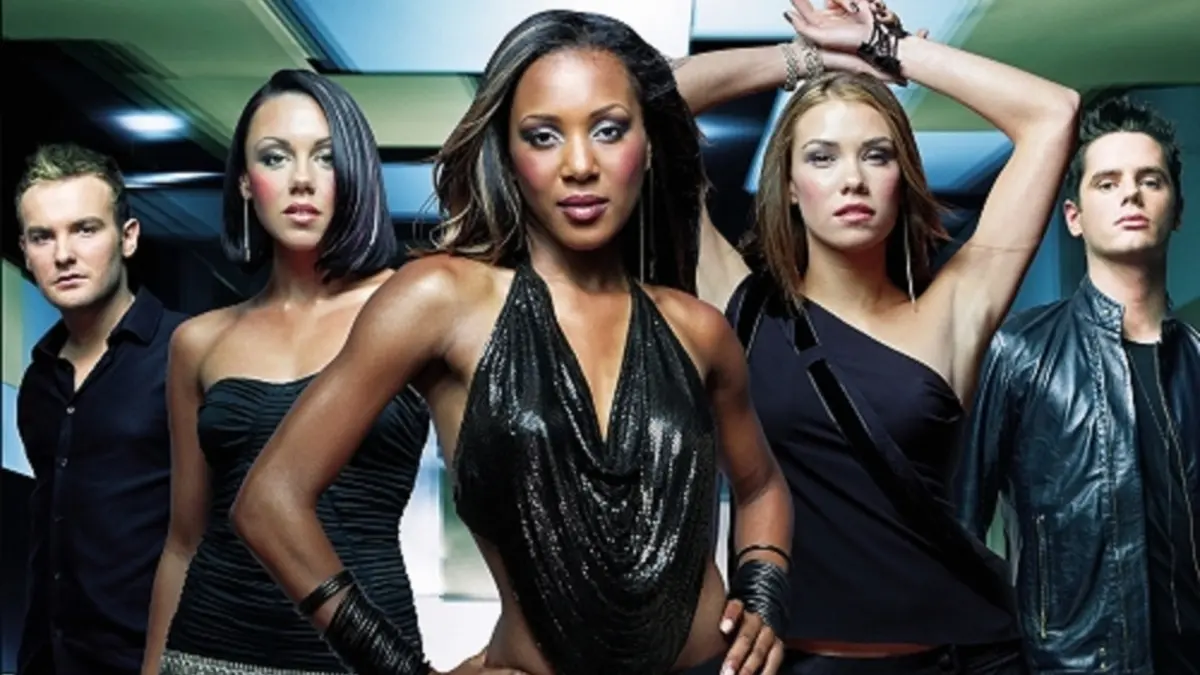
While Girls Aloud were desperately seeking a chart-topping vehicle, their chart contemporaries Liberty X were navigating a very different phase of their career. Formed as the runners-up of the original UK Popstars series in 2001 (losing out to Hear’Say), Liberty X—consisting of Michelle Heaton, Tony Lundon, Kevin Simm, Jessica Taylor, and Kelli Young—had carved out a fiercely respected niche with slick, R&B-infused pop hits like "Just a Little" and "Being Nobody."
However, in an unearthed interview clip originally shared by TikTok creator Pop Princess and discussed with member Kelli Young, the untold backstory of "Jump" came to light. Young revealed that before the track found its way to Girls Aloud, the film’s producers actively pitched it to Liberty X.
"They had already confirmed that it was going to be on the Love Actually movie," Young explained in the interview. "You know, the producers of the film came to us and were like, ‘Would you like to do this song? It’s going to be a big, you know, really big film.’ And at the time, we just felt that we’d done enough covers. And we didn’t want to, you know, become a covers band, even though it did seem like a really good opportunity."
At a time when Liberty X were working hard to establish artistic credibility and distance themselves from the manufactured reality-TV stigma, taking on a cover version—even one tied to a major blockbuster—felt counterintuitive to their brand identity.
The Regret: A Tour-Bus Revelation
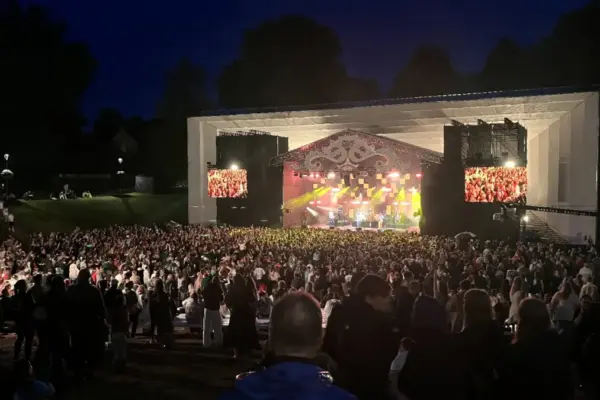
Artists often look back at historical publishing rejections with a mixture of relief and pragmatic acceptance, but the ghost of "Jump" lingered within the Liberty X camp. Kelli Young recounted a revealing moment that occurred while she and bandmate Jessica Taylor were attending a Girls Aloud concert during their summer tour.
As Girls Aloud launched into a high-energy performance of "Jump," Taylor turned to Young with a sudden pang of retrospective wonder:
"Should we have done this one?"
Young’s response was rooted in philosophical resignation:
"No, babe, no, everything happens for a reason."
While Young maintained that passing on the track was the correct artistic decision for Liberty X at that precise juncture in their career development, the anecdote highlights the fine margins of the pop industry, where a single track can shift millions of records and cement a rival’s legacy.
Official Statements and Retrospective Insights
To fully understand the gravity of "Jump" within the Girls Aloud canon, musicologists and group members have frequently reflected on its unique production and strategic placement.
Nicola Roberts, renowned for her sharp pop sensibilities and involvement in the group’s creative direction, noted the brilliant accessibility of the track during a retrospective interview:
"It was four on the floor so it could be played in the clubs, but it was also familiar enough to be played on the radio. And at this point, it was probably our most digestible single."
By blending a driving, club-ready dance beat with a universally recognized 1980s melody, the track bridged the gap between niche pop fans and mainstream radio listeners. It proved that Girls Aloud could handle heritage material and transform it into contemporary gold—a skill they would refine across subsequent releases with Xenomania masterminds Brian Higgins and Miranda Cooper.
Future Outlook: The Nostalgia Economy and Legacy Tours
As the dust settles on decades of chart rivalries, the landscape of early-2000s British pop has transitioned gracefully into the thriving modern nostalgia economy. The cultural weight of these groups remains remarkably potent, driven by dedicated fan bases eager to relive the golden age of Y2K pop music.
Looking ahead to the coming years, the narrative of these interconnected reality-TV groups comes full circle. Following landmark anniversary milestones for Girls Aloud, attention has turned toward their foundational peers. Next year marks a staggering 25 years since Liberty X finished as runners-up to Hear’Say on the original series of Popstars.
In celebration of this milestone, legendary Y2K pop crossover acts Liberty X and Hear’Say have announced a massive, highly anticipated joint arena tour spanning the UK and Ireland. Billed as a celebration of the era’s biggest pop anthems, the tour promises to deliver the exact kind of high-energy, feel-good nostalgia that defined turn-of-the-millennium chart music.
Tickets for the landmark reunion tour are currently on sale, offering fans a rare opportunity to witness the enduring legacy of an era when reality TV talent shows ruled the airwaves and a single rejected song could completely rewrite pop history.
Data Summary: The "Jump" Timeline
| Date / Era | Event | Impact |
|---|---|---|
| Late 2002 | Girls Aloud win Popstars: The Rivals and release "Sound of the Underground". | Immediate commercial success, but skepticism from Polydor executives regarding long-term viability. |
| Early–Mid 2003 | Singles "No Good Advice" and "Life Got Cold" chart well (No. 2 and No. 3). | Moderate success, but label hesitates to greenlight a full second album. |
| Mid-2003 | Love Actually producers pitch a cover of the Pointer Sisters’ "Jump" to Liberty X. | Liberty X decline the offer to avoid being typecast as a "covers band." |
| Late 2003 | Girls Aloud record and release "Jump" as part of the Love Actually soundtrack. | The single skyrockets up the charts, reviving commercial interest and securing funding for What Will the Neighbours Say?. |
| Present Day | Archival interviews emerge; Liberty X prepare for a massive 25th-anniversary arena tour. | Highlights the butterfly effect of Y2K publishing decisions while celebrating enduring pop heritage. |