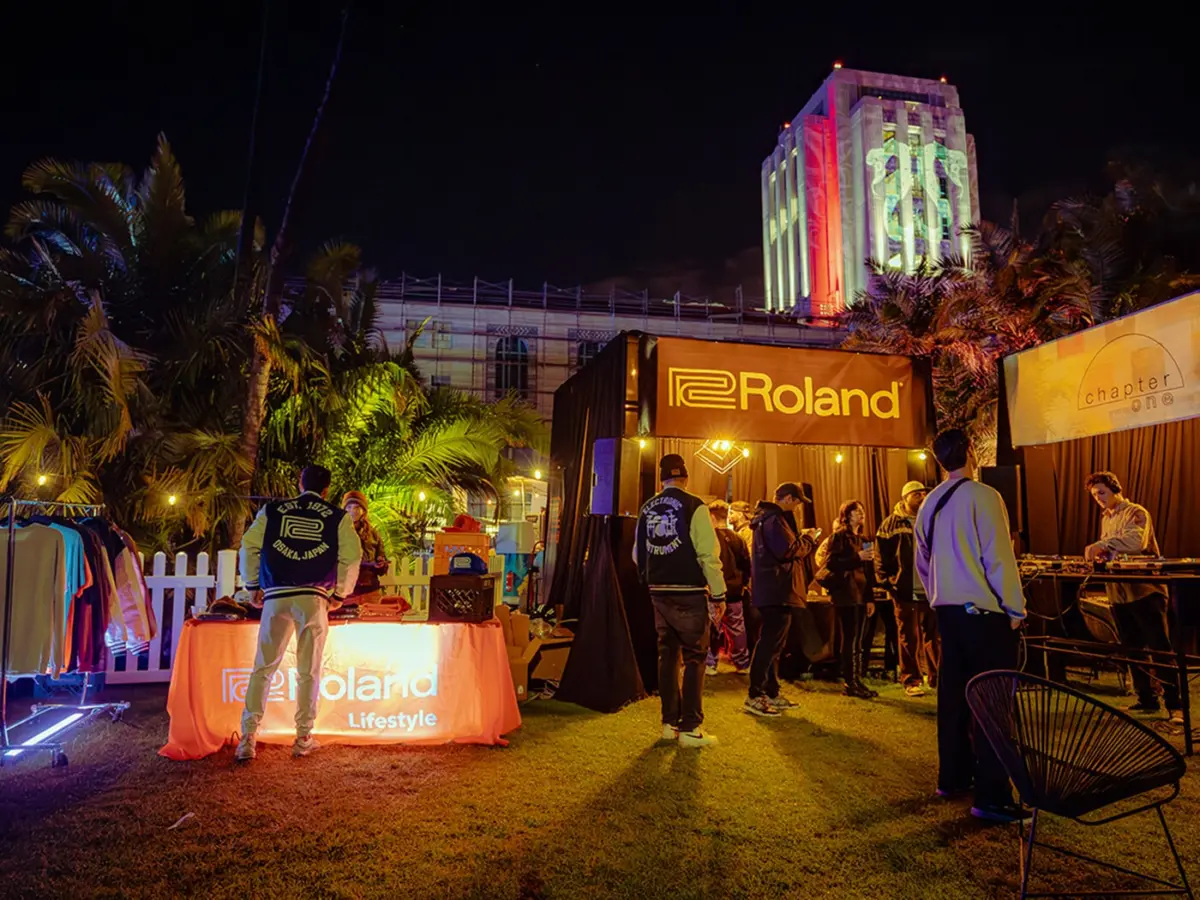
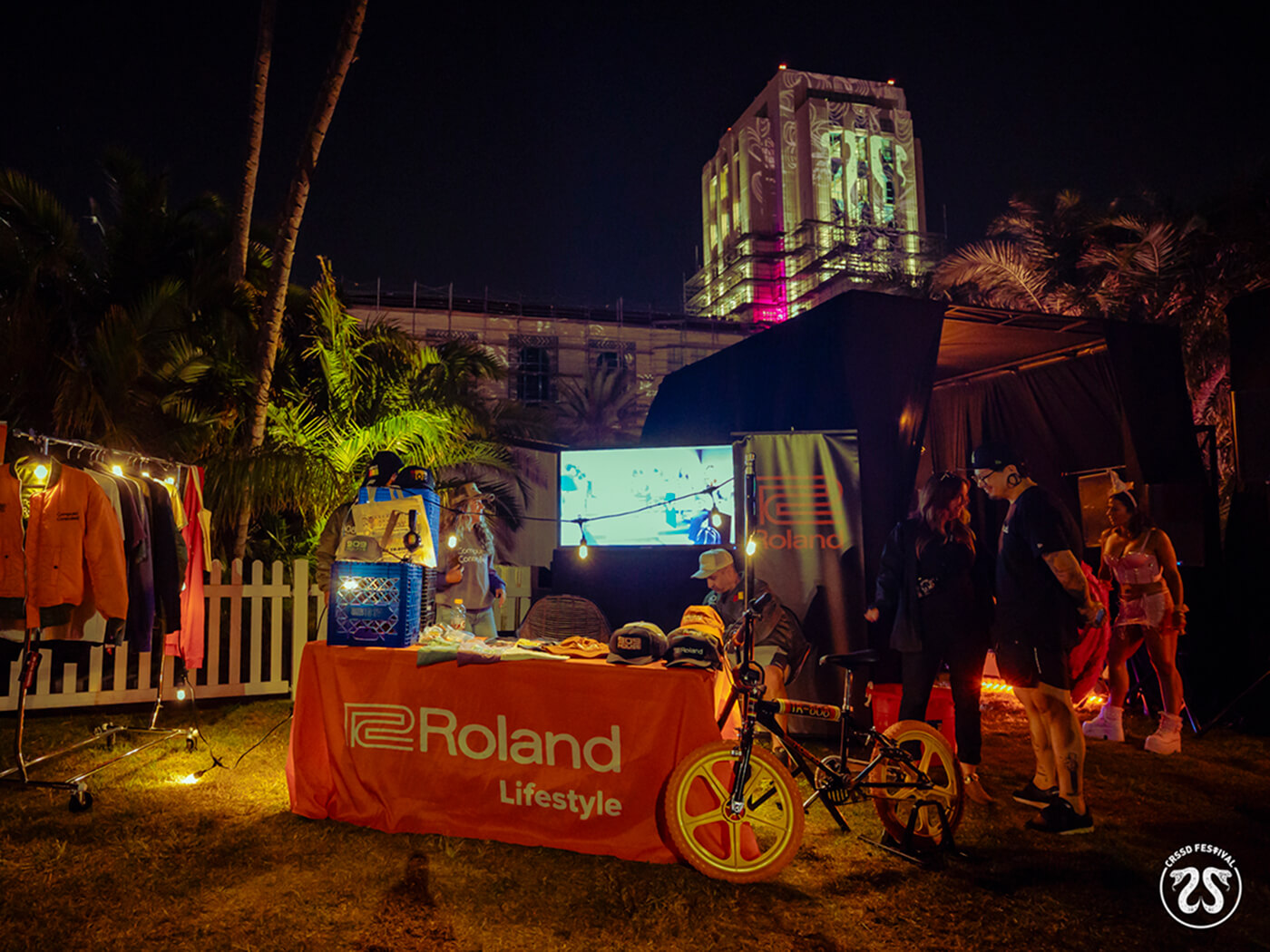
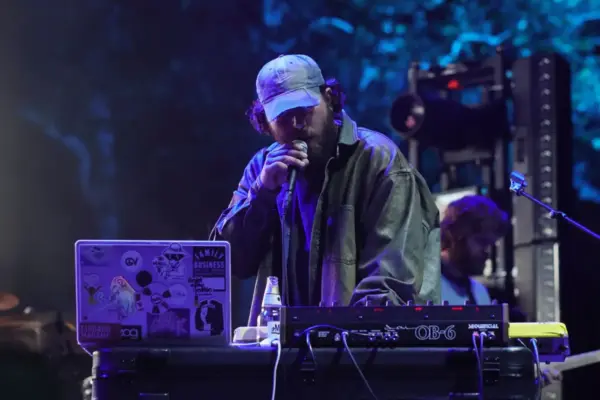
Amidst the sun-drenched concrete and palm trees of San Diego’s Waterfront Park, the bi-annual CRSSD Festival serves up a sensory overload of sub-bass, strobe lights, and seaside revelry. As temperatures hover around a sweltering 32°C (90°F), thousands of festival-goers navigate the grounds in a sea of tank tops, neon sunglasses, and ice-cold brews. Yet, hidden dead-center in the heart of the festival site lies a starkly different destination: a darkened, industrial-grade black tent known simply as CRSSD Lab.
For over eight years, this pop-up activation has occupied a vital cultural intersection between electronic music consumption and creation. While festival stages thunder with headline house and techno acts, the Lab offers a haven of tactile creativity. Featuring flagship electronic music hardware from Roland and an immersive pop-up record store curated by Los Angeles-based Chapter One Records, the space challenges the barrier separating the passive listener from the active producer.
This deep-dive investigation explores why legendary music tech giants like Roland and independent vinyl purveyors like Chapter One continue to brave the dust, heat, and logistical hurdles of festival activations. Far beyond simple product placement or merchandise sales, these spaces represent a paradigm shift in how gear manufacturers connect with their audiences. By offering face-to-face, one-on-one mentorship, physical crate-digging, and hands-on synthesis, the masterminds behind CRSSD Lab are on a mission to answer a profound industry question: Can a weekend music festival truly transform raving fans into the next generation of electronic music producers?
Detailed Chronology: The Evolution of CRSSD Lab
To understand the cultural weight of the CRSSD Lab, one must trace its roots back nearly a decade to the formative years of Waterfront Park’s flagship boutique festival. Founded as a haven for underground house and techno enthusiasts on the West Coast, CRSSD quickly realized that its demographic wasn’t just comprised of casual partygoers. A significant percentage of attendees were aspiring DJs, bedroom producers, and passionate vinyl collectors hungry for a deeper connection to the culture.
The Early Years (2015–2018): Planted Seeds
In its infancy, the Lab initiative was an experimental sidebar—a modest booth featuring basic synthesizers and a handful of local record dealers trying to gauge interest. At the time, major MI (Musical Instrument) brands rarely ventured out of climate-controlled convention centers like NAMM to pitch gear in the dust and sweat of a dance festival. However, early traction proved undeniable. Festival attendees—sweaty from dancing to live techno sets—piled into the tent to fiddle with drum machines and flip through underground 12-inches.
Scaling Up (2019–2022): The Integration of Hardware and Software
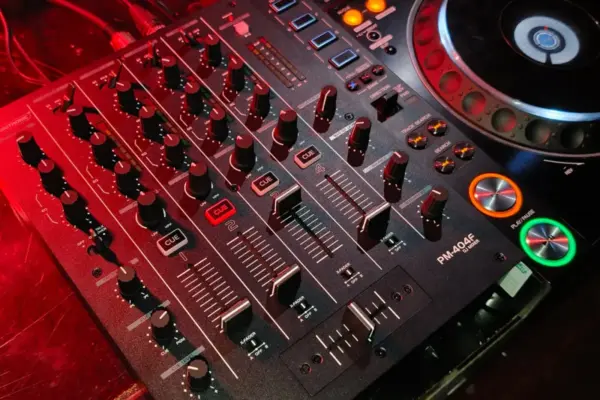
As electronic music production democratized and laptop-based workflows merged with vintage hardware emulation, Roland solidified its presence as a permanent fixture. Recognizing that digital interfaces could sometimes feel sterile, Roland brought out heavy-hitting hardware: the Juno-X synthesizer, TR-8S and TR-1000 drum machines, and dedicated DJ controllers. Simultaneously, Chapter One refined its curation, moving away from generic commercial releases toward rare house singles, left-of-centre techno imports, and timeless classics.
The Modern Era (2023–Present): Seamless Synergy
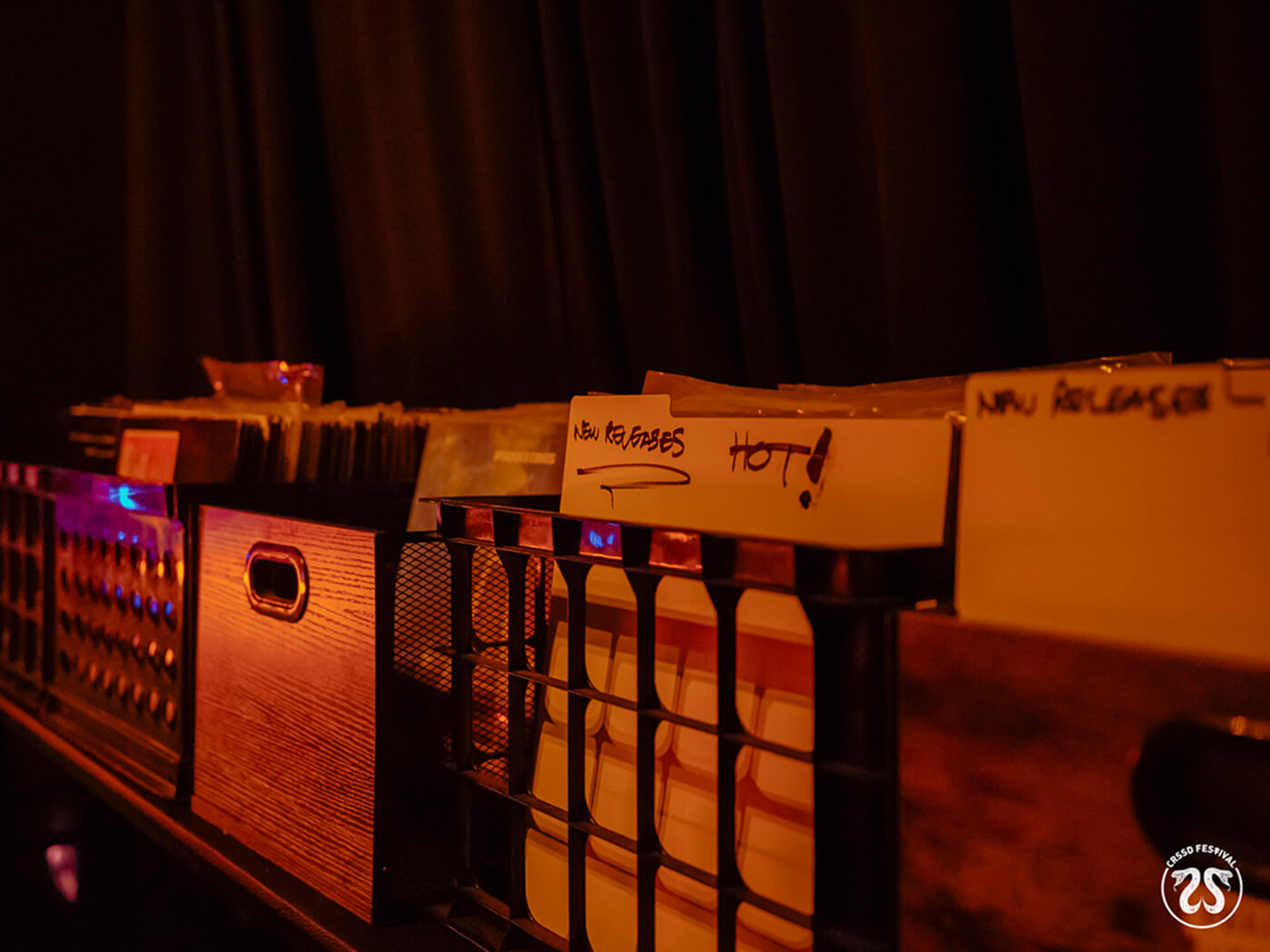
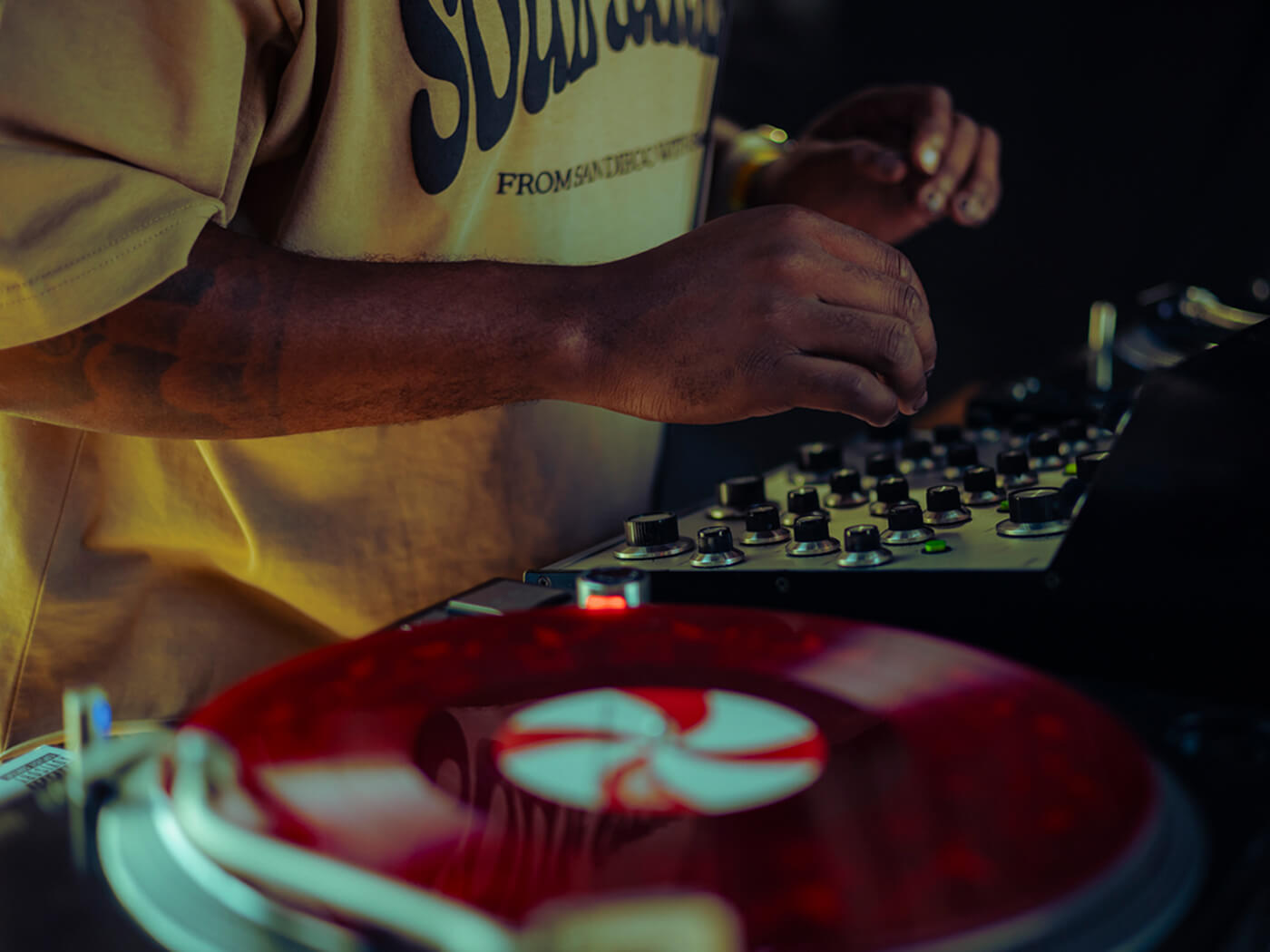
Today, the CRSSD Lab is a well-oiled machine. Entering the tent reveals a sophisticated hybrid setup. Roland’s gear is intricately routed into Ableton Live workstations, allowing visitors to record audio clips on the fly, layer synth lines, and pass the torch to the next curious stranger. Meanwhile, Chapter One manages a bustling retail operation where vinyl crates are stacked high, complete with listening stations powered by Technics SL-1200 turntables and high-end monitoring headphones. By 3 PM on any given festival day, a growing wall of paper bags—earmarked purchases waiting for attendees to pick up post-festival—proves that tactile music discovery is far from dead.
Supporting Context & Metrics: The Anatomy of a Festival Activation
While festival marketing teams often tout "brand engagement" as an abstract metric, the reality on the ground at CRSSD Lab is quantifiable, driven by shifting consumer habits and a surging renaissance for physical media and analog hardware.
The Vinyl Resurgence Meets Gen Z Curiosity
According to Max Coletto of Chapter One Records, the demographics visiting the record booth are shifting in fascinating ways. Far from being dominated exclusively by older purists, the store sees an influx of attendees spanning generations:
The New Wave: Young festival-goers in their late teens and early twenties who have recently dipped their toes into underground electronic music. Many cannot yet name specific legacy producers or underground labels, but their unbridled curiosity drives high engagement.
The Veterans: 50-to-60-year-old dedicated crate-diggers who have lived through the evolution of house, disco, and techno, treating the booth as a nostalgic touchpoint.
Economically, the model works. Chapter One routinely sells 80 per cent of its total stock over the course of a single CRSSD weekend. Inventory ranges wildly in price and genre, stretching from $5 budget dance singles to high-ticket masterworks like Daft Punk’s Random Access Memories.
Direct-to-Consumer Music Tech Education
On the hardware side, Roland’s presence fills a glaring void in modern music retail. With traditional brick-and-mortar music stores shrinking across North America, beginner producers rarely get a chance to physically touch high-end gear before dropping thousands of dollars online.
Roland’s data and anecdotal feedback from activations—spanning CRSSD in San Diego, Movement in Detroit, and the country festival Stagecoach in California—reveal a powerful trend:
Parental Validation: Parents frequently approach the booth with their children, viewing hardware synthesis as a tangible, screen-reduced pathway into creative arts.
Peer-to-Peer Problem Solving: Visitors regularly return day after day with specific technical hurdles, asking brand representatives how to route specific midi sequences, sample external audio sources into DAWs, or integrate mobile setups into their home studios.
Official Statements: Perspectives from the Frontline
To truly grasp the philosophy driving CRSSD Lab, one must listen to the architects who orchestrate the chaos year after year.
Mar Keith Anthony: Roland’s Global Brand Relations Manager
For Mar Keith Anthony, the value of getting out from behind a corporate desk and into the blistering California sun is immeasurable.
"Who else do you see out here getting one-on-one with their end users?" Anthony asks rhetorically, emphasizing Roland’s unique position as the sole major music tech brand consistently embedded within North American festival grounds.
"We’re creating and fostering collaboration, and teaching skills at the same time," he explains. "People don’t know how simple music-making tools are these days. People walk in like, ‘Oh, I don’t make music,’ and I’m like, ‘I can literally show you in five minutes how to do it!’ That’s our goal. We’re just trying to inspire people to pick up instruments and make music."
This grassroots philosophy mirrors Roland’s broader retail strategies, such as the launch of their flagship brick-and-mortar store in New York City. Whether inside a metropolitan showroom or a festival tent, the core objective remains identical: converting passive consumers into active creators.
"We’re creatives, and we feel like music is the heartbeat of everything that we do," Anthony notes. "So therefore, for us, that’s what we’re passionate about: creating more music makers."
Max Coletto: The Chapter One Perspective
From the retail side, Max Coletto views the partnership not merely as a pop-up storefront, but as a vital community feeder network bridging Los Angeles and San Diego.
"It’s definitely a good feeder to our community in L.A.," Coletto says. "We see really young first-timers—people who are getting into electronic music—and we see 50- to 60-year-olds who have been listening to this music their whole lives… It’s always a nice little memory for them. It’s not just about getting the record, it’s about interacting with them. It’s a whole experience."
Coletto points out that the real magic lies in the dialogue sparked by the physical media. In an era dominated by algorithmic Spotify playlists and hidden streaming metadata, physical record crates force human interaction.
"I’m definitely noticing a younger audience," Coletto observes. "An audience that doesn’t necessarily know specific artists or labels, but there’s a huge amount of curiosity because they’ve dipped their toes into this underground electronic music, and they’re really excited to learn. They ask about local labels and what artists to check out. There’s just a general curiosity among the younger crowd that’s really exciting because you can tell there’s an increased demand for this kind of slightly underground, left-of-centre music."
Future Outlook: The Next Wave of Festival Innovations
As festival culture continues to evolve post-pandemic, experiential micro-environments like CRSSD Lab are transitioning from novel marketing gimmicks into essential cultural pillars. Electronic music festivals are no longer evaluated solely by their headliner lineups or laser production; attendees increasingly demand spaces for community-building, education, and self-expression.
What Lies Ahead for Brand-Festival Partnerships?
Hybrid Workflows: Expect future iterations of festival labs to feature even tighter integration between modular hardware, software plugins, and cloud-based collaboration tools, allowing festival-goers to instantly email their on-site jams straight to their smartphones.
Expanded Mentorship: Brands are realizing that masterclasses led by underground touring artists draw massive crowds. Inviting festival performers to drop by the Lab for impromptu Q&A sessions or beat-making teardowns represents the next logical evolution for spatial programming.
The Counter-Culture Appeal: As digital fatigue sets in among Gen Z and millennial demographics, tactile experiences—spinning vinyl, twisting cutoff knobs, and plugging patch cables—will continue to serve as a sacred analog sanctuary away from the endless glow of smartphones.
Ultimately, the sweaty, dusty black tent at the center of Waterfront Park proves something vital about electronic music culture: the line dividing the person dancing in the crowd and the producer standing behind the decks is razor-thin. By keeping the doors open to anyone willing to walk in out of the heat, Roland, Chapter One, and CRSSD Festival are quietly building the future of electronic music, one curious fan at a time.