Executive Overview
In the highly competitive world of professional audio production, accurate low-frequency reproduction remains one of the most elusive and critical goals for studio designers, mix engineers, and content creators. Whether tracking a thumping hip-hop bassline, mixing the subterranean impacts of a cinematic action sequence, or verifying the balance of a spatial audio mix, the sub-bass domain can make or break a project. Enter ADAM Audio, a German manufacturer globally renowned for its precision-engineered monitoring systems. With the announcement of the Sub8 PRO and Sub10 PRO, the company is once again elevating expectations, offering a masterclass in how to integrate deep, controlled low-end response into modern production environments.
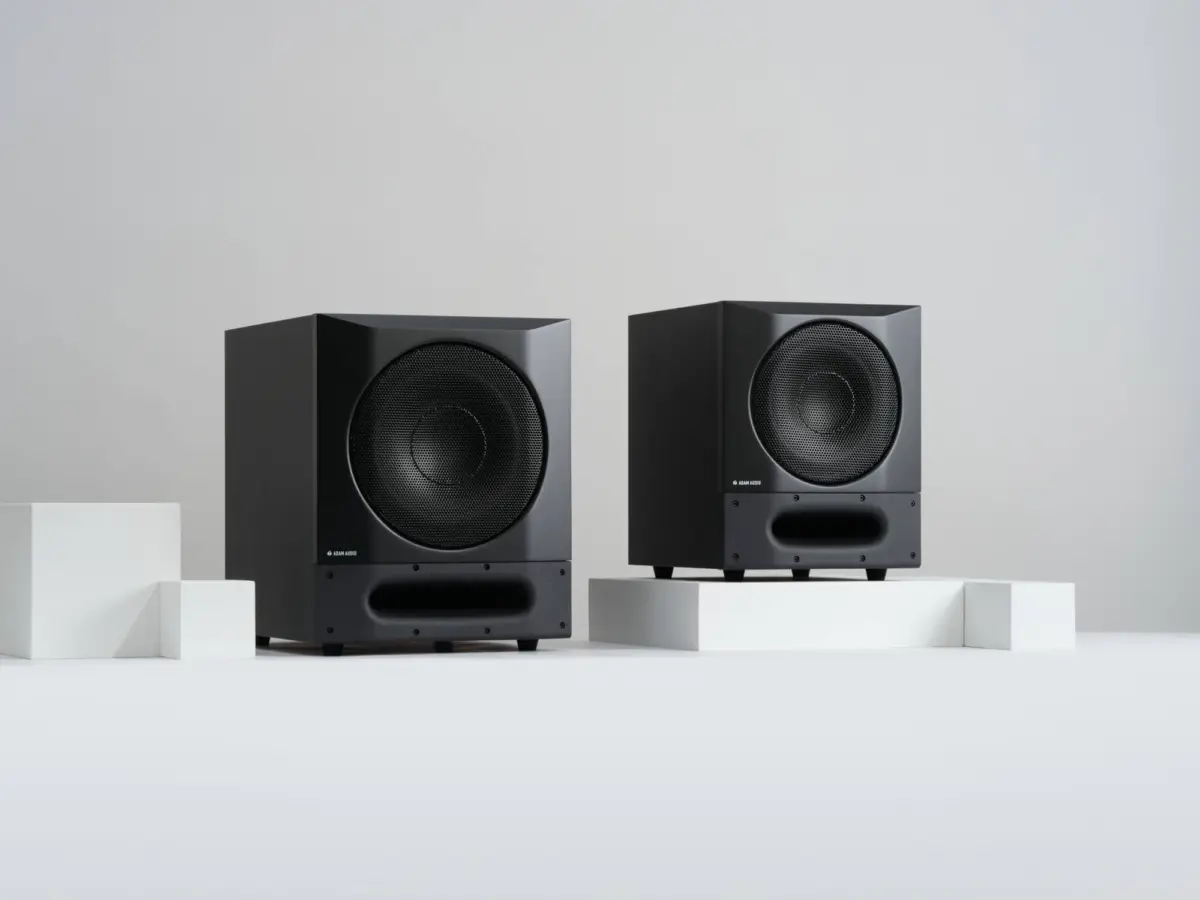
The newly unveiled subwoofers are not merely iterative updates to ADAM Audio’s catalog; they represent a fundamental modernization of low-frequency monitoring. Designed specifically to extend the low-end performance of nearfield and midfield setups, the Sub8 PRO (featuring an 8-inch driver) and Sub10 PRO (featuring a 10-inch driver) combine advanced acoustic engineering with powerful digital signal processing (DSP). By marrying robust Class D PWM amplification with intelligent network-based control systems, ADAM Audio has engineered a pair of studio workhorses that offer uncompromising power, pristine clarity, and surgical adaptability.
At the heart of this release is ADAM Audio’s proprietary ADAM Control software—a powerful network-based Ethernet management platform that brings unprecedented calibration, routing, and monitoring capabilities to the sub-bass domain. Furthermore, with flexible connectivity options including AES3 digital I/O, specialized operational modes like LFE and Wide, and a ruggedized build quality, the Sub8 PRO and Sub10 PRO are built to thrive in everything from simple stereo project studios to complex Dolby Atmos immersive setups. Priced at £829.99 for the Sub8 PRO and £1,129.99 for the Sub10 PRO, these units position themselves as premier investments for audio professionals who demand absolute transparency in their low-end translation.
Detailed Chronology: The Evolution of ADAM Audio’s Low-End Engineering
To understand the significance of the Sub8 PRO and Sub10 PRO, it is necessary to examine the trajectory of ADAM Audio within the professional monitoring landscape. Founded in Berlin in 1999, ADAM Audio quickly disrupted the studio monitor market with its proprietary X-ART and S-ART accelerated ribbon tweeter technology, which delivered unprecedented high-frequency detail and transient response. However, the company realized early on that a truly transparent monitoring system requires a cohesive, balanced relationship between sparkling highs and articulate lows.
Over the past two decades, ADAM Audio’s subwoofer iterations have steadily evolved. From legacy models that focused primarily on raw power and physical driver displacement, the company gradually shifted its engineering focus toward integration, phase coherence, and room adaptability. The introduction of digital signal processing into their monitoring ecosystem marked a watershed moment, allowing users to move away from purely analog adjustments and toward precise, software-driven alignment.
The development of the Sub PRO series began years prior to its commercial launch, driven by shifting industry demands. With the explosive rise of immersive audio formats—most notably Dolby Atmos—studios required subwoofers that could not only handle high sound pressure levels (SPL) cleanly but could also be networked, managed, and calibrated dynamically across multiple channels. Traditional analog crossovers and rear-panel potentiometer dials were no longer sufficient for complex multichannel arrays.
ADAM Audio’s engineering team tackled this challenge by developing a unified ecosystem. The groundwork was laid with the introduction of the company’s advanced A Series monitors, which integrated seamlessly with network-based software workflows. The logical next step was to design subwoofers that shared this digital DNA. The resulting Sub8 PRO and Sub10 PRO were conceptualized to bridge the gap between standalone low-frequency drivers and fully integrated, network-managed monitoring networks. By combining modern Class D amplification with sophisticated DSP room optimization, ADAM Audio has successfully transitioned its subwoofer lineup into the modern era of smart studio infrastructure.
Supporting Context & Metrics: Under the Hood of the Sub8 PRO and Sub10 PRO
Acoustic precision is dictated by the physics of materials, power delivery, and cabinet design. The Sub8 PRO and Sub10 PRO are textbook examples of rigorous acoustic engineering, utilizing bespoke components to ensure that low frequencies are reproduced without the smearing, distortion, or overhang that plagues lesser subwoofers.
Drivers, Cones, and Amplification
At the core of both units are newly engineered, fibre-reinforced paper cones. Paper remains a preferred material in high-end audio design due to its natural internal damping characteristics, which help suppress unwanted break-up modes. By reinforcing these cones with high-strength fibres and mounting them with durable rubber surrounds, ADAM Audio has created a moving assembly capable of handling extreme excursions while maintaining structural integrity.
Driving these cones are high-efficiency Class D Pulse Width Modulation (PWM) amplifiers capable of delivering a robust 200W RMS. Class D amplification is ideal for modern subwoofers; it delivers massive amounts of instantaneous current with minimal thermal waste, ensuring that transients are crisp and sustained low-frequency notes remain steady and uncompressed.
Frequency Response and Port Optimization
Performance metrics for the new line highlight their exceptional reach:
- Sub8 PRO: Delivers precise, controlled bass reproduction starting down at 26 Hz and extending up to 300 Hz.
- Sub10 PRO: Pushes the threshold even lower, offering subterranean extension starting at 21 Hz and reaching up to 300 Hz.
Achieving flat, extended response down to 21 Hz requires meticulous cabinet and port design. Low-frequency port turbulence—often heard as undesirable chuffing noises at high listening levels—has been systematically engineered out of the Sub PRO line. The internal geometry and flared openings of the bass ports have been optimized to maintain highly consistent air speeds along their entire length. This aerodynamic refinement guarantees that even when pushing high SPLs during heavy mix sessions, the bass remains tight, articulate, and free of port distortion.
Encased in solid, resonance-damped wooden cabinets outfitted with protective metal grilles, these subwoofers are built to endure the punishing physical demands of professional studio environments while remaining visually sleek and unassuming.

Connectivity and System Integration
Modern studios require flexible routing options to accommodate both legacy analog hardware and pristine digital signal chains. The Sub8 PRO and Sub10 PRO are exceptionally well-equipped in this regard:
- Analog Connectivity: Standard XLR/TRS combination sockets allow for seamless integration with traditional analog mixing consoles, monitor controllers, and audio interfaces.
- Digital Connectivity: Built-in AES3 digital inputs and outputs support high-resolution audio streams up to 24-bit/96 kHz, enabling fully digital signal paths that eliminate unnecessary digital-to-analog and analog-to-digital conversion steps.
Furthermore, the subwoofers feature specialized operational modes tailored for complex mixing environments:
- LFE Mode: Provides a dedicated, optimized cutoff specifically designed for the Low-Frequency Effects channel in Dolby Atmos and other immersive surround-sound configurations.
- Wide Mode: Unlocks the full available frequency range of the subwoofer, allowing it to operate unhindered in traditional stereo or custom bass-management setups.
ADAM Control: The Digital Nervous System
Perhaps the most transformative feature of the Sub PRO line is ADAM Control, the manufacturer’s newly minted network-based Ethernet management system. In contemporary studio design, room acoustics remain the single greatest variable influencing mix translation. Standing waves, phase cancellations, and frequency build-ups can drastically skew an engineer’s perception of the low-end, leading to mixes that translate poorly to consumer playback systems.
ADAM Control acts as a digital nervous system for the studio. Operating over standard Ethernet networking, the software provides a centralized interface for calibrating, monitoring, and tweaking every parameter of the Sub8 PRO and Sub10 PRO.
Through ADAM Control, engineers can precisely manage:
- EQ Settings: Tailor the frequency response of the subwoofer to compensate for boundary loading and room modes.
- Gain Staging: Match output levels accurately across satellite monitors and the subwoofer.
- Phase Alignment: Ensure that the acoustic crossover point between the main monitors and the subwoofer is perfectly coherent, eliminating phase cancellation holes in the crossover region.
- Delay Compensation: Fine-tune time alignment to account for physical speaker placement discrepancies within the room.
Whether deployed in a simple two-channel stereo setup or a complex multichannel immersive environment, ADAM Control streamlines the calibration process. Crucially, promotional materials and technical demonstrations for ADAM Control reveal that the system is designed to work hand-in-hand with the company’s acclaimed A Series monitors. Furthermore, ADAM Audio has hinted that the platform is forward-compatible with all future network devices, signaling a broader corporate strategy toward fully networked, software-managed studio ecosystems.
Official Statements and Industry Impact
While hardware specifications tell one part of the story, the industry reception and corporate philosophy behind product launches dictate their long-term impact. ADAM Audio has positioned the Sub8 PRO and Sub10 PRO not merely as accessories, but as foundational components of modern acoustic architecture.
In product briefings, ADAM Audio’s engineering and product development teams emphasized the necessity of addressing low-frequency accuracy in the age of immersive audio. "Mixing in Dolby Atmos or complex surround formats requires absolute trust in every single channel of your monitoring system," notes product development literature from ADAM Audio. "Low frequencies, by their very nature, interact violently with room boundaries. With the Sub PRO line and ADAM Control, we are giving engineers the surgical tools they need to tame the room and trust their low-end."
Industry insiders and early reviewers have echoed these sentiments, noting that the inclusion of AES3 digital connectivity and robust Ethernet management places ADAM Audio at the forefront of studio monitor innovation. By bridging the gap between raw electroacoustic performance and intelligent software control, the company has addressed a major pain point for professional mix engineers: the tedious, often imprecise nature of manual subwoofer calibration.
Pricing, Availability, and Future Outlook
For professionals looking to upgrade their monitoring infrastructure, ADAM Audio has positioned the Sub PRO series competitively within the high-end studio gear market:
- ADAM Sub8 PRO: £829.99
- ADAM Sub10 PRO: £1,129.99
Both models are available through authorized ADAM Audio dealers worldwide.
Looking forward, the launch of the Sub8 PRO, Sub10 PRO, and the ADAM Control ecosystem points toward an increasingly connected future for professional audio gear. As studios continue to adopt immersive audio formats, hybrid analog-digital workflows, and software-driven acoustic correction, the demand for networked hardware will only accelerate. By future-proofing their product lines with Ethernet connectivity and scalable management software, ADAM Audio has ensured that its monitoring solutions will remain relevant, adaptable, and indispensable for years to come. For the discerning engineer seeking uncompromising low-end clarity and total system control, the Sub8 PRO and Sub10 PRO represent a formidable benchmark in modern studio engineering.