Executive Overview
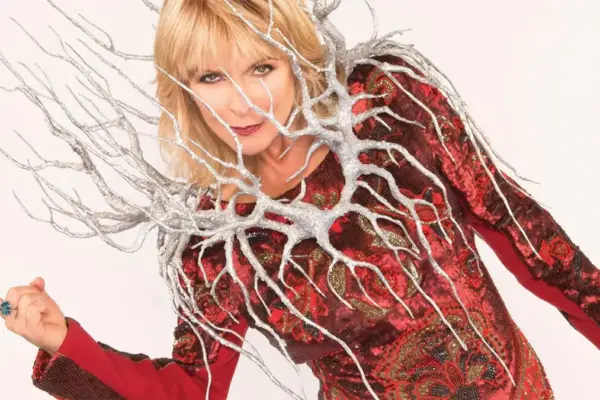
As the global music community converges on Las Palmas de Gran Canaria for the prestigious WOMEX showcase, artists arrive from every corner of the earth, carrying distinct cultural memories and sonic traditions. Among this year’s most anticipated acts is Diyet & The Love Soldiers, a genre-defying trio hailing from the remote landscapes of the Yukon Territory in Canada.
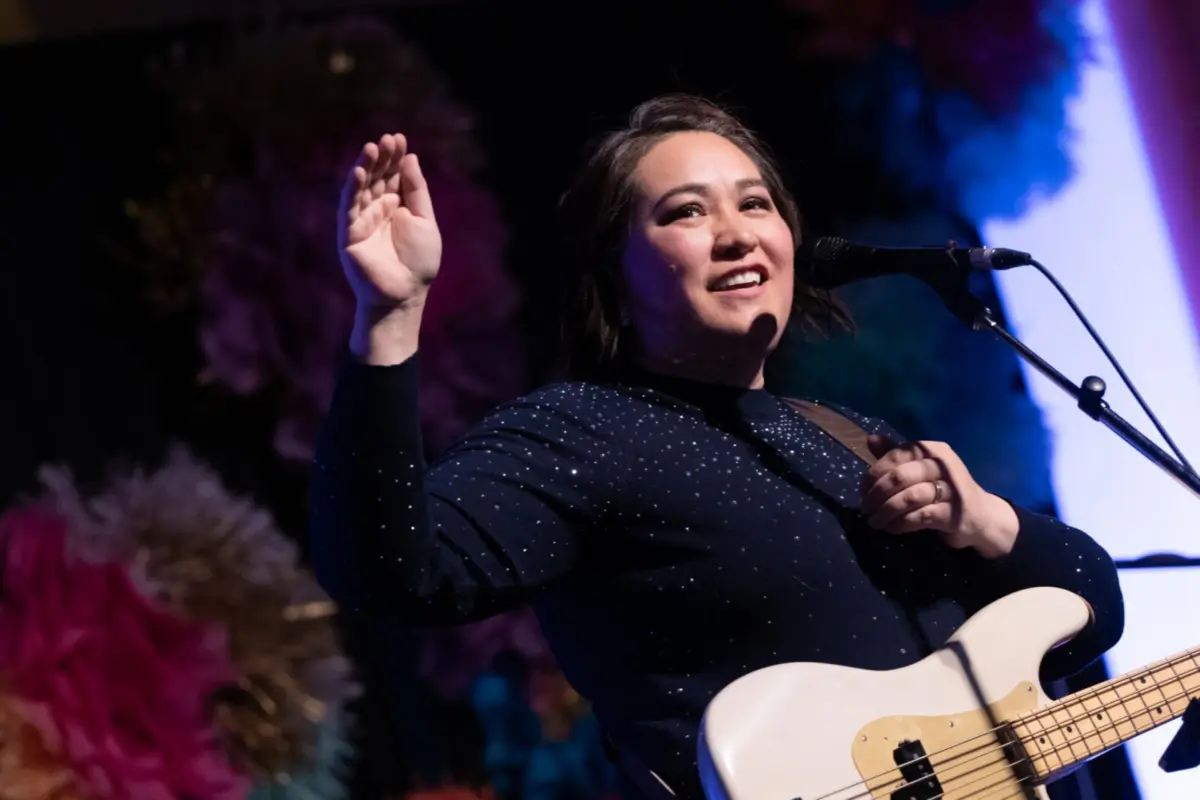
Fronted by Diyet van Lieshout—a vocalist, songwriter, and proud member of the Kluane First Nation—the group weaves alt-country, folk, and roots instrumentation with the endangered Southern Tutchone language. Born in a tent on ancestral lands where her family has thrived for more than ten thousand years, Diyet’s musical journey has taken her from the remote shores of Kluane Lake to stages across Alaska, Canada, the United States, and Europe.
Ahead of their midnight performance on the Borondón Stage at Sala San Borondón, Diyet sat down for an exclusive interview as part of the Musical Road to WOMEX series. In this conversation, she discusses the deep geographic and ancestral roots of her songwriting, the vital work of preserving Indigenous languages, and an unexpected cultural parallel discovered in the historical legacy of Gran Canaria’s Indigenous Guanche people.
This comprehensive feature explores the artistic philosophy of Diyet & The Love Soldiers, tracing their path from the glacial waters of the sub-Arctic North to the sun-drenched shores of the Atlantic, while highlighting their ongoing mission to affirm that Indigenous cultures are not relics of the past, but living, evolving forces in contemporary music.
Detailed Chronology: From the Shores of Kluane Lake to the Global Stage
Roots in the Sub-Arctic Wilderness
The story of Diyet van Lieshout begins far from metropolitan cultural hubs, embedded within the staggering topography of Canada’s Yukon. Born in a tent on the ancestral territory of the Kluane First Nation, Diyet grew up in a tight-knit community of roughly ninety people. It is a landscape defined by extremes: the relentless, glowing glow of the midnight sun during the summer months, and the profound, isolating darkness of deep sub-Arctic winters.
For the first decade of her life, music was not an industry or a career aspiration; it was an organic fabric of daily existence. It lived in the stories shared around gatherings, the traditional Southern Tutchone songs passed down through generations, and the rhythms of a community deeply attuned to the land, weather, and animal migrations.
Despite her early immersion in music, Diyet initially discovered her formidable vocal talents almost by accident as a shy ten-year-old. This accidental discovery set her on a rigorous artistic trajectory. She pursued formal training, earning a degree in voice performance before branching out into commercial songwriting for a publishing house in Vancouver and later teaching vocal arts in the Netherlands.
The Return North and the Birth of The Love Soldiers
Gravitating back to her homeland, Diyet returned to the Yukon alongside her Dutch husband, Robert van Lieshout. They settled in a small village devoid of traditional performance venues—a paradox that ultimately catalyzed her authentic artistic voice. Far away from the commercial pressures of urban music centers, Diyet began writing raw, deeply personal songs for herself.
It was within this remote sanctuary that Diyet & The Love Soldiers took form. The trio brings together three distinct musical backgrounds:
- Diyet van Lieshout: Lead vocals, bass, and primary songwriting.
- Robert van Lieshout: Acoustic guitar, drums, and percussion, bringing a nuanced European rhythmic sensibility to North American roots music.
- Bob Hamilton: A Juno Award-winning producer and multi-instrumentalist handling electric guitar, pedal steel, and mandolin, grounding the ensemble’s rich sonic textures.
Together, the trio crafts a distinct brand of alt-country, folk, and roots music threaded with Southern Tutchone. Diyet’s multifaceted heritage—spanning Southern Tutchone, Tlingit, Japanese, and Scottish ancestry—informs her worldview. She frequently describes her lifestyle as "living in two worlds at once," alternating between traditional subsistence practices like ice-fishing for dinner one day and standing before international festival audiences the next.
Touring, Seeds of Dreaming, and the Global Resonance of Home
Over the past five years, the band’s touring footprint expanded dramatically across Alaska, Canada, and Europe. Yet, no matter how far the road took them, Diyet’s songwriting continually circled back to Kluane Lake.
This journey culminated in the release of their acclaimed album, Seeds of Dreaming. Written across half a decade of relentless touring, every track on the record points homeward. Songs like "8th Wonder" serve as emotional tributes to her mother, a survivor of Canada’s devastating residential school system. Meanwhile, "Grandfather’s Country" is built directly upon the Southern Tutchone phrase Ásí Keyi—translating to "my grandfather’s country"—honoring the ancestral lands where she was raised.
Supporting Context & Metrics: The Intersection of Culture, Language, and Geography
To fully appreciate the significance of Diyet & The Love Soldiers’ appearance at WOMEX, one must examine the broader socio-cultural metrics surrounding endangered Indigenous languages and contemporary roots music.
The Vulnerability of Indigenous Languages
According to linguistic experts, thousands of the world’s approximately 7,000 languages are currently endangered, with Indigenous languages facing the most severe pressure due to historical colonization, forced assimilation policies, and globalization. Southern Tutchone, spoken by the First Nations of the southwestern Yukon, is among these fragile linguistic treasures.
When Diyet incorporates Southern Tutchone into contemporary alt-country and folk arrangements, she is engaging in active language revitalization. As she notes, language preservation goes far beyond vocabulary:
- Worldview and Philosophy: Indigenous languages encode unique philosophical frameworks regarding human relationships with the natural world.
- Intergenerational Transmission: Passing down songs in native tongues bridges the gap between elders and youth, ensuring cultural continuity.
- Sonic Identity: The tonal and rhythmic qualities of Southern Tutchone provide an organic percussive and melodic texture that elevates standard folk and country structures.
The Cultural Landscape of WOMEX
WOMEX (Worldwide Music Expo) stands as the most international and diverse music meeting in the world, bringing together thousands of professionals—including booking agents, label executives, festival directors, and journalists—from over 90 countries.
For an artist from a community of ninety people to step onto the Borondón Stage at Sala San Borondón in Las Palmas de Gran Canaria represents a staggering geographical and cultural leap. It underscores the modern festival’s ability to act as a bridge between hyper-local traditions and global audiences, proving that deeply specific regional narratives possess universal emotional resonance.
Official Statements & Q&A Insights
Ahead of their showcase, Diyet shared profound insights regarding her music, her heritage, and her first encounter with the history of the Canary Islands during her interview with the Musical Road to WOMEX.
On the World Her Music Inhabits
"My music lives in the North. It comes from the mountains, the water, the long winters, the midnight sun, and from growing up in a place where the land is always present in your life… I think of the music as a meeting place between worlds, Southern Tutchone and English, traditional and contemporary, Indigenous and non-Indigenous."
On Connecting with the History of Gran Canaria
When informed about the Guanches—the Indigenous people of the Canary Islands whose culture and language were largely suppressed following the Spanish conquest—Diyet expressed immediate intellectual and emotional solidarity:
"Coming from a small Indigenous Nation and being involved in the work of keeping Southern Tutchone alive, I understand how fragile language can become when it stops being passed naturally from one generation to another… Language carries so much more than words. It carries humour, worldview, relationships to land and ways of understanding who you are."
On Shifting Stereotypes of Indigenous Music
Diyet is fiercely committed to challenging preconceived notions of what Indigenous art should sound like, rejecting tokenism in favor of genuine artistic expression:
"At WOMEX, I want people to meet us as we actually are, not as some idea of what Indigenous music is supposed to sound like. If people leave our showcase feeling like they have travelled north for 45 minutes, met some people they didn’t know before and maybe understand our part of the world a little differently, then I think we’ve done our job."
On Healing and Resilience
Addressing the complex themes of historical trauma present in her songwriting, Diyet emphasized a forward-looking paradigm of healing:
"For me, the important message is that Indigenous people are still here, our cultures are alive, and we are creating new things. Healing isn’t about pretending difficult things didn’t happen. It’s about carrying that history while still moving forward."
Future Outlook: Orchestral Horizons and Beyond
As Seeds of Dreaming celebrates its first anniversary and the trio cements its reputation on the international touring circuit, Diyet is already casting her gaze toward the next chapter of her artistic evolution.
While the intimate chemistry of the trio—consisting of Diyet, Robert van Lieshout, and Bob Hamilton—remains the beating heart of their live performances, new sonic horizons beckon. Diyet has begun exploring ambitious orchestral arrangements for her catalog. Collaborating with symphonic players to expand songs born in the sub-Arctic wilderness into a grand, cinematic scale has opened up an entirely new dimension of creative possibility.
By continuing to write in Southern Tutchone and integrating her native language seamlessly into expansive musical landscapes—without reducing it to a mere ceremonial or static artifact—Diyet is proving that Indigenous storytelling is dynamic, forward-looking, and infinitely adaptable.
Performance Details
For delegates and music lovers attending WOMEX in Las Palmas de Gran Canaria, the journey to the Yukon is only a heartbeat away.
- Artist: Diyet & The Love Soldiers
- Event: WOMEX Showcase Festival (Musical Road to WOMEX)
- Venue: Borondón Stage at Sala San Borondón
- Date & Time: Friday, 23 October, from 00:00 to 00:45 (Midnight)
As Diyet extends her personal invitation to the audience: "You don’t need to know anything about the Yukon. You don’t need to understand Southern Tutchone. Just come ready to listen. Hopefully when you leave, true North won’t feel quite so far away."