Executive Overview
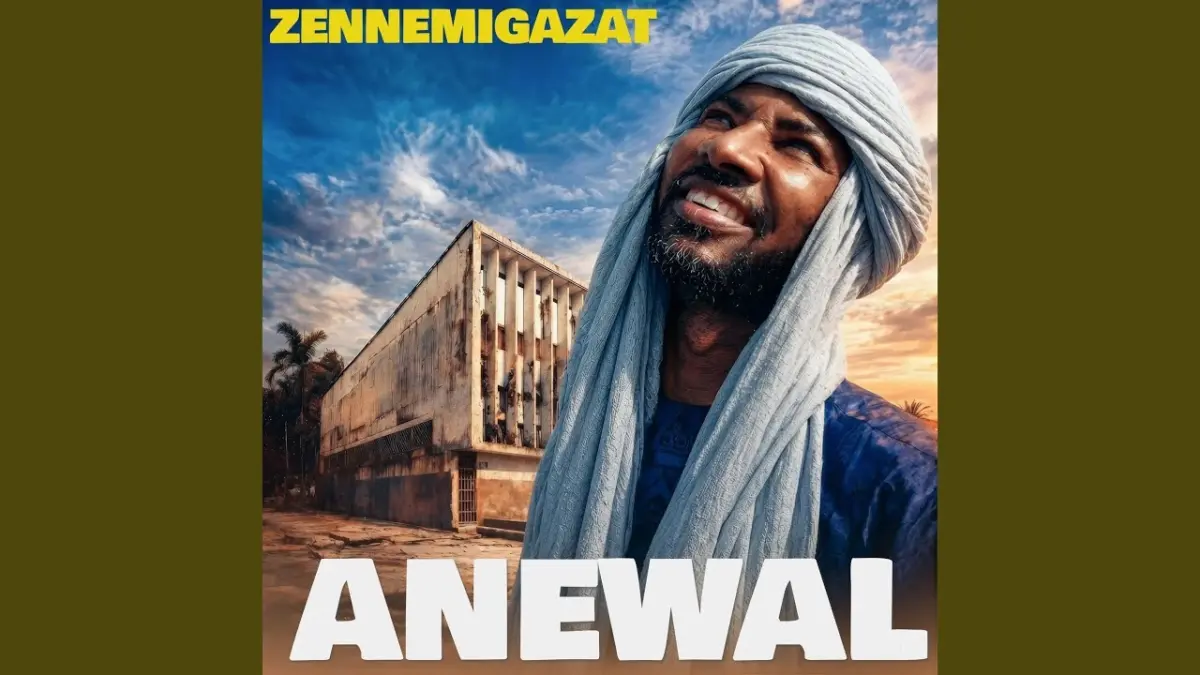
In the pantheon of global music collaborations, few bridges span such vast geographic, cultural, and sonic distances as the one forged between Tuareg desert bluesman Alhousseini Mohamed Anivolla—better known as ANEWAL—and Cameroonian music icon Sam Fan Thomas. Their intersecting artistic paths have culminated in Timchar, a sweeping cross-continental masterwork released via World Music Network. Preceded by the critically acclaimed August single "Zennemigazat," the full-length album represents a profound milestone in contemporary African music, uniting the hypnotic, cyclical electric guitar phrasing of the Sahara with the vibrant, high-energy pulse of Central African makassi.
For ANEWAL, whose moniker translates from Tamasheq as "the walking man"—a proud heritage name inherited from his grandfather—Timchar (meaning "things that have gone") is more than just a musical experiment. It is a deeply personal odyssey dedicated to his late mother, a sonic exploration of memory, displacement, and cultural exchange. Recorded in the bustling port city of Douala, Cameroon, the album successfully pairs the nomadic, rustic traditions of Niger’s Tuareg communities with the urban dance-floor dynamism that once captivated a young ANEWAL through the flickering, black-and-white television screens of his youth.
This comprehensive report examines the trajectory of ANEWAL’s career, from his formative years under the vast Saharan skies to his groundbreaking work with Etran Finatawa, his fateful recording sessions in Central Africa, and the broader implications of Timchar on the global music landscape.
Detailed Chronology: From Black-and-White Screens to the Douala Studio
1. Formative Years: The Magic of Sam Fan Thomas in Niger
Long before he became a global ambassador for Tuareg desert blues, Alhousseini Mohamed Anivolla was a boy growing up in Niger, consuming culture through the limited lens of state television broadcasts. In those days, public television in Niger transmitted strictly in black and white. Yet, the monochromatic visual barrier did nothing to dull the explosive, kaleidoscopic energy radiating from the screen when Cameroon’s Sam Fan Thomas appeared.
"We all wanted to dance like him," ANEWAL recalls, reflecting on an era when Thomas’s infectious 1984 global dance-floor anthem, "African Typic Collection," conquered international charts. The track’s iconic basslines and soaring melodies transcended language and borders, embedding themselves deeply into the subconscious of a generation of West African youths—including a future guitar hero of the Sahara.
2. The Nomadic Roots and the Rise of Etran Finatawa
Born into the nomadic Tuareg lifestyle, ANEWAL’s early life was defined by the rhythms of migration across the Sahel. However, his artistic aspirations would eventually propel him onto the world stage. In 2004, he reached a pivotal career milestone by co-founding Etran Finatawa, a groundbreaking musical collective that achieved the seemingly impossible: bridging the historical divide between Tuareg musicians and their traditional neighbors and rivals, the Wodaabe pastoralists, to share the same stage.
Etran Finatawa’s mission was as much about peacebuilding as it was about musical innovation. By merging the hypnotic guitar-driven desert blues of the Tuareg with the polyphonic, clapping-and-chanting vocal traditions of the Wodaabe, the band forged a completely unique sonic identity. Over the next two decades, Etran Finatawa took their powerful message and mesmerizing performances to audiences across five continents, solidifying their status as pioneers of modern African world music.
The band’s global cultural footprint expanded even further in 2020, when the renowned British electronic music duo Disclosure sampled Etran Finatawa’s recordings, transforming them into a contemporary dance track titled "Etran." This unexpected crossover underscored the timeless, universal appeal of the collective’s Saharan grooves.
3. The Convergence: Recording Timchar in Cameroon
Decades after watching Sam Fan Thomas dance on a grainy television screen in Niger, ANEWAL orchestrated one of the most remarkable full-circle moments in contemporary music. Traveling south to the humid, vibrant port city of Douala, ANEWAL entered Thomas’s private recording studio to collaborate directly with his childhood idol.
The resulting sessions yielded "Zennemigazat," the lead single released in August, which sets the stage for the full Timchar album. The track is a masterclass in cross-genre synthesis. ANEWAL’s signature desert blues style—characterized by electric guitar phrases that loop, twist, and circle back upon themselves beneath a weathered, gravelly vocal delivery—interlocks seamlessly with Thomas’s proprietary makassi rhythm. Makassi is Thomas’s own accelerated, high-octane evolution of makossa, Cameroon’s legendary urban dance music.
With Thomas not only producing the tracks but also lending his legendary vocals to harmonize with ANEWAL, "Zennemigazat" became an instant transnational bridge, wedding the dust and wind of the Sahara to the sweat and electricity of the Central African club scene.
Supporting Context & Metrics: The Architecture of Desert Blues and Makassi
To fully appreciate the weight of Timchar, one must examine the distinct musical ecosystems that converge within its grooves.
The Evolution of Desert Blues (Ishumar music)
Desert blues, known locally as ishumar (derived from the French word chômeur, or unemployed, reflecting the economic marginalization of young Tuareg men in the 20th century), emerged as a voice of resistance, longing, and identity. Rooted in traditional nomadic poetry and wedding music, ishumar was revolutionized by the adoption of the electric guitar. Artists like Tinariwen, Bombino, and ANEWAL transformed campfires into international stages. The genre’s sonic hallmark is its modal, cyclical guitar lines that mimic the hypnotic pacing of a camel caravan crossing endless sand dunes, combined with emotionally heavy, poetic lyricism that addresses political struggle, exile, and the beauty of the desert.
Cameroonian Makossa and Makassi
In contrast, Cameroonian makossa—and its derivative, makassi—is an urban phenomenon born in the bars and dance halls of Douala and Yaoundé during the post-independence era. Propelled by prominent basslines, syncopated brass sections, and high-energy percussion, makossa became one of Africa’s dominant pop exports in the 1970s and 1980s. Sam Fan Thomas took this foundation and accelerated the tempo, injecting a buoyant, celebratory spirit that defined the soundscape of West and Central Africa.
Comparative Metrics of Collaboration
| Metric / Attribute | ANEWAL (Alhousseini Mohamed Anivolla) | Sam Fan Thomas |
|---|---|---|
| Origin | Agadez/Nomadic regions, Niger | Douala/Edea, Cameroon |
| Primary Genre | Tuareg Desert Blues / Ishumar | Makassi / Cameroonian Pop |
| Key Instrument | Electric Guitar / Vocals | Production / Vocals / Guitar |
| Global Breakthrough | Co-founder of Etran Finatawa (2004) | "African Typic Collection" (1984) |
| Label Partnership | World Music Network | Independent / Legacy Collaborator |
Official Statements & Artistic Vision
The creative ethos behind Timchar is anchored in themes of legacy, remembrance, and pan-African unity. In various statements surrounding the album’s rollout, ANEWAL has emphasized the emotional and historical weight carried by the project.
"The title Timchar translates directly to ‘things that have gone’ or ‘what remains of the past,’" ANEWAL explains through his collaborative network. "As a nomad, you are always moving forward, but your memories, your ancestors, and the people who shaped you remain anchored in the places you have left behind. This album is a monument to those memories, and above all, it is dedicated to my mother, who instilled in me the strength to walk these long roads."
Speaking on the unexpected pairing with Sam Fan Thomas, ANEWAL reflects on the realization of a lifelong dream:
"When I was a boy watching television in Niger, watching Sam Fan Thomas move millions of people with his music, I never could have imagined that one day we would share a studio, let alone that he would produce my songs. This collaboration proves that African music speaks a single language, no matter how many deserts and rivers lie between us."
World Music Network, in their curatorial notes for the album, highlighted the historical importance of the release:
"Timchar is not merely a collection of songs; it is a cultural artifact of immense value. By fusing the meditative melancholy of the Tuareg guitar tradition with the joyous exuberance of Cameroonian makassi, ANEWAL and Sam Fan Thomas have created a timeless dialogue between the Sahara and the tropical coast."
Future Outlook: The Global Trajectory of ANEWAL and Timchar
As Timchar makes its way into the hands of critics, world music enthusiasts, and dance-floor aficionados globally, its release marks a critical juncture for contemporary African roots music.
- Expanding the Boundaries of Desert Blues: For years, desert blues has enjoyed mainstream international acclaim, largely through European and North American festival circuits. ANEWAL’s collaboration with Central African production heavyweights breaks open the insular geography of the genre, proving that the desert guitar can converse fluidly with tropical and urban African rhythms without losing its distinct identity.
- Streaming and Global Reach: With lead singles like "Zennemigazat" securing prominent placement on global streaming platforms (such as Spotify) and major curation by networks like World Music Network, ANEWAL is poised to introduce a new generation of listeners to the depth of Tuareg culture—much like Disclosure did when sampling Etran Finatawa in 2020.
- Live Performance Prospects: Industry insiders anticipate that the partnership between ANEWAL and the legacy production networks surrounding Sam Fan Thomas will inspire trans-continental live touring circuits. Bringing the high-octane makassi beats and hypnotic desert blues together on the live stage presents a formidable logistical and artistic triumph that festival directors across Europe, the Americas, and Africa are eager to book.
Ultimately, Timchar stands as a testament to the enduring power of art to conquer distance, time, and circumstance. From a young boy captivated by a black-and-white television screen in Niger to a master guitarist recording in the heart of Douala, ANEWAL has proven that the "walking man"’s journey is far from over—and the path he is carving leaves an indelible mark on the global musical map.