Executive Overview
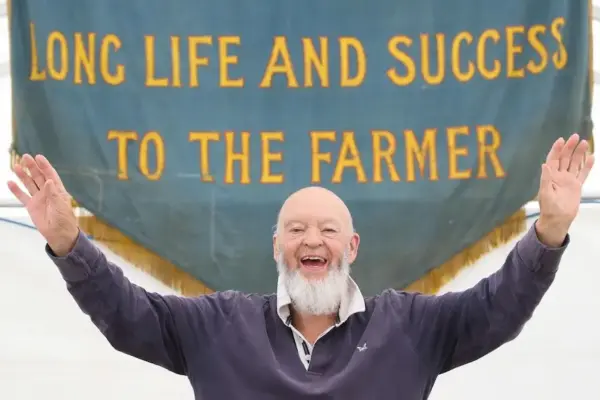
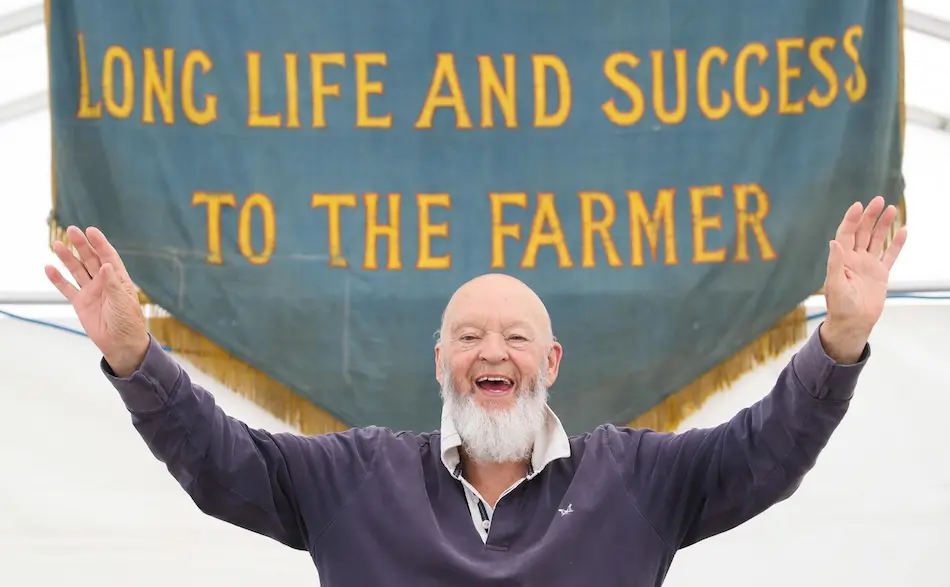
To generations of music lovers, counterculturalists, and devoted festival-goers worldwide, Sir Michael Eavis is more than just a Somerset dairy farmer—he is the visionary architect of the greatest greenfield festival on earth. As he marks his milestone 90th birthday at his home in Pilton, Eavis reflects on more than half a century of reshaping the global cultural and live music landscape. From its humble, countercultural beginnings in 1970 as the Pilton Pop, Folk & Blues Festival—where tickets cost just £1 and included free milk from the farm—to a multi-award-winning cultural juggernaut that defines the British summer, the Glastonbury Festival has weathered nearly every conceivable storm.
In an exclusive, wide-ranging interview conducted at Worthy Farm, Eavis discusses the endurance that keeps him vital at ninety, his memories of past musical milestones including Neil Young’s transcendent sets, and the ongoing, active planning during the festival’s designated fallow year. Beyond the stages, the lights, and the legendary headliners, this milestone anniversary offers a unique vantage point to evaluate Eavis’s broader societal impact. From pioneering a sustainable local dairy partnership that sees Worthy Farm cheddar stocked in supermarkets across the United Kingdom, to championing social housing developments in Pilton and multi-million-pound charitable contributions, Eavis’s life story remains an extraordinary testament to resilience, conviction, and community-driven vision. As he prepares to celebrate his ninth decade with family, local villagers, and a closely guarded three-song set with his band, this retrospective explores the making of an icon who truly did it "his way."
Detailed Chronology: From 1970 to the Modern Era
The Genesis: Summer 1970
The Glastonbury story began not in corporate boardrooms or high-end talent agencies, but on a modest dairy farm in Somerset, inspired by an entirely different kind of gathering. In 1974, reflecting on his motivations, Eavis recalled paying £1 to see Led Zeppelin at the Bath Festival of Blues and Progressive Music in 1970. Impressed and electrified by the scale of the countercultural movement, he tracked down the festival’s organizers, secured the contact for musical acts, and decided to host his own event at Worthy Farm.
On September 19, 1970, approximately 1,500 people gathered for the first-ever Pilton Festival. Headlined by T. Rex (who stepped in after Tyrannosaurus Rex frontman Marc Bolan pulled out at the eleventh hour), the event offered a blueprint for future countercultural havens. Attendees paid a guinea (£1.10) for admission, a price that famously included free milk pumped straight from the farm’s dairy cows. Though modest by modern standards, the seed had been planted.
Navigating the Decades of Turmoil
The road to global supremacy was fraught with existential threats, legal battles, and fierce local opposition. Throughout the 1970s and 1980s, Eavis found himself locked in continuous bureaucratic warfare with local authorities, magistrates, and village residents who feared the influx of thousands of hippies, travellers, and music fans.
"In those days, I was always at war with the council and the village and the local magistrates and the police," Eavis recalls. The tension reached critical points where the survival of the festival hung in the balance. He remembers a stark warning from the chairman of the local magistrates who once bluntly told him, "If you do this again, you’ve had it."
Rather than backing down, Eavis engaged with the community, negotiated licensing hurdles, and gradually transformed local skepticism into civic pride. He notes that the very struggles and resistance he faced early on were essential in forging the festival’s robust operational framework. "The fight was really what made it work, there’s no doubt about that. It was certainly worth it!"
Institutionalization and Cultural Dominance
By the turn of the 21st century, Glastonbury had transitioned from a chaotic, boundary-pushing hippie gathering into a sophisticated, highly regulated cultural institution. The introduction of the Worthy Farm perimeter fence in 2002—designed to curb rampant ticket counterfeiting and overcrowding—marked a turning point toward structural security and financial stability.
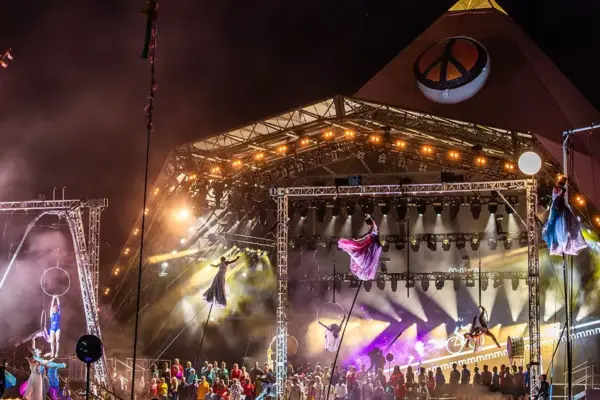
Despite scaling up to accommodate over 210,000 attendees, the festival has fiercely guarded its independent ethos. Under the guidance of Michael and his daughter, Emily Eavis, the festival has continued to innovate, introducing dedicated zones like Arcadia, Greenpeace fields, and the Pilton Palais cinema, all while maintaining its commitment to environmental sustainability and social activism.
Supporting Context & Metrics: Beyond the Music
While the headliners on the Pyramid Stage capture global headlines, the true legacy of Michael Eavis extends deeply into agricultural commerce, rural development, and philanthropy.
The Worthy Farm Agricultural Legacy
At its core, Worthy Farm remains a fully functioning, highly productive dairy enterprise. The daily operations produce thousands of liters of milk, a significant portion of which is supplied directly to Wyke Farms to produce authentic Worthy Farm Reserve Cheddar. What started as an insular local product has grown into a commercial success story, with the cheese now distributed through major retailers, including nationwide availability in Co-op supermarkets across Britain. Eavis often marvels at this unexpected commercial footprint, recalling a spontaneous visit to a Co-op in Glasgow where he discovered shelves stocked with Worthy Farm cheddar.
Rural Philanthropy and Social Housing
Eavis’s commitment to his local community goes far beyond commercial ventures; it is anchored in a deep-rooted Methodist ethos that prioritizes social equity and collective welfare. Recognizing the housing crisis facing rural Somerset—where younger generations and working-class families are often priced out of their home villages—Eavis spearheaded a pioneering social housing initiative in Pilton.
Working alongside local trusts, Worthy Farm land was utilized to construct 52 affordable social houses designed specifically for local residents. The project gained national attention when former England footballer and broadcaster Gary Lineker visited Pilton to officially open the development, producing a widely shared documentary feature that highlighted the model’s success.
"Gary Lineker came to open the houses, and he really saw the value of them," Eavis reflects. "He did a lovely interview about them and it went everywhere. I think my mother would be proud of me for the houses too. They look lovely on a sunny day. I drive that way out of the village, you know, and I see the sun shining out on them and think, ‘How did all this happen?’"
In addition to housing, Glastonbury Festival regularly disburses millions of pounds to charitable causes, including long-standing partnerships with Greenpeace, WaterAid, and Oxfam, alongside regional donations supporting emergency services, schools, and community infrastructure.
Official Statements and Reflections
As he reaches his 90th milestone, Sir Michael Eavis remains remarkably active, sharp, and engaged with the creative community that populates his world. During his anniversary interview at Worthy Farm, he shared his perspectives on aging, artistic curation, and his enduring passions:
-
On reaching 90 and the culmination of his life’s work:
"I feel very well actually. It all feels like the culmination of more than 50 years of work… It’s been really good, though. It’s all been a long story of excitement. That’s probably what’s keeping me going!" -
On his favorite festival memories:
Reflecting on the pantheon of musical legends who have graced Worthy Farm—from David Bowie and Radiohead to Beyoncé and Paul McCartney—Eavis maintains a present-focused philosophy:
"Do you know, I always think that the most recent one is the best one. I really do. This year’s Festival was a good one, wasn’t it? My top act was Neil Young on the Saturday night. He was so good. He really loves performing here and he played such a great set." -
On the enduring political and cultural identity of the festival:
When asked if the festival retains its social conscience, Eavis is unequivocal:
"Oh absolutely. There will always be a political angle there. And I think people expect that." When questioned about the influence of his Methodist upbringing on this worldview, he simply answers: "I’m sure it is."
Future Outlook: The Fallow Year and Beyond
As Glastonbury enters its scheduled fallow year—a necessary ecological break allowing Worthy Farm’s land, soil, and local wildlife to recover from the intense footprint of hundreds of thousands of visitors—some might assume operations wind down. For Michael Eavis, however, slowing down is not part of the vocabulary.
True to form, Eavis has spent recent weeks actively engaging with the creative minds behind the festival’s most ambitious physical installations. A recent week included collaborative meetings with structural visionary Joe Rush and the kinetic art engineers of Arcadia, reinforcing the reality that festival planning is a continuous, year-round endeavor.
Looking ahead to the future, management of Glastonbury Festival has increasingly transitioned to Emily Eavis and the wider operational team, ensuring that the core values established by Michael in 1970 will be preserved for decades to come. Ticket demand remains unprecedentedly high; as Eavis remarks with a knowing smile when asked if a million tickets would sell out, "They probably would!"
For his 90th birthday celebration, true to his unpretentious roots, Eavis has eschewed grand international galas in favor of an intimate gathering in Pilton with family, friends, and local villagers. True to form, the man who has shared stages with rock royalty plans to step up to the microphone with his band to perform a tightly guarded three-song set. When teased that My Way must surely be on the setlist, Eavis laughs: "That’s a good guess! Yeah, I think it would be fair to say that."
For a dairy farmer from Somerset who turned a modest field into the cultural heartbeat of the modern music world, doing it his way has changed the cultural landscape forever.