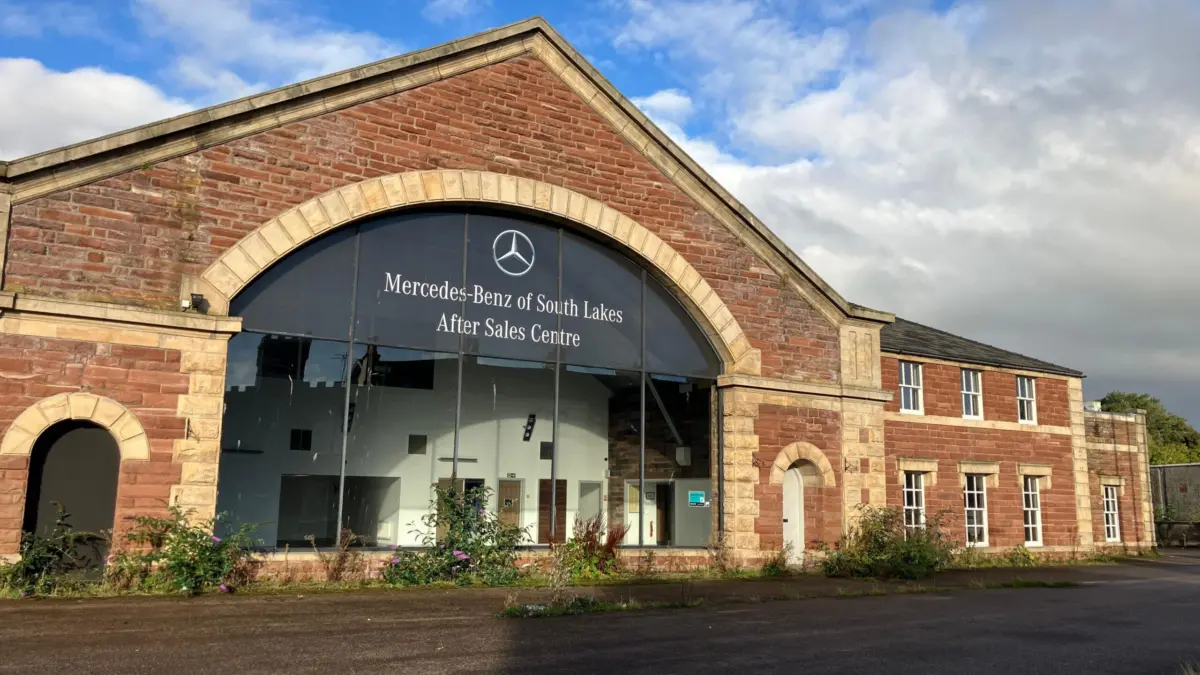
In an ambitious move that promises to redefine the cultural landscape of Northern England, Turner Prize-winning artist Keith Tyson has unveiled plans to transform a vacant, historical car showroom in Ulverston into a vibrant centre for contemporary art, education, and community engagement. Tyson, who grew up in the region, has purchased the former Mercedes-Benz garage on Princes Street—a striking red sandstone and industrial-style structure.
The privately funded regeneration project aims to bridge a historical geographical gap in the area’s cultural infrastructure. Growing up in a locality devoid of professional art galleries, Tyson’s own formative artistic education relied heavily on local libraries. With this new initiative, he intends to provide the youth of Ulverston and the wider Cumbrian community with direct access to world-class exhibitions, reference libraries, and educational programmes.
While the project is currently in its nascent stages, local leaders, educators, and arts advocates are already hailing the initiative as a potential cornerstone for Northern creativity. By merging architectural preservation with community-driven cultural programming, Tyson’s venture seeks to elevate Ulverston’s already buzzing festival culture into a nationally recognized destination for the arts.
Detailed Chronology
The Roots of Creativity: Tyson’s Early Years in Cumbria
Long before his rise to international acclaim, Keith Tyson’s artistic journey began in the classrooms and libraries of rural Cumbria. As a young student at George Romney School in Dalton, Tyson’s innate creative abilities were quickly identified by his educators. Adrian Newnham, Tyson’s art teacher when the future laureate was just ten years old, recognized an exceptional spark. Newnham preserved some of Tyson’s childhood artwork—a testament to a rare, foundational talent that would eventually blossom on the global stage.
In interviews reflecting on his youth, Tyson has frequently noted the isolation of his upbringing regarding fine art. With no traditional galleries for miles around, his early inspiration was self-sourced through literature, local libraries, and a relentless personal curiosity about the intersection of art, science, and philosophy.
The Asccent to National Prominence
Tyson’s departure from Cumbria ultimately led him to the vanguard of the British contemporary art scene. Working across a diverse array of media—including painting, large-scale sculpture, complex installations, and digital concepts—he developed a distinct methodology that merges empirical science with philosophical inquiry.
His breakthrough came in 2002 when he was awarded the prestigious Turner Prize, one of the art world’s highest accolades. Notably, upon receiving the award, Tyson publicly acknowledged his former teacher, Adrian Newnham, cementing a lifelong connection to the educational mentors who shaped his early trajectory. Over the decades, Tyson’s work has been exhibited globally, yet his emotional and cultural ties to the North of England have remained remarkably persistent.
The Acquisition of the Princes Street Garage
The pivotal turning point for the Ulverston project occurred when Tyson acquired the former Mercedes-Benz of South Lakes After Sales Centre on Princes Street. The building itself is an architectural juxtaposition: a grand red sandstone structure featuring a central arched glass frontage and classic industrial detailing, coupled with weathered utility spaces and expansive open-plan interiors.
Though the building has experienced periods of dormancy and urban weathering—with peeling paint, exposed masonry, and overgrown foliage marking its recent past—Tyson envisioned something profound within its rugged framework. Rather than seeing a derelict commercial asset, he recognized a cavernous, adaptable canvas capable of hosting large-scale installations, public workshops, and academic archives.
Supporting Context & Metrics
Bridging the Cultural Infrastructure Gap in the North
Tyson’s initiative addresses a well-documented disparity in regional cultural funding and infrastructure across the United Kingdom. While metropolitan hubs like London, Manchester, and Liverpool boast dense networks of publicly funded galleries and museums, rural and post-industrial towns often face severe deficits in permanent contemporary art spaces.
The Rural Art Deficit: Studies by regional arts councils consistently highlight that young people growing up outside major urban centres are significantly less likely to visit a contemporary art gallery before the age of 18.
Economic and Cultural Regeneration: Grassroots, artist-led regeneration projects have increasingly proven to be catalysts for local economies. By converting redundant industrial or commercial architecture into cultural venues, towns can attract cultural tourism, foster creative micro-economies, and enhance civic pride.
Architectural Heritage Preservation: The reuse of the Princes Street garage avoids the sterile nature of new-build construction, instead breathing new life into Ulverston’s historical built environment by celebrating its industrial vernacular—red sandstone, arched glass, and robust ironwork.
Ulverston: A Festival Town Ready for Expansion
Ulverston is already widely celebrated as a vibrant cultural node within Cumbria, famous for its lively community festivals, street theatre, and historic charm (including being the birthplace of legendary comedian Stan Laurel). However, the town has historically lacked a dedicated, permanent institution capable of mounting major contemporary art exhibitions and year-round educational residencies.
Local stakeholders believe that Tyson’s conversion of the Mercedes-Benz showroom will provide the missing physical anchor needed to transition Ulverston from a seasonal festival destination into a year-round pilgrimage site for art enthusiasts across the North of England.
Official Statements and Perspectives
Keith Tyson on Vision and Community Impact
Discussing the motivations behind the privately funded venture, Keith Tyson emphasized the deep personal resonance of the project:
"We’re still in the very early stages of the project, but I’m really excited about this beautiful building’s potential to become an arts destination, celebrating creativity, especially in the north, and supporting learning and engagement through exhibitions, education, and other resources."
Reflecting on his own childhood, Tyson noted the profound impact of having physical spaces dedicated to learning:
"There were no galleries for miles around when I was growing up. This is an incredible chance to give young people in the community an opportunity to see and learn about art in a way that I simply never had."
Educators and Local Advocates
Adrian Newnham, reflecting on his former student’s journey from a talented ten-year-old in Dalton to a world-class artist and philanthropist, expressed immense pride in the upcoming venture:
"I was Keith’s art teacher when he was 10 years old. I told him he had a talent and I kept his artwork. When he won the Turner Prize, I showed him the artwork I’d kept, and he thanked me in the programme. He was a highly talented lad."
Newnham added that the community alignment could not be more ideal:
"Ulverston is a festival town with a cultural buzz. Hopefully, his venture will raise the artistic status of the town even more."
Future Outlook: What Lies Ahead for Princes Street
As the project moves out of its conceptual infancy and into detailed architectural planning, several key milestones lie on the horizon:
Architectural and Engineering Assessments: Specialists will need to evaluate the structural integrity of the red sandstone facade and the expansive industrial interiors of the former garage to ensure compliance with modern public assembly and gallery standards (including climate control for sensitive artworks and accessible public amenities).
Community Consultation: Tyson and his team are expected to engage local schools, community groups, and local authorities to shape the programming of the reference library, workshop spaces, and exhibition schedules.
Phased Development Strategy: Given the scale of the privately funded initiative, the regeneration will likely roll out in phases—starting with secure structural stabilization and basic exhibition spaces, followed by fully equipped educational workshops and archival facilities.
By rooting a world-class contemporary vision in the industrial soil of his hometown, Keith Tyson is not merely repurposing a building; he is constructing a bridge between his own extraordinary artistic legacy and the untapped creative potential of the next generation of Cumbrian youth.