
In her latest literary achievement, multi-bestseller and Pulitzer Prize-winning author Barbara Kingsolver returns with Partita, a deeply resonant, structurally innovative novel that explores the complex architecture of grief, memory, and artistic dedication. Centered on the life of Livia—a gifted classical pianist navigating the fault lines of class, trauma, and personal identity—the novel uses the vocabulary and structural form of a musical composition to mirror the chaotic, beautiful, and ultimately reconciliatory trajectory of a human life.
At its core, Partita investigates the metaphor of the musical partita: a piece composed of disparate, contrasting movements that an artist must labor to synthesize into a cohesive whole. For Livia, whose life is fractured by familial violence, socioeconomic displacement, and the profound tragedy of her brother’s suicide, achieving this synthesis requires confronting the unvarnished truths of her past. Through a narrative structure that shifts fluidly between her formative years at Indiana University and her mid-forties return to her deceased, hoarder mother’s home, Kingsolver delivers a masterclass in character study.
The novel has already drawn widespread critical acclaim, hailed as a virtuoso storytelling triumph that bridges the gap between intricate musical theory and universally accessible emotional truths. Beyond its structural brilliance, Partita also serves as a poignant sociological examination of the American working class, the accessibility of classical education, and the hidden sacrifices made by those who bridge the cultural divide between rural obscurity and elite artistic achievement.
Detailed Chronology and Narrative Architecture
The Overture: Prologue to Tragedy
The narrative trajectory of Partita is meticulously mapped onto classical musical forms, beginning with an "overture" that functions as the prologue to Livia’s lifelong psychological journey. Set against the backdrop of her early childhood, this foundational phase introduces the shadow that will hang over Livia for decades: the suicide of her older brother when she was just 11 years old and he was 18.
This tragic event acts as a catalytic trauma, creating an emotional fracture that Livia spends her youth attempting to bypass through rigorous, uncompromising technical perfection at the piano. Rather than processing the grief, she buries it beneath hours of relentless practice, allowing her extraordinary musical talent to become both a shield and an isolation chamber.
The University Years: Ambition and Class Divergence
The novel’s earlier formative chapters transport the reader to Indiana University, where a 20-year-old Livia studies on a prestigious music scholarship. Far from her abusive, unloving mother and her rural Tennessee roots, Livia works tirelessly to earn the respect of her instructors. She consciously suppresses her regional accent and conceals the glaring gaps in her formal education, driving herself to master notoriously difficult compositions—such as Maurice Ravel’s Gaspard de la Nuit, a piece so technically demanding that even its composer could not perform it.
It is during this period of intense academic and artistic pressure that Livia enters an all-consuming romance with Sigurd, a campus union organizer. Sigurd’s background and worldview introduce Livia to the stark, often invisible socioeconomic divides that dictate access to higher education. Their relationship forces Livia to confront the precarious reality of student life, marked by seasonal labor, financial instability, healthcare anxieties, and the transactional nature of university scholarships.
This awakening culminates in a profound personal crisis during the novel’s third section, structurally designated as a sarabande—a movement traditionally characterized by a calm, reflective, and deeply intense emotional weight. Staring down the immense anxiety required to master hyper-complex classical works, Livia experiences a crisis of purpose: Why undergo the immense suffering of artistic perfectionism when only a microscopic fraction of society will ever truly understand the achievement?
The Narrative Present: Clearing the House
Decades later, the narrative shifts to Livia in her mid-forties. Following the death of her mother, Livia is forced back home to clear out a house consumed by hoarding. This present-day reality forces her to physically and metaphorically sift through the debris of her upbringing.
Amidst the sorting of accumulated clutter, Livia engages in profound philosophical debates with her sister-in-law, Mickie, an English literature teacher. Their discussions center on the fundamental purpose of art. Mickie posits a comforting, utilitarian view: that art’s primary function is "to help you like your life better."
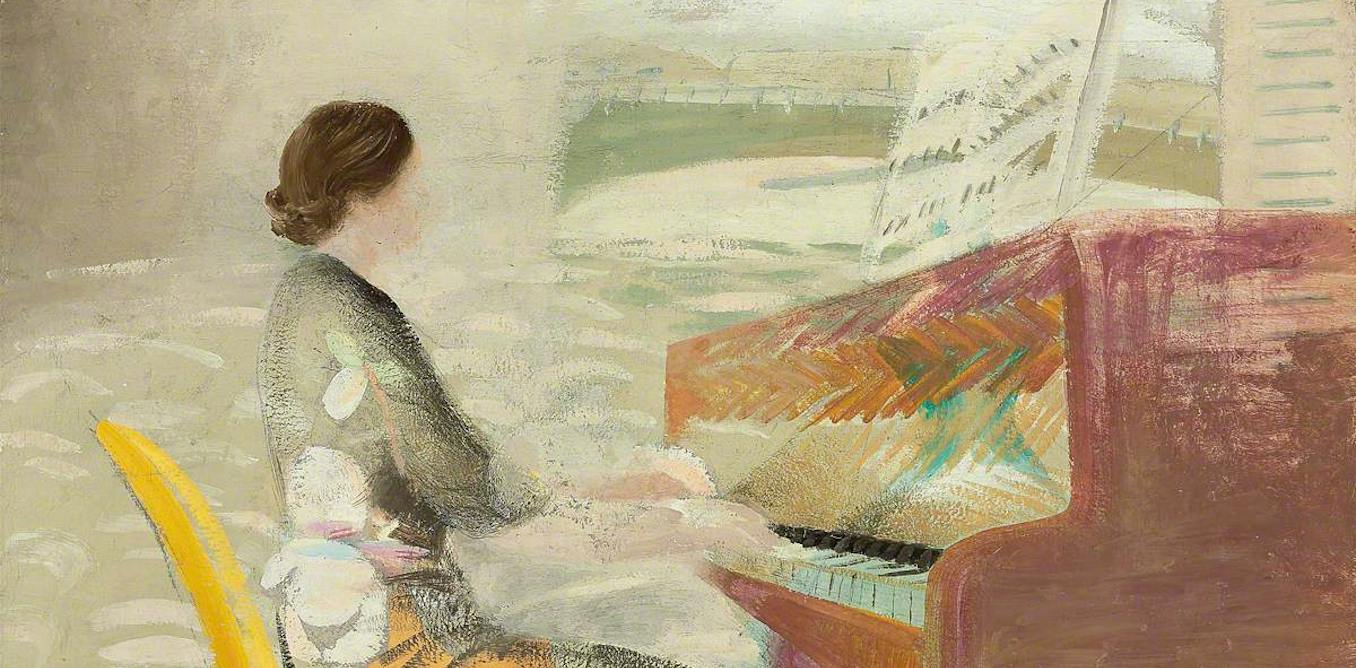
Livia, however, holds a more rigorous, transformative philosophy. This ideological stance is underscored by a recent conflict in Livia’s professional life, wherein she forbade a wilful teenage piano pupil from performing the Vince Gill country hit Go Rest High on that Mountain at a formal recital in memory of the girl’s late father. While the student sought emotional comfort, Livia argued for the intrinsic, demanding value of classical masterworks—insisting that true art challenges the individual, fostering growth and expanding human capacity rather than merely validating pre-existing emotions.
The Al Fine Resolution
The novel’s ultimate convergence occurs in its concluding chapter, titled al fine—a traditional Italian musical instruction meaning "to the end," which directs a performer to navigate through a piece and stop precisely at the designated word. For Livia, reaching the al fine moment requires no longer bypassing her trauma through technical distraction, but rather actively revisiting and playing through the painful movements of her past. By confronting the bitter hurt, regret, unspoken secrets, withheld affection, and physical pain that have defined her life, Livia finally achieves a sense of resolution that is both emotionally satisfying and unshakeably true.
Supporting Context & Metrics
The Socioeconomics of Classical Music
Partita offers a rare, granular look at the economic barriers inherent in pursuing a career in classical music. Kingsolver’s narrative does not shy away from the gritty realities of scholarships, housing instability, and the psychological toll of class migration. Moving from a violent, working-class home in rural Tennessee to the elite halls of a university music department requires a total shedding of identity—a process that leaves permanent psychological scars.
Structural Breakdown of the Novel
To appreciate Partita, one must understand its structural integration with musical form:
- The Overture: Establishes the primal wound of the brother’s suicide.
- Formative Chapters / University Arc: Tracks Livia’s technical ascension and her ideological awakening via Sigurd.
- The Sarabande (Section III): Houses the emotional and philosophical crisis regarding the utility of high art.
- Prelude IV (Central Chapter): Features the pivotal debate with Mickie on the purpose of artistic engagement.
- The Al Fine Chapter: Provides the therapeutic narrative endpoint where past trauma is fully integrated rather than repressed.
Official Statements and Authorial Insights
In the acknowledgement notes of Partita, Barbara Kingsolver reflects deeply on her own background, providing a personal anchor for the novel’s themes. Kingsolver, an accomplished pianist who attended the DePauw University School of Music, noted the profound disparity in cultural access during her upbringing:
"In rural, working-class places like the one where I grew up, classical music and fine arts are mostly out of reach."
Through Partita, Kingsolver pays deliberate homage to the unsung piano teachers scattered across rural and working-class communities—figures who, much like Livia, often harbor extraordinary artistic talents alongside complex emotional histories and heavy socioeconomic burdens.
To further bridge the gap between the novel’s world and her readers, Kingsolver has curated a listening list of the classical compositions referenced throughout the text, complete with page citations. This gesture invites the audience to actively participate in Livia’s auditory universe, transforming the reading experience into an immersive, multisensory journey.
Future Outlook and Critical Reception
Since its publication, Partita has garnered unanimous praise from literary critics, cementing its status as a landmark work in contemporary American fiction. Reviewers have lauded the novel as "a virtuoso storytelling achievement that’s packed with musical insights accessible to those with little musical knowledge."
Beyond its technical craftsmanship, the novel’s legacy will likely rest on its nuanced psychological portraiture of women’s lives, generational trauma, and the evolving traditions of American class mobility. As readers and critics continue to dissect its complex movements, Partita stands out as a triumph of narrative composition—proving that, much like a well-structured musical partita, the most fragmented and painful elements of a human life can ultimately be resolved into a profound and enduring harmony.