Executive Overview
In the fluid landscape of contemporary electronic music, few artists traverse boundaries with the fearless agility of Teneil Throssell, universally known as HAAi. From her origins anchoring shoegaze indie outfits with a guitar in hand to headlining global festival stages with uncompromising techno-melters, the London-based producer has built a career upon a restless refusal to be pigeonholed.
Arriving on October 9, 2026, via Mute, her latest ten-track LP, Digitise, serves as a direct, club-focused sibling to its critically acclaimed predecessor, Humanise. While Humanise interrogated what it means to be human in an algorithmic age dominated by artificial intelligence, Digitise pulls the microphone down to the sweat-soaked concrete of the dancefloor. Conceived largely in-transit across an exhaustive global touring schedule, the record weaves an eclectic cast of collaborators—ranging from bass prodigy Skybreak and veteran producer Echonomist to the Medellin-based children’s choir Cantoalegre—into a seamless tapestry of hard-hitting club electronics and organic warmth.
This deep-dive feature explores the making of Digitise, unpacking HAAi’s mobile production workflows, her gear-heavy studio philosophies, the profound legacy of mentors like Andrew Weatherall, and her uncompromising manifesto for artistic evolution in a hyper-accelerated industry.
Detailed Chronology: From Shoegaze Beginnings to Global Club Architect
The Genesis of an Eclectic Vision
Throssell’s musical DNA was forged long before she became a fixture of the global festival circuit. Her formative years were spent singing and playing guitar in shoegaze and indie bands—environments characterized by textured walls of sound, delayed guitars, and emotional introspection. Yet, the transition from indie rock to heavy electronic music was not a sharp pivot, but rather an expansion of a lifelong aesthetic curiosity.
"Back when I was in bands, everything felt more tribal," Throssell reflects. "There were guitar kids, and there were club kids."
The bridge between these isolated scenes came via the late, legendary British DJ and producer Andrew Weatherall. Weatherall’s genre-agnostic approach left an indelible mark on Throssell, teaching her that musical boundaries are largely social constructs rather than artistic limitations. This philosophy culminated in a deeply emotional milestone for HAAi: performing at the Convenanza Festival in Carcassonne, an event dedicated to celebrating Weatherall’s enduring legacy.
"Andy Weatherall was a huge part of my beginnings in DJing," she notes. "I’m still very influenced by him and his legacy, and getting to play the festival was huge for me. The demographic and sounds are so varied at that event, and what they have created there is so special. We need more parties like it, where everyone feels comfortable and welcomed showing up and dancing."
The Evolution from Humanise to Digitise
The narrative arc of Digitise began almost by accident. Following the release of her boundary-pushing 2024 album Humanise—which featured collaborations with Jon Hopkins on Voices and explored themes of digital displacement—Throssell initially planned to release a companion remix record provisionally titled RE-Humanise.
However, as she began handling the stems, the project naturally mutated. Instead of merely re-contextualizing old material, she began sampling and resampling original audio, generating entirely new compositions.
"I realised I wasn’t fully ready to let go of Humanise," she explains. "The album is such an important record for me and my audience. I’ve had such wonderful messages about what it means to people. Digitise deliberately sits much more in the club world while straddling my DJing and production too. In some ways, I wanted it to feel like a version of one of my longer DJ sets."

The album’s rollout bridges these two sonic worlds literally and figuratively. The final track of Humanise fades out with the ethereal harmonies of a children’s choir, only for that exact vocal thread to bleed straight into the opening track of Digitise, instantly plunging the listener back into a high-energy club environment.
Supporting Context & Metrics: The Itinerant Workflow and Hardware Ecosystem
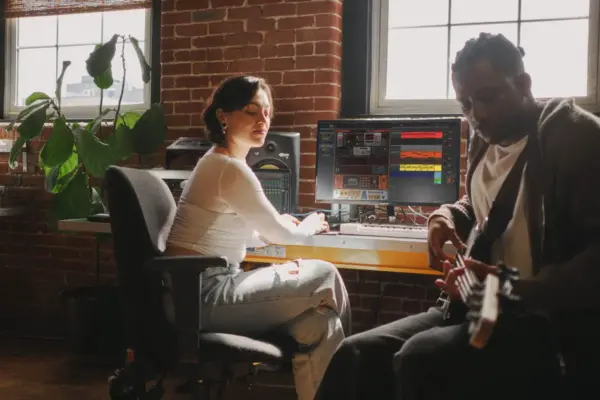
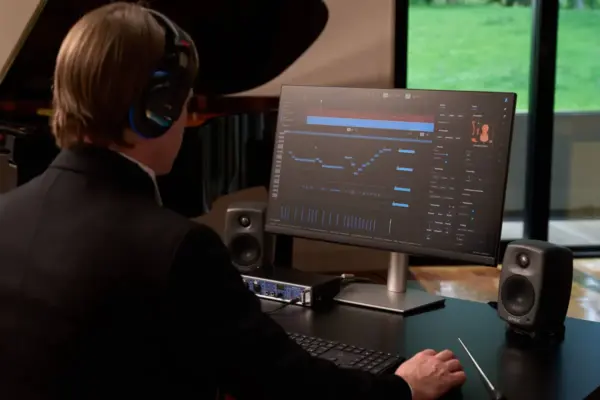
Writing a club-ready record while maintaining a punishing international touring schedule requires a radical shift in production methodology. For Digitise, HAAi abandoned the traditional stationary studio model for much of the writing process, instead constructing the tracks "in the box" while flying between gigs across the globe.
The Laptop-First, Hardware-Refined Workflow
"It’s how I tend to write dance music as I’m usually in transit and need something to play at a festival or play at a club that night," Throssell explains. "It means you’re writing with intention for a track to be functional. This record in particular was made more in the box, then I’ve broken it down so it can be played with hardware."
This functional approach demands a tightly curated suite of software plugins and hardware instruments capable of translating heavy studio design into fluid live performances. On the road and in the studio, HAAi relies heavily on specific tools to forge her unique sonic signature:
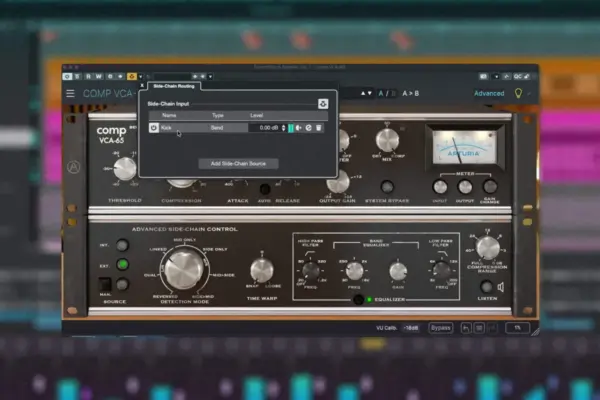
- Devious Machines (Infiltrator & Duck): HAAi cites Infiltrator as an indispensable tool found on almost every track she produces. "Infiltrator has this overdrive, but there are some more granular and spectral effects too," she notes, praising its ability to rapidly transform sterile audio into textured, dynamic noise.
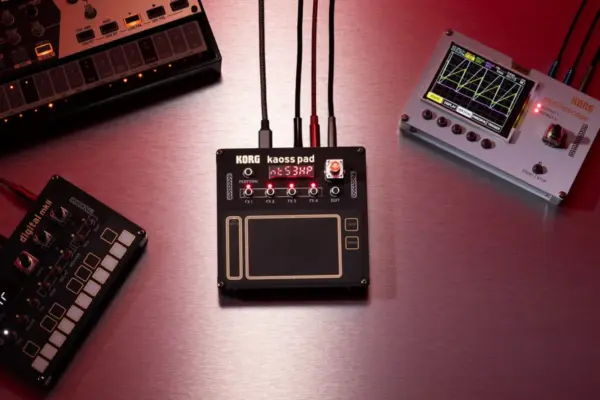
- Novation Peak & Launch Control: Recently integrating Novation’s Peak polyphonic synthesizer into her workflow, she praises its tactile layout for facilitating rapid creative flow. For live performances, she pairs a MIDI keyboard and controller with the Novation Launch Control.
- The Roland Space Echo (A Ghost in the Machine): Perhaps her most prized possession is a vintage Roland Space Echo tape delay purchased via eBay from a studio in Japan. Unbeknownst to her at purchase, the unit still contained the audio loops and ghost traces of previous recording sessions. "You have these ghosts of sounds in the background," she smiles. "I live for these kinds of glitches."
Studio Revamp at Devon Analogue
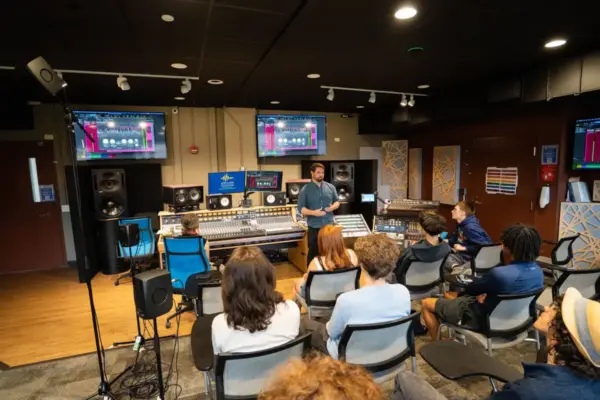
When not on the road, HAAi collaborates closely with her musical director, Luca Perry, in their shared studio space. A recent stint at the renowned Devon Analogue studio in North Devon provided a psychological and logistical catalyst for their workflow. Inspired by the facility’s extensive array of outboard gear, Throssell and Perry reconfigured their own studio infrastructure.
"We updated it to follow how Devon Analogue is set up, even though they have so much more kit than we do," she states. "We just wanted to make it easier to work on music and make sure more pieces of gear are rigged up and ready to go."
Official Statements & Collaborative Breakthroughs
Digitise derives much of its dynamic power from an expansive roster of guest artists, bridging established collaborators with unexpected new voices.
Bridging Bass and Choral Grace: Talking Walls
One of the album’s most daring experiments is Talking Walls, a track born from an Instagram scroll. HAAi discovered the work of young US producer Skybreak after becoming obsessed with his sub-bass-heavy track Anxiety.
"His music is this insane, energetic mix of bass and dubstep; he’s super young and wildly talented," HAAi says. "I was playing his track a lot, then asked him if he’d be up for collaborating. He’s one of these super talented kids who just work in their own unique way; he uses FL Studio on a laptop and is so fast. We connected in America, and he works at a speed that I’d never experienced before."
Seeking to inject raw, human emotion into the brutalist bass architecture of the track, HAAi turned to an unexpected source during a tour stop in Colombia: Cantoalegre, a children’s choir based in Medellin. After meeting with the principal of a local school, they coordinated a spontaneous recording session.

"It was such a fulfilling day of music-making for me," she recalls. "When you have lyrics with a certain amount of meaning sung by kids, it takes everything up another few notches. I’ve had some insane experiences there. I love Colombia so much."
The resulting track defies easy genre classification, merging punishing dubstep low-end with soaring emotional choral arrangements. "It really stretched a lot of my production knowledge, and I learned a lot from Skybreak in terms of processing too," she adds.
The Title Track: Working with Pat Alvarez
Another anchor point on the album is the title track, Digitise, which showcases a masterclass in collaborative production alongside long-time creative partner Pat Alvarez.
"It’s rare for me to have something in my mind for it to sound, then for that to be close to the end result," HAAi reflects. "I’ve worked with Pat so much, and we’re such a good match in the studio collaboratively, that was super exciting to make."
Future Outlook: A Manifesto for Artistic Longevity
As electronic music accelerates toward faster-paced release cycles, algorithmic recommendation engines, and pressure for constant content generation, HAAi stands as a vocal proponent of deliberate, unhurried artistic evolution. She looks to peers like Daniel Avery—who famously pivoted away from the seminal 2013 breakthrough sound of Drone Logic—as proof that creative survival depends on courting discomfort.
"If Dan had made ten more Drone Logic style songs, as seminal as it is, he would have been criticised. I think it’s really healthy to go beyond what people expect," HAAi argues. "Not everyone will be happy or on board with this constant change. But being on the edge of being uncomfortable is what is most fulfilling about working as a musician and artist; it’s all about challenging yourself."
Her advice to emerging producers navigating the modern musical landscape is rooted in patience and self-discovery. Having broken through into international prominence in her early thirties, Throssell urges young creators to resist the manufactured urgency of the digital age.
"For anyone emerging, it’s important to remember to try and avoid feeling any sense of urgency to put anything out," she advises. "Sitting on music and working out your sound is a wise move, especially in an age where we’re all made to feel this real sense of urgency. I broke through as an artist in my early thirties, and I think it’s important to sit and develop your skills and sound as much as you can."
With Digitise, HAAi has not merely delivered a collection of functional club tracks; she has mapped out a blueprint for modern electronic artistry. By tearing down the artificial walls dividing indie sensibilities from heavy club electronics, she proves that true longevity belongs to those willing to embrace the unknown—one flight, one glitch, and one radical sonic shift at a time.