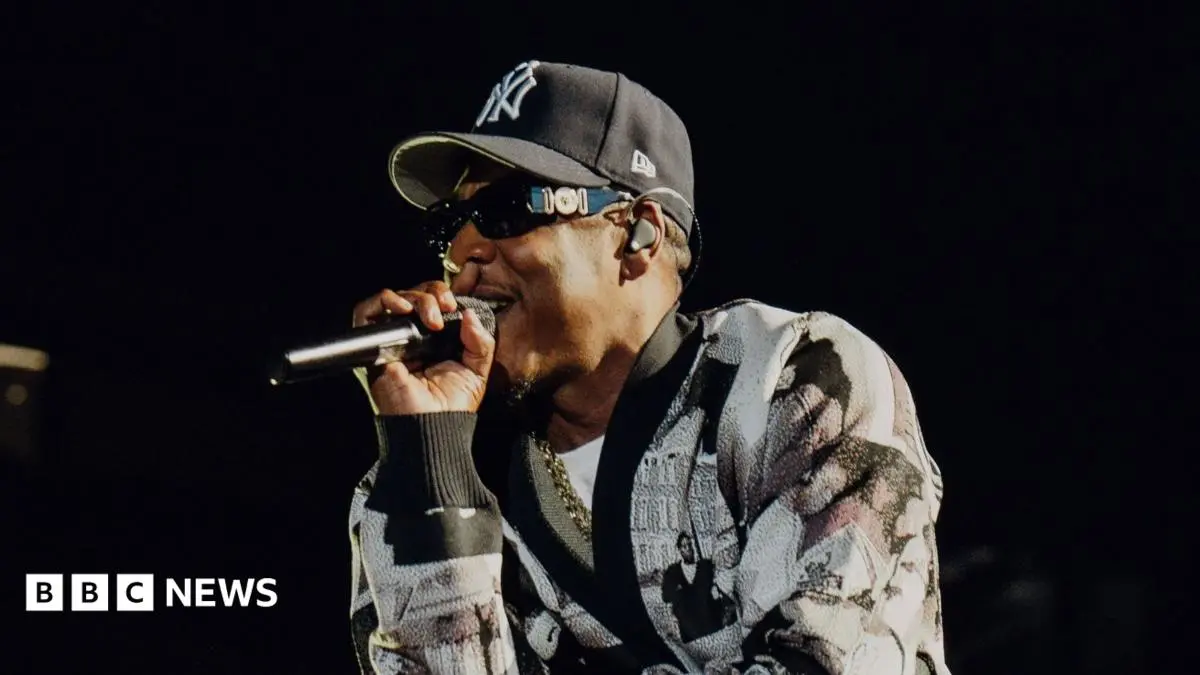
For the first time in more than a decade, the architectural marvel of the Tottenham Hotspur Stadium transformed into a sprawling cathedral of hip-hop culture, playing host to one of the most anticipated musical events of the decade. Shawn "Jay-Z" Carter, the billionaire polymath, cultural architect, and undisputed heavyweight of contemporary rap, took to the London stage on Friday night to deliver a masterclass in longevity, lyrical dexterity, and artistic curation.
The high-stakes performance marked the opening night of a landmark weekend in the British capital as part of the globally celebrated Jay-Z 30 tour. This meticulously engineered anniversary run commemorates three decades since the release of his seminal debut album, Reasonable Doubt—a record that not only laid the foundation for an unprecedented career but permanently altered the trajectory of modern music and urban commerce. For over two hours, the rap superstar rolled back the decades, treating tens of thousands of adoring fans to an exhaustive sonic retrospective of a culture-shaping discography.
Yet, beyond the nostalgic cadence of classic cuts like "99 Problems," "Empire State of Music," and "Dead Presidents," the evening transcended a standard legacy tour. It was a living, breathing masterclass in hip-hop historiography, underscored by an elite roster of special guest appearances. From homegrown UK grime royalty to foundational 1990s American hip-hop royalty, the stage became a focal point for cross-generational reverence.
The night also coincided with a monumental personal milestone: the 45th birthday of global icon and cultural force Beyoncé Knowles-Carter. While persistent rumors had rippled through the stadium regarding a surprise joint performance—echoing her triumphant appearances during his trio of New York City shows earlier this summer—the night instead unfolded as a deeply personal, stadium-wide tribute. Jay-Z deftly balanced the monumental scale of a world-class production with intimate human moments, thanking the legions of fans who have sustained his journey from the gritty asphalt of Brooklyn’s Marcy projects to the upper echelons of global wealth and cultural influence.
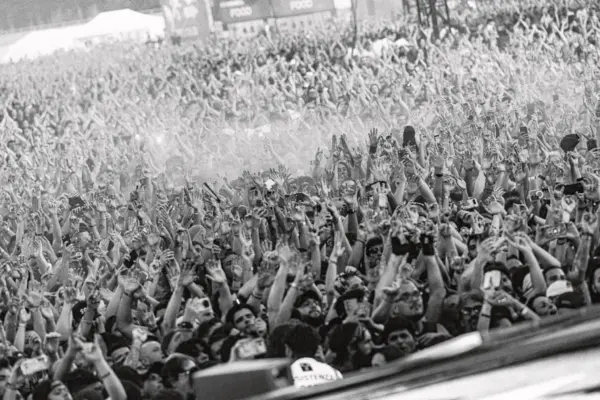
As thousands of fans raised their hands aloft to form the iconic Roc diamond, the atmosphere was thick with a shared understanding: this was not merely a concert, but a rare living monument to a living legend who continues to dictate the terms of modern culture.
Detailed Chronology: A Night of Nostalgia, Surprises, and Lyrical Mastery
The Opening Acts and Setting the Stage
The anticipation inside the Tottenham Hotspur Stadium had reached a fever pitch long before the house lights dipped. Fans had converged on North London from every corner of the United Kingdom, alongside international travelers who had flown in exclusively for the historic weekend run.
As the house lights finally dimmed, a wave of electric tension swept through the venue. Jay-Z emerged to a wall of sound, cutting an iconic silhouette against a minimalist yet striking stage design. Dispensing with unnecessary preamble, he immediately established a relentless pace. The opening suite of songs served as a chronological victory lap, moving swiftly through heavy-hitting anthems that defined the late 1990s and 2000s commercial golden era of hip-hop.
Introspective Reflection and the Marcy Roots
Midway through the set, the high-octane tempo yielded to a more reflective, vulnerable atmosphere. Addressing the capacity crowd, Jay-Z took a moment to express profound gratitude to the foundational supporters who had stood by him since his independent 1996 debut.
"Music saved my life," he confessed to the rapt audience, his voice carrying the weight of a journey marked by both extraordinary triumph and profound survival.
This introspective pivot manifested powerfully in his execution of "Hard Knock Life (Ghetto Anthem)" and "Where I’m From." These tracks served as vivid audio-documentaries of his formative years navigating the unforgiving landscape of the Marcy housing projects in Brooklyn, New York. The stark lyricism was mirrored by minimalist visual cues on the stadium’s massive LED screens, stripping away the billionaire gloss to reveal the hungry artist underneath.
However, the contemplative mood was deliberately fleeting. Without warning, the temperature in the stadium spiked—both metaphorically and literally—as the opening strains of his 2011 collaboration "No Church in the Wild" echoed across the venue. The track was amplified by a battery of fiery pyrotechnics that sent waves of intense heat rolling across the stadium seating tiers. Notably, the performance featured a poignant editorial choice: while the unmistakable vocals of his estranged collaborator, Kanye West (Ye), remained intact on the chorus, West’s verses were surgically excised, signaling a subtle yet firm boundary in their famously complex relationship.
Surprise Appearances: Giggs, DJ Khaled, and the Fugees Reunion
The concert’s narrative architecture relied heavily on dynamic guest curation, transforming the solo headline show into a communal celebration of global rap music.
Following a brief transition interlude managed by US hitmaker DJ Khaled—who worked the crowd while Jay-Z executed a rapid wardrobe change—the stage erupted for London’s own homegrown icon, Giggs. The British rap pioneer joined Jay-Z for a blistering rendition of "Talkin Da Hardest." The emotional resonance of the moment was palpable; at one point during the performance, Giggs appeared visibly overwhelmed, clutching his face in disbelief as he took in the roaring, sold-out North London stadium chanting his lyrics back to him.
Yet, the evening’s primary jaw-dropping moment arrived when 1990s American hip-hop royalty stepped into the fold. Lauryn Hill and Wyclef Jean, founding pillars of the legendary collective Fugees, engineered a rare and electrifying reunion on stage. The duo ripped through timeless masterpieces including "Ready or Not," "Killing Me Softly With His Song," and "Fu-Gee-La."
For Jay-Z, the moment carried deep historical symmetry. He paused the set to remind the audience of his early days in the industry, recalling how he had once served as an opening support act for the Fugees during a grueling European tour decades prior. Seeing them share the stage as peers and icons was a masterclass in hip-hop continuity.
The Grand Finale and the Birthday Tribute
As the two-hour mark approached, Jay-Z brought the main set to a thunderous crescendo with soaring renditions of "Public Service Announcement (Interlude)" and the genre-blending Linkin Park collaboration, "Numb/Encore." Declaring the evening a "legendary night" that he would "never forget," he exited the stage to a sea of glowing lights and thousands of fans flashing the universal diamond hand sign.
The lingering subtext of the evening, however, remained the birthday of Beyoncé Knowles-Carter. Toward the tail end of the performance, Jay-Z slyly addressed the elephant in the room, telling the stadium that it happened to be a "young lady’s birthday." The announcement sent the crowd into an absolute frenzy of speculation and cheers.
Joking with the audience that he simply "couldn’t make her perform on her big day," he instead pivoted the arena’s collective energy toward celebration. Directing the crowd’s attention to a private VIP box where the global superstar was seated, Jay-Z led 60,000 voices in a soaring, stadium-wide rendition of "Happy Birthday." Simultaneously, a breathtaking display of sparkler-like fireworks erupted into the North London night sky, cementing a cinematic capstone to an unforgettable evening of music.
Supporting Context & Metrics: The Anatomy of a Cultural Titan
To understand the cultural earthquake of the Jay-Z 30 tour stop in London, one must examine the staggering macroeconomic and artistic metrics underpinning Shawn Carter’s career. The British capital has long maintained a complex, deeply appreciative relationship with American hip-hop, but few artists command the institutional respect required to sell out a premier Premier League football stadium for a multi-night run over a decade after their last major solo UK headlining tour.
| Metric / Milestone | Detail / Value | Context |
|---|---|---|
| Career Debut | Reasonable Doubt (1996) | Released independently via Roc-A-Fella Records; widely regarded as a foundational classic of East Coast hip-hop. |
| Commercial Peak | Vol. 2… Hard Knock Life (1998) | Secured his first Billboard 200 number-one album and earned him his inaugural Best Rap Album Grammy Award. |
| Grammy Legacy | 25 Wins | Ranks among the most decorated artists in Grammy history across multiple musical categories. |
| Hall of Fame Inductions | Songwriters (2017) / Rock & Roll (2021) | First rapper inducted into the Songwriters Hall of Fame; cemented broader institutional recognition for hip-hop literature. |
| Net Worth Milestone | $2.5 Billion+ (Forbes Estimate) | Recognized in 2019 as hip-hop’s first official billionaire, with a portfolio spanning music catalogs, champagne, cognac, fine art, and venture capital. |
The Sociological Impact of a Living Legend
For younger attendees like 19-year-old Prince Dean Sithole, who traveled from Leeds to witness the event, the concert served as an empowering sociological touchstone.
"I think he’s very impacting, especially for us black people because we don’t get a lot of recognition," Sithole shared with reporters outside the venue. "Seeing him today shows that dreams are possible and you can be that person that you want to be."
This sentiment encapsulates Jay-Z’s unique evolutionary trajectory. He has successfully bridged the chasm between street-level authenticity and boardroom hegemony. Through Roc Nation—his full-service entertainment agency encompassing talent management, music publishing, sports representation (Roc Nation Sports), and philanthropic endeavors—Carter has redefined what it means for an artist to control the means of cultural production. Notably, Roc Nation’s oversight of the prestigious Super Bowl Halftime Show has transformed a traditional televised athletic interlude into a premier showcase for Black musical excellence on a global stage.
Official Statements and Industry Reception
While formal press releases from Roc Nation regarding the specific logistics of the London run remain minimal, the qualitative industry and critical reception has been uniformly rapturous. British broadsheets and specialized music publications alike have hailed the Tottenham Hotspur Stadium performances as a masterclass in pacing, vocal delivery, and historical curation.
Music industry analysts monitoring the Jay-Z 30 tour note that the deliberate scarcity of his live appearances—preferring curated, high-impact residencies and milestone performances over grueling, continuous global treks—has artificially inflated the cultural and commercial value of his brand. By treating each performance as a rare historical artifact rather than a routine promotional stop, Carter ensures that demand remains perpetually high across generations.
Furthermore, the inclusion of cross-Atlantic talent like Giggs highlights Jay-Z’s long-standing commitment to nurturing and acknowledging regional rap ecosystems outside the United States. British rap and drill artists have increasingly found institutional backing and global validation through American platforms, and sharing a stadium stage with hip-hop’s senior statesman serves as the ultimate validation of the UK urban music scene’s global maturation.
Future Outlook: Preserving the Legacy and the Next Decade
As the dust settles on the opening weekend of the London residency, industry observers are left speculating on what the next chapter holds for the undisputed king of modern hip-hop commerce and lyricism.
With thirty years of Reasonable Doubt officially celebrated and documented on stages across major global markets, the question shifts from retrospective victory laps to future creative output. While Carter has frequently teased or outright announced his retirement from traditional album-making cycles in the past—most famously with 2003’s The Black Album—his selective, highly calculated returns to the microphone demonstrate an artist who only steps into the spotlight when he has something culturally vital or commercially unprecedented to communicate.
Moreover, his business empire continues to expand into high-growth sectors, cementing a family dynasty alongside Beyoncé that guarantees their children—Blue Ivy, Rumi, and Sir—will inherit a diversified conglomerate spanning entertainment, luxury goods, philanthropy, and digital media investments. Blue Ivy’s already well-documented artistic contributions on tour stages globally hint at a generational transfer of creative capital that is rare in modern entertainment.
For now, however, the immediate legacy of the weekend rests on the acoustic resonance of a packed North London stadium singing "Empire State of Mind" under a canopy of celebratory fireworks. Jay-Z has proven, definitively, that thirty years into a career built on hustle, intellect, and generational lyricism, he remains unmatched at the apex of the cultural pyramid.