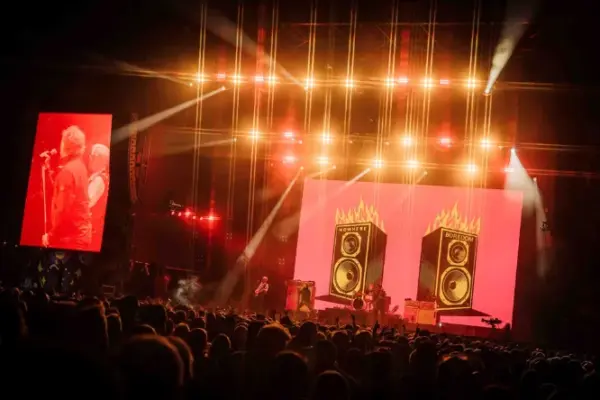
UK Garage (UKG) has experienced a staggering global resurgence, evolving from its underground origins in pirate radio broadcasts and damp home studios into a dominant force at major international music festivals like Coachella, where artists such as Sammy Virji command massive, adoring crowds. Yet, UKG has never been a monolithic genre; rather, it functions as a broad, eclectic umbrella spanning US garage imports like Todd Edwards’ intricate vocal-chop masterpieces, homegrown 4/4 bassline anthems, soulful 2-step cuts, and even wobbly Teutonic reworks.
Among these varied stylistic branches, 2-step stands out as perhaps the most undeniably homegrown and structurally distinct creation of the UK electronic music landscape. Much like jungle, drum and bass, and dubstep, 2-step illustrates the profound innovative capacity of British music culture when it draws inspiration from its own multicultural heritage rather than merely mirroring American imports.
This comprehensive technical walkthrough explores the foundational mechanics of 2-step rhythm production. Taking inspiration from the rolling, contemporary aesthetic of tracks like Rose Holland’s "Solid On The Ground"—written, produced, and vocally delivered with pristine precision—we will break down the exact programming, sound selection, and arrangement strategies required to engineer tight, timeless 2-step drums in Ableton Live.
Detailed Chronology: The Evolution and Anatomy of 2-Step Production
To truly understand how to program a compelling 2-step beat, producers must first appreciate the historical lineage and structural DNA of the style. Emerging in the late 1990s as a direct evolution of speed garage, 2-step discarded the rigid, four-on-the-floor kick pattern of its predecessor. In its place came a sparse, syncopated rhythm where the kick drum on the third beat of a traditional four-beat bar was intentionally dropped—hence the moniker "2-step."
This deliberate removal of the downbeat created a vast rhythmic pocket. It allowed sub-basslines to breathe, injected an irrepressible swing into the groove, and placed heavy emphasis on the interplay between the kick, the rimshot, and intricate top-end percussion.
Step 1: Crafting the Low-End Foundation — The Kick
Unlike the chest-rattling, deep-sub kick drums found in techno or modern trap, authentic UKG kicks require short release tails and typically lack monolithic sub-frequencies. Instead, they are designed to punch cleanly in the upper bass and lower midrange registers. This acoustic real estate is vital: it leaves room for heavy, moving sub-basslines while giving the rhythm’s inherent syncopation room to breathe.
Primary Kick Selection: Using Ableton Live’s Kick 70s 1 sample provides an organic, punchy foundation. The foundational pattern places two kicks per bar (occurring on beats 1 and 1.3.3). To emphasize the rhythmic skip, every fourth bar features an additional kick placed on 4.4.3, accented with a slightly higher velocity. To keep the low end pristine, apply a high-pass filter cutting between 100Hz and 140Hz to eliminate competing sub-frequencies.
Layering for Bounce: To inject classic 2-step syncopation, layer in a more synthetic transient using Live’s Club Kick. Rather than locking these hits rigidly to the quantization grid, program them by feel—off-grid—to achieve that signature, organic human bounce.
Gain Staging: Lower the volume of the Club Kick by approximately 10dB relative to the primary kick. This ensures that the organic Kick 70s 1 supplies the weight of the rhythm, while the synthetic kick acts purely as a textural enhancer. The combined pattern loops seamlessly over a two-bar phrase.
Step 2: The Driving Force — Rims and Knocking Textures
If the kick supplies the heartbeat, the rimshot provides the skeletal framework of the 2-step rhythm. Crucially, the rim sound does not require an acoustic rimshot sample; any short, dry, woody knocking noise will suffice, provided it remains relatively dark and tonally controlled.
Positional Consistency: Rim placement remains remarkably consistent across almost all foundational 2-step beats, landing firmly on every second beat of the bar. Because these sounds possess a distinct tonal footprint, layering two distinct samples—such as Rim 3k Sharp and Rim 90s MPC—creates depth. To introduce variation across the two-bar loop, delete every fourth instance of the Rim 90s MPC.
Skippy Rim Rhythms: 2-step is equally defined by rapid, rolling rim patterns that propel the track forward. Program a secondary pattern utilizing Live’s Rim DMX Fatso 2 sample, tuned down by three semitones. Pair this with a counter-rhythm using the Rim LDre 2 sample, also pitched down three semitones. These alternating patterns establish an engaging call-and-response dynamic that spans both one- and two-bar loops.
Pro-Tip on Melodic Tuning: Skippy rim rhythms are frequently played melodically at varied pitches. Duplicate both skippy rim samples to new dedicated drum lanes, transpose the copies up or down by a single semitone, and selectively shift specific hits to these new tracks to introduce subtle tonal shifts.
Step 3: Textural Movement — Hi-Hats, Tambourines, and Rattles
The top-end shimmer of a 2-step beat relies on a careful blend of closed hats, tambourines, shakers, and auxiliary percussion. Historically, producers sampled these elements directly from disco, funk, or hip-hop records; today, comprehensive digital libraries offer immense flexibility.
Hat Length and Placement: While 16th-note closed hats (straight or swung) and off-beat patterns vary widely, sample length remains strictly controlled. Even open hats are edited to sound short, punchy, and abruptly choked. Begin with two short open-hat samples—Hihat Open Ironman and High Open Machine Hard—both playing on the off-beats. Add a longer sustained note and a single short skip note to the High Open Machine Hard to reinforce the two-bar cyclical feel.
Tambourine Call-and-Response: Introduce a tambourine shake (Tambourine Sampled at 86 bpm, pitched up by 8.44 semitones to match the session tempo) during the second half of each bar, extending its duration every second bar.
Shakers and Reversed Elements: Fill remaining gaps in the soundscape with subtle shakers, tambourine hits, and reversed elements.
Pro-Tip on Reversed Transients: The secret to integrating extra shakers and hats without cluttering the mix is avoiding sharp initial transients, which clash with the percussive skippy rims and kicks. Utilize short, reversed hat and shaker samples, shifting them forward on the timeline so that their natural swell peaks directly on the grid, rather than firing at the exact trigger point.
Step 4: Arrangement Dynamics — Edits, Fills, and Transitions
As with any high-energy dance genre, dynamic variation is essential to prevent listener fatigue and accentuate arrangement shifts. 2-step edits typically involve strategically dropping out kicks, snares, or hats at the end of four- or eight-bar phrases, or injecting rapid kick rolls.
Kick Rolls and Dropouts: Build momentum by programming accelerating rolls with the Club Kick over the course of a single bar. Leave a moment of absolute silence at the very end of the bar to create tension before the drop of the next eight-bar phrase, muting the main kick drum while the roll plays.
Crash Cymbals and Rims: Place a high-tuned, short 909 crash cymbal at the downbeat of every eight-bar cycle, supplementing it with skippy crash hits at the phrase endings. Re-introducing the primary rim sound on the absolute final beat of bar eight acts as an exceptional psychological trigger, building immense anticipation for the subsequent phrase.
Supporting Context & Metrics: Production Workflow and Standards
Producing high-tempo, intricate dance music requires strict adherence to workflow management and mixing hygiene. Prolonged exposure to densely layered transient-heavy loops frequently leads to auditory exhaustion.
Production Best Practice: To maintain critical objectivity and prevent listening fatigue, integrate strict break timers into your studio routine. If frequencies begin to blur or rhythmic timing feels ambiguous, step away from the monitors. Utilizing the classic "sleep on it" approach—or stepping away for several days to let a mix breathe—often reveals immediate solutions to arrangement and mixing bottlenecks upon your return.
Furthermore, producers must manage the frequency spectrum aggressively. Because 2-step relies heavily on the interplay between the mid-range punch of kicks, the woody body of rimshots, and the high-end air of reversed shakers, maintaining dynamic headroom is paramount. Utilizing parallel processing on drum buses—such as gentle tape saturation combined with upward compression—glues the disparate sampled elements into a unified, cohesive groove without sacrificing transient clarity.
Official Statements and Industry Insights
Reflecting on the genre’s enduring cultural significance, veteran producers and industry historians frequently highlight the genre’s DIY ethos. Alex Blanco, writing on contemporary electronic music production, notes:
"Much like jungle, drum and bass, and dubstep, 2-step demonstrates how innovative UK music is when it draws on its own multicultural heritage rather than copying America. UK Garage was always a very permissive genre in clubs and on pirate radio stations… encompassing a wide range of sounds and styles, arguably wider than any other contemporary dance genre."
This sentiment underscores why 2-step continues to captivate new generations of producers. Its emphasis on syncopation, rhythmic space, and sound selection offers an endless playground for sonic exploration. Whether studying 90s pirate radio dubplates or dissecting modern festival anthems, the core principles of tight drum programming remain an essential rite of passage for electronic music producers worldwide.
Future Outlook
As the boundaries of electronic music continue to dissolve through cross-genre pollination—merging UKG with hyperpop, ambient techno, and modern bass music—the foundational mechanics of 2-step remain surprisingly resilient. Modern software developments, such as generative MIDI devices, advanced transient shapers, and AI-assisted separation tools, have made crafting intricate, skippy rhythms more accessible than ever.
However, technology remains secondary to human feel. The enduring legacy of 2-step proves that groove is born not from rigid grid quantization, but from careful off-grid placement, thoughtful sound selection, and an acute understanding of rhythmic space. Producers who master these foundational techniques will continue to shape the sound of underground clubs and international festival stages for decades to come.