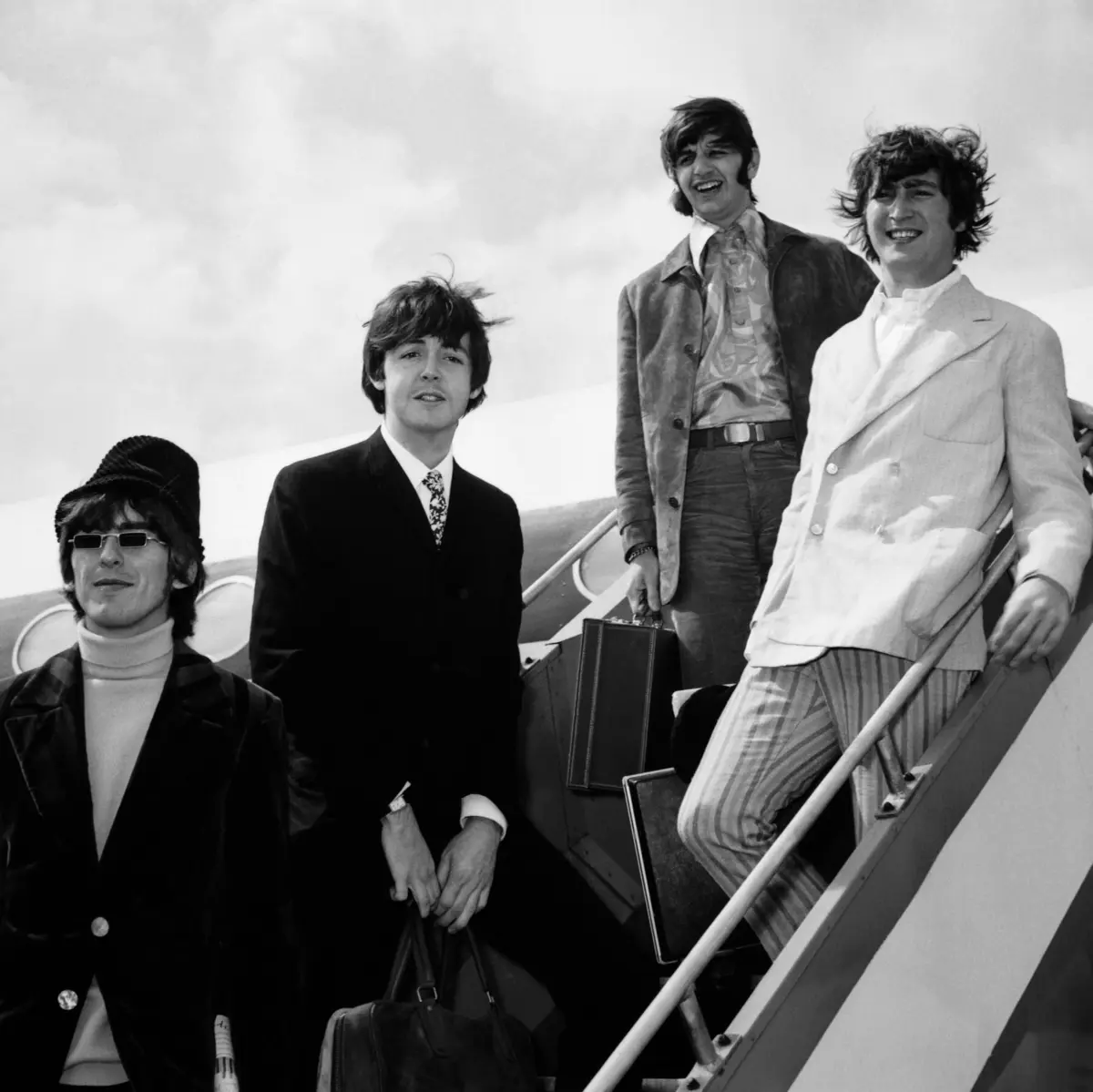
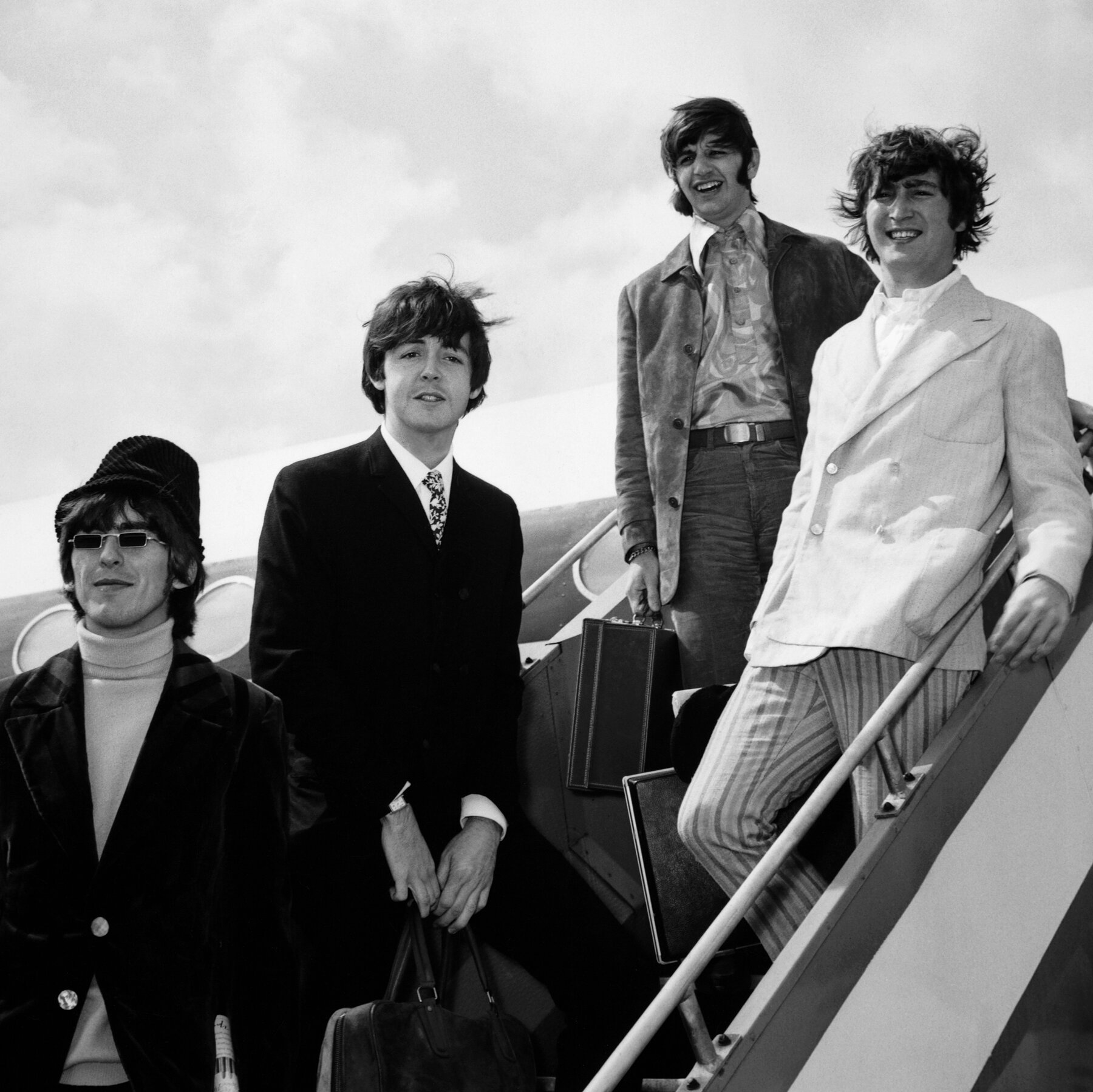
To talk about The Beatles is to converse with modern musical history itself. John Lennon, Paul McCartney, George Harrison, and Ringo Starr did not merely write songs; they fundamentally rewrote the structural, sonic, and cultural possibilities of popular music. Their legacy remains as vivid, fiercely contested, and universally scrutinized today as it was during the height of Beatlemania in the 1960s.
Every individual born into the modern musical landscape eventually develops an opinion on the Fab Four—usually by the time they reach twelve years old. My personal initiation did not stem from a formal music history class or a curated parent’s vinyl collection. Instead, it was sparked by an eclectic mix: a 1972 Doctor Who episode featuring Jo Grant (Katy Manning) casually referencing I Am the Walrus, a ubiquitous flash-mob mobile network commercial singing Hey Jude, and the inevitable realization that once you have exhausted the foundational catalog of your very first favorite band—The Wombles—the logical next step is Liverpool’s finest.
Publicist Derek Taylor was entirely correct when he wrote that the "radioactive, cigar-smoking" children of "AD 2000" would derive just as much visceral pleasure from The Beatles as listeners did in the volatile, kaleidoscopic 1960s. Taking a metaphorical drag and glowing luminescent in the glow of historical significance, this comprehensive retrospective serves as a definitive ranking of the top ten studio albums by The Beatles, charting their breathless trajectory from raw Merseybeat upstarts to avant-garde architects.
And, finally, a preemptive notice: if Sir Paul McCartney is currently reading and happens to disagree with any facet of this ranking, he is cordially invited to visit the Rough Trade warehouse. After all, as he once wrote, we can work it out.
Detailed Chronology: The Top Ten Albums Ranked
10. With the Beatles (1963)
The Beatles’ second studio album is a phenomenal record. It presents a masterclass of striking covers and confident originals that put on full display the unbridled verve and raw power of a band that had already seized cultural control of Great Britain. They arguably never played rhythm and blues with more conviction than they do here; witness the sheer miracle of the Smokey Robinson-inspired All I’Ve Got to Do and the relentless attack of Money (That’s What I Want), which stands as arguably John Lennon’s greatest early vocal performance.
Furthermore, the band had never communicated with their fans with such direct intimacy: they call you up (All I’Ve Got to Do), send you letters (All My Loving, Please Mr. Postman), and bluntly tell you to buzz off (Don’t Bother Me). Why rank it tenth, then? Because something has to occupy the base of the list. Structurally, it feels a touch weaker than their debut regarding original material, bogged down by a slight mid-album sag exemplified by tracks like Little Child and I Wanna Be Your Man—songs that rank among Lennon and McCartney’s least inspired early output. Better things were unmistakably waiting just around the corner.
Key Track:Not a Second Time
9. Let It Be (1970)
How’s this for light criticism? Let It Be occupies a unique space in the canon as a Beatles album that commits the artistic sin of failing to fully transcend its own reality. Functioning as the audio soundtrack to Michael Lindsay-Hogg’s famously tense documentary film, it sounds precisely like what it is: fleeting, sometimes fragile snapshots of a fractured band working through an uncharacteristically aimless month.
Undoubtedly, there are wonderful songs scattered along the way—Across the Universe, Two of Us, and I Me Mine—and the record is heavily energized by the dynamic insertion of keyboardist Billy Preston. Yet, it remains the Beatles LP that falls the shortest of their sky-high standards. There is only one "new" John Lennon-led track present (with Don’t Let Me Down omitted from the original running order), leaving a lingering suspicion that much of this material required one final, rigorous studio pass. For what it is worth, Richard Hewson’s heavily debated 1970 orchestral arrangements go some way toward making Let It Be sound like a convincing, cohesive record, even if it occasionally struggles to feel like a cohesive Beatles record.
Key Track:Two of Us
8. Help! (1965)
Much like the cinematic caper it accompanied, Help! finds The Beatles at their most heightened, cinematic, and cartoonish. Their preceding album, Beatles for Sale, had paired an unusually predictable set of cover versions with glum, introspective folk originals. In sharp contrast, Help! finds the lads loosening their ties. It introduces two compositions from George Harrison (a generous allotment for the era), generous lashings of organ textures, the pioneering integration of a guitar pedal, and, via Yesterday, a solo Paul McCartney performance backed entirely by a classical string quartet.
While some of their signature raw Merseybeat vitality was inevitably lost in the process, it is impossible to argue with timeless songwriting like I Need You, You’ve Got to Hide Your Love Away, I’Ve Just Seen a Face, and—ignoring Lennon’s own harsh retrospective dismissals—It’s Only Love. The sole misstep is a fiery but slightly out-of-place cover of Larry Williams’ Dizzy Miss Lizzy; while appreciated in isolation, it feels jarringly tacked onto the album’s conclusion.
Key Track:I’Ve Just Seen a Face
7. Please Please Me (1963)
"Sexual intercourse began in nineteen sixty-three… between the end of the Chatterley Ban and The Beatles’ first LP." — Philip Larkin
The curmudgeon poet may well have been onto something. It is easy to grow tired of revisionist history that positions The Beatles as "Year Zero" for everything creative. Excellent British pop records existed long before February 1963, but dropping Please Please Me onto the turntable after exhausting your Adam Faith and Cliff Richard singles is guaranteed to make something stir. Recorded for the most part in a single, marathon studio session, the album features John, Paul, George, and Ringo constructing their own British version of the Brill Building within EMI Studio 2. The style, the compositional color, and—most importantly—the astonishing consistency of quality were entirely groundbreaking.
Key Track:There’s a Place
6. A Hard Day’s Night (1964)
On record and on film, The Beatles were utterly indomitable in 1964—musical Daleks for whom cultural resistance was entirely futile. Comprising 100% Lennon-McCartney originals, A Hard Day’s Night represents their most impressive sonic onslaught from the peak of Beatlemania. Every single track is a winner, with subtle, adventurous dips into Latin rhythms (And I Love Her) and country-and-western tropes (I’ll Cry Instead) pointing directly toward the genre-bending future of the group.
Though A Hard Day’s Night may not be their absolute greatest album, a strong argument can be made that it is their most structurally perfect. Modern fans frequently undervalue the early, pre-psychedelic albums, but doing so ignores the intricate foundation of their genius.
Key Track:And I Love Her
5. Rubber Soul (1965)
Rubber Soul stands as the band’s great conceptual step-up. Infused with simmering Motown rhythms (Drive My Car, You Won’t See Me), explicit nods to the poetic cadence of Bob Dylan (Norwegian Wood), and proto-hippie philosophical messages (Think for Yourself, The Word), it fills an expansive canvas with intensely focused songwriting. The concentration of classic tracks per square inch is remarkably high. Had The Beatles mysteriously decided to split up at the end of 1966, Rubber Soul would be universally remembered for what it truly is: the definitive ignition switch for the psychedelic movement on both sides of the Atlantic.
Key Track:Girl
4. Abbey Road (1969)
There is a telling, bittersweet moment in The Beatles Anthology documentary when producer George Martin recalls telling Paul McCartney that he would agree to produce Abbey Road "only if you let me produce it the way we used to." This final recorded album is heavily shaped by the soaring ambitions of McCartney and Martin. It functions as an unofficial sequel to Sgt. Pepper, acting as a trial run for the grand album blockbusters of the 1970s with its glossy, multi-layered arrangements and the inspired closing song-cycle.
Disparate compositions—including two instant standards by George Harrison, an octopus-themed country canter from Ringo Starr, an eight-minute doom-metal precursor from Lennon, and a dark McCartney ditty about a student wielding a hammer—somehow mesh seamlessly into a singular statement. Released while Let It Be languished in post-production limbo, Abbey Road is an audacious, triumphant curtain call. They truly went out with a massive bang.
Key Track:I Want You (She’s So Heavy)
3. Revolver (1966)
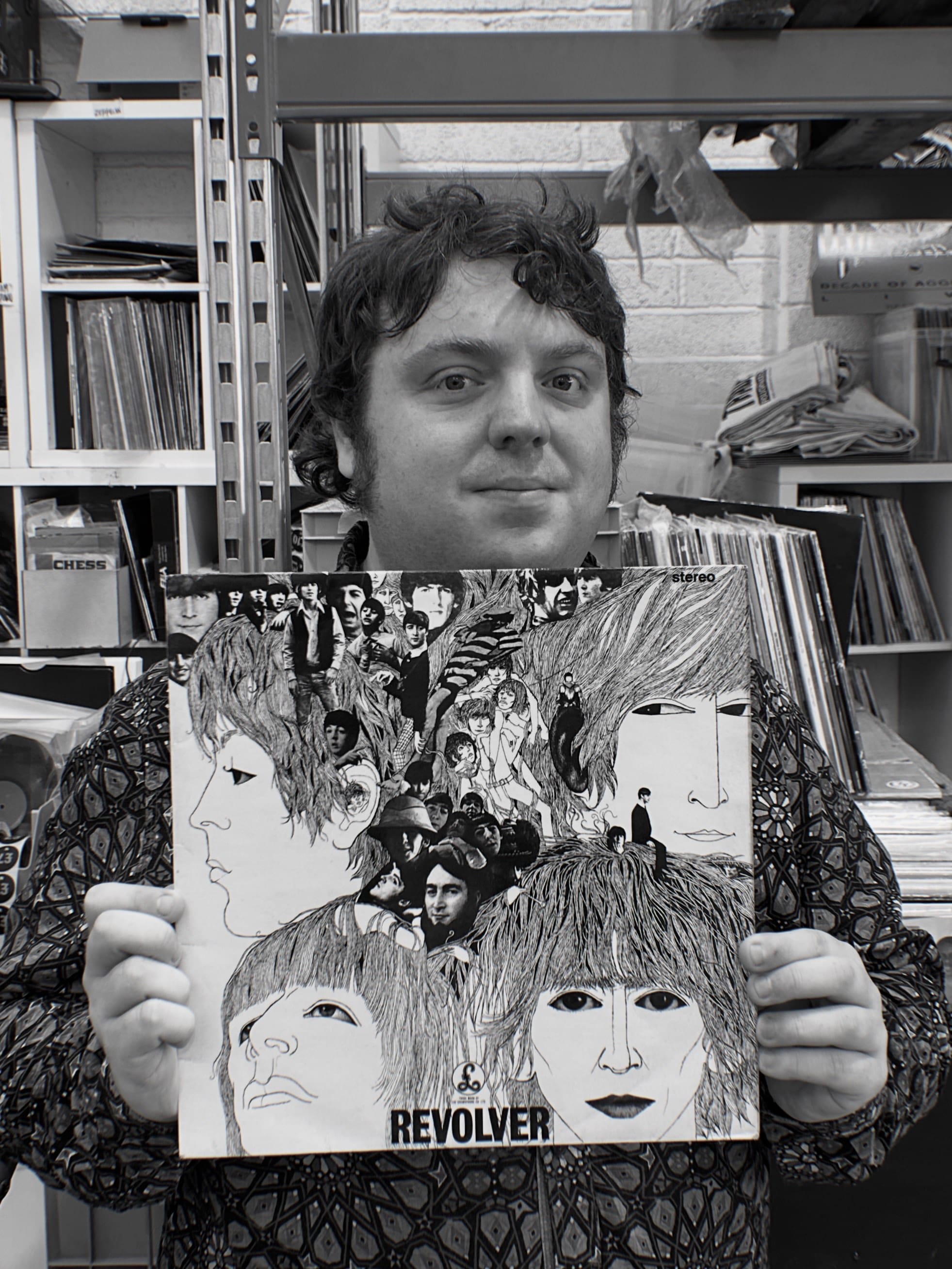
Revolver has long enjoyed the status of the "cool" Beatles album. Sonically, it bears the closest resemblance to modern rock music of all their releases, and the 1990s Britpop generation consciously built entire careers in its image. Yet, it wasn’t always revered this way. Upon its release in the summer of 1966, Revolver faced its fair share of skepticism. Ray Davies of The Kinks, reviewing it for Disc and Music Echo, bemoaned "the newer electronic stuff," while MOR vocal group The Overlanders dismissed the album as "absolutely useless."
History has thoroughly vindicated the record. Frankly, it could easily occupy the number one spot on this list, but its unassailable indie credentials dictate that it cannot rest too high in critical charts.
Key Track:Eleanor Rigby
2. Sgt. Pepper’s Lonely Hearts Club Band (1967)
For decades, Sgt. Pepper was universally crowned as The Beatles’ greatest and most culturally seismic achievement. While its critical star has dimmed slightly among contrarians over the years, there is no logical reason it should be devalued. A fascinating sociological theory explains its shifting reception: while recognized instantly as a game-changer, Sgt. Pepper successfully bridged generational divides by bringing the "mums and dads" into the fold.
The Edwardiana aesthetics, the East-meets-West orchestration, and the Lewis Carroll-inspired lyrics held immense appeal for a middle-aged audience. This broad cultural embrace is precisely why the album cemented itself in high culture—and ironically, why younger generations eventually sought to knock it from its pedestal. Regardless of shifting trends, Sgt. Pepper remains a peerless 20th-century artefact, capturing the height of Britain’s post-war arts boom in a breathless 39 minutes.
Key Track:Within You Without You
1. The White Album (1968)
Every fan has a personal favorite, and The White Album is mine. It is the definitive Beatles album where Lennon, McCartney, and Harrison are operating simultaneously at their absolute, undisputed peaks as songwriters. It offers the widest, most uncompromising spectrum of what the band was truly capable of achieving. Sitting in their catalog like the enigmatic black obelisk in 2001: A Space Odyssey, it emanates a strange, haunting mystery that listeners never fully adjust to—and hopefully never will.
What is that bizarre phonetic gibberish whispered in I’m So Tired? Can anyone ever truly trace the stylistic origins of Back in the U.S.S.R.? Why is the emotional fade-out of Long, Long, Long so profoundly eerie? Dismiss the naysayers who argue it should have been edited down into a single LP; no concise version could ever match this thrill ride. And yes—Revolution 9 is genuinely one of the most daring things they ever committed to tape. It is the bloody Beatles White Album—shut up and listen.
Key Track:Martha My Dear
Supporting Context & Metrics: The Cultural Footprint
To contextualize this catalog is to understand a statistical and cultural anomaly. Between October 1962 and May 1970, The Beatles released 13 studio albums (varying slightly between UK and US configurations) alongside a string of non-album singles that routinely dominated global charts.
Metric / Milestone
Data Point
Active Years as Recording Artists
8 Years (1962–1970)
Official UK Studio Albums
12 LPs
Global Record Sales (Estimated)
600 Million+ units
US Billboard Hot 100 Number Ones
20 Singles
Milestone Commemoration
60th Anniversary of Revolver (August 2026)
Official Statements & Anniversary Events
Celebrating 60 Years of Revolver
To mark the monumental 60th anniversary of Revolver (originally released on August 5, 1966), Rough Trade is hosting a series of exclusive events this August. Fans are invited to attend three specialized listening parties followed by high-stakes, Beatles-themed trivia quizzes at Rough Trade Nottingham, Rough Trade Bristol (hosted by our very own Huw Thomas), and Rough Trade Liverpool. Attendees are strongly encouraged to bring their A-game, as major prizes are up for grabs. Tickets and event details can be found via Dice.
Future Outlook and Honorary Mentions
It goes without saying that virtually every note of music released by The Beatles between 1962 and 1970 is mandatory listening. Ranking their studio output feels akin to arranging precision rulers by length; the baseline of quality is simply staggering. Notably, Beatles for Sale (1964) is the sole proper studio omission from our top ten, though it remains a fine record in its own right.
The Great Catalog Omissions
Several major releases intentionally sit outside this primary studio ranking:
Magical Mystery Tour (1967): Originally issued in the UK as a six-track double EP, it is an indispensable piece of the canon. However, because its standard album iteration was manufactured for the North American market by padding the original tracks with five unrelated 1967 singles, pitting it directly against organic studio albums feels analytically unfair.
Yellow Submarine (1969): Discounted for a similar hybrid reason, containing only four new Beatles compositions—though two of them (Hey Bulldog and It’s All Too Much) rank comfortably among the band’s finest ever recordings.
Past Masters: Essential for any completist, collecting all the stray hits, essential B-sides, and non-album EP tracks that never found a home on original LPs.
Compilations Worth Your Time
While compilation albums were excluded from the primary ranking, releases like 1—which compiles all 27 of their UK and US number-one hits—offer an undeniable, lean summation of their commercial dominance. Meanwhile, the 2006 Love project (the soundtrack to the Cirque du Soleil show, produced by George Martin and his son Giles) remains a brilliant, psychedelic remix soup that continues to reward repeated listening.
As the decades roll on, the legacy of The Beatles shows no sign of fading into dusty antiquity. They remain the gold standard against which all pop and rock music is measured.