Executive Overview
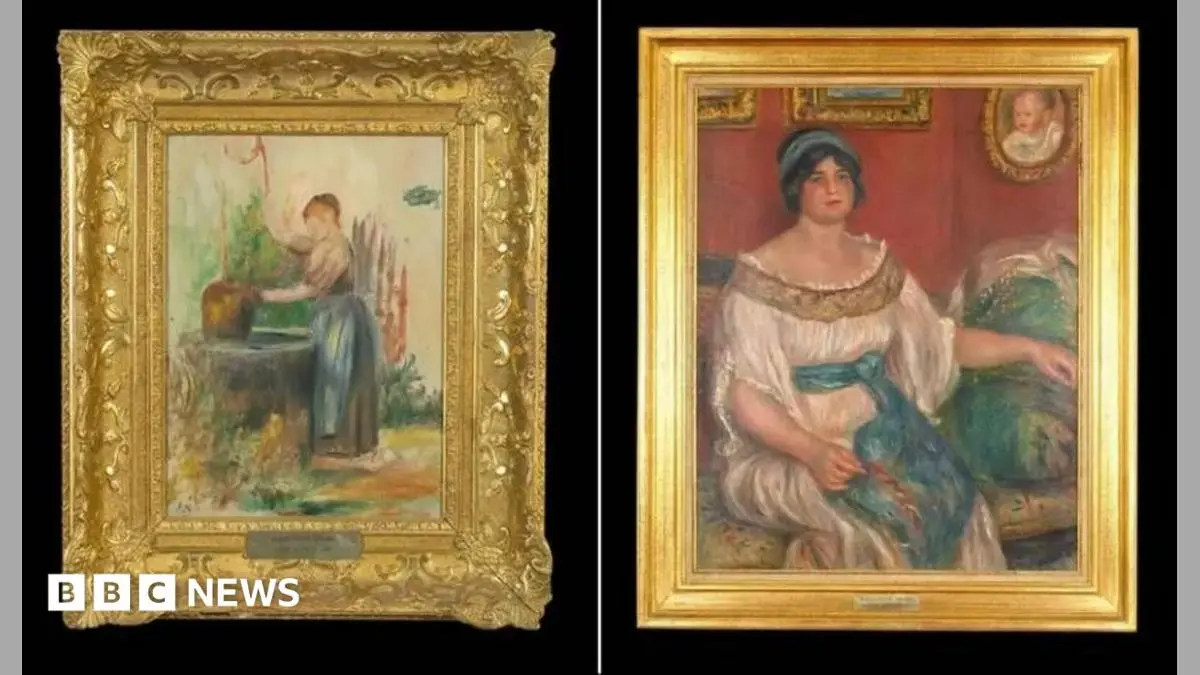
In a major triumph for international cultural heritage preservation and law enforcement, two priceless paintings by the legendary French Impressionist master Pierre-Auguste Renoir have been successfully recovered exactly one month after they were brazenly stolen from their permanent home in the south of France. The artworks—Portrait de Madame Colonna Romano (1910) and Jeune fille au puits (1886)—were safely secured following a coordinated series of high-stakes police operations that also resulted in the arrest of six suspects connected to the brazen September 8 heist at the Renoir Museum in Cagnes-sur-Mer.
The recovery brings a profound sense of relief to the picturesque hilltop town of Cagnes-sur-Mer, where Renoir spent the final, highly productive decades of his life battling debilitating rheumatoid arthritis while continuing to paint monumental masterpieces. The town hall, led by Mayor Bryan Masson, confirmed the recovery in an official statement that highlighted both the emotional and historical weight of the stolen canvases.
While the swift apprehension of the suspects and the retrieval of the canvases mark an extraordinary victory for French authorities, the incident has once again laid bare the vulnerabilities plaguing mid-sized cultural institutions across Europe. As museum heists increasingly target regional repositories—perceived by criminal syndicates as softer targets than national behemoths like the Louvre or the Musée d’Orsay—questions regarding art security, budgetary allocations for municipal museums, and the burgeoning black market for stolen masterpieces have been thrust back into the global spotlight. This comprehensive report explores the chronology of the theft, the profile of the targeted museum, the broader ecosystem of European art crime, and the implications for the future security of our collective cultural heritage.
Detailed Chronology: From the Midnight Breach to the Recovery
The Raid on the Domaine des Collettes
The brazen operation unfolded in the dead of night on September 8 at the Renoir Museum, situated within the lush, olive-tree-studded Domaine des Collettes in Cagnes-sur-Mer. According to preliminary police investigations and forensic findings, the criminal syndicate meticulously planned the break-in, demonstrating a chilling familiarity with the estate’s geography and security blind spots.
Under the cover of darkness, the perpetrators bypassed the perimeter defenses by cutting aggressively through a heavy wire-mesh fence bordering the estate. Moving swiftly across the manicured gardens—which still echo the ghosts of the Belle Époque—the thieves targeted a vulnerable rear window of the museum building. Using heavy-duty glass-cutting equipment, they shattered the pane to gain direct access to the interior exhibition rooms.
Unlike casual burglars, the crew came prepared for institutional-grade security mountings. Once inside, the thieves deployed an electric saw to meticulously sever the heavy metal frame mountings securing the artworks to the walls. In total, the perpetrators initially detached four original Renoir paintings, planning a massive haul. However, the weight, panic, or logistical complications of their hasty escape proved to be their undoing. As the thieves fled pell-mell back through the museum’s terraced gardens, they dropped two of the canvases into the foliage, where they were subsequently discovered abandoned in the damp grass by investigators the following morning.
The two paintings that successfully left the premises—Portrait de Madame Colonna Romano (1910) and Jeune fille au puits (1886)—represent significant phases in the artist’s stylistic evolution, making them exceptionally difficult to fence on the open market, yet intensely coveted by illicit private collectors.
The Manhunt and Arrest of the Six Suspects
Following the discovery of the break-in, the French gendarmerie launched an intensive, multi-agency manhunt led by specialized art crime units (Office central de lutte contre le trafic des biens culturels – OCBC). Utilizing high-tech digital forensics, surveillance footage from surrounding municipalities, and confidential informant networks within the European underworld, investigators methodically unraveled the conspiracy.
Over the course of four weeks, the net closed in on the suspects. In a coordinated series of early-morning raids across the Provence-Alpes-Côte d’Azur region, law enforcement agencies swooped in on locations believed to be safehouses for the stolen assets. The operations yielded the arrest of six individuals suspected of direct involvement in the planning, execution, and logistical support of the heist.
Simultaneously, tactical teams recovered the two missing Renoir masterpieces. While the town hall initially announced that a comprehensive press conference would be held on Friday to detail the intricate recovery operation and display the returned works to the press, the event was abruptly cancelled at the eleventh hour. Authorities cited ongoing investigative protocols and the need to protect sensitive aspects of the broader judicial inquiry into the syndicate behind the raid. Nevertheless, forensic experts have confirmed that both canvases are back in safe custody and are undergoing rigorous conservation assessments to determine if they sustained any environmental or physical damage during their month-long clandestine ordeal.
Supporting Context & Metrics: The Renoir Museum and Europe’s Art Crime Epidemic
The Legacy of Les Collettes
To fully grasp the magnitude of the September 8 theft, one must understand the profound historical sanctity of the Renoir Museum. Opened to the public in 1960, the museum occupies the historic farmhouse and estate where Pierre-Auguste Renoir lived from 1903 until his death in 1919. It was within these sun-drenched walls, surrounded by ancient olive groves overlooking the Mediterranean Sea, that the master painted some of his most luminous and celebrated late-period works.
The museum’s permanent collection is remarkably intimate, housing just 12 original Renoir paintings. Beyond the canvases, the estate serves as an immersive shrine to his daily life and artistic process. Visitors can view his original easel, the specially adapted wheelchair he used as his arthritis severely crippled his hands, authentic period photographs, and intimate personal correspondence with contemporaries such as Claude Monet, Auguste Rodin, and Henri Matisse. Because the museum is deeply integrated into the local identity of Cagnes-sur-Mer, the theft of its core assets was treated by the community not merely as a property crime, but as a devastating assault on the town’s cultural soul.
The Broader Landscape of European Art Heists
The Cagnes-sur-Mer break-in is far from an isolated incident; rather, it represents the sharp tip of an alarming upward trend in art thefts across the European continent. Regional museums, historical house-museums, and municipal galleries have increasingly become primary targets for organized crime syndicates looking to exploit systemic underfunding in security infrastructure.
Earlier this year, the international art community was rocked by a lightning-fast heist near the Italian city of Parma. In a raid that lasted a staggering three minutes, thieves bypassed security systems to steal major works by Renoir, Paul Cézanne, and Henri Matisse. While those masterpieces were fortunately recovered in August, the speed and audacity of the operation highlighted the vulnerabilities inherent in regional Italian and French cultural repositories.
France, in particular, has endured a grueling year of high-profile security breaches. Most notably, the nation witnessed its largest and most brazen art robbery in decades last October, when historic crown jewels were stolen in broad daylight from the prestigious Louvre Museum in Paris. In that cinematic heist, perpetrators disguised as construction workers breached the Louvre’s first-floor Apollo Gallery during normal operating hours. Utilizing heavy-duty angle-grinders, they sliced through reinforced display cases in plain sight of terrified visitors and staff, escaping with an estimated €88 million (£78 million) in irreplaceable jewels that once adorned France’s 19th-century queens and empresses, including Empress Eugénie.
The Louvre heist unleashed a firestorm of international criticism, exposing severe systemic under-investing in physical security, outdated surveillance architectures, and over-reliance on standard guard protocols at even the world’s most heavily visited cultural institutions. When world-class mega-museums struggle to protect their treasures, regional facilities like the Renoir Museum face insurmountable financial and logistical hurdles in safeguarding their collections against sophisticated, well-funded criminal enterprises.
Official Statements and Institutional Reactions
The successful recovery of the Renoir paintings elicited waves of profound relief and unbridled joy from local leaders, cultural preservationists, and national figures alike.
In an impassioned official statement, Cagnes-sur-Mer Mayor Bryan Masson—a prominent figure associated with France’s National Rally party—emphasized the irreplaceable cultural value of the retrieved works:
"These two paintings are far more than works of art. They are part of our city’s history, our cultural heritage, and the legacy Auguste Renoir left to Cagnes-sur-Mer. To have them back in our possession is a source of immense joy and profound relief for our entire community. We extend our deepest gratitude to the law enforcement agencies whose tireless dedication, professionalism, and speed made this miraculous recovery possible."
Mayor Masson’s sentiments were echoed by cultural commentators across France, who noted that regional museums act as vital custodians of artistic memory outside the metropolitan gravity of Paris.
Art security experts, however, have struck a more cautionary tone. While praising the gendarmerie for their swift apprehension of the six suspects and the physical recovery of Madame Colonna Romano and Jeune fille au puits, security analysts point out that the recovery was as much a result of the thieves’ operational ineptitude—dropping two paintings in the garden and struggling to monetize such globally recognized masterpieces—as it was of stellar police work.
Industry insiders emphasize that stolen blue-chip art is rarely held for ransom in the traditional sense; instead, it is frequently used as collateral within international drug trafficking syndicates, weaponized in criminal debt settlements, or hidden away in damp warehouses while desperate intermediaries attempt to find corrupt, ultra-wealthy private collectors willing to harbor contraband they can never publicly display. The fact that the Renoir works were recovered relatively intact within a month is considered a statistical anomaly in the murky underworld of global art theft, where recovery rates for stolen cultural property historically hover well below 10 percent.
Future Outlook: Securing Our Shared Cultural Heritage
As the dust settles on the month-long drama in the south of France, the successful recovery of the Cagnes-sur-Mer Renoir paintings serves as both a moment of celebration and a harsh wake-up call for the museum sector. The incident has catalyzed urgent conversations among municipal leaders, national heritage ministries, and private security contractors regarding the urgent need to modernize the defense mechanisms protecting regional art repositories.
The Imperative for Modernized Security Infrastructure
Experts argue that municipal and regional museums must transition away from legacy security models—often characterized by static analog closed-circuit television (CCTV) cameras, outdated motion sensors, and minimal physical hardening—toward integrated, multi-layered security ecosystems. This evolution requires substantial capital investment in:
- Advanced Biometric Access Control: Restricting internal staff and contractor access to sensitive gallery zones through multi-factor authentication.
- Smart Glass and Hardened Glazing: Installing laminated, attack-resistant display cases and window laminates designed to withstand sustained assaults from electric saws and angle-grinders.
- AI-Driven Threat Detection: Deploying machine-learning algorithms integrated with modern optical sensors to automatically detect suspicious loitering, unauthorized entry, or tampering with frame mountings long before physical damage can occur.
- Public-Private Intelligence Sharing: Fostering closer, real-time intelligence conduits between regional cultural institutions and specialized national police units like France’s OCBC to track emerging criminal tactics targeting heritage sites.
Balancing Accessibility with Preservation
A central challenge moving forward will be maintaining the delicate balance between public accessibility and institutional security. House-museums like the Domaine des Collettes derive much of their charm and emotional resonance from their intimate, domestic architecture—allowing visitors to walk the same wooden floors and gaze out the same windows as the artists they adore. Transforming these historic sanctuaries into fortress-like bunkers risks alienating the public and eroding the very intimate atmosphere that makes them unique.
Nevertheless, the events of September 8 have starkly demonstrated that cultural heritage sites can no longer afford to rely on historical goodwill or the remote location of their estates to deter criminality. Organized crime syndicates view art and antiquities as liquid, high-value assets capable of bypassing traditional financial surveillance networks.
As the six arrested suspects face impending prosecution in French courts, and as Portrait de Madame Colonna Romano and Jeune fille au puits prepare to return to their rightful places on the walls of the Renoir Museum, the overarching lesson is clear. Protecting our artistic legacy requires constant vigilance, robust financial commitment, and unyielding international cooperation to ensure that the timeless masterworks of human history remain safely preserved for generations yet unborn.