Executive Overview
In contemporary Britain, physical fitness has transcended the boundaries of routine healthcare or casual recreation, ascending to a core pillar of modern identity. Recent data from Sport England and associated industry metrics reveal a striking cultural shift: more than one quarter of young adults in Britain now declare that their gym memberships are more important to them than holidays or eating out. Generation Z is spearheading this transformation, systematically pivoting away from traditional endurance disciplines such as running, swimming, and conventional fitness classes in favor of dedicated gym and strength training.
For today’s youth, lifting weights is not merely a means of physical preservation; it is viewed as the ultimate form of self-cultivation—simultaneously building structural strength, refining aesthetic appearance, and fortifying overall longevity. Yet, this intense preoccupation with physical conditioning is far from a contemporary invention born of social media feeds. For over two centuries, human beings have fiercely debated, engineered, and monetized the "best" ways to move, flex, and sweat.
A rigorous historical examination reveals that fitness fads have rarely been driven by pure, unadulterated health concerns. Instead, the evolution of human physical culture has been continuously catalyzed by geopolitics, theatrical entertainment, post-war medical panics, and, most recently, digital algorithms. From the battlefields of Napoleonic Europe to the hyper-connected virtual landscapes of TikTok and Instagram, the human impulse to sculpt the body has always mirrored the shifting anxieties and ambitions of the societies in which we live.
Detailed Chronology: Two Centuries of Physical Transformation
Napoleon, Musak, and the Birth of the Turnplatz (1806–1825)
The genesis of the modern fitness industry can be traced back to an unlikely catalyst: military defeat and geopolitical upheaval. In 1806, Napoleon Bonaparte’s formidable troops marched aggressively across Europe, decisively invading Prussia and dismantling its military apparatus. Among those watching the humiliation of his homeland was a fiery Prussian nationalist named Friedrich Ludwig Jahn.
Jahn became consumed by an overwhelming sense of anger and national humiliation, concluding that Prussian men had fallen to the French not due to inferior weaponry, but because they were physically and morally weaker than their invaders. For Jahn, the salvation of the nation did not lie in muskets, but in muscles.
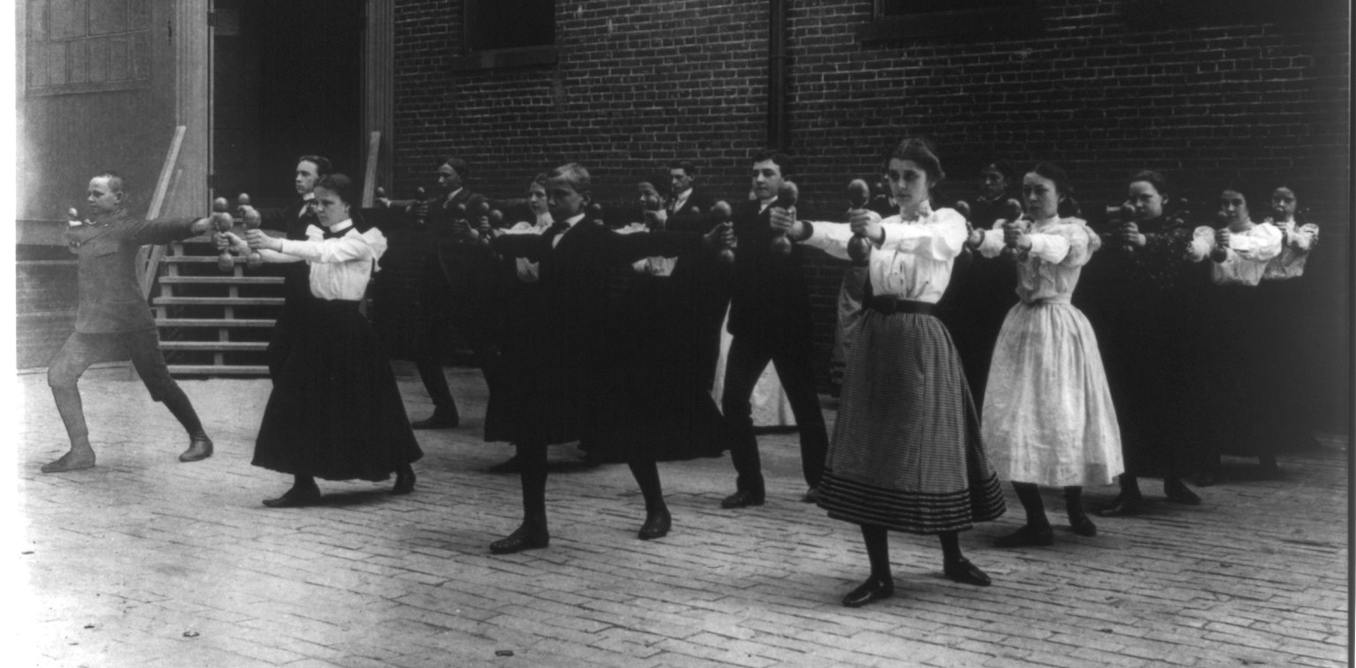
Driven by this philosophy, Jahn opened the Turnplatz—an open-air gymnasium—in Berlin in 1811. The facility was designed to forge a resilient, hardy citizenry. Young men gathered to run, jump, climb ropes, wrestle, and vault. Crucially, Jahn engineered and introduced two revolutionary pieces of apparatus that remain foundational to gymnastics today: the parallel bars and the horizontal bar. The underlying logic of the Turnplatz system—the conviction that strong nations demand physically formidable, disciplined troops—acted as a powerful rallying cry. It sparked a widespread European movement of calisthenic and gymnastic systems, with Britain’s first outdoor gymnastics school opening its doors in 1825.
The Victorian Spectacle and the Invention of Bodybuilding (1889–1925)
As the nineteenth century progressed, the primary driver of physical culture shifted from military readiness to theatrical entertainment and personal display. The Victorian era was dominated by "strongmen" shows—spectacles where muscular performers demonstrated awe-inspiring feats of raw power, such as breaking thick iron chains wrapped tightly around their chests. Performers like Charles "Samson" Sampson captured the public imagination through these displays of brute strength.
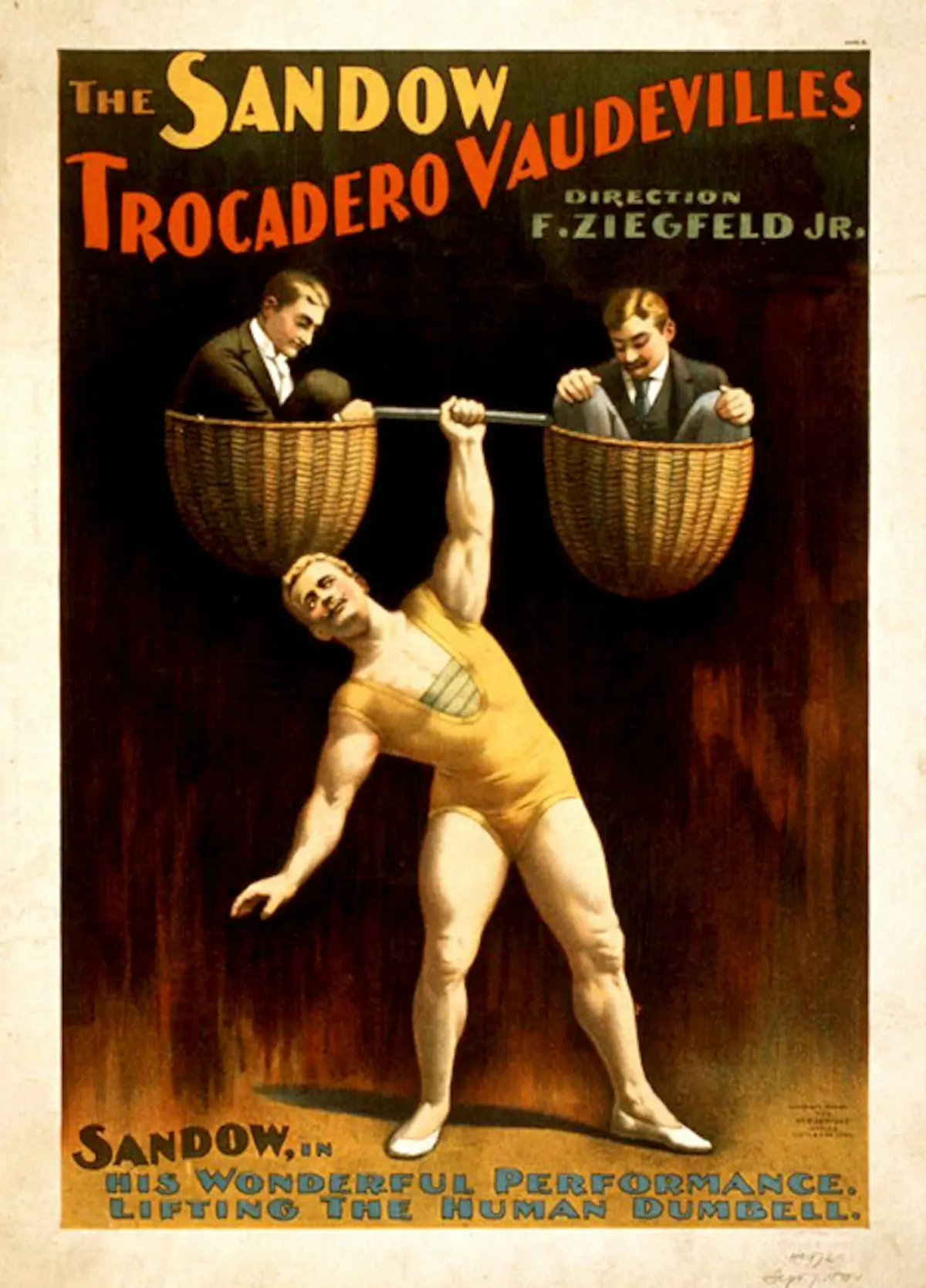
However, the landscape of physical culture was permanently altered in 1889. During one of Samson’s performances in a London theatre, a sleek, moustachioed challenger named Eugen Sandow stepped forward, stripped down to his posing briefs, and accepted a public challenge. What set Sandow apart from his contemporaries was not merely his strength, but his physical architecture. Unlike the bulky, rugged frames of traditional strongmen, Sandow possessed a lean, highly sculpted physique reminiscent of classical Greek marble statues.
From 1889 until his death in 1925, Sandow became the undisputed global ambassador of the ideal human form. Dudley Sargent, a pioneering physical educationalist at Harvard University, formally dubbed Sandow the "best specimen of manhood." Recognizing the commercial potential of his aesthetic, Sandow organized the world’s first major bodybuilding competition in London in 1901 and established a sprawling health empire that stretched across the British Empire, the Americas, and Australasia. Thousands of devotees purchased his mail-order courses, subscribed to his dedicated magazine, and even consumed his branded cocoa. Those who lifted iron to emulate Sandow proudly categorized themselves as "physical culturists"—the direct intellectual ancestors of today’s adherents of Pilates, Hyrox, and powerlifting.
[1811: Jahn's Turnplatz] ---> [1889: Sandow's Aesthetic Shift] ---> [1950s: Morris's Inactivity Studies] ---> [1970s: Pumping Iron & Aerobics] ---> [Today: Algorithmic Fitness]The Post-War Panic and the Aerobics Boom (1950s–1980s)
Following the tumult of the Second World War, the societal rationale for exercise underwent another radical transformation. The primary catalyst shifted from aesthetics and national defense to a terrifying new modern malady: chronic sedentarism and the rising tide of cardiovascular disease.
This fear was profoundly amplified in 1953 by epidemiologist Jerry Morris, whose landmark study of London transport workers revealed a sobering truth. London bus drivers, who spent their shifts sitting behind the wheel, experienced significantly higher rates of heart disease compared to bus conductors, who spent their working days actively climbing the stairs of double-decker buses. The identified culprit was stark and undeniable: physical inactivity.
Medical professionals across the globe began mobilizing against the escalating heart disease epidemic. Their radical prescription was deceptively simple: encourage ordinary citizens to run slowly for sustained periods—an activity that soon became codified as "jogging." Pioneered in New Zealand and popularized in the United States during the 1960s, jogging ignited a massive "aerobics" craze.
New commercial gym chains rapidly materialized, welcoming previously untrained populations into structured cardiovascular routines. Aerobics proved uniquely popular among women. In 1969, fitness instructor Jacki Sorensen revolutionized the space by fusing dance steps from jazz, folk, cha-cha, and square dancing with high-energy pop music, birthing the aerobic dance movement. By the 1980s, the phenomenon achieved mainstream ubiquity, supercharged by iconic cultural touchstones such as Jane Fonda’s bestselling 1982 workout video, which successfully migrated the fitness studio directly into the domestic living room.
The Golden Era of Muscle and the Rise of Mass Lifting (1970s–2000s)
Parallel to the cardiovascular and aerobics explosion, the iron game underwent its own cinematic renaissance. In 1977, the seminal documentary Pumping Iron introduced the world to an ambitious, charismatic Austrian immigrant named Arnold Schwarzenegger. Produced in tandem with fitness entrepreneur Joe Weider, the film popularized bodybuilding as a mainstream cultural phenomenon, arriving precisely at a historical moment when newly engineered gym equipment—such as Arthur Jones’s Nautilus machines—made weight training vastly more accessible to the general public.
Schwarzenegger’s hyper-muscular silhouette became the definitive template for heroic masculinity in popular culture. Hollywood action stars, toy manufacturers, and competitive athletes alike rushed to emulate the aesthetic. Sylvester Stallone notably enlisted Schwarzenegger’s legendary training partner, Franco Columbu, to completely transform his physique ahead of his star-making turns in the Rocky and Rambo franchises.
Crucially, women were also breaking structural barriers in the strength domain. Lisa Lyon captured the inaugural women’s world bodybuilding championship in 1979, paving the way for women’s weightlifting to make its historic debut at the Olympic Games two decades later. By the turn of the millennium, pumping iron had firmly shed its counter-cultural associations, evolving into a ubiquitous recreational activity supported by 24-hour budget gym franchises and explosive new disciplines like CrossFit.
Supporting Context & Metrics: The Modern Fitness Landscape
To fully understand why over a quarter of young Britons now prioritize their gym memberships over holidays or dining out, one must examine the intersection of modern lifestyle pressures, economic shifts, and health metrics.
The Shift Toward Strength Training Among Gen Z
Data compiled by Sport England and industry body ukactive highlights a profound generational divergence in physical activity. While older generations often gravitated toward endurance sports or general recreation, Generation Z exhibits an overwhelming preference for resistance and strength training.
- The Gym Over Leisure: Over 25% of young British adults state that maintaining their gym membership is a non-negotiable financial priority, ranking above traditional discretionary spending like vacations and restaurant meals.
- The Longevity and Aesthetic Driver: Young adults increasingly view weight training not merely as an aesthetic pursuit, but as a holistic health investment that enhances metabolic function, bone density, mental resilience, and physical longevity.
- The Persistent Activity Gap: Despite the surge in Gen Z gym culture, broader public health data warns that approximately one in three Britons engages in zero strength exercise whatsoever, posing severe long-term risks for age-related muscle loss (sarcopenia) and metabolic disease.
Official Statements and Expert Insights
The convergence of historical precedent and modern behavioral trends has drawn deep analysis from academic researchers, exercise scientists, and cultural historians.
"Influencers have been a massive part of this modern shift toward hyper-visible physical culture, but none of this is fundamentally new," notes exercise scientist Andrew Scott. "Eugen Sandow sold his body on postcards and cocoa tins in the Victorian era; Jane Fonda sold hers on VHS tapes in the 1980s; and Arnold Schwarzenegger sold his on the silver screen. The medium changes, but the core psychological drivers remain remarkably constant."
Historians emphasize that physical culture has always served as a mirror reflecting the deeper anxieties of the state and the individual. In the nineteenth century, fitness was weaponized to build resilient soldiers for imperial expansion. In the post-war era, it was mobilized as a medical defense against the sedentary hazards of modern industrial labor. Today, experts suggest that fitness serves as an antidote to digital alienation and economic uncertainty.
"Two hundred years ago, structured fitness served the geopolitical ambitions of the sovereign nation-state," cultural observers note. "Today, in an era dominated by digital platforms, the pursuit of the optimized physical form serves the algorithm."
Future Outlook: The Algorithm-Driven Future of Physical Culture
As we look toward the horizon, the trajectory of the fitness industry points toward hyper-personalization, data-driven optimization, and virtual integration. The traditional boundaries between physical spaces (the gym), digital platforms (social media), and biometric tracking (wearables) are dissolving at an unprecedented rate.
1. The Death of Generic Programming
The future of strength and fitness will be dictated by real-time biometric feedback. Wearable technology, continuous glucose monitors, and artificial intelligence-driven coaching applications will allow Gen Z and subsequent generations to move away from generalized workout routines. Instead, exercise prescription will be hyper-individualized, adapting dynamically to recovery metrics, sleep quality, and hormonal biomarkers.
2. The Gamification of Strength
Fueled by short-form video algorithms on TikTok and Instagram, fitness has become an inherently performative and community-driven experience. The hashtag #strongnotskinny has generated billions of impressions, creating decentralized digital peer groups that demand continuous engagement, progression documentation, and public accountability. This gamification ensures that fitness remains deeply entrenched in youth identity, functioning simultaneously as a social currency and a health pursuit.
3. Public Health Implications and Accessibility
While the obsession with strength training among young adults is a positive development for functional health, the commercialization of fitness presents distinct socio-economic challenges. As gym memberships and specialized training modalities command an increasingly large share of disposable income, policymakers face the urgent task of ensuring that physical health infrastructure remains accessible across all demographics, preventing a widening health divide between the fitness-obsessed affluent and the sedentary marginalized.
Ultimately, the iron will continue to be lifted. Whether driven by the ghost of a nineteenth-century Prussian nationalist, the theatrical showmanship of Victorian strongmen, or the algorithmic imperatives of twenty-first-century social media, humanity’s relentless drive to reshape its physical shell remains one of our most enduring cultural constants.