Executive Overview
For decades, the pantheon of mid-century American rhythm and blues has been dominated by a familiar triad of names: Etta James, Gladys Knight, and Aretha Franklin. Yet, standing shoulder-to-shoulder with these luminaries—and arguably exerting an equally profound, if understated, influence on the trajectory of modern popular music—is the woman universally revered as the "Soul Queen of New Orleans": Irma Thomas.
Despite a career spanning over seven decades, a Grammy Award, and the vocal admiration of rock-and-roll royalty ranging from Mick Jagger to Bonnie Raitt, Thomas has largely evaded the mainstream, crossover household-name status achieved by her peers in the United Kingdom and, to a lesser extent, across the United States. Outside of devout music aficionados and the discerning ears of the British Northern Soul circuit, her name remains an industry insider’s secret.
Her journey is a masterclass in artistic resilience. From her roots in Ponchatoula, Louisiana, to navigating the treacherous waters of 1960s record labels, surviving the catastrophic devastation of Hurricane Katrina, and finally reclaiming her catalog and her history on stages worldwide, Thomas’s narrative is one of quiet majesty. Armed with what critics have famously described as "the sadly sweet voice of a fallen angel," Thomas has spent a lifetime teaching the world what true R&B royalty sounds like. This retrospective explores her monumental career, the industry missteps that kept her from global superstardom, and her enduring, unassailable legacy.
Detailed Chronology: From Louisiana Roots to R&B Royalty
Early Beginnings and the New Orleans R&B Scene
Born Irma Lee in Ponchatoula, Louisiana, in 1941, Thomas displayed a natural, commanding vocal prowess from a remarkably young age within her local religious and community circles. By the tender age of 13, she had already caught the attention of industry scouts, auditioning for Specialty Records.
However, it was visionary bandleader Tommy Ridgley who truly ignited her professional trajectory. Ridgley secured Thomas a recording contract with Ron Records, a boutique label specializing in raw, authentic New Orleans R&B. Founded by Joe Ruffino to champion local sounds, Ron Records positioned Thomas alongside legendary company, including Professor Longhair and Mac Rebennack, who would later achieve global fame as Dr. John.
Thomas wasted no time cementing her unique artistic identity. Her debut single, the fiercely assertive "(You Can Have My Husband But Please) Don’t Mess With My Man," climbed to No. 22 on the Billboard R&B chart. Even at the inception of her recording career, the track showcased a woman of immense confidence, delivering sharp, soulful refrains with a maturity that belied her years.
The Imperial Years and Creative Peak
Seeking broader horizons, Thomas transitioned to the Minit label, where she struck a formidable creative partnership with producer, songwriter, and arranger Allen Toussaint. Toussaint penned the haunting, blues-soaked masterpiece "It’s Raining" (1962) for her. The following year yielded "Ruler Of My Heart," composed by Aaron Neville—a composition so potent it would later be covered to critical acclaim by both Otis Redding (as "Pain in My Heart") and Norah Jones.
The year 1964 marked an imperial phase for Thomas, yielding four Top 100 R&B hits on the Imperial label. It began with the emotionally pulverized "Wish Someone Would Care," a song penned by Thomas herself during the painful collapse of her first marriage. Ironically, this heart-wrenching ballad was backed by the infectious, uptempo snare-drum shuffle of "Breakaway" (written by Jackie DeShannon and Sharon Sheely)—a track that would later become a major hit for British pop star Tracy Ullman.
This momentum continued with "Anyone Who Knows What Love Is (Will Understand)," a breathtaking, emotional tour de force co-written by Randy Newman. In a cruel twist of fate, its B-side—a gospel-infused rendition of "Time Is On My Side"—became synonymous with The Rolling Stones. The British invaders copied Thomas’s arrangement note-for-note, including her spoken ad-libs, for their second studio album. So pervasive was the Stones’ version that many casual listeners mistakenly accused Thomas of covering the band’s song. The indignity of this misconception stung so deeply that Thomas stubbornly refused to perform the track live for decades.
Rounding out her remarkable 1964 chart run were "Times Have Changed" and the stunning "He’s My Guy." During this era, Thomas functioned as an unofficial R&B ambassador, her pristine vocal control and emotional depth serving as the gold standard for the genre.
Label Shuffling and the Swamp Dogg Era
As the turbulent 1960s drew to a close, Thomas’s commercial momentum began to stall due to a series of ill-fated label transitions. Her final R&B hit of the decade was a stirring cover of Otis Redding’s "Good For Me," recorded in 1968 at the legendary Muscle Shoals studios for Chess Records.
Regrettably, her tenure with Chess was criminally short. Had a major label of that caliber invested in her long-term development, the trajectory of her career might have looked vastly different. Stints with Canyon, Roker, and Cotillion followed before she found a kindred spirit in producer Jerry Williams Jr., better known as Swamp Dogg.
Under Swamp Dogg’s Fungus Records imprint, Thomas released In Between Tears (1973). An idiosyncratic, deeply immersive collection of southern soul, the album was a critical triumph that was nonetheless consigned to commercial obscurity for years—a hidden gem waiting to be rediscovered by crate-diggers and soul purists.
The Soul Queen of New Orleans Takes the Crown
Following a period of residency in Los Angeles, Thomas returned to her spiritual and physical home: New Orleans. Alongside her husband, Emile Jackson, she established a vibrant live music hub, The Lion’s Den, where she fronted her own formidable house band.
Simultaneously, her participation in the New Orleans Jazz & Heritage Festival (established in 1970) exposed her talents to a wider, more appreciative audience of roots-music tourists and international critics, transforming her into a lucrative and beloved live attraction.
Record-wise, the late 1970s and 1980s brought renewed creative energy. In 1978, she signed with Maison de Soul, releasing "Hip Shakin’ Mama" as a direct nod to the burgeoning dancefloors of the era. For the same label, she recorded Soul Queen Of New Orleans, an album featuring disco-infused reworkings of her classic catalog.
In 1986, Thomas found a stable, creatively liberating home with Rounder Records. This partnership yielded a succession of critically lauded albums, including The New Rules (1986), The Way I Feel (1988), Live: Simply The Best (1991), and True Believer (1992).
Surviving Katrina and Grammy Glory
The resilience of Irma Thomas was tested to its absolute limits in August 2005 when Hurricane Katrina submerged 80 percent of New Orleans under floodwaters. Among the countless cultural casualties of the deluge was The Lion’s Den, which was entirely destroyed.
Refusing to be broken by the tragedy, Thomas channeled her grief and survival into the studio. Entering Dockside Studios in Maurice, Louisiana, she recorded After The Rain (2006). Her 18th studio album was a poignant, deeply spiritual reflection on loss and endurance. It earned Thomas her first-ever Grammy Award, taking home the prize for Best Contemporary Blues Album—making her the first female artist to win the category since Etta James.
Supporting Context & Metrics
Cultural Resonance and Modern Reclamations
While commercial charts in the United States and the UK often failed to reflect Thomas’s true stature, her cultural footprint has expanded exponentially through unexpected avenues in the 21st century.
- The Black Mirror Effect: Creator Charlie Brooker’s championing of Thomas introduced her work to an entirely new generation. "Anyone Who Knows What Love Is (Will Understand)" was featured prominently across seven episodes of Netflix’s critically acclaimed anthology series Black Mirror, imbuing the haunting ballad with a chilling, recurring thematic resonance.
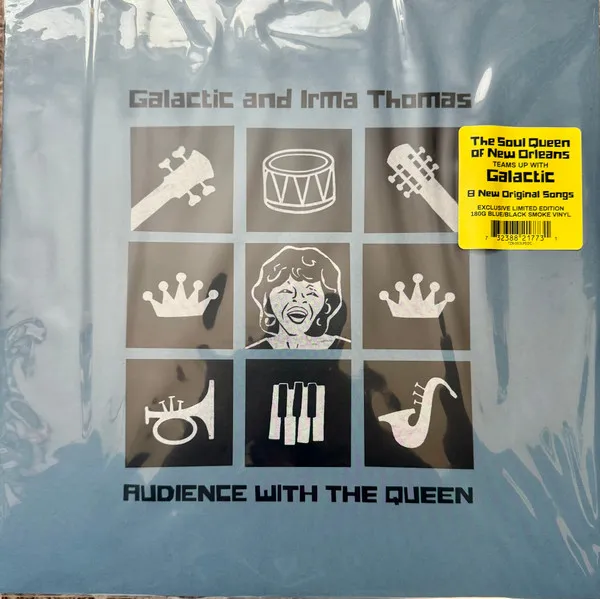
- Collaborations Across Genres: Thomas has never been boxed into a single genre. Her rich voice has graced recordings by blues icons like B.B. King, modern funk innovators Galactic (with whom she recorded Lady Liberty and the 2025 album Audience With The Queen), and even British actor and musician Hugh Laurie on his 2011 release Let Them Talk, where she tackled the traditional ballad of John Henry.
- A Historic Reconciliation: At Jazz Fest 2024, a decades-long musical ghost was finally laid to rest. Mick Jagger invited Thomas to share the stage to perform "Time Is On My Side." In front of tens of thousands of fans, Jagger publicly acknowledged the Rolling Stones’ immense musical debt to Thomas, offering her a magnanimous and overdue opportunity to reclaim the spotlight on a song that had always belonged to her.
Industry Influence Matrix
| Artist / Collaborator | Nature of Influence / Connection | Key Track / Milestone |
|---|---|---|
| The Rolling Stones | Copied "Time Is On My Side" note-for-note; later shared the stage with Thomas in 2024. | "Time Is On My Side" (1964) |
| Allen Toussaint | Prolific producer and songwriter who crafted her signature blues-soaked arrangements. | "It’s Raining" (1962) |
| Otis Redding | Covered her material and profoundly admired her vocal delivery. | "Ruler Of My Heart" / "Pain In My Heart" |
| Charlie Brooker | Utilized her music to define the emotional core of his dystopian series. | Black Mirror sync placements |
| Galactic | Contemporary funk collaborators bridging generations of New Orleans sound. | Audience With The Queen (2025) |
Official Statements and Critical Legacy
Industry peers and cultural critics have long recognized the yawning gap between Thomas’s artistic genius and her commercial footprint.
Music historians frequently point to her absence from the mainstream British consciousness as one of the great oversights of the 20th-century transatlantic music exchange. While acts like the Animals, the Rolling Stones, and Fleetwood Mac absorbed the rich idioms of American rhythm and blues—frequently borrowing directly from Thomas’s arrangements—the primary architect herself remained an underground favorite, celebrated primarily within the niche confines of the UK’s Northern Soul scene.
Reflecting on her career, Thomas has often embraced an educational moniker, referring to herself simply as "The Teacher." It is a title she wears with absolute justification. In interviews, she has spoken pragmatically about the music industry’s historical inequities, noting that while she may not have achieved the household name recognition or multi-million-dollar fortunes of some of her contemporaries, her catalog remains untarnished by compromise.
Music critic Lin Bensley aptly captured the ethereal quality of her artistry, writing that Thomas possesses:
"the sadly sweet voice of a fallen angel… Anyone seeking a tutorial on how to attain rhythm and blues royalty should pay attention to the music of her majesty, Irma Thomas."
Future Outlook
As she enters her mid-eighties, Irma Thomas shows no signs of slowing down or resting on her considerable historical laurels. The release of her 2025 album, Audience With The Queen, recorded alongside the boundary-pushing electro-funk outfit Galactic via Tchoup-Zilla Records, proves that her artistic curiosity remains as sharp as ever. By fusing her timeless, gospel-imbued vocal delivery with contemporary funk and electronic textures, Thomas continues to defy generational boundaries.
Looking forward, the mission for music historians, collectors, and streaming audiences alike is clear: complete the reclamation of her legacy. As physical reissue campaigns—championed by outlets like Record Collector—continue to unearth lost sessions from her Swamp Dogg and Imperial eras, the modern listener is afforded a clearer picture of her architectural importance to soul music.
Irma Thomas may never have enjoyed the ubiquitous chart dominance of Aretha Franklin or the glossy pop crossovers of Gladys Knight, but her legacy is built on something far more enduring. She is the keeper of the New Orleans soul flame—an artist whose voice carries the weight of history, the pain of heartbreak, and the unyielding joy of survival. For anyone willing to listen, the classroom is open, and "The Teacher" is still in session.