Executive Overview
In the deepest reaches of the North Atlantic, nearly forty miles off the outer coast of the Scottish mainland, lies St Kilda—a remote, volcanic archipelago battered by relentless winds, towering swells, and the haunting cries of millions of seabirds. It is a place of profound isolation, abandoned by its human inhabitants in 1930, yet etched deeply into the folklore and ecological history of the British Isles. It is also the muse, canvas, and acoustic laboratory for the avant-folk ensemble Garefowl.
On October 2, the group returns with their sophomore full-length album, Things That Vanish, released via the vanguard electronic and experimental label AD 93. To herald the announcement, Garefowl have shared the record’s arresting lead single, Buthaigir/Puffin. Recorded under the cover of darkness on Hirta—the main, precipitous island of the St Kilda group—the new album marks a radical departure from the band’s acclaimed 2020 debut, Cliffs. Stripping away synthesizers entirely, the collective has forged an organic, spectral soundworld sourced directly from the elements: field recordings, hydrophone captures, and a revolutionary audio-generation process that translates the molecular structures of St Kildan rock and bone into resonant sine waves.
Named after the archipelago’s most threatened avian species—including the puffin, guillemot, storm petrel, cormorant, shearwater, kittiwake, gannet, bonxie, and fulmar—Things That Vanish is not merely an album of nature recordings or traditional folk arrangements. It is a work of sonic archaeology. It interrogates the thin veil between myth and ecology, channelling old St Kildan beliefs that view these seabirds not just as wildlife, but as primal predatress entities, mythical livestock rustlers, or the pelagic, wandering souls of drowned sailors.
This comprehensive report examines the genesis of Things That Vanish, the groundbreaking technological and ecological methodologies behind its creation, the rich historical lineage of the band, and what this uncompromising release signals for the future of experimental folk music.
Detailed Chronology: From the Great Auk to the Night-Sketches of Hirta
The Ancestral Bloodline and the Ghost of the Great Auk
The story of Garefowl is inextricably bound to a tragic ecological threshold in British history: the extinction of the great auk (Pinguinis impennis), known in vernacular Scots as the garefowl. The project was originally conceived by founding member Ewan Macdonald and his father, Murdo Macdonald. Both men carry a profound genealogical link to this loss, standing as direct relatives of one of the islanders who, in the summer of 1840 on the St Kildan stack of Stac an Armin, captured and killed what was believed to be the last great auk seen in British waters, convinced the flightless bird was a witch.
That historical trauma serves as the psychological bedrock of the band’s output. The Great Auk’s extinction is a permanent ghost haunting the maritime consciousness of the North Atlantic. When Ewan and Murdo Macdonald sought to translate this historical grief into music, they formed Garefowl as an act of mourning, atonement, and artistic preservation.
The Lockdown Birth of Cliffs (2020)
Garefowl’s debut album, Cliffs, emerged during the unprecedented global isolation of 2020. Crafted largely through remote collaboration during lockdown, the album combined traditional instrumentation—fiddles, smallpipes, and strings—with atmospheric synthesizers. Released to critical acclaim, Cliffs established the band’s unique territory at the intersection of avant-garde composition and traditional folk forms.
Reviewing the record at the time, critic Johnny Whalley praised its evocative power, noting that Garefowl had produced music that “effortlessly evokes the sights and sounds of the remote, rocky, seabird havens that make up the St Kilda archipelago.” The album’s impact resonated deeply within the British folk community: it was featured prominently on Episode 82 of the Folk Show, and ultimately secured a coveted spot in KLOF Mag’s Top 100 Folk Albums of 2020.
Yet, for a band obsessed with the physical reality of the edge of the world, remote creation was only ever a prelude. To capture the true essence of St Kilda, Garefowl had to go to the source.
Nocturnal Fieldwork on Hirta
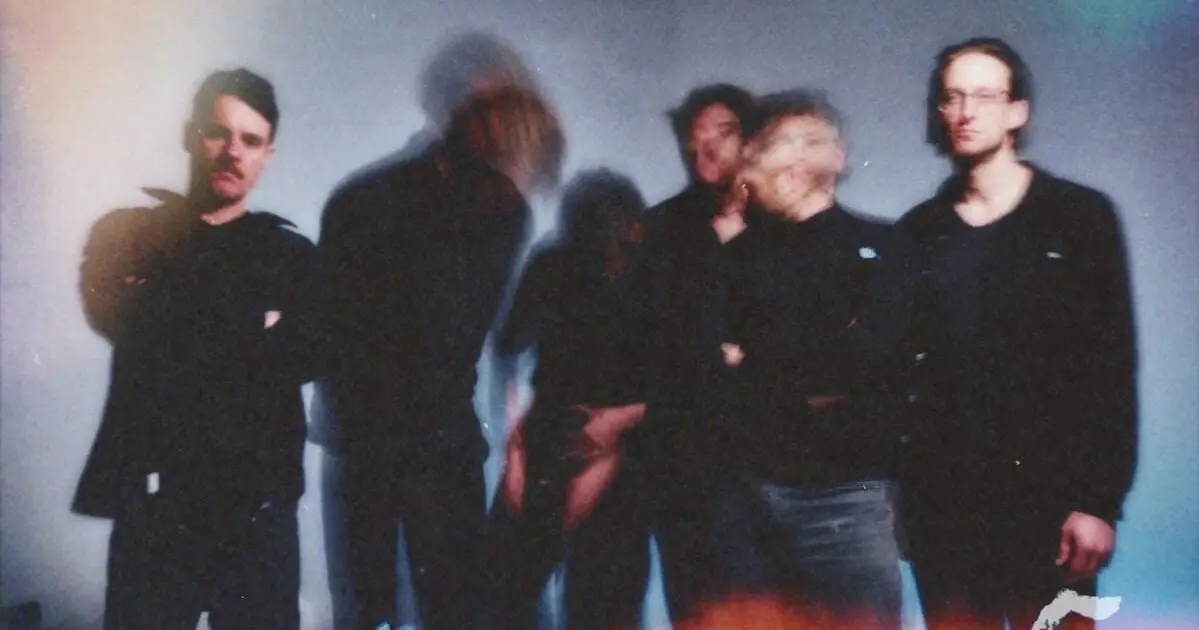
To produce Things That Vanish, Garefowl abandoned the safety of conventional studios. Instead, the current lineup—featuring Ewan Macdonald (fiddle, smallpipe drone), Nathan Bontrager (viola da gamba, harmonium, banjo), Stuart Graham (bouzouki, harmonica, harmonium), Chris Jones (concertina, mandolin), Richard O’Flynn (island sounds, percussion, XRD drones), and Jess Whelligan (cello)—journeyed into the heart of the archipelago.
Working under the cloak of night on Hirta, the ensemble immersed themselves in the sensory deprivation and acoustic amplification of the St Kildan darkness. The absence of daylight threw the sonic environment into sharp relief: the booming surge of Atlantic breakers against granite cliffs, the whistling downdrafts of wind tearing through abandoned stone cleits (storage huts), and the haunting, nocturnal cacophony of nesting seabirds.
Rather than overlaying traditional melodies onto field recordings, the band allowed the environment to dictate the composition. The result is a nine-track monument, with each piece bearing the name of an endangered avian resident:
- Buthaigir / Puffin
- Guillemot
- Storm Petrel
- Cormorant
- Shearwater
- Kittiwake
- Gannet
- Bonxie
- Fulmar
The release of Buthaigir/Puffin as the lead single offers the first window into this nocturnal world, balancing fragile string textures with the oppressive, beautiful weight of absolute wilderness.
Supporting Context & Metrics: The Science of Sound and the Crisis of the Seabirds
Sonochemistry: X-Ray Diffraction and Molecular Drones
One of the most remarkable technical achievements of Things That Vanish is its total abandonment of synthesizers. In previous work, electronic textures filled out the atmospheric gaps. For this album, Garefowl wanted an acoustic palette that was literally molecularly tied to St Kilda.
This led to a pioneering collaboration by band member Richard O’Flynn and sound artist Joe Gardner. Together, they developed a technique that bridges material science and acoustic composition:
- Collection: Physical fragments of rock and bone sourced from St Kilda were gathered under strict ethical and environmental guidelines.
- Analysis: These samples were subjected to X-ray diffraction (XRD)—a crystallographic technique typically used to determine the atomic and molecular structure of a crystal.
- Translation: The resulting diffraction spectrums were mapped directly onto sine waves.
In essence, the physical matrix of St Kilda’s cliffs and the historical remnants of its fauna were translated into raw, foundational drone frequencies. When listeners hear the deep, humming undercurrents on Things That Vanish, they are not hearing artificial oscillators; they are hearing the literal atomic geometry of the archipelago transformed into sound. This is supplemented by high-fidelity hydrophone recordings, capturing the underwater acoustic ecology of the surrounding marine shelf—whale clicks, crustacean scuttling, and the muffled roar of sub-surface currents.
The Ecological Reality: Threatened Havens
The album’s title, Things That Vanish, carries an urgent ecological warning. St Kilda is facing an unprecedented environmental crisis driven by climate disruption, shifting ocean temperatures, and collapsing food webs. Sandeels—the critical dietary staple for many North Atlantic seabirds—are experiencing massive population drops due to warming seas, leading to catastrophic breeding failures across the archipelago.
By dedicating each track to a threatened species, Garefowl transforms the album into a sonic memorial and an ecological alarm bell:
- The Puffin (Fratercula arctica): Once ubiquitous, now classified as vulnerable across its European range due to sandeel depletion.
- The Storm Petrel (Hydrobates pelagicus): Nocturnal breeders that rely heavily on undisturbed island burrows and dark skies.
- The Bonxie (Great Skua, Catharacta skua): Apex avian predators whose populations have been recently decimated by outbreaks of avian influenza (H5N1) combined with food scarcity.
In St Kildan folklore, these birds occupied a liminal, supernatural space. Islanders whispered stories of fulmars acting as spectral guardians, or seabirds serving as the reincarnated souls of drowned mariners pulled down by the unforgiving Atlantic swells. Garefowl tap directly into this animistic worldview, treating the birds not merely as scientific subjects, but as sentient witnesses to a changing world.
Official Statements and Critical Reception
The artistic ambition of Things That Vanish has already sent ripples through the contemporary folk and experimental music communities.
Reflecting on the ethos of the new material, the band notes that the transition away from synthesizers was essential to achieving an authentic connection with the landscape:
"When you stand on Hirta at night, the synthetic feels alien. The island speaks in ancient frequencies—in the crystalline structure of the stone, the dense chatter of the colonies, and the deep, sub-audible pressure of the ocean. Our goal was to let the environment author itself through us, using science to unlock the voice of the rock and bone."
Early critical appraisal continues to validate Garefowl’s unique position in modern music. Reviewers have highlighted the ensemble’s rare ability to merge rigorous ethnomusicological research with avant-garde sound art without losing emotional resonance. Johnny Whalley’s summation of their debut—noting music that "effortlessly evokes the sights and sounds of the remote, rocky, seabird havens"—applies tenfold to the immersive sonic architecture of Things That Vanish.
Future Outlook: Live Performances and Tour Dates
As Things That Vanish prepares for its October 2 release via AD 93 on digital platforms and luxury LP formats, Garefowl are translating their nocturnal St Kildan field studies into a live touring apparatus.
Recreating the complex acoustic layers of the album—balancing live fiddle, viola da gamba, concertina, and bouzouki against XRD-derived sine-wave drones and field recordings—promises an intense, theatrical concert experience. The band has announced an extensive live itinerary across Ireland and the UK for the autumn of 2024:
Garefowl Live Itinerary (Fall 2024)
- September 11: Dún Laoghaire Folk Festival – County Dublin, Ireland
- October 28: The Globe – Glossop, United Kingdom
- October 29: Glad Cafe – Glasgow, United Kingdom
- October 30: St Brides Church – Liverpool, United Kingdom
- October 31: Stones Nest – London, United Kingdom
These performances are expected to incorporate immersive visual and sonic elements, drawing audiences directly into the fog-shrouded sea stacks and midnight cliffs of St Kilda.
Pre-Order and Availability Information
- Release Date: October 2
- Label: AD 93
- Formats: Digital download, streaming, and high-grade physical LP.
- Pre-Orders: Available now via the official AD 93 portal at ad93.ffm.to/thingsthatvanish.
In an era where much of contemporary folk looks backward in comfort, Garefowl look outward and downward—into the molecular structure of extinct birds, the atomic memory of ancient stones, and the dark, howling vaults of the North Atlantic. Things That Vanish stands as a monumental achievement: a record that does not just sing about the edge of the world, but is built entirely from its remnants.