Executive Overview
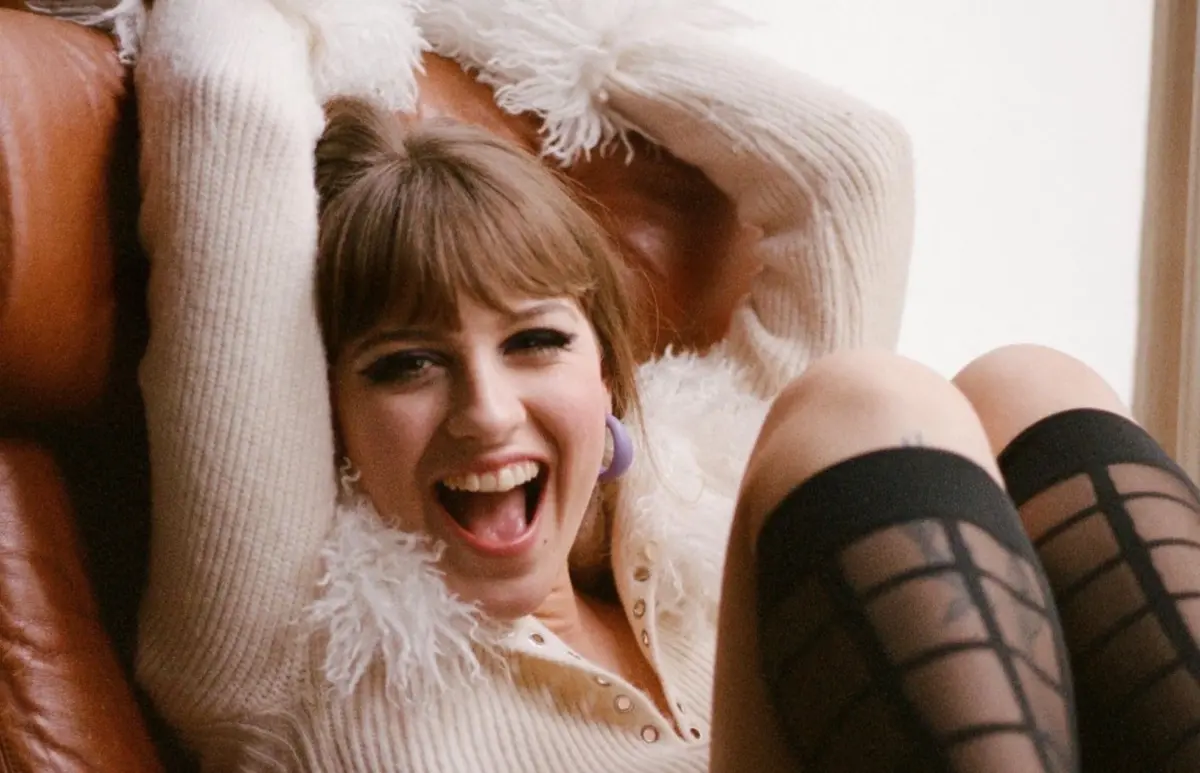
In an era defined by rapid political realignment and an unrelenting 24-hour digital news cycle, the line between civic engagement and psychological exhaustion has become increasingly thin. This tension lies at the absolute core of Riot Youth, the highly anticipated debut album from Manchester-based singer-songwriter Chloe Slater. Speaking exclusively with NME backstage at the Mad Cool Festival in Madrid, Spain, Slater articulated a sentiment that is rapidly becoming the defining characteristic of her generation: a profound sense of political desensitization.
Slater’s commentary arrives at a critical juncture in British and global politics. With the sudden resignation of Keir Starmer as Prime Minister and the subsequent elevation of former Greater Manchester Mayor Andy Burnham to the nation’s highest office, the UK political landscape is undergoing seismic shifts. Simultaneously, the constant background noise of global instability—ranging from the ubiquitous media presence of Donald Trump to the surreal, satirical interventions of fringe political figures like Count Binface—has created an environment where the extraordinary has become mundane.
Through her upcoming record, scheduled for release on October 9, Slater seeks to dissect this modern malaise. Rather than delivering a conventional, wide-eyed protest album, Riot Youth serves as an investigative autopsy of youth activism under the weight of systemic stagnation. It explores the transition from the passionate idealism of youth to the jaded pragmatism of early adulthood, offering a raw, unfiltered look at what happens when the drive for societal change collides with the brick wall of institutional inertia.
Detailed Chronology
To understand the evolution of Riot Youth and the perspective Slater brings to her debut campaign, it is necessary to trace the milestones of her rapid ascent alongside the turbulent political backdrop of the mid-2020s.
[February 3, 2025] ───► Chloe Slater featured as NME Cover Star, cementing her status as a rising voice in UK indie-punk.
       │
[Mid-2026]          ───► Major UK political upheaval: Keir Starmer resigns; Andy Burnham assumes leadership.
       │
[July 9, 2026]      ───► Slater performs a high-energy set in the Cinco Estrellas tent at Mad Cool Festival, Madrid.
       │
[July 9, 2026]      ───► Slater speaks to NME backstage, detailing the thematic architecture of 'Riot Youth'.
       │
[October 9, 2026]   ───► Scheduled global release of Slater's debut album, 'Riot Youth'.
The Ascent to the Cover (February 2025)
Slater first captured widespread critical attention in early 2025, culminating in her feature as an NME Cover Star on February 3, 2025. This milestone established her not merely as a musician, but as an articulate cultural commentator capable of translating the anxieties of her peers into sharp, guitar-driven narratives.
The Political Catalyst (Mid-2026)
The writing and production of Riot Youth occurred against a backdrop of historic political volatility in the United Kingdom. The sudden resignation of Keir Starmer shattered the illusion of post-election stability, paving the way for Andy Burnham to transition from regional leadership in Greater Manchester to the national stage. This shift directly resonated with Slater’s Manchester roots, highlighting the stark contrasts between grassroots regional optimism and the rigid realities of Westminster governance.
The Mad Cool Milestone (July 9, 2026)
On Thursday, July 9, 2026, Slater took to the stage in the Cinco Estrellas tent at Madrid’s prestigious Mad Cool Festival. Her performance served as a live-testing ground for the sonic landscapes of Riot Youth. It was during this festival appearance, amid the sweltry heat of the Spanish capital, that Slater sat down with NME to unpack the heavy thematic elements of her upcoming release, offering a sobering counter-narrative to the celebratory atmosphere of the festival.
Supporting Context & Metrics
The Psychology of Political Disillusionment
Slater’s thesis—that repeated participation in democratic processes without tangible material improvement leads to severe burnout—is heavily supported by contemporary sociological data.
According to recent youth engagement metrics across Europe and the UK:
- Voter Turnout vs. Efficacy: While initial voter turnout among 18-to-25-year-olds peaked during cycles of promised "radical change," follow-up surveys indicate a sharp decline in "perceived political efficacy"—the belief that an individual’s vote can influence policy outcomes.
- The Burnout Cycle: Sociological studies track a distinct three-stage cycle in young activists:
- Mobilization (protests, grassroots organizing, high digital engagement);
- Stagnation (lack of policy response, media pivot); and
- Alienation (withdrawal from political discourse to protect mental well-being).
This trajectory is precisely what Slater targets in her track "Hopeless," the song from which the album title Riot Youth is derived. The "riot" is no longer just an outward physical act of defiance; it is an internal struggle to maintain passion in an environment engineered to exhaust it.
The Algorithmic Deluge: News Consumption and Desensitization
The modern information ecosystem plays a primary role in accelerating this desensitization. The transition of news delivery from curated, scheduled broadcasts to an infinite, algorithmic scroll on platforms like Instagram and TikTok has fundamentally altered cognitive processing.
| Platform Type | Delivery Mechanism | Psychological Impact on Users |
|---|---|---|
| Traditional News Media | Scheduled, curated, contextualized reporting | Higher retention, structured understanding, lower immediate anxiety |
| Social Media Feeds (Instagram/TikTok) | Infinite scroll, sensationalized clips, algorithmic curation | Cognitive overload, severe "compassion fatigue," rapid desensitization |
When catastrophic global events are juxtaposed directly against lighthearted lifestyle content or satirical political performance art (such as the media circus surrounding Count Binface), the brain struggles to assign appropriate emotional weight to tragedy. The result is a flatlining of empathy, a defense mechanism that Slater identifies as both a necessity for survival and a danger to collective progress.
Official Statements
During her conversation with NME, Slater spoke with a candidness that bypassed standard promotional talking points, choosing instead to engage directly with the socio-political realities shaping her art.
On the Paradox of "Riot Youth" and "Hopeless"
Reflecting on the core irony of her album’s title, Slater explained how the phrase is rooted in a loss of innocence:
"The title comes from a lyric on one of the songs on the album called ‘Hopeless’, and it’s about when you’re young, and you feel like you can do anything. You go and you do the protests, you vote for action and change, and you really try. But as you get older, you keep voting in these elections and you don’t see any real change. You go to the protests and nothing is working, and you’re still disadvantaged in life… it can be really hard to keep up that passion and not get burnt out."
Slater was quick to clarify that this sense of exhaustion is not exclusive to Gen Z, positioning the album’s themes as universally human:
"I don’t think the album is exclusively for young people, despite ‘youth’ being in the title. I think it’s more about that feeling, which anyone can feel at any age."
      "Riot Youth" represents the friction between
   the boundless energy of activism and the crushing weight
            of systemic political stagnation.
On the Transition of Power: Starmer to Burnham
When pressed on whether the dramatic leadership change in the UK—specifically Andy Burnham stepping into the vacuum left by Keir Starmer—offered a genuine glimmer of hope, Slater expressed a cautious, almost weary skepticism:
"I’m not sure how much of a difference it’s going to make, because there are a lot of wild things going on."
To illustrate the sheer absurdity of the current political climate, she pointed to the bizarre media ecosystem that prioritizes spectacle over substance:
"I feel like every time I look at my phone, there is something so unbelievable that I’m almost desensitised to it now, which is something we need to work on."
On Navigating the Digital Wasteland
Slater offered a prescriptive critique of how society consumes tragedy, warning against the psychological hazards of the infinite scroll:
"I think you have to filter yourself a bit from online. If you are online all the time and you’re constantly reading about all the horrific or crazy things that are happening – everything Donald Trump says every day – you do become desensitised to it, and it doesn’t seem like as big of a deal anymore."
She concluded with an appeal for intentional, offline reflection as a prerequisite for meaningful resistance:
"You can’t be looking at that all day, everyday. Otherwise you get so used to it, and you think that’s the way the world should be and that’s the way it is. You need to feel shocked, but that’s difficult in a time where news is constantly accessible and coming out every minute.
"It’s good to filter yourself from social media and look at trusted news channels, rather than everything on Instagram. It’s difficult to have the desire to make real change if you’re just constantly being fed a stream of awful news."
Future Outlook
As the October 9 release date for Riot Youth approaches, the album is poised to do more than establish Chloe Slater as a commercial force; it is set to serve as a cultural benchmark for the post-punk, indie-pop landscape of the late 2020s.
What to Expect from Riot Youth
- Sonic Landscape: Expect a dynamic contrast between high-energy, aggressive guitar work—symbolizing the "Riot"—and stripped-back, introspective lyrical passages that capture the quiet despair of the "Hopeless" state of mind.
- Thematic Depth: The record promises to reject easy answers. Rather than offering superficial anthems of rebellion, Slater’s debut will likely stand as an honest documentation of the difficulty of maintaining a moral compass in a hyper-connected, hyper-saturated world.
- Industry Impact: Coming off a high-profile performance at Mad Cool and backed by the editorial weight of NME, Slater is positioned to lead a new wave of British songwriters who prioritize raw, socio-political realism over polished, escapist pop.
Ultimately, Slater’s message is a call to reclaim our capacity for outrage. In a world designed to keep us scrolling, numb, and politically passive, Riot Youth suggests that the most radical act of protest left is simply to step away from the screen, refuse the comfort of desensitization, and preserve the energy required to demand genuine change.