Executive Overview
When Noel Gallagher summarized Oasis’s landmark debut album Definitely Maybe in 1994 with the succinct declaration, "It’s about escaping," he was offering an initial thesis for what would become one of the most culturally seismic records in modern rock history. Yet three decades later, as the album’s tracks continue to reverberate across sold-out stadium tours and captivate new generations of listeners, it has become evident that the album represented far more than mere escapism. Definitely Maybe was an unapologetic, fiercely defiant manifesto of working-class pride, raw ambition, and unyielding youth optimism.
Emerging from the grey, economically stagnant landscape of post-Thatcher Britain, the Manchester quintet—led by the volatile songwriting engine of Noel Gallagher and the charismatic swagger of frontman Liam Gallagher—delivered an eleven-track collection that fundamentally altered the trajectory of British music. While music journalists initially lumped Oasis into the emerging "Britpop" movement alongside contemporaries such as Blur, Pulp, and Suede, Definitely Maybe possessed an entirely different lineage. It was, at its core, a punk rock record driven by wall-of-sound guitar distortion, infectious Beatles-inspired melodies, and an absolute refusal to accept a diminished future.
As Oasis’s historic reunion tours reaffirm their status as enduring cultural icons, Definitely Maybe stands re-evaluated not simply as a nostalgia piece, but as the last great British punk album—a timeless declaration of independence, self-belief, and the triumphant glory of youth.
Detailed Chronology
[1991–1993] ──────────────── [MAY 1994] ─────────────── [AUGUST 29, 1994] ───────────── [SEPTEMBER 4, 1994] ──────────── [2024–2025]
Band forms in Burnage;      "Supersonic" released;    "Definitely Maybe"          Reaches #1 in UK;            Reunion Tour
Noel joins; songs written   first single signals      officially lands via        Historic Belfast gig         stadiums packed;
under Tory rule.            seismic shift.            Creation Records.           at the Limelight.            Gen Z adoption.
1. The Crucible of Burnage (1991–1993)
The origin of Definitely Maybe lies in the working-class suburb of Burnage, Manchester. Written primarily by Noel Gallagher while working low-wage jobs and collecting unemployment benefits during a period of prolonged political dominance by the Conservative Party, the songs were forged in an environment marked by industrial decline and systemic disenfranchisement. Rather than yielding to despair, the band channeled their frustration into explosive, anthemic compositions designed for maximum arena resonance.
2. The Recording and Breakthrough (Late 1993–Mid 1994)
After signing with Alan McGee’s legendary independent label Creation Records, the band struggled initially to capture their ferocious live energy in studio sessions at Monnow Valley. It was only after relocating to Sawmills Studios in Cornwall and bringing in producer Owen Morris to master a raw, overdriven, compressed mix that the album’s signature sonic assault was realized. Singles like "Supersonic" (released April 1994) and "Shakermaker" (June 1994) established the group as an unstoppable force.
3. Release and Chart Triumph (August–September 1994)
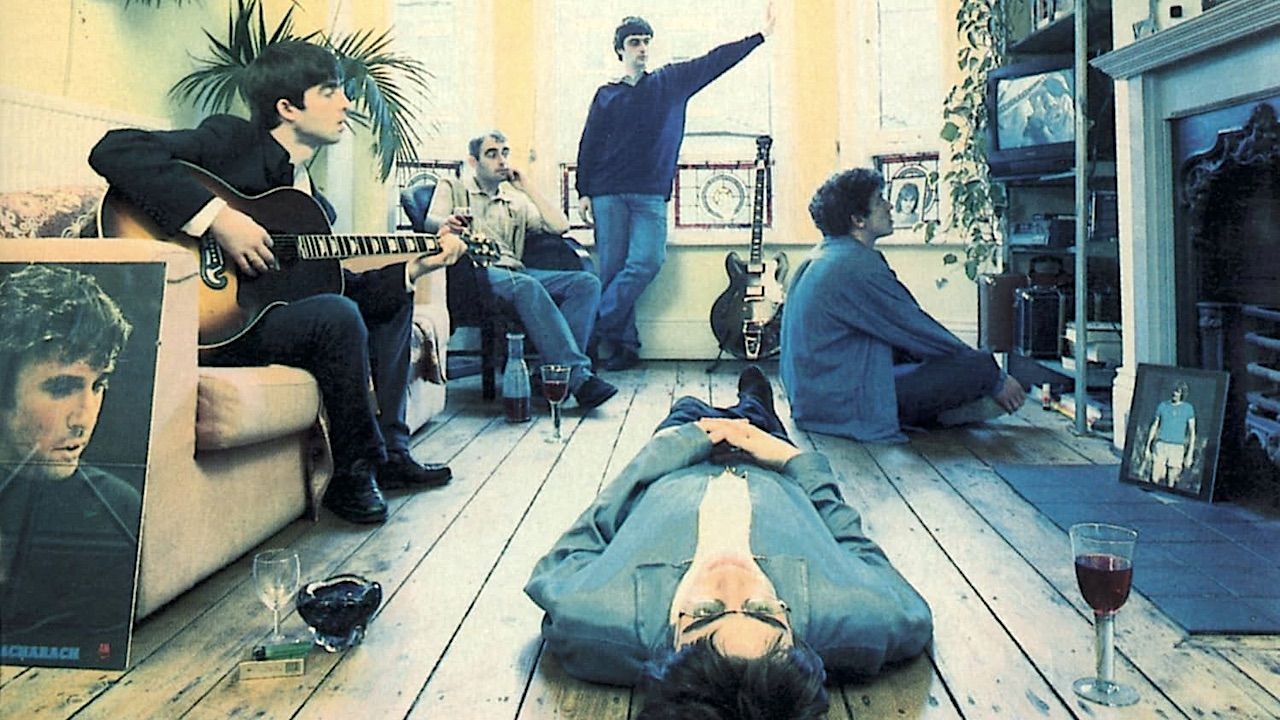
Officially released on August 29, 1994, Definitely Maybe entered the UK Albums Chart at Number 1 on September 4, 1994. At the time, it became the fastest-selling debut album in British music history, signaling a massive cultural shift away from the insular grunge melancholy importing from North America toward an assertive, home-grown sonic optimism.
4. The Belfast Benchmark (September 4, 1994)
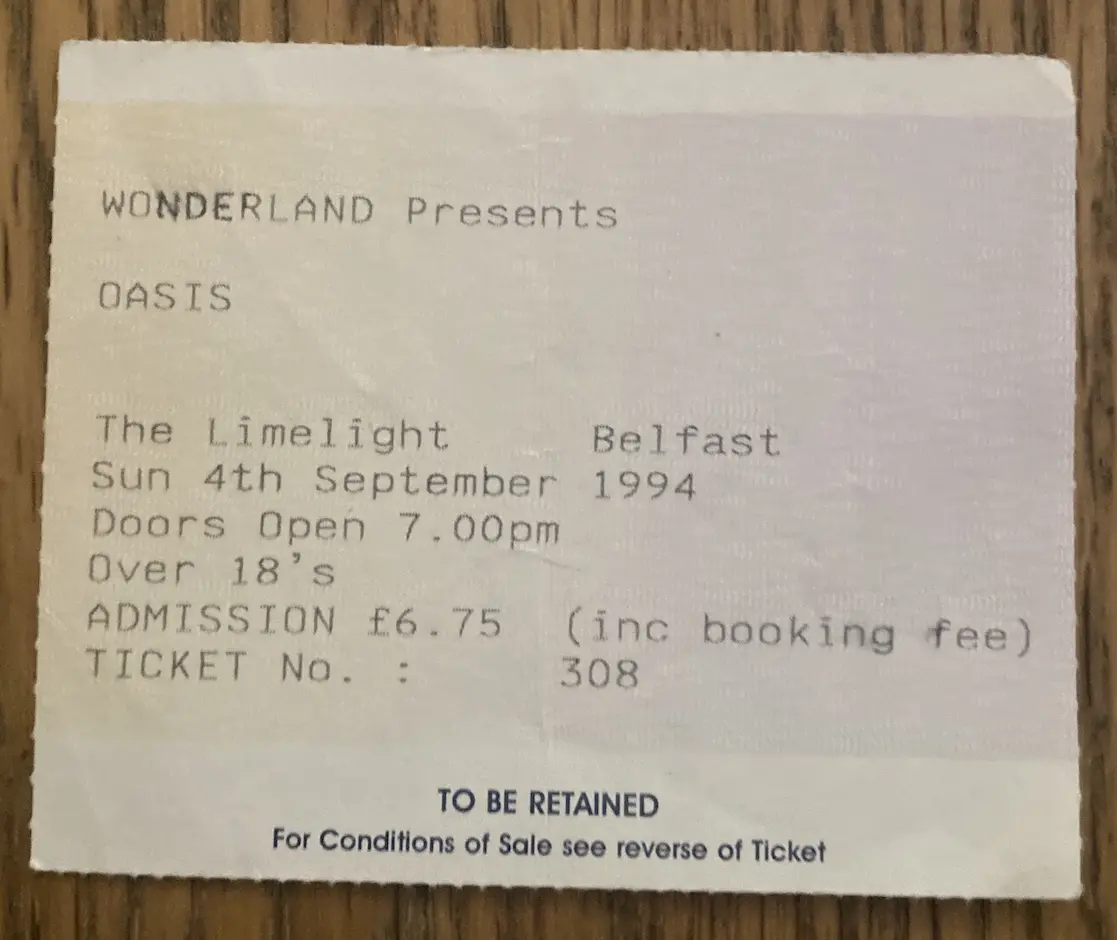
On the very night Definitely Maybe was confirmed as the UK’s top-selling record, Oasis played a historic show at The Limelight in Belfast, Northern Ireland. Receiving news of their chart victory in a cramped backstage dressing room, the band performed a incendiary set to a crowd that recognized the achievement not just as a victory for five lads from Manchester, but as a shared triumph for working-class youth across the British Isles.
5. Eternal Resonance and the Renaissance (2020s)
Decades after its debut, the album’s material formed the backbone of the Gallagher brothers’ historic reunion setlists. Six tracks from Definitely Maybe regularly featured in their stadium tour shows, proving that the record’s snap, swagger, and emotional potency had lost none of their original fury over thirty years later.
Supporting Context & Metrics
The Sonic Architecture: Borrowed Riffs and Secular Hymns
Definitely Maybe is an exercise in brazen rock ‘n’ roll re-appropriation. It shamelessly loots from the pantheon of classic rock, converting legacy guitar tropes into modern anthems of defiance:
- "Cigarettes & Alcohol": Built on an unabashedly borrowed guitar riff from T. Rex’s "Get It On," the track transformed glam-rock swagger into a hedonistic rally cry for a generation trapped in dead-end employment.
- "Bring It On Down": Drawing direct sonic inspiration from The Stooges, this remains the album’s most explicit political and musical assault. Targeting the social stratification of 1990s Britain, it addresses the "outcast" and "underclass" over aggressive, driving rhythms.
- "Columbia": Rooted in late-1980s Acid House jams and late-night ecstasy culture, the track presents a six-minute hypnotic trance of heavy, overdriven guitars and psychedelic euphoria.
- "Slide Away": A masterclass in melodic songwriting, structured as a cascading series of soaring choruses that build in emotional intensity.
- "Live Forever": Written as a direct counter-narrative to the prevailing grunge ethos of the era—specifically rumors that Nirvana’s Kurt Cobain intended to title an album I Hate Myself And I Want To Die—the song served as an audacious secular hymn. Noel Gallagher swapped fatalism for immortality, crafting a melody of simple, undeniable beauty.
       DEFINITELY MAYBE: INFLUENCE & SONIC DNA

┌────────────────────────────────────────────────────────┐
│  T. Rex ("Get It On")    ──>  "Cigarettes & Alcohol"   │
│  The Stooges             ──>  "Bring It On Down"       │
│  Acid House / Techno     ──>  "Columbia"               │
│  The Beatles (Melody)    ──>  "Live Forever"           │
│  Nirvana (Counter-point) ──>  Rejection of Fatalism    │
└────────────────────────────────────────────────────────┘
Tracklist Optimization vs. Lost Classics
Critical consensus over the decades has noted that while Definitely Maybe is a near-masterpiece, its track selection reflected a band with an embarrassment of riches. Had Noel Gallagher replaced lighter album cuts like "Digsy’s Dinner" or "Married With Children" with contemporaneous B-sides such as "Fade Away" or "Half The World Away," the record would stand as an indisputable, flaw-free opus. Even so, the inclusion of jukebox mainstays like "Supersonic" ensured the record maintained an unflagging momentum from start to finish.
Historical Metrics & Impact
| Metric | Historical Value / Impact |
|---|---|
| UK Chart Debut | No. 1 (September 4, 1994) |
| Initial Sales Record | Fastest-selling debut album in UK history (1994) |
| UK Certification | 8× Platinum (BPI) |
| Setlist Representation | 6 tracks included in major 21st-century reunion tours |
| Cultural Context | Post-Thatcher Conservative UK / Dole-queue culture |
Official Statements
The narrative surrounding Definitely Maybe has been shaped by the candid, unfiltered commentary of its creators. Unlike their art-school contemporaries, the Gallagher brothers articulated their vision with a absolute lack of pretension.
Noel Gallagher on the Album’s True Identity
Reflecting on the record’s legacy in a 2023 interview with Mojo magazine, Noel Gallagher firmly detached Definitely Maybe from the polite confines of middle-class Britpop, re-framing it within the lineage of British punk:
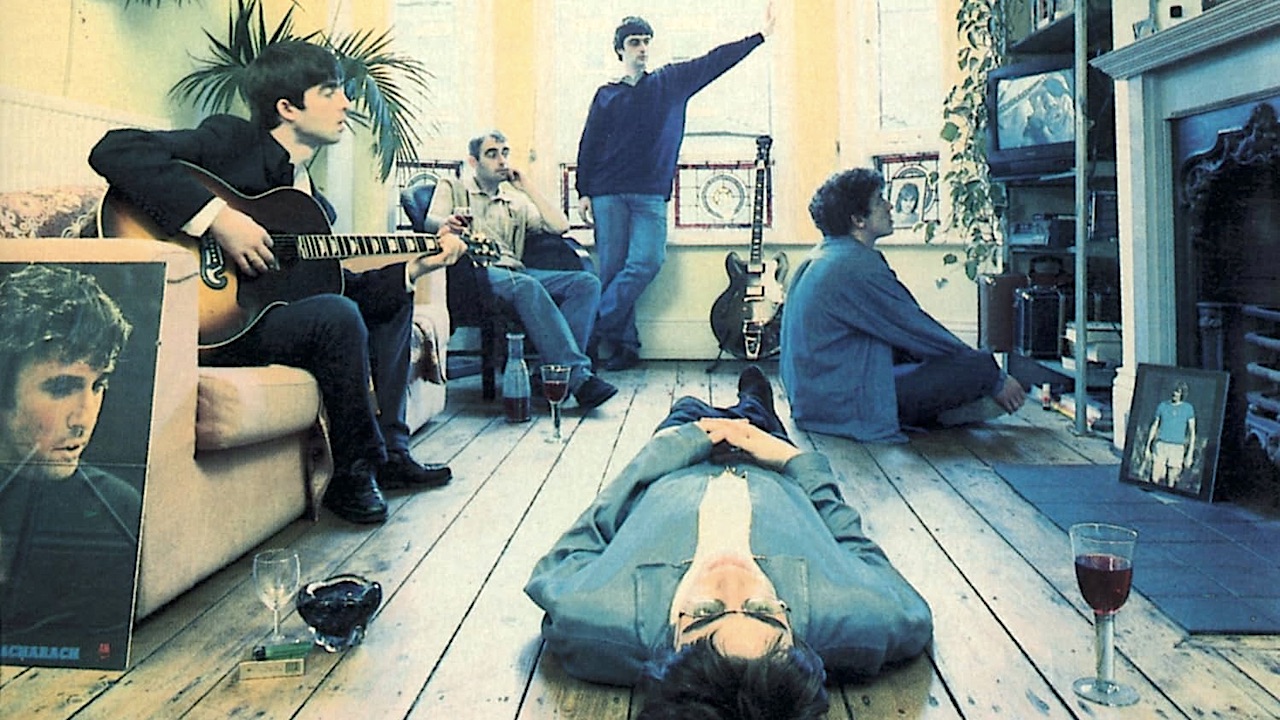
"We were a punk band with Beatles melodies. We had no effects, barely any equipment, just loads of attitude, 12 cans of Red Stripe and ambition. If you listen to that and [Sex Pistols’] ‘Never Mind The Bollocks’, they’re quite similar."
Noel further elaborated on the stark generational contrast between the punk movements of 1977 and 1994:
"’Never Mind The Bollocks’ was about the angst of being a teenager in 1977. Fast forward to 1994 and ‘Definitely Maybe’ is about the glory of being a teenager. It’s being down the park with a ghetto blaster distilled… There’s no bullshit on it. It’s an honest snapshot of working-class lads trying to make it. It’s about shagging birds, taking drugs, drinking and the glory of all of that."
He was equally uncompromising when addressing the band’s mid-90s peers:
"I’d hear Blur or Pulp or Suede on the radio and think, ‘Fuck these idiots.’"
================================================================================
                       THE PUNK PARALLEL (1977 vs. 1994)
================================================================================
 ALBUM:              'Never Mind The Bollocks'       'Definitely Maybe'
 ARTIST:             Sex Pistols                     Oasis
 YEAR:               1977                            1994
 CORE THEME:         Teenage Angst & Nihilism        Youth Glory & Ambition
 SOCIAL CONTEXT:     Pre-Thatcher Discontent         Post-Thatcher Resilience
 MUSICAL DRIVER:     Raw Punk Fury                   Punk Assault + Beatles Melody
================================================================================
Liam Gallagher on Arrogance and Authority
The album’s opening track, "Rock ‘n’ Roll Star," served as both a literal declaration of intent and a self-fulfilling prophecy. Delivered by a then-21-year-old Liam Gallagher, the song captured an unmatched vocal swagger.

Reflecting on his iconic delivery of the line, "Look at you now, you’re all in my hands tonight," Liam later characterized the track with characteristic bravado, deeming it simply:
"The most arrogant song ever."
Future Outlook
As Definitely Maybe moves deeper into its fourth decade, its cultural relevance has expanded rather than diminished. Most notably, the record has experienced a massive resurgence among Generation Z—a demographic coming of age in a socio-economic landscape marked by housing crises, economic uncertainty, and digital fatigue.
       CULTURAL TRANSMISSION ACROSS GENERATIONS

 1994: Gen X / Millennial Youth  ──>  Dole Queue Defiance & Physical Ghetto Blasters
                                      │
                                      ▼
 2024+: Generation Z Audience   ──>  Digital Age Escapism & Radical Optimism
Why ‘Definitely Maybe’ Resonates Today
- Unfiltered Authenticity: In an era of highly sanitized, algorithmically engineered pop music, the unvarnished, overdriven production of Definitely Maybe stands out as raw, organic, and inherently human.
- Radical Optimism: Unlike modern music trends that often lean into anxiety or introspective doom-scrolling, songs like "Live Forever" and "Slide Away" offer an antidote of unapologetic confidence and hope.
- The Universal Appeal of Escapism: The underlying theme of transcending one’s immediate circumstances—whether a drab suburban neighborhood or an uncertain economic future—remains timeless.
Whether evaluated as a historical artifact of 1990s working-class Britain or as a living, breathing component of modern stadium rock, Definitely Maybe retains its place in the pantheon of popular culture. It remains an extraordinary snapshot of youth, defiance, and melodic power—an impossible, thrilling declaration of intent that will, as promised, live forever.