George Frideric Handel’s historical migration from composing Italian opera to pioneering English oratorio remains one of the most transformative pivots in Baroque music history. While conventional musicological narratives often emphasize the English vocal forces that anchored these monumental sacred works—such as the formidable soprano Anastasia Robinson, the expressive contralto Susannah Cibber, and the legendary tenor John Beard—this simplistic dichotomy overlooks a fascinating historical reality: Italian castrati played an indispensable, foundational role in the genesis and evolution of Handel’s English oratorio tradition.
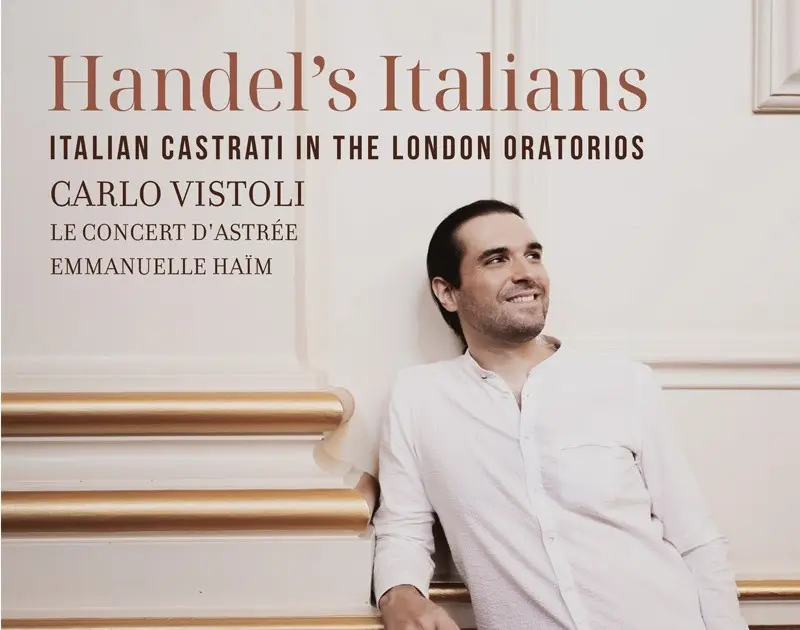
A compelling new concept album titled Handel’s Italians: Italian castrati in the London oratorios, scheduled for release on Harmonia Mundi, boldly plunges into this historical crossover. Featuring the celebrated Italian countertenor Carlo Vistoli, soprano Giulia Semenzato, and the period-instrument ensemble Le Concert d’Astrée under the visionary direction of Emmanuelle Haïm, the recording brilliantly illuminates a neglected chapter of 18th-century performance practice. Rather than serving as a standard, predictable "greatest hits" compilation of Baroque arias, this imaginative recital meticulously resurrects the specific arias, linguistic transmutations, and vocal transpositions that Handel custom-tailored for the star castrati who dominated London’s King’s Theatre.
Through suave, stylistically pristine performances, Vistoli and his collaborators demonstrate how Italian vocal artistry and English sacred drama coexisted, collided, and ultimately coalesced. This release offers modern listeners an exceptional opportunity to reexamine how porous the boundaries between secular Italian opera and English sacred oratorio truly were during the 1730s and 1740s.
Detailed Chronology: The Italian Castrati in Handel’s London
The integration of Italian castrati into English oratorios was not a sudden stylistic evolution, but a prolonged, pragmatic transition. For approximately a decade, Italian opera and English oratorio ran almost simultaneously within George Frideric Handel’s prolific output, forcing the composer to manage multilingual, multinational casts that reflected the shifting tastes and political maneuvers of London’s turbulent theatrical landscape.
The 1732 Genesis: The Rush to Esther
The catalyst for this stylistic fusion occurred in the spring of 1732. Faced with unauthorized, rival performances of his early sacred drama Esther (originally composed in 1720 for Cannons), Handel hurriedly assembled a grand, revised version of the work to be staged at the King’s Theatre. To ensure commercial viability and artistic prestige, Handel utilized the elite company of Italian singers who had just concluded a run of his opera Flavio, re de’ Longobardi.
This formidable ensemble included the legendary soprano Anna Maria Strada, the celebrated alto castrato Francesco Bernardi (universally known as "Il Senesino"), contralto Francesca Bertolli, and bass Antonio Montagnana. From this watershed moment onward, Handel’s oratorios routinely featured a hybrid casting model, blending native English performers with top-tier Italian virtuosi depending on availability and box-office appeal. By the time Athalia premiered in 1733, the cast was entirely English-speaking with the sole exception of the indomitable Strada—a pattern that would repeat in later decades with the inclusion of Italian sopranos Giulia Frasi and Caterina Galli alongside homegrown talent.
Senesino and the Linguistic Divide
Il Senesino first arrived in London under Handel’s employ in 1720 and remained a central pillar of the composer’s operatic seasons until an acrimonious split in 1733. While Senesino was undoubtedly a master of dramatic inflection and vocal agility, his mastery of the English language was, to put it charitably, a work in progress.
Historical anecdotes from London’s theater scene highlight the comic perils of casting foreign virtuosi in English-texted sacred works. Most famously, Senesino’s heavy Italian accent reportedly transformed the devoutly romantic line "I come, my Queen, to chaste delights" into the unintentionally comedic confession, "I comb my Queen to chase the lice." Despite such linguistic hurdles, Senesino successfully lent his warm tone and dramatic flair to early oratorio revivals, bridging the gap between operatic grandiosity and English sacred verse.
Giovanni Carestini and the Art of "Italianisation"
When the phenomenal castrato Giovanni Carestini arrived in London in 1733, he found himself thrust into the premieres of some of Handel’s finest mezzo-soprano hero roles, including Arianna in Creta, Ariodante, and Alcina. Carestini also participated in major revivals of Deborah, Esther, and Athalia.
However, Carestini was notoriously strong-willed and appears to have actively resisted singing extended roles in English. To accommodate his demands without losing his formidable star power, Handel engaged in a fascinating compositional workaround: he "Italianised" specific arias for Carestini. This process involved translating English oratorio texts into Italian, composing entirely new Italian replacement arias, and transposing existing numbers downward or upward to suit Carestini’s specific vocal range, which closely mirrors the modern mezzo-soprano classification.
For the 1735 revival of Athalia, this accommodation reached new heights when Handel incorporated a reworked, Italian-texted aria derived from his earlier Latin motet Silete venti, seamlessly grafting sacred solo vocalism from his continental years into the English theatrical framework.

The Later Decades: Andreoni and Guadagni
As the 1740s progressed, Handel increasingly relied on English singers for his oratorio premieres, yet he continued to deploy Italian specialists whenever they were resident in London. When Giovanni Battista Andreoni—who had previously sung in the operas Imeneo and Deidamia—appeared in the 1741 revival of Saul, Handel prepared a translated and transposed version of the central heroic role of David specifically for him.
A more complex and creatively fertile relationship blossomed with Gaetano Guadagni, who initially arrived in London as part of a touring Italian comic opera troupe. Guadagni possessed a rare theatrical intelligence, famously studying dramatic acting with the legendary David Garrick while collaborating closely with Handel. This cross-pollination resulted in Guadagni creating the pivotal role of Didymus in Theodora (performing alongside Giulia Frasi and Caterina Galli) and receiving newly minted, highly demanding virtuoso arias (sung in English) for major revivals of Messiah.
Supporting Context & Metrics: Repertoire Analysis on Record
The structural design of Harmonia Mundi’s Handel’s Italians reflects this complex socio-musical history, tracing a careful arc through Handel’s catalog. Opening with the majestic overture from the Concerto Grosso Op. 6, No. 10, the recording embarks on a chronological and stylistic tour of arias originally written for or adapted by London’s immigrant castrati.
Vocal Precision and Linguistic Mastery
One of the most striking triumphs of Carlo Vistoli’s performance—shared equally by soprano Giulia Semenzato—is the immaculate clarity and natural phrasing of the English text. Modern audiences are spared the cringing phonetic struggles that likely plagued 18th-century patrons listening to foreign stars navigate unfamiliar phonemes. Vistoli’s delivery balances textual intelligibility with the fluid, breath-controlled legato characteristic of the finest countertenor artistry.
Repertoire Breakdown by Castrato
- Senesino’s Repertoire: The program opens with selections from Esther ("How can I stay when Love invites" and the exquisite duet "Who calls my parting soul from death?"), instantly establishing Vistoli’s warm vocal timbre, seamless lyricism, and agile coloratura. This is followed by Senesino’s bravura vehicle "All danger disdaining" from Deborah.
- Carestini’s Italianised Innovations: Also drawn from Deborah is Carestini’s lyrical showpiece "Più bella spoglia sarà fral", which transports the listener directly into the affective world of Neapolitan opera seria. The album concludes with two stellar 1735 revivals from Athalia: "Cor fedele" (ingeniously adapted from Silete venti) and the brilliant, pyrotechnic bravura finale "Angelico Splendor".
- Guadagni’s Dramatic Contributions: Representing Guadagni’s legacy, Vistoli tackles Cyrus’s majestic aria "Great God! Who yet but darkly known" from Belshazzar (inserted during the 1751 revival), alongside the soaring prayer "The raptur’d soul defies the sword" and the sublime duet "To thee, thou glorious son of worth" from Theodora. Crucially, the program includes Guadagni’s immortal tenor/mezzo assignment from Messiah, "But who may abide the day of His coming", wherein Vistoli expertly balances sweeping lyricism with intricate Handelian coloratura, applying discreet, tasteful ornamentation.
- Andreoni’s Saul: The album captures Andreoni’s unique contribution via the Italianised translation of David’s music, "Di Jonathan lo stral portò" ("Brave Jonathan his bow ne’er drew"), showcasing how flexible Handel’s scores were in performance.
| Featured Singer | Primary Oratorio Roles / Revivals | Associated Repertoire on Recording |
|---|---|---|
| Francesco Bernardi ("Il Senesino") | Esther (1732), Deborah (1733) | "How can I stay", "All danger disdaining", Duet: "Who calls my parting soul" |
| Giovanni Carestini | Deborah, Esther, Athalia (1735 revivals) | "Più bella spoglia", "Cor fedele" (ex Silete venti), "Angelico Splendor" |
| Gaetano Guadagni | Theodora (1750), Messiah (1750 revivals), Belshazzar (1751) | "Great God! Who yet", "The raptur’d soul", "But who may abide" |
| Giovanni Battista Andreoni | Saul (1741 revival) | "Di Jonathan lo stral portò" ("Brave Jonathan") |
Official Statements and Artistic Vision
In recent press materials surrounding the album release, countertenor Carlo Vistoli and conductor Emmanuelle Haïm have emphasized the historiographical importance of moving beyond rigid genre definitions when interpreting George Frideric Handel’s output.
"When we look at Handel in London, we tend to build rigid walls between the Italian opera house and the English oratorio stage," noted a representative close to Harmonia Mundi’s production team. "What this recording proves is that Handel was an aggressively pragmatic, highly responsive theatrical artist. He used whatever vocal genius was standing in front of him, whether they arrived from Bologna, Venice, or Dublin. Vistoli and Haïm have unlocked a living dialogue between the Italianate vocal impulse and English sacred drama."
Conductor Emmanuelle Haïm, renowned for her fiery, idiomatic command of Baroque repertoire, praised Le Concert d’Astrée’s responsiveness in navigating the stylistic shifts between grand Italian opera seria idioms and the austere dignity of English sacred narrative. Vistoli, building upon his recent critically acclaimed performances in Handel’s Semele at the Royal Opera House, Covent Garden, noted that stepping into the shoes of historical castrati like Carestini and Guadagni requires a dual commitment: honoring the original vocal pyrotechnics while respecting the distinct rhetorical weight of the English dramatic texts.
Future Outlook
The release of Handel’s Italians: Italian castrati in the London oratorios arrives at a pivotal moment for Baroque performance practice and recording culture. As the classical music market grows increasingly saturated with standard "greatest hits" anthologies and routine composer anniversary projects, this release charts a refreshing path forward by championing musicological rigor paired with visceral, high-level musicianship.
Looking ahead, this recording raises provocative questions regarding the future staging of Handel’s lesser-performed oratorios. While it remains highly improbable that major opera houses or festival managements will mount fully staged, historically authentic polyglot revivals of hybrid scores like Athalia or Saul in the immediate future, recital programs of this caliber demonstrate how much interpretive gold remains buried in the margins of Handel’s catalog.
By proving that stylistic hybridity was a core feature—rather than a compositional flaw—of London’s 18th-century musical ecosystem, Vistoli, Haïm, and Le Concert d’Astrée have set a new benchmark for intellectual curiosity and vocal virtuosity in Baroque performance. Future artists exploring the 18th-century English canon will undoubtedly look to this recording as a masterclass in contextual programming and stylistic integrity.