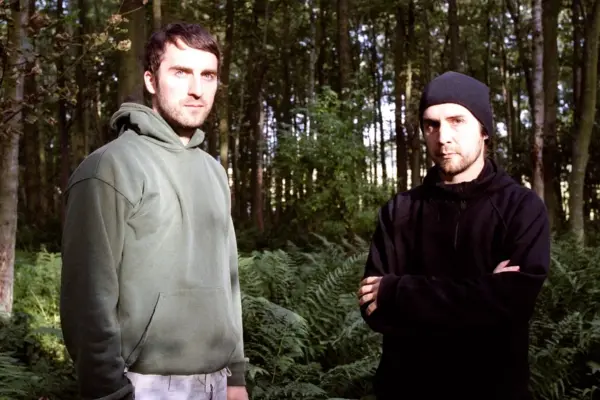
In the realm of electronic music production and software development, few figures loom as large or as quietly influential as Robert Henke. Operating at the bleeding-edge intersection of sound engineering, visual art, and computer science, Henke’s footprint on modern culture is indelible. As one of the foundational co-creators of Ableton—alongside Gerhard Behles and Bernd Roggendorf—he helped architect the digital audio workstation (DAW) that fundamentally transformed how electronic music is composed, performed, and produced live. Simultaneously, under his acclaimed moniker Monolake, Henke has spent decades charting a path through minimal techno, immersive sound design, and generative audiovisual performance.
Yet, despite a resume that bridges corporate music-tech innovation and avant-garde artistry, Henke remains remarkably deliberate about how he spends his most finite resource: time. In a recent appearance on MusicTech’sMy Forever Studio podcast—created in partnership with Audient and hosted by Chris Barker and Will Betts—Henke offered a rare glimpse into his creative calculus.
At the heart of his philosophy is a profound realization about opportunity cost in the studio: "Every decision for something is a massive decision against a lot of other options."
This article explores Henke’s rigorous framework for creative decision-making, tracing his journey from an engineer-minded upbringing in Germany to the founding of Ableton in 1999, his deep-seated passion for expressive hardware, and how modern creators can apply his lessons of radical reductionism to overcome the paralyzing paradox of choice in the digital age.
Detailed Chronology: From Berlin’s Soundscapes to the Birth of Ableton
To understand Robert Henke’s hyper-critical approach to creative decision-making, one must first examine the environment that forged his sensibilities. Raised in a family of engineers, Henke inherited a foundational fascination with systems, mechanics, and structural logic. This analytical mindset collided serendipitously with the reunification-era Berlin club scene—a crucible of electronic music experimentation where the boundaries between sound technology and musical composition were constantly being rewritten.
The 1990s: The Genesis of Monolake
As Monolake, Henke began releasing music in the mid-1990s, quickly becoming a linotype for the distinctive Berlin minimal techno sound. Working alongside Gerhard Behles under the Monolake banner, Henke found himself constrained by the linear, tape-emulating limitations of traditional 1990s DAWs and hardware setups. They needed a tool designed specifically for real-time electronic composition and improvisational live performance—a medium that treated audio not as a static recording, but as a fluid, malleable material.
1999: Founding Ableton
Recognizing a massive gap in the market, Henke, Behles, and software engineer Bernd Roggendorf founded Ableton in 1999. Their objective was audacious: to build software that could function both as a reliable studio production suite and a stable, highly expressive live instrument.
When Ableton Live debuted in 2000, it revolutionized the industry. Its revolutionary "Session View" introduced a non-linear clip-launching matrix that mirrored how electronic musicians actually improvised and sketched ideas. Rather than forcing users down a rigid, left-to-right timeline, Live empowered producers to experiment spontaneously.
However, the irony of creating the ultimate loop-and-clip playground—a software platform that offers infinite tracks, plugins, and routing possibilities—is that it exposes the modern creator to infinite distraction. For Henke, who helped open Pandora’s box of digital modularity, the antidote to infinite choice has been a strict, almost ascetic regime of personal discipline.
Supporting Context & Metrics: The Paradox of Choice in Modern Production
Henke’s insights on the My Forever Studio podcast tap into a well-documented psychological phenomenon known as the "paradox of choice." In contemporary music production, the barriers to entry have evaporated. Where hardware studios of the 1980s and 90s were bounded by physical space, cable routing, and financial cost, the modern software-based studio provides access to thousands of virtual instruments, infinite undo steps, and millions of sample variations.
The Cost of Infinite Possibility
According to industry productivity studies and artist surveys, modern producers frequently suffer from acute creative paralysis. When every sound can be manipulated, layered, compressed, and pitch-shifted infinitely, the energy required to make a definitive artistic choice spikes dramatically.
The Notebook Method: Henke combats this by shifting his heavy lifting away from the computer. He maintains a physical notebook filled with rough sketches, system diagrams, and conceptual ideas.
The Filtration Ratio: Out of dozens of concepts mapped out in his journals, only a minuscule fraction ever makes it to the execution phase. Henke filters his ideas through a lens of ultimate necessity: Does this specific action serve the larger artistic narrative, or is it merely technological busywork?
This engineering approach treats creative energy as a finite battery. Every hour spent tweaking an unnecessary LFO routing or auditioning the "wrong" synthesizer patch is an hour stolen from profound compositional development.
Official Statements & Insights: Inside the Mind of Robert Henke
Speaking candidly on the My Forever Studio podcast, Henke unpacked the exact mechanics of how he scrutinizes his own workflow. When hosts Chris Barker and Will Betts prompted him on his studio habits, Henke provided a masterclass in creative efficiency.
On the Weight of Creative Choices
"There is a quality in the decision-making process that is involved here," Henke told MusicTech.
"Every decision for something is a massive decision against a lot of other options because it takes time to build stuff. And that means I scrutinise my ideas a lot before I start building.
I have a whole notebook full of ideas and sketches of things, but only a tiny fraction of those things I finally decide to throw my energy on, and that means I think a lot about, ‘Does this specific thing I’m attempting to do really help me? Do I really believe that at the end, I have a result that justifies the effort?’"
The Hardware Obsession and Sample Crafting
Beyond his philosophical approach to decision-making, Henke used his time on the podcast to delve into the tactile realities of his craft. He discussed his meticulous process for building proprietary sample packs—treating sample creation not as a casual archival exercise, but as the curation of raw, highly specific sonic textures.
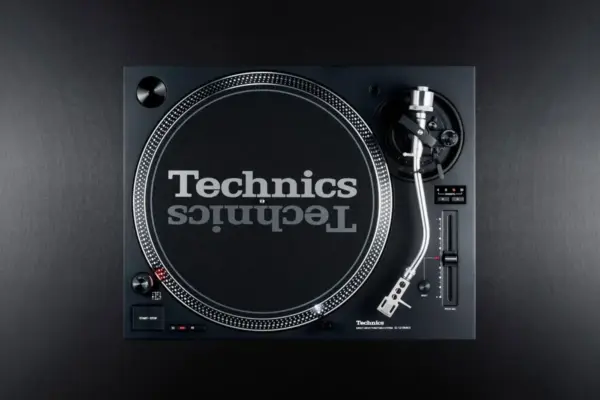
Furthermore, Henke expounded on his enduring love affair with expressive hardware and experimental sound technology. For an artist who helped invent digital looping software, Henke’s physical setup remains deeply tactile. He values hardware not out of nostalgic purism, but because physical interfaces impose natural physical limitations—limitations that force immediate, decisive artistic action.
Future Outlook: Lessons for the Next Generation of Producers
As music technology marches toward ever-more complex horizons—incorporating machine learning, generative AI orchestration, and hyper-complex software ecosystems—Robert Henke’s philosophy serves as both a warning and a compass.
Embracing Strategic Constraints
The future of electronic music production will not belong to those who can utilize every tool available, but to those who possess the editorial discipline to ignore most of them. Henke’s career proves that true innovation arises from setting boundaries. Whether curating a fantasy studio under the strict rules of My Forever Studio—where guests must choose precisely six items with zero budget limitations and no bundles—or mapping out a complex audiovisual installation, the secret lies in ruthless curation.
For producers navigating an era of endless plugins, sample subscriptions, and algorithmic assistance, Henke’s notebook method offers a timeless blueprint:
Conceive on Paper: Keep ideas abstract and conceptual before opening a DAW.
Scrutinize the Yield: Ask whether the technical execution of an idea will yield an emotional or sonic result that justifies the human hours invested.
Embrace Exclusion: Understand that choosing one path requires actively closing doors to a hundred others—and that this act of closing doors is where true style is born.
As Robert Henke continues to push the boundaries of sound as Monolake and educator, his legacy extends far beyond founding Ableton Live. He remains a living reminder that the most powerful instrument in any studio is not a synthesizer, a plugin, or a computer, but the artist’s own capacity to say no.