Executive Overview
The return of comedian Shane Gillis to NBC’s Saturday Night Live (SNL)—years after his initial, highly publicized firing over racist and homophobic remarks—was billed by network executives and industry insiders as a grand test of redemption, boundary-pushing satire, and the enduring resilience of live television comedy. Instead, what materialized on screen was an exercise in creative bankruptcy: a tired, derivative opening monologue that relied on regressive tropes about women at the gym.
This analysis examines the broader cultural and economic implications of Gillis’s controversial return. Beyond the predictable social media furor over recycled misogyny and accidental profanity, the incident serves as a glaring symptom of a larger artistic malaise infecting mainstream American entertainment. At a moment defined by staggering geopolitical instability, economic hardship, and profound societal anxiety, audiences are increasingly asked to subsidize multimillion-dollar platforms for humor that feels not merely offensive, but tediously uninspired.
This article deconstructs the structural decline of modern late-night television comedy, explores the mechanics of what passes for "risk-taking" in contemporary media, and questions whether the institutional gatekeepers of comedy have fundamentally lost touch with the realities of their audience.
Detailed Chronology: The Anatomy of a Flawed Comeback
To understand the weight of Gillis’s recent SNL appearance, one must trace the arc of his career trajectory alongside the shifting priorities of late-night television programming.
- The 2019 Dismissal: Shane Gillis was initially hired as a featured cast member on Saturday Night Live in September 2019. Within hours of the announcement, archival podcast footage emerged featuring Gillis using racial slurs and derogatory remarks about Asian people, alongside other homophobic and misogynistic commentary. Lorne Michaels and NBC severed ties with Gillis less than a week later, citing remarks that were "offensive, hurtful, and unacceptable."
- The Rehabilitation Era: Over the subsequent five years, Gillis cultivated a massive, fiercely loyal independent following through podcasts, streaming platforms, and a heavily streamed stand-up special. Rather than retreating from controversy, he leveraged his outsider status, positioning himself as a victim of a sanitized "cancel culture." This independent commercial viability eventually forced the hand of network executives, leading to his controversial hosting gig.
- The Return and the Monologue: Taking the stage for his opening monologue, Gillis attempted to frame his reentry through the lens of domestic mundanity—specifically, returning to the gym after a prolonged hiatus. However, the routine quickly devolved into observational comedy of the most retrograde variety: a critique of women’s workout attire, which he likened to "artificial bait" stretching across their posteriors. He lamented the social restrictions preventing men from openly ogling women at the gym due to ubiquitous smartphone recording.
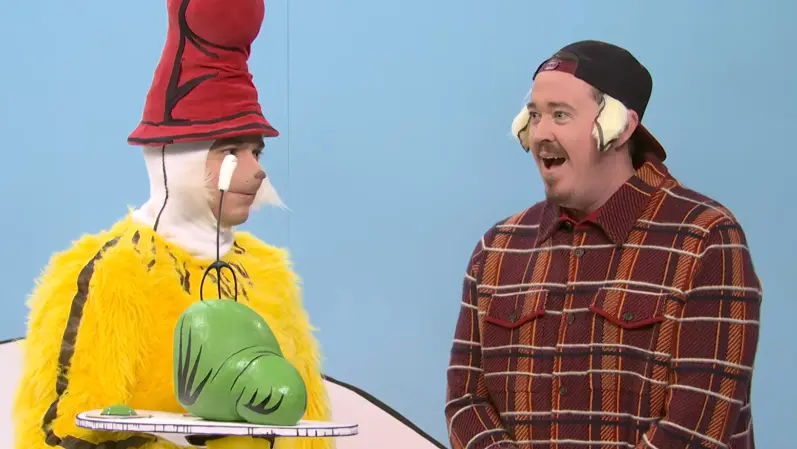
- The Slip-Up and the Apology: Later in the broadcast, Gillis accidentally uttered an unauthorized profanity during a live sketch, necessitating a quick apology. While the slip-up caused logistical headaches for network censors, it ultimately functioned as another minor disruption in an evening already characterized by creative missteps.
- The Silence for Rogan: Perhaps the most revealing moment of the evening occurred when Gillis referenced his association with podcaster Joe Rogan and his private Texas gym. Expecting an enthusiastic wave of audience adulation, Gillis paused for applause—only to be met with dead air, highlighting a stark disconnect between the insular world of digital bro-comedy and a mainstream television studio audience.
Supporting Context & Metrics: The Economics of Outrage and Creative Stagnation
The persistence of lazy, misogynistic tropes in high-profile comedy is not merely an artistic failure; it is economically reinforced. In the contemporary media landscape, controversy is a low-cost, high-yield marketing strategy.
+-------------------------------------------------------------------+
                  THE CONTROVERSIAL COMEDY FEEDBACK LOOP
+-------------------------------------------------------------------+
  [ Comedian makes low-effort, regressive joke ]
                        │
                        ▼
  [ Public backlash / Social media outrage ]
                        │
                        ▼
  [ Defense: "Pushing boundaries / Cancel culture victim" ]
                        │
                        ▼
  [ Amplified digital engagement & monetized streaming spikes ]
                        │
                        ▼
  [ Network re-engagement for "edgy" appeal ]
+-------------------------------------------------------------------+
The "Edgelord" Economic Model
When comedians defend routines like the "gym shorts" bit by claiming they are "pushing boundaries," they are deploying a carefully crafted marketing shield. True boundary-pushing comedy challenges institutional power, questions established dogmas, or offers genuinely novel perspectives on the human condition. Conversely, complaining about women’s gym attire is the comedic equivalent of low-hanging fruit. It requires zero intellectual rigor, challenges no existing power structures, and echoes talking points readily available in hyper-conservative cultural spaces.
The Contrast of National Exhaustion
The artistic feebleness of Gillis’s routine is made starker when measured against the actual psychological state of the American public. Data from sociological studies and news feeds paint a portrait of a society grappling with unrelenting compounding stressors:
- Economic Strain: Stagnant wages failing to keep pace with the rising costs of housing, energy, and basic nutrition.
- Civic Anxiety: Escalating political polarization, normalized public violence, institutional erosion, and the persistent background hum of global conflict.
- Existential Fatigue: The rapid, unregulated advancement of transformative technologies—including artificial intelligence and automated systems—operating without meaningful ethical oversight.
When citizens turn on late-night sketch comedy at the end of a grueling week, they are not seeking a lecture from an evangelical-adjacent perspective disguised as stand-up. They are looking for release, sharp observation, and cultural wit that acknowledges the absurdity of surviving in a complex world. Instead, they are handed recycled grievances about Spandex shorts.

Official Statements and Industry Reactions
The reception to Gillis’s return has exposed deep fractures within the entertainment industry regarding the boundaries of acceptable discourse and the responsibilities of platform curators.
Network executives have largely defended the booking under the banner of comedic diversity and artistic freedom. Privately, however, industry analysts suggest that traditional networks are desperately chasing the lucrative, highly engaged male demographic that consumes alternative digital comedy podcasts.
Media critics and cultural commentators have been less forgiving. Prominent cultural essayists noted the deep irony of labeling such routines as "fearless." As one critic observed:
"When the most powerful political figures in the country regularly traffic in explicit misogyny, and fundamental bodily autonomy rights are systematically dismantled by the courts, complaining about women’s workout clothing on national television is not an act of rebellion. It is institutional pandering in a clown suit."
Furthermore, public reactions on social platforms highlighted a growing fatigue among viewers who feel patronized by networks that demand gratitude for mediocrity under the guise of artistic bravery. The absolute silence that met the Joe Rogan name-drop served as a real-time referendum from the studio audience, signaling that even among self-selecting comedy fans, the emperor’s new clothes were clearly visible.
Future Outlook: Where Goes Mainstream Comedy?
The trajectory of Saturday Night Live and the broader stand-up comedy ecosystem stands at a precarious crossroads. As traditional television viewership continues to fragment in the face of on-demand streaming and niche digital creators, networks face an existential choice:
- The Race to the Bottom: Chasing algorithmic engagement by platforming edgelord provocateurs who rely on regressive shock value. This path risks alienating a broad swath of viewers who expect a baseline of intelligence and empathy from major cultural institutions.
- The Renaissance of Observational Wit: Investing in writers and performers capable of synthesizing the genuine absurdity of modern life into intelligent, innovative satire.
If the future of television comedy resembles the tired tropes witnessed during Gillis’s monologue—where a comedian mistakes stale locker-room chatter for high-wire risk-taking—then the medium risks becoming entirely disconnected from the lived experiences of its audience.
Humor has historically served as humanity’s most effective psychological armor against the dark. When that armor is replaced by cheap, derivative cynicism, the audience is left unprotected against the very real stressors of the modern era. Until television executives demand better craftsmanship from those they pay millions to entertain us, viewers will continue to look for hope—and actual humor—elsewhere.