Executive Overview
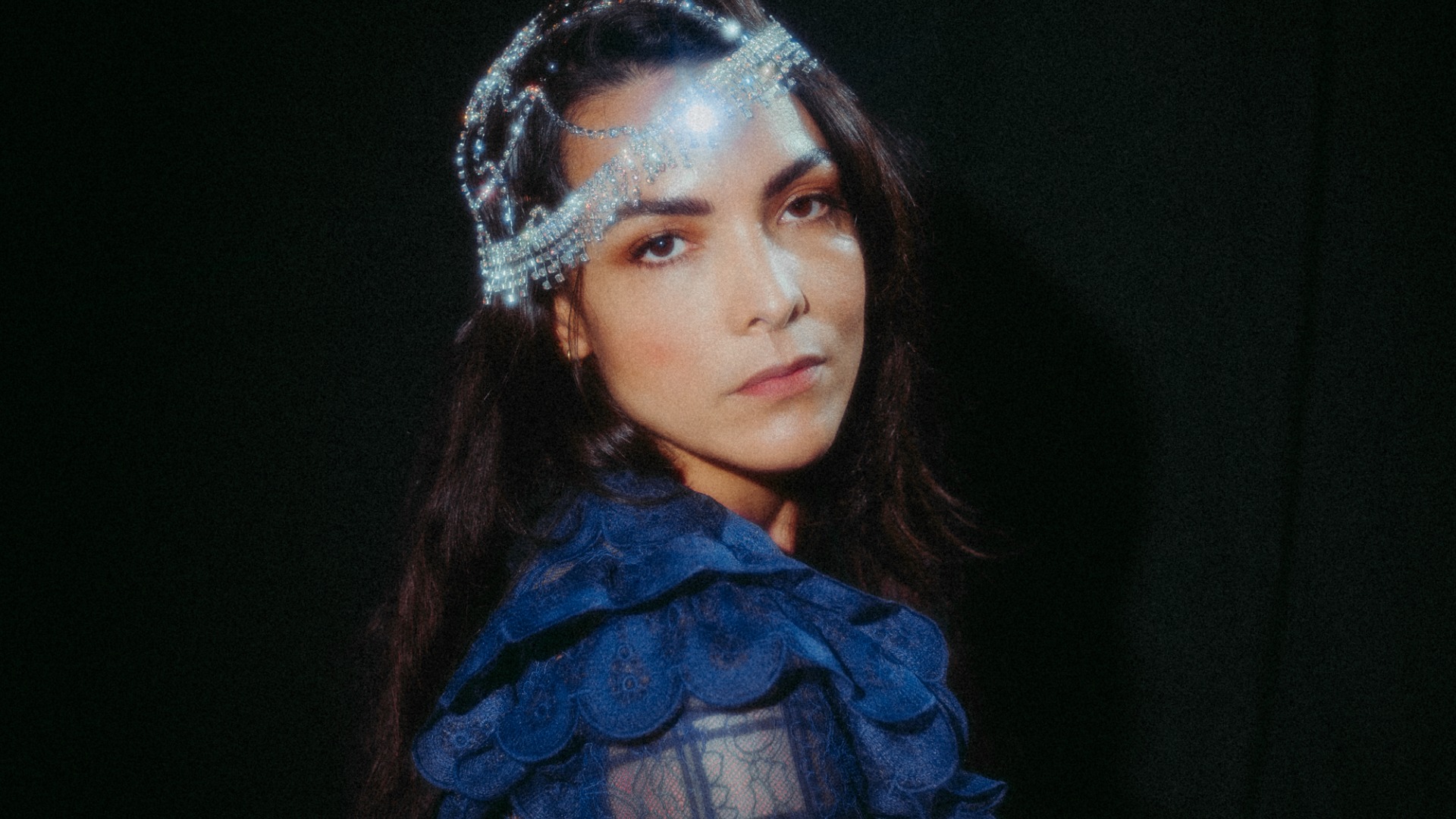
On a crisp, sunlit Thursday morning at Soho’s iconic Cafe Boheme, Dutch singer-songwriter Caro sits down for an interview against the backdrop of a bustling four-day London promotional trip. The timing is both electric and precarious: it is the literal eve of her latest album release, a milestone that represents far more than just another commercial drop.
Her new full-length record, Returning To Innocence, marks a monumental shift in her illustrious career. It is the very first body of work she has ever released entirely under her own given name. For over a decade, Caro was universally recognized as the vibrant, theatrical frontwoman of Caro Emerald, the multi-million-selling jazz-pop collective that dominated global charts and etched its name into music history. Most notably, her former project famously dethroned Michael Jackson’s Thriller to claim the record for the longest-running No. 1 album in her native Netherlands.
Yet, beneath the glittering charts, the vintage aesthetic, and the adulation of millions, the artist known to the world as Caro Emerald was battling an invisible cage. Stepping away from the powerhouse collective that defined her youth was, by her own admission, a profoundly daunting endeavor. In this comprehensive feature, we explore the grueling chronology of her reinvention, the feminist framework underpinning her new music, the metrics of her historic success, and her unyielding vision for the future.
Detailed Chronology: From Vintage Persona to Authentic Self
To understand the weight of Returning To Innocence, one must look backward at the architectural constraints of the Caro Emerald phenomenon. Launched in 2009 with smash hits like "A Night Like This," "That Man," and "Tangled Up," the collective paired a genre-bending, vintage-infused sound with a meticulous early 20th-century aesthetic. To fans across the globe, Caro was Caro Emerald. But behind the glamorous curtain, the persona functioned as a psychological safety net.
"I never really wanted to be a character, but I felt I had to because people wanted me to be," she admits candidly, stirring her coffee as the morning hum of Soho surrounds us. "And I never questioned it because I didn’t want to look like a fool. Who would ever come to a show for just me, you know? So I went along with it, hoping somebody would come up to me and say, ‘You don’t need all of this.’ And nobody ever did."
The turning point arrived slowly, accelerated by the quiet exhaustion of maintaining a fictionalized standard. Following the release of the final Caro Emerald single in 2020, she began quietly untethering herself from the collective, writing and recording in isolation. In the spring of 2022, she tested the waters under the pseudonym The Jordan—a heartfelt nod to the working-class De Jordaan neighborhood of Amsterdam where she spent her formative years.
It was not until the rollout of her debut solo parent album, Nowhere Near The Sky, that her true identity was finally unmasked. But whereas that project was a bridge, Returning To Innocence is the destination. Spanning 14 deeply vulnerable tracks, the new record places her authentic self squarely at the center of the production, exploring the multifaceted realities of her existence: the artist, the mother, the daughter, and the woman.
"When I made the last record, it felt like I just got started, but now I realise I’m a mid-career artist," she reflects, grappling with the surreal, full-circle nature of finally releasing music under her birth name. "I don’t know of any examples of somebody who had a collective behind their own name, and I don’t always know how to deal with it. I want to do justice to what we did together, and I think choosing my own name now, just Caro, does that. It honours what we’ve done and how proud I am of that, and it allows me to bring that into my career, right now, as the artist I am today."
Supporting Context & Metrics: Breaking Records and Shattering Expectations
The scale of Caro’s previous commercial dominance cannot be overstated, making her pivot away from established machinery all the more courageous. Twenty years have passed since she was first approached to voice "Back It Up"—the modest jazz track that inadvertently sparked an international phenomenon and introduced her voice to the world stage.
As the voice of Caro Emerald, she achieved milestones that few European artists ever touch:
- Chart Supremacy: Shattered national records in the Netherlands by surpassing Michael Jackson’s legendary Thriller for the longest-running No. 1 album on the charts.
- Global Footprint: Sold millions of records worldwide, headlining major international festivals and selling out arenas across Europe and beyond.
- The Pseudonym Strategy: Successfully launched The Jordan in 2022 to gauge audience reaction independently of her historical brand, proving that her vocal allure transcended genre gimmicks.
- Streaming Benchmarks: Now building a contemporary solo footprint, navigating the hyper-competitive streaming era where comparisons to modern pop titans like Taylor Swift are inevitable—even if her 12-year-old daughter humorously holds her to impossibly high modern metrics.
"My oldest daughter keeps comparing my streaming numbers to Taylor Swift’s, and I’m like, ‘That’s not really fair!’ Honestly, how am I ever gonna win?" she laughs, leaning back with a bright, self-deprecating grin. Yet, measured by artistic integrity rather than algorithmic dominance, she has already won.
Official Statements & Deep Dives: The Making of Returning To Innocence
The thematic core of Returning To Innocence is unflinchingly raw. It is an album born of reckonings, self-interrogation, and a fierce rejection of patriarchal archetypes. The opening track, "Already Lost," sets the emotional tone with the poignant lines: "Tied with one foot out the door / Tell me what I’m waiting for."
"All my doubts and fears; my fear of failure, my question marks…" she muses, parsing through the emotional dichotomy of her current chapter. "I feel scared sometimes, and sometimes I feel like a winner. I feel both."
Redefining Feminism in Modern Music
Central to the album’s conceptual framework is a profound critique of how modern society constructs womanhood. Looking up from our table, Caro points toward a mental image of J. Howard Miller’s iconic World War II "We Can Do It!" poster—featuring a woman in a polka-dot bandana flexing her bicep.
"I feel strongly that this is a very feminist album, and reclaiming my own name is a very feminist move. But feminism, as it is today, is being viewed in a certain way that bugs me," she asserts. While acknowledging the poster’s historical value in boosting wartime morale, she argues that the modern iteration of female empowerment often traps women in a rigid binary.
"It’s a great picture, and I think it represents a lot that needs to be represented, but it also fails to show things that are very feminine and deserve to be seen. Somewhere underneath that image lies the idea that a successful woman is like a man: strong, decisive, and maybe even harsh. That’s not all we are—and maybe that’s exactly what we should be grateful for. I wanted the doubt and the fear to be part of that victory, ’cause that’s what brought me here."
Across the tracklist, she confronts these themes head-on: demanding autonomy on "Call The Shots," craving unconditional validation on "Worship Me," mapping out lifelong ambitions on "Mama," and battling internal insecurities on "Mirror." Her sonic palette is equally expansive, drawing stylistic inspiration from Madonna’s legendary reinventions, ABBA’s pristine Swedish melody-making, Prince’s purple funk, classic ’90s power ballads, and her parents’ deep-seated love for classical music.
The Genesis of "Goddess"
One of the most striking moments on the record is the track "Goddess," a song that required a year and a half of meticulous cultivation. The process began with a single line jotted down in a digital document: "This is my confession."
Seeking a specific, transcendent atmosphere, Caro drew inspiration from Romanian-German producer Michael Cretu’s ambient project Enigma—and specifically their 1990 classic "Sadeness" (a serendipitous parallel to Enigma’s global 1993 hit titled "Return to Innocence").
"I was meditating a lot and I started to think about why certain sounds make you immediately go into that spiritual state," she explains. "So I brought their song into the session and said, ‘I want to do something like this.’ And I had this one line. So they put down the beat, a bit Enigma-ish, and I started making up this lyric which intuitively became ‘Father, please forgive me…’ I didn’t even think of it!"

The song is punctuated by a chilling spoken-word introduction delivered by Caro’s eldest daughter. The text serves as what the artist grimly calls an "instruction manual for what women should be."
"I basically asked Google, ‘What does the Bible say about women?’, and these are words that I found on the Internet," Caro reveals, her expression turning serious. "It’s not a direct piece from the Bible, and some of the words might not be exactly what’s written, but this is what I found. And I was looking at them like, really? She’s supposed to be quiet, and only open her mouth with wisdom, and she has to serve her husband and support her husband. I’m like, fuck. We’re still living with this idea. It’s still inside of us."
The Motherhood Paradox
Fueling this righteous indignation are her two daughters, aged 12 and 9. Historically, Caro maintained a strict psychological wall between her public stardom and her private domestic life, fearing that blending the two would "devalue" her artistic mystique. Today, she recognizes that compartmentalization was merely another defense mechanism.
"If you’re talking about all sides of humanity and womanhood, then motherhood is part of it," she says.
As she speaks about her children, her eyes well with tears. "There are so many things that are unfair, and I don’t want them to grow up in this world. They deserve a different world. As a parent, you’re kind of powerless; you can do so much, then the rest is up to the village. The only thing I can do is give the right example and show them how I deal with all of these things that are so tough, especially on girls. That gave me the extra drive to do this."
Future Outlook: Ronnie Scott’s and Beyond
With the ghosts of her past persona finally laid to rest, Caro is looking toward the horizon with unbridled optimism. Twenty years after her initial steps into the professional music industry, she stands unmasked, releasing music that bears her true name and carries the unvarnished weight of her lived experience.
Her upcoming schedule reflects a renewed hunger for live performance. In October, she launches her European tour in Amsterdam, traversing the continent before landing in London for a prestigious, two-night residency at the legendary Ronnie Scott’s jazz club in late November. Beyond the tour, whispers of additional new material point to an artist who has finally found her true creative flow.
"At some point I realised: ‘Nobody’s ever gonna pull me out of this—until I do,’" she reflects, encapsulating the entire philosophy of her current era.
Grinning across the table at Cafe Boheme, she leaves no doubt about where her career is heading next. "I still feel like my best album is yet to come. It might not even be the next. It might be the one after that. I have so many things to explore still; it’s a great place to be in."
Returning To Innocence is out now via Big Mouse. Caro’s European tour kicks off on October 21 in Amsterdam and concludes with a two-night stint at London’s Ronnie Scott’s on November 28. Tickets and information are available via her official website.