Executive Overview
Veteran British broadcaster John Humphrys has reignited one of the most sensitive and enduring debates in modern British constitutional history. In a provocative new Channel 4 documentary titled The Royals: Time to Go?, the former BBC stalwart presents a compelling exploration of the British monarchy, forcefully arguing that the citizens of the United Kingdom should possess the democratic right to "choose our leaders."
Humphrys, whose voice defined the morning commute and current affairs landscape for millions of Britons over a decades-long career encompassing the Today programme, the Nine O’Clock News, and Mastermind, is no stranger to holding the powerful to account. However, turning his journalistic lens toward the House of Windsor represents a deeply personal and professionally daring departure. While the Cardiff-born broadcaster is careful to express personal admiration for King Charles III, his core thesis challenges the foundational architecture of the British state: the hereditary principle.
This comprehensive news feature examines Humphrys’ arguments, the historical roots of his republican skepticism, the broader cultural and political context of the contemporary debate surrounding the Royal Family, and what this documentary signals for the evolving relationship between the Crown and a changing British public.
Detailed Chronology: From Newport Road to Channel 4
To understand John Humphrys’ current stance on the monarchy, one must trace a trajectory that winds from post-war working-class Cardiff to the highest corridors of media and establishment power.
The Formative Years in Cardiff
Growing up in post-war Wales, Humphrys’ first direct brush with the institution of the monarchy occurred on the streets of Cardiff. He vividly recalls watching the young Queen Elizabeth II being driven down Newport Road during an early royal tour. Yet, even in an era of overwhelming deference to the Crown, resistance echoed within his own household.
In a recent interview on BBC Radio Wales Breakfast, Humphrys recounted how his father refused to participate in the public adulation. "My father didn’t attend and said he would never bend the knee to anyone," Humphrys recalled. "I guess that rubbed off on me." This foundational skepticism quietly accompanied Humphrys as he climbed the journalistic ladder, eventually anchoring him in the upper echelons of the British Broadcasting Corporation, where neutrality was the professional creed.
A Career of Encounters
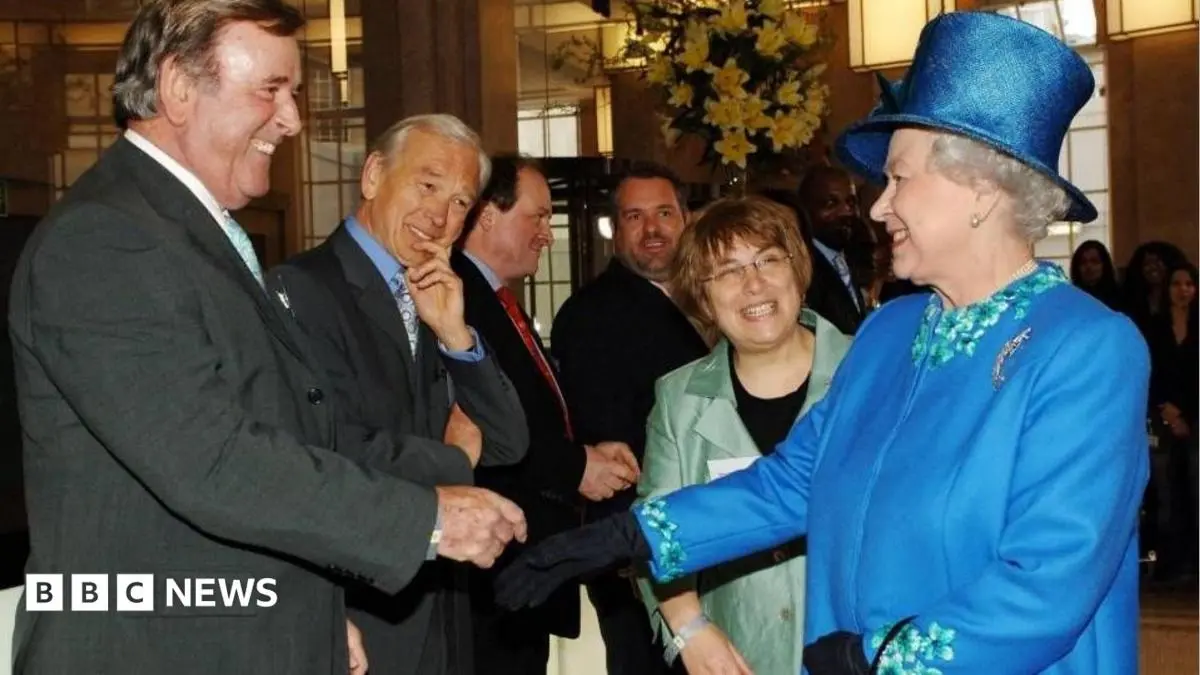
Throughout his illustrious career at the BBC, Humphrys crossed paths with the late Queen Elizabeth II on numerous occasions. These encounters were not merely distant observations; they occurred inside the gilded state rooms of Buckingham Palace. Amid conversations that touched upon statecraft, public service, and—memorably—"the corgis of course," Humphrys maintained the probing instincts of a seasoned inquisitor.
Never one to miss an opportunity for an exclusive, Humphrys even pitched the idea of a formal, unfettered interview with the sovereign. The interaction remains a classic anecdote of royal encounters:
"When I’d finished, she looked up at me and said just one word, ‘no’, and I thought I could build on that," he quipped, demonstrating the irrepressible journalistic persistence that defined his career.
The Pivot to Channel 4
Having stepped away from the daily grind of the BBC’s flagship radio waves, Humphrys has found a new platform on Channel 4 to probe deeper questions of governance and national identity. The Royals: Time to Go? is the culmination of months of investigation, featuring balanced discourse with both fierce critics and staunch supporters of the monarchy. Yet, it is Humphrys’ own normative conclusion—that the head of state should be an elected president—that forms the beating heart of the documentary.
Supporting Context & Metrics: The Monarchy in Modern Britain
Humphrys’ documentary arrives at a fascinating juncture for the House of Windsor. While the institution has historically enjoyed remarkably high approval ratings compared to elected political bodies, the landscape of public opinion is shifting, driven by generational divides, economic pressures, and changing societal values.
The Hereditary Principle vs. Modern Democracy
At the core of Humphrys’ critique is a philosophical objection to inherited privilege. In a modern democracy founded on the principle of universal suffrage—where citizens cast ballots to determine everything from local councils to the national government—the concept of an unelected head of state stands out as an anomaly.
"I know the monarch is not a political leader, but he is our leader, and we need to bow our knee to him," Humphrys argued during his promotional media tour. "That’s what I object to. Shouldn’t we get a choice?"
Humphrys has also challenged the cultural taboo that often surrounds open criticism of the Royal Family. For decades, questioning the utility or legitimacy of the Crown was viewed in polite British society as deeply unpatriotic or socially unacceptable. Humphrys pushes back against this boundary, asserting simply: "We can [talk about it] because it’s a democracy."
Public Opinion and Generational Divides
Data from polling agencies such as YouGov consistently show that while a majority of the British public still supports the retention of the monarchy over an elected head of state, the margin of support varies dramatically by age group:
- Older Generations (65+): Show overwhelmingly robust support for the Royal Family, often viewing the institution as a vital pillar of national continuity, tradition, and soft power.
- Younger Generations (18–24): Demonstrate significantly lower levels of enthusiasm. Younger Britons are markedly more likely to favor an elected head of state or express indifference toward the institution. This demographic shift presents a long-term strategic challenge for Buckingham Palace as it seeks to maintain relevance in a hyper-connected, meritocratic globalized world.
The Cost of Monarchy and Transparency
Beyond the philosophical objections regarding unelected leadership, modern republican arguments—such as those championed by groups like Republic and echoed in broader policy discussions—frequently focus on public finances. The Sovereign Grant, which funds the official duties of the monarch and the maintenance of occupied royal palaces, remains a subject of parliamentary scrutiny. While defenders of the Crown argue that the monarchy generates significant tourism revenue and drives international trade through soft power diplomacy, critics contend that the true economic impact is difficult to substantiate and that public funds should not subsidize private wealth and opulence.
Official Statements and Institutional Reactions
As expected with any high-profile media intervention concerning the British sovereign, institutional reactions have been carefully measured.
- Buckingham Palace: Representatives for the King and Queen have been formally approached for comment regarding the claims and arguments presented in Humphrys’ documentary. True to traditional protocol, the Palace has largely maintained a policy of dignified silence regarding media critiques, preferring to let the actions, public engagements, and constitutional duties of King Charles III and Queen Camilla speak for themselves.
- Monarchist Defenders: Proponents of the Crown have pushed back against Humphrys’ framing, emphasizing that the separation between the apolitical head of state and the partisan head of government (the Prime Minister) is one of the greatest strengths of the British uncodified constitution. Defenders argue that an elected president would inevitably introduce political bias, polarization, and costly periodic electoral cycles into an office that currently serves as a unifying symbol above the political fray.
- Republican Advocates: Conversely, anti-monarchy organizations have welcomed Humphrys’ contribution to the public square. By leveraging his immense credibility and mainstream journalistic authority, Humphrys helps normalize a conversation that has historically been marginalized in mainstream British broadcasting.
Future Outlook: What Next for the Crown and the Debate?
The release of The Royals: Time to Go? is unlikely to trigger an immediate constitutional crisis or force an imminent transition from a constitutional monarchy to a parliamentary republic. The inertia of tradition, combined with the personal popularity of King Charles III and the Prince of Wales, remains a formidable shield for the House of Windsor.
However, cultural touchstones matter. When a broadcaster of John Humphrys’ stature—someone who spent a lifetime embedded within the inner workings of the British establishment—publicly questions the necessity of bowing the knee and calls for democratic choice, the Overton window shifts.
Key Questions for the Coming Decade:
- The Post-Elizabethan Era: Now well into the reign of King Charles III, the emotional buffer provided by the late Queen Elizabeth II’s historic 70-year reign is gone. How will the institution adapt to a monarch who is charting his own distinct path?
- Commonwealth Dynamics: As realms within the Commonwealth continue to re-evaluate their constitutional ties to the British Crown—with countries like Barbados transitioning to republics in recent years—domestic debates within the UK will inevitably draw inspiration from international shifts.
- Media Normalization: Will other mainstream figures follow Humphrys’ lead in dissecting the utility of the monarchy without fear of professional ostracization or accusations of disloyalty?
Ultimately, John Humphrys has done what great journalists have always done: he has held up a mirror to society and asked uncomfortable questions. Whether the British public decides to embrace or reject his conclusions, the debate over who rules the realm—and by what right—is one that will continue to shape the national identity of the United Kingdom for generations to come.