Executive Overview
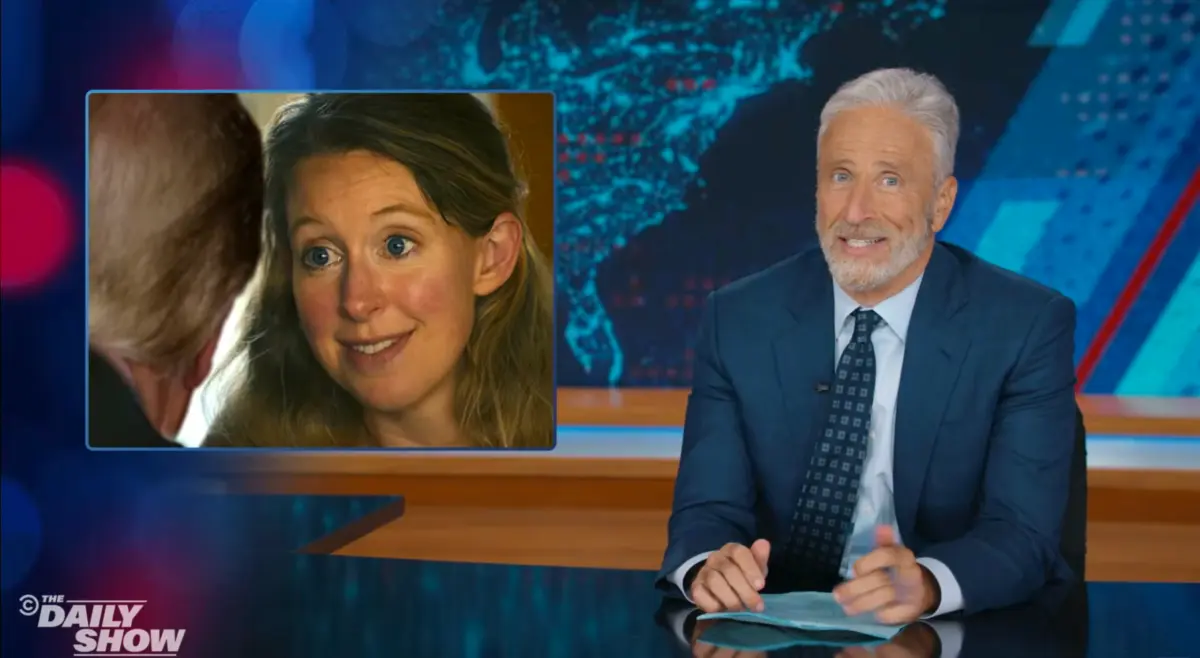
Returning from a month-long hiatus, late-night comedian and political satirist Jon Stewart wasted no time injecting high-concept humor back into the American political discourse. During Tuesday night’s broadcast of The Daily Show on Comedy Central, Stewart targeted former U.S. President Donald Trump, focusing specifically on his increasingly unusual and close working relationship with White House aide Natalie Harp.
Harp, who has earned the ubiquitous moniker of the "Human Printer" within political circles due to her constant provisioning of positive news printouts directly to the president, has recently drawn intense scrutiny from both political pundits and investigative reporters. To underscore the peculiar nature of this dynamic, Stewart deployed an unexpected pop-culture parallel: disgraced Theranos founder Elizabeth Holmes.
By brilliantly superimposing Trump’s face into the viral trailer of Nathan Fielder’s upcoming documentary You Can See Everything—which features Fielder living alongside Holmes and her husband prior to her federal prison sentence—Stewart lampooned the insular flow of information shaping Trump’s worldview. This comedic masterclass arrived amid revelations of substantial financial gifts bestowed upon Harp by Trump, further compounding public fascination with an aide whose influence over the nation’s highest political office continues to grow unchecked.
Detailed Chronology: Stewart’s Return and the Monologue
The Tuesday night episode marked Stewart’s first appearance at the helm of The Daily Show following a scheduled month-long break. Stepping back onto the Comedy Central stage to a rapturous studio audience, Stewart quickly pivoted from broader geopolitical commentary to domestic peculiarities defining the contemporary political landscape.
Ramping Up the Rhetoric: From "Lake America" to the "Human Printer"
Stewart’s opening monologue methodically dismantled several recent headlines surrounding Donald Trump. Among the targets was a controversial and eccentric proposal by the former president to officially rename Lake Ontario to "Lake America." While the remark initially generated localized amusement and bewilderment, it served as a stepping stone for Stewart to transition into his primary comedic target of the evening: Natalie Harp.
Harp has become an omnipresent figure within the inner sanctum of Trump’s orbit. Dubbed the "Human Printer," her primary functional role has evolved into serving as a physical conduit of positive press. Rather than relying on traditional briefings or diverse media diets, Trump’s information pipeline is allegedly curated by Harp, who supplies him with hard copies of favorable news coverage, glowing opinion pieces, and affirming social media printouts.
Stewart seized upon the structural implications of this arrangement, describing it with characteristic biting sarcasm:
"This is unbelievable. The outside world is somehow fed into this woman, a single conduit. And from there, she is the filter to all of the information that is directly fed into Donald Trump’s psyche."
Further escalating his critique, Stewart highlighted an administrative vulnerability that has alarmed ethics watchdogs and political analysts alike: Harp’s persistent avoidance or refusal to obtain official security clearances. Posing the question directly to his audience, Stewart asked, "By the way, Natalie Harp had repeatedly declined to get security clearances. Can we even trust her?"
The Elizabeth Holmes Crossover
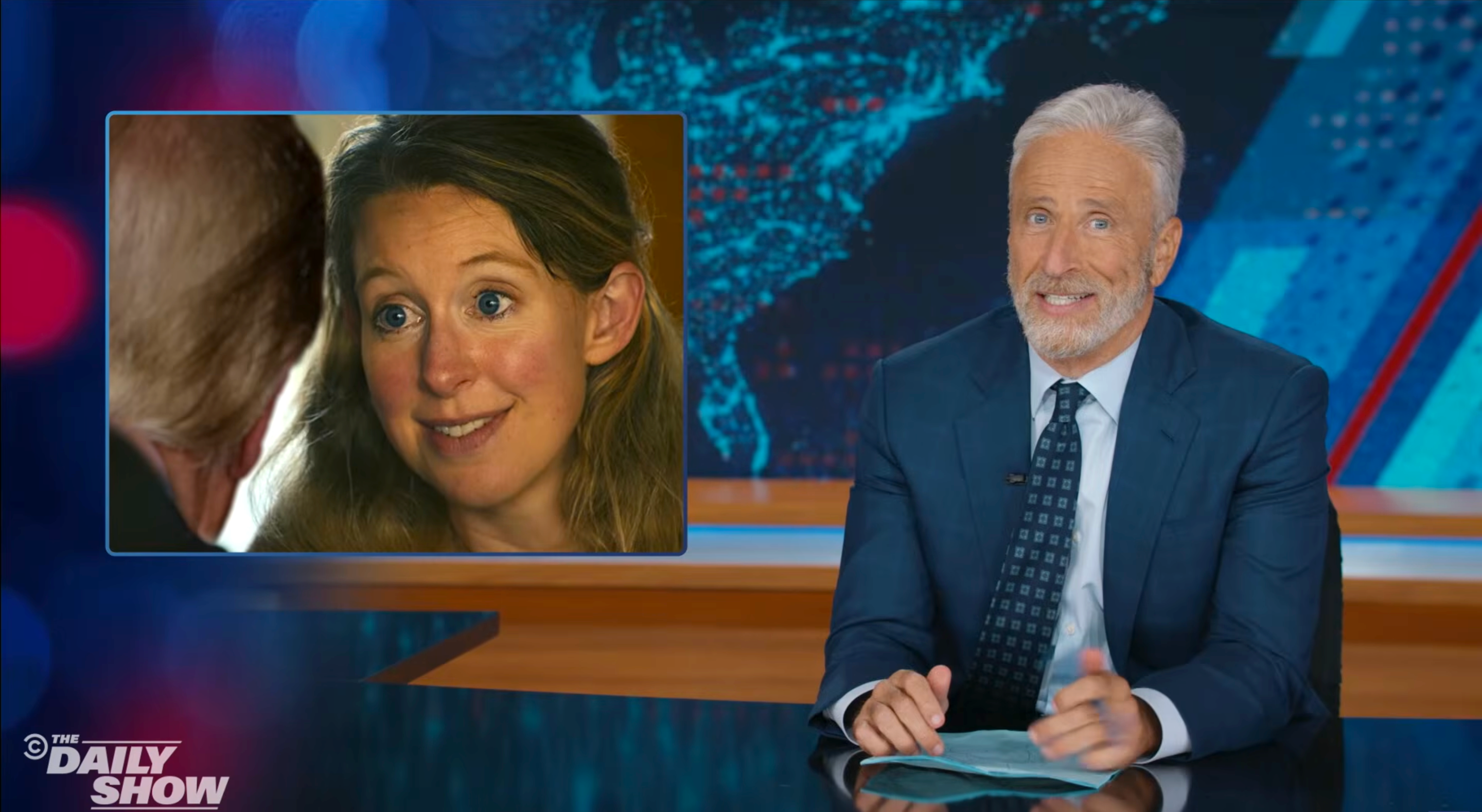
Rather than leaving the critique to standard monologue jokes, Stewart introduced an elaborate satirical segment. Announcing an "exclusive preview" of a pseudo-documentary tracking Harp and Trump’s day-to-day dynamic, the show aired a repurposed version of the internet-breaking trailer for comedian Nathan Fielder’s forthcoming Apple TV+-backed documentary, You Can See Everything.
The original trailer, released earlier in the week, features Fielder embedding himself in the household of Elizabeth Holmes—the disgraced biotech entrepreneur awaiting federal imprisonment for orchestrating a massive multi-million-dollar fraud scheme via Theranos—alongside her husband, Billy Evans. The internet immediately seized upon the original footage due to its bizarre psychological tension, marked by deadpan expressions, an eerie smile from Holmes, and unnerving, unbroken eye contact during intense interpersonal exchanges.
In The Daily Show’s customized version, Trump’s visage was digitally superimposed over Fielder’s face. In the sequence, Holmes looks directly at the camera-turned-president with unsettling intensity, asking:
"Why would I deceive you? There’s no—there’s no reason for me to do that."
The seamless blending of high-profile corporate fraud, deadpan documentary filmmaking, and American executive politics provided a textbook example of Stewart’s ability to contextualize complex political oddities through contemporary media artifacts.
Supporting Context & Metrics: The Financial and Professional Ties
Stewart’s satirical jabs did not emerge in a vacuum; they coincided with a wave of hard investigative reporting and financial disclosures that have illuminated the unusual contours of Natalie Harp’s position within Trump’s professional ecosystem.
The Financial Disclosures: Cash Gifts and Salaries
Recent financial disclosure documents released to the public revealed significant monetary transfers between Donald Trump and his key aides. Most notably, disclosures confirmed that Trump awarded Natalie Harp a $45,000 cash holiday gift late last year. This bonus arrived on top of her standard government-allocated annual salary of $150,000.
While executive compensation and holiday bonuses are not entirely unheard of in political or private corporate environments, the magnitude of the cash gift—directed toward a junior staffer whose operational utility is viewed unorthodoxly—triggered immediate public debate.
When approached for comment regarding the financial disclosures, a White House official defended the transactions on the condition of anonymity, noting:
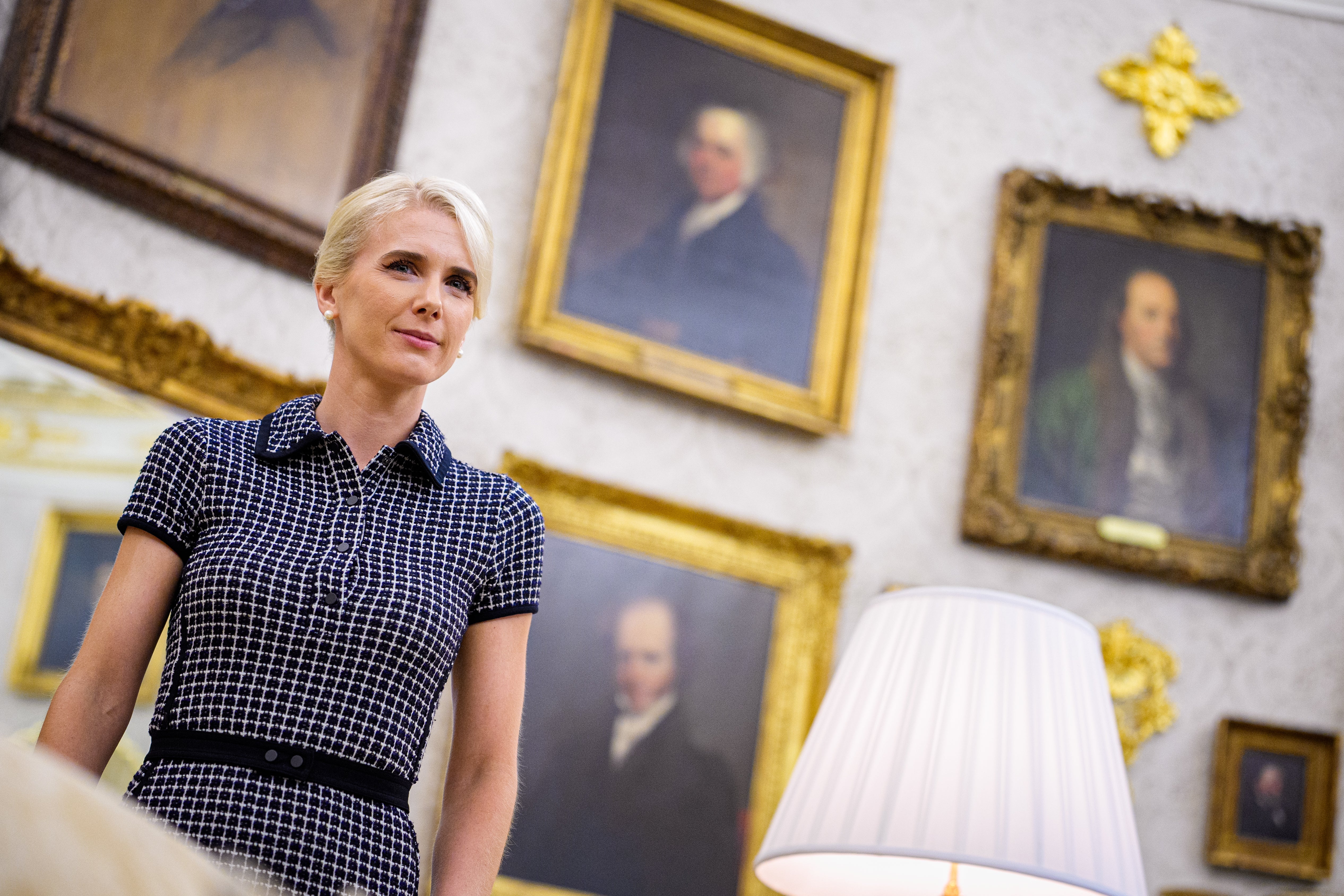
"Trump has a longstanding practice of giving Christmas gifts to people in his orbit, including at times employees and aides, both in government and in his time in the private sector."
The "Love Letters" and Intimate Correspondence
The scrutiny surrounding Harp intensified exponentially following an investigative report published by The Daily Beast last month, which was subsequently picked up and amplified by celebrity and entertainment outlet TMZ. The publications brought to light a cache of written correspondence composed by Harp for Trump.
Described by media outlets as "love letters," the documents revealed an uncommonly intense level of personal devotion and professional subordination. Among the reported excerpts, Harp allegedly assured the former president:
"I never want to bring you anything but joy."
This level of emotional investment from a political staffer tasked with managing media intake has blurred the traditional boundaries between professional administrative assistance and partisan fealty, providing ample ammunition for late-night comedy programs and institutional critics alike.
Official Statements and Institutional Reactions
The intersection of satire, political administration, and media curation has generated varied responses across political and entertainment sectors.
- The Daily Show Production Team: Producers emphasized that Stewart’s month-long hiatus allowed the writing room to compile a robust portfolio of material regarding the administrative shifts inside Trump’s post-presidency and campaign apparatus. The incorporation of Nathan Fielder’s cinematic style represents a strategic shift toward utilizing contemporary internet culture—specifically viral documentary trailers—to anchor complex political critiques.
- White House and Campaign Representatives: Representatives for Donald Trump have consistently downplayed the criticisms regarding aides like Harp, framing the attacks as partisan attempts to undermine loyal personnel. Campaign officials maintain that Trump’s operational strategies and staffing choices are entirely optimized for efficient communications and aggressive public relations management.
- Legal and Ethics Experts: Watchdog organizations have expressed renewed concerns over the compartmentalized flow of information to high-ranking political figures. The absence of standard security clearances for individuals holding proximity to classified or sensitive intelligence streams continues to be highlighted as a systemic vulnerability by government accountability groups.
Future Outlook: Implications for the 2026 Political and Media Landscape
As the political cycle progresses toward upcoming legislative battles and electoral milestones, the dynamic between Donald Trump and his inner circle of administrative aides will remain under a microscope.
Several key developments are expected to shape the narrative moving forward:
- The Release of You Can See Everything: Nathan Fielder’s documentary is scheduled for commercial release in October. Given the massive viral traction of its trailer—and its prominent weaponization by Jon Stewart—cultural commentators expect renewed public interest in the psychological themes of deception, loyalty, and insular environments that the film explores.
- Continued Late-Night Scrutiny: With Jon Stewart back at the anchor desk of The Daily Show on a regular broadcast schedule, administrative eccentricities and personal loyalty loops within political campaigns will undoubtedly remain prime targets for satirical investigation.
- Institutional Security Debates: Pressure from congressional oversight committees regarding staff security clearances, particularly for unconventional aides operating without traditional vetting protocols, is anticipated to persist, keeping figures like Natalie Harp at the center of Washington policy debates.
Ultimately, Stewart’s comedic intervention demonstrated that the boundaries between political loyalty, corporate scandal tropes (as embodied by the invocation of Elizabeth Holmes), and modern media consumption have become increasingly porous, offering endless material for political satirists and observers of the American political theater.