Executive Overview
The long-awaited cinematic revitalization of C.S. Lewis’s beloved literary universe has officially arrived at its first major public milestone, and the reception is as explosive as it is polarized. Netflix has unveiled the inaugural trailer for The Magician’s Nephew, spearheading a multi-film Chronicles of Narnia adaptation directed by Academy Award-nominated filmmaker Greta Gerwig. Known for her distinct stylistic sensibilities in critically acclaimed features such as Lady Bird, Little Women, and the global cultural phenomenon Barbie, Gerwig has brought an unexpected aesthetic to the foundational fantasy text.
Rather than adopting the traditional, pastoral high-fantasy tone associated with previous adaptations of Lewis’s work, the new trailer leans heavily into a vibrant, cosmic glam-rock aesthetic. Set to the sweeping, iconic cadence of Led Zeppelin’s "Stairway to Heaven," the promotional footage offers a kaleidoscopic glimpse into the creation of Narnia, complete with striking visual effects, bold tonal choices, and a distinct departure from conservative period-piece expectations.
This stylistic pivot has ignited an immediate firestorm across digital platforms. Social media channels, particularly X (formerly Twitter), have become a battleground for literary traditionalists and enthusiastic cinephiles. Detractors argue that the modern tonal choices and stylistic flourishes disrespect the spiritual and literary integrity of C.S. Lewis’s Christian-allegorical masterpiece. Conversely, supporters have hailed the production as a breath of fresh air, praising Gerwig’s courage to reimagine the material and commending the decision to begin the cinematic journey with the chronological origin story rather than the more universally recognized The Lion, the Witch and the Wardrobe.
As the film prepares for a hybrid theatrical and streaming rollout—hitting IMAX and standard theater screens on February 12 before premiering globally on Netflix on April 2—industry analysts are closely monitoring the cultural discourse. With Gerwig eyeing an expansive multi-movie franchise, The Magician’s Nephew represents one of Netflix’s most high-stakes intellectual property gambles to date.
Detailed Chronology: From Page to Screen and the Road to the Trailer
To understand the weight of the current controversy, one must examine the complex history of C.S. Lewis’s The Chronicles of Narnia and the arduous journey of bringing this literary milestone to modern screens.
The Literary Foundation (1950–1955)
C.S. Lewis published the first of his seven Narnian chronicles, The Lion, the Witch and the Wardrobe, in 1950. The book became an instant classic of children’s literature, enchanting generations with its portals, talking animals, and deep allegorical themes. Five years later, in 1955, Lewis published The Magician’s Nephew. Although written later in the publishing sequence, the novel serves as a prequel, detailing the genesis of the magical realm, the planting of the Lamppost, the origins of the White Witch, and how the wardrobe tree came to be.
When arranged in chronological order, The Magician’s Nephew stands proudly at the absolute beginning of the saga. However, past cinematic adaptations—most notably Walden Media and Disney’s 2005 film The Lion, the Witch and the Wardrobe, followed by Prince Caspian and The Voyage of the Dawn Treader—chose to follow the publication order.
The Netflix Acquisition and Gerwig’s Appointment
In late 2018, Netflix announced a historic, multi-year agreement with The C.S. Lewis Company to develop series and film projects across The Chronicles of Narnia universe. For several years, the development process remained relatively quiet, fueling intense speculation among fans regarding who would helm the ambitious universe.
The landscape shifted dramatically when Greta Gerwig was officially attached to write and direct at least two films in the planned franchise. Gerwig, coming off the monumental cultural and financial success of Warner Bros.’ Barbie (2023)—which grossed over $1.4 billion worldwide—was granted unprecedented creative latitude by Netflix executives. Her vision was clear from the outset: she wanted to honor the profound, transformative impact the books had on her childhood while introducing contemporary cinematic dynamism to a new generation of viewers.
The Trailer Drop and Immediate Fallout
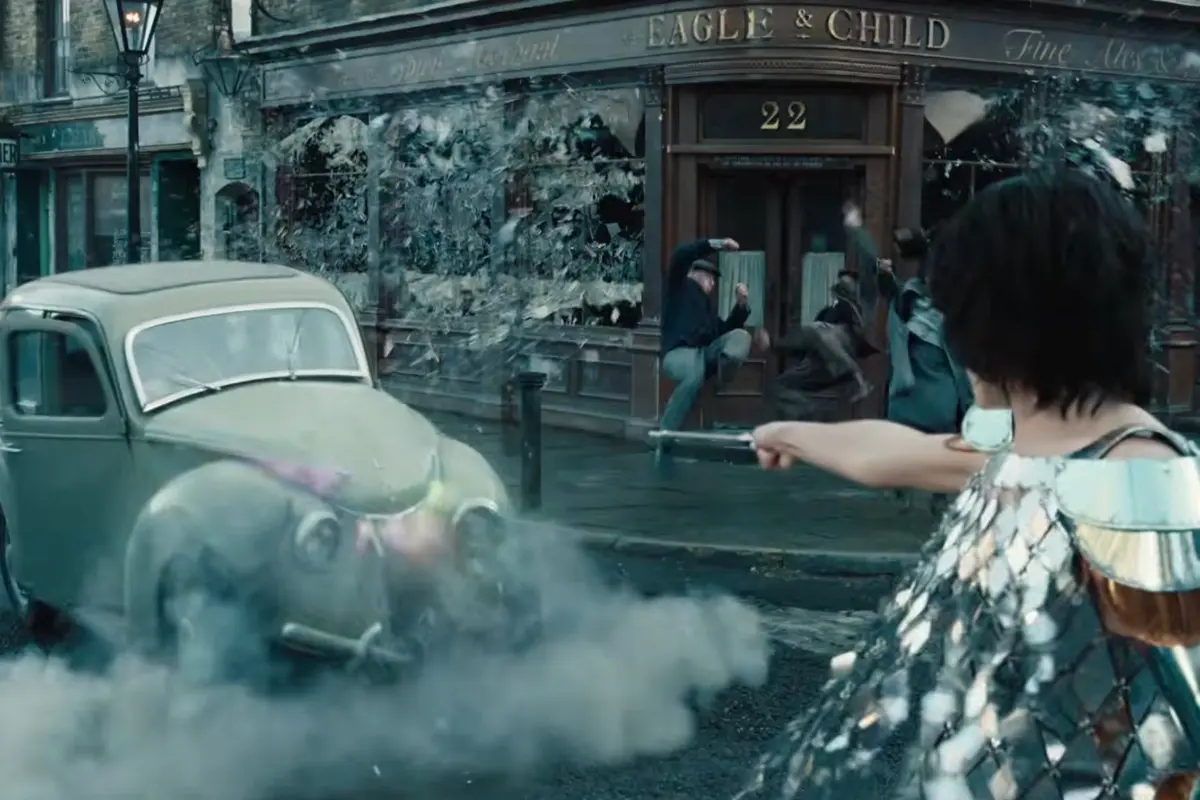
The release of the first official trailer on October 13 marked the definitive crossing from development to public scrutiny. Showcasing young protagonists exploring Victorian London before tumbling into alternate cosmic dimensions, the footage culminated in breathtaking visual sequences of Aslan singing the world of Narnia into existence.
Yet, it was the auditory and visual styling—specifically the integration of Led Zeppelin’s classic rock anthem and a vibrant, almost psychedelic color palette—that immediately dominated the news cycle, fracturing the fan base down the middle.
Supporting Context & Metrics: The Anatomy of a Fanbase Split
The polarization surrounding the Magician’s Nephew trailer offers a fascinating case study in modern intellectual property stewardship. Audiences today possess immense emotional ownership over classic literature, and major streaming services constantly walk a tightrope between nostalgic fidelity and innovative reinvention.
The Purist Backlash
For a significant faction of the literary community, C.S. Lewis’s works are sacred texts imbued with profound theological and moral weight. Critics on social media wasted no time voicing their displeasure over what they perceived as a commercialized distortion of the source material.
One prominent post on X captured the indignation of purists:
"Anyone who defends this slop should be ashamed. They have disgraced C.S. Lewis. His family should be ashamed to sell out like this. Netflix destroys everything that is good."
Another user echoed these sentiments, directly targeting the director’s creative license:
"Made by a monster who doesn’t care about source material. Movie looks like crap. Congrats Netflix, another movie that disrespects the source material."
This faction argues that pairing classic Christian-themed fantasy with 1970s glam-rock sensibilities strips away the quiet, dignified wonder of Lewis’s Edwardian-era English setting, substituting timeless literary art with trendy corporate aesthetics.
The Progressive Defense
Conversely, a vocal and equally passionate group of film enthusiasts and book purists praised Gerwig’s bold choices, arguing that true adaptation requires cinematic translation rather than literal page-to-screen transcription.
Highlighting the structural brilliance of the adaptation’s starting point, one defender wrote:
"Starting the whole cinematic run with the actual origin story instead of jumping straight back to Wardrobe is the ultimate dream for book purists."
Praising Gerwig’s artistic execution, another user noted:
"Gerwig is an exceptionally talented film-maker. The aesthetic quality of the trailer is impressive. If all the trailers strike this note, it will be hard for all but the most resolved audiences to resist watching. Personally, I enjoy the cosmic rock aesthetic."
Industry Metrics and Cultural Impact
- Release Strategy: Netflix has opted for a high-profile theatrical window in collaboration with IMAX, recognizing that epic fantasy demands theatrical immersion. The film will play in theaters for nearly two months before streaming exclusively on Netflix.
- Theatrical Release Date: February 12
- Netflix Streaming Premiere Date: April 2
- Franchise Stakes: As Netflix’s most ambitious franchise play since acquiring the rights, the financial and reputational success of The Magician’s Nephew will dictate the greenlighting and trajectory of subsequent sequels planned by Gerwig and her production team.
Official Statements: Greta Gerwig Speaks on Her Lifelong Narnia Dream
Amid the online commotion, Greta Gerwig released an expansive and deeply personal statement detailing her lifelong relationship with C.S. Lewis’s literary legacy and her collaborative journey with Netflix and IMAX.
Expressing her excitement for the dual release schedule, Gerwig stated:
"Working with Netflix to bring this film to life has been extraordinary and IMAX continues to be an incredible partner. I cannot wait for people to see the film in theaters on February 12 and on Netflix on April 2."
Delving into her personal history with the text, the filmmaker painted a vivid picture of her childhood inspiration:
"I was a child when I first read The Magician’s Nephew, and I fell in love with the gorgeously improbable but completely brilliant concept of a cosmic lion singing the world of Narnia to life. I didn’t know that I would grow up to make films, but a universe built out of music is an idea that always lived in my heart. It is the honor of a lifetime to be asked to imagine it into being."
Gerwig concluded by reflecting on the transformative power of literature and the enduring universal appeal of the Narnian universe:
"Because of C. S. Lewis’s The Chronicles of Narnia, I believed in magic and hidden worlds and adventure. I believed that anywhere could be enchanted and that anyone could be swept up into an epic. That wonder and awe was available to everyone, even ordinary people like me… It transformed me."
Future Outlook: What Lies Ahead for Netflix’s Narnia Universe
The release of the trailer for The Magician’s Nephew is merely the opening salvo in what promises to be one of the most closely watched cinematic events of the coming year. As the debate between purists and progressive cinephiles continues to rage across digital forums, the ultimate verdict will rest upon the quality of the finished film when it arrives in theaters this February.
Challenges and Opportunities for Netflix
For Netflix, the strategy of pairing prestige auteurs with massive intellectual properties has yielded mixed historical results. However, entrusting an artist of Greta Gerwig’s caliber with Narnia signals a clear desire for artistic distinction rather than algorithmic product generation. If Gerwig’s gamble pays off, the glam-rock-infused, cosmic origin story could redefine how classic fantasy is adapted for modern, multi-generational audiences.
Expanding the Horizon
Should The Magician’s Nephew achieve critical acclaim and box office success, Gerwig’s roadmap for Netflix includes expanding deeper into the Narnian chronology. The prospect of seeing subsequent novels—such as The Lion, the Witch and the Wardrobe, The Horse and His Boy, and The Voyage of the Dawn Treader—filtered through Gerwig’s unique directorial lens opens up thrilling possibilities for fantasy cinema.
For now, all eyes remain fixed on February 12. Whether audiences walk out of IMAX theaters mesmerized by a daring new vision of Aslan’s creation or questioning the fusion of C.S. Lewis and Led Zeppelin, one thing is certain: Greta Gerwig has successfully made Narnia the most talked-about topic in global entertainment once again.