Executive Overview
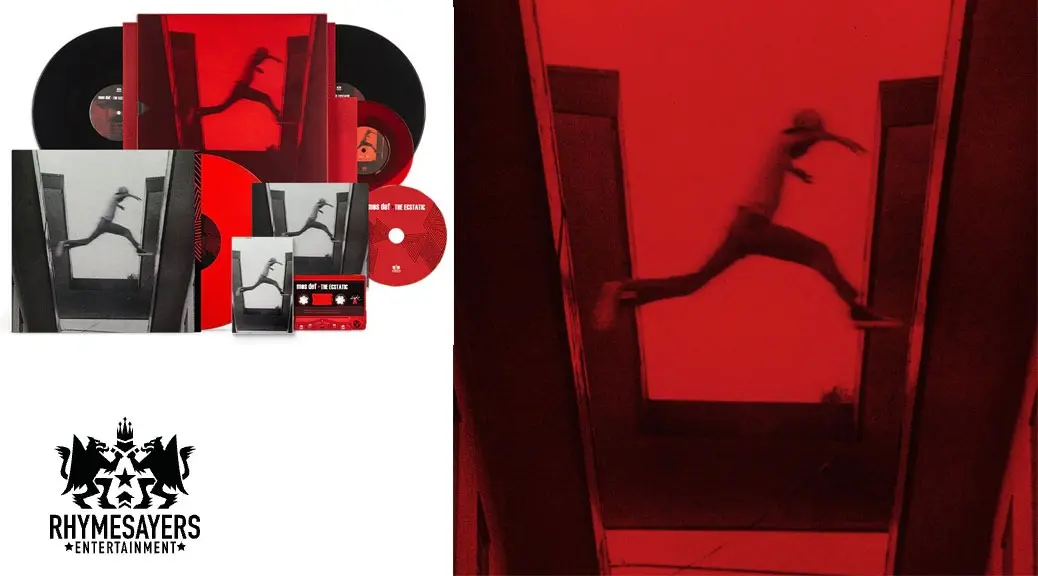
Seventeen years after its initial drop through Downtown Records, Mos Def’s critically acclaimed fourth studio album, The Ecstatic, is finally receiving the premier vinyl reissue treatment it has long deserved. Handled by the revered independent hip-hop institution Rhymesayers Entertainment—a label whose catalog boasts foundational releases from underground icons like MF DOOM, Digable Planets, and Homeboy Sandman—this new pressing brings a modern collector’s sheen to a watershed moment in contemporary Black music.
Upon its release in 2009, The Ecstatic was greeted by a music industry in rapid transition. Major labels were wrestling with the seismic tremors of the digital downloads era, and traditional promotional pipelines were giving way to the wild west of early social media. For Dante Smith—then balancing his legendary musical footprint with an increasingly vibrant career as a respected film and television actor—the album represented both a creative liberation and a temporary farewell. Having successfully severed ties with Geffen Records, where he felt creatively stifled following 2004’s The New Danger and 2006’s True Magic, Smith delivered a project that shattered expectations.
Today, The Ecstatic stands not merely as a high-water mark in Mos Def’s storied discography, but as a prophetic blueprint for the modern, genre-agnostic landscape of hip-hop. Spanning a global sonic palette that effortlessly weaves through funk, afrobeat, jazz, soul, and Middle Eastern instrumentation, the album captured an artist operating at the absolute peak of his intellectual and technical powers. This comprehensive review and retrospective examine the historical weight of The Ecstatic, the tumultuous industry backdrop that birthed it, its rare sonic architecture, and the enduring legacy of an artist who chose artistic integrity over corporate compliance.
Detailed Chronology: From Geffen to Independence and the Birth of yasiin bey
To truly understand the brilliance of The Ecstatic, one must chart the arduous creative journey that preceded it. Following his universally hailed, monumental 1999 solo debut, Black on Both Sides—a record that immediately established him as the conscience and voice of a generation—Mos Def entered a complex phase of his career. As his acting resume expanded with critically praised performances in films like Monster’s Ball, The Woodsman, and Brown Sugar, his relationship with the major label system began to fray.
His transition to Geffen Records yielded projects that, while boasting flashes of brilliance, suffered from corporate interference and a shifting commercial climate. The New Danger pushed hard into rock, blues, and experimental soul, baffling radio programmers accustomed to the boom-bap purism of late-90s New York. Its follow-up, True Magic, was notoriously rushed out under strained contractual obligations with minimal promotional fanfare, further cementing Smith’s disillusionment with the rigid commercialism of the major label apparatus.
Frustrated by boardroom politics and creative constraints, the rapper made a decisive pivot. Leaving Geffen behind allowed Smith to reclaim his autonomy, setting the stage for his artistic rebirth under the independent banner of Downtown Records. By 2009, The Ecstatic arrived as a revelation. It was the moment Mos Def shook off the corporate shackles and rediscovered the unbridled joy of creation.
This period also marked the evolutionary transition toward his current identity as yasiin bey. While The Ecstatic still bore the iconic moniker that introduced him to the world, the artistic ethos stamped across its tracks was that of a global citizen unfettered by genre borders. Much like his contemporary and conceptual twin, André 3000 of OutKast—who famously distanced himself from hip-hop before his recent renaissance as a spiritual jazz flautist—Mos Def’s relationship with the genre has always been defined by an intellectual restlessness. Where André cited feeling too old to authentically connect with modern commercial rap, Mos Def’s retreat from the industry was fueled by an exhaustion with its commercial cynicism. The Ecstatic remains the precious artifact captured right at the crossroads of that disillusionment: a masterclass in defiance.
Supporting Context & Metrics: Sonic Architecture and Global Landscapes
Musically, The Ecstatic was an outlier in 2009. At a time when mainstream hip-hop was increasingly dominated by synthesized club anthems, ringtone rap, and rigid formulaic structures, Mos Def curated an organic, globe-trotting soundscape that felt remarkably timeless.
Though eagle-eared hip-hop historians quickly noted that several beats on the album had circulated in underground bootlegs or earlier producer beat-tapes, the compilation of these disparate elements was nothing short of visionary. The production roster read like a Mount Rushmore of independent beat-making: Chad Hugo, Madlib, Oh No, and the dearly missed, legendary J Dilla.
J Dilla’s posthumous contribution, the transcendent track "History," stands as an emotional core of the album. The beat—warm, dusty, and emotionally resonant—served as the canvas for a triumphant reunion between Mos Def and his Black Star partner, Talib Kweli. Their chemistry, forged a decade prior in the crucible of underground New York hip-hop, sounded as vital and razor-sharp as ever, proving that true creative brotherhood transcends passing musical eras.

Furthermore, the album’s stylistic breadth was staggering. Tracks incorporated heavy afrobeat rhythms, hypnotic Middle Eastern string arrangements, raw funk breaks, and avant-garde jazz flourishes. A prime example of this adventurous curation is found in the song "Roses." Collaborating with the typically eclectic, visionary Georgia Anne Muldrow—who had already released her own distinct version of the track that same year—Mos Def traded verses in a breathtaking duet that blurred the lines between jazz vocal improvisation and soulful hip-hop cadence.
Key Production & Collaboration Metrics:
- Release Year (Original): 2009 (Downtown Records)
- Release Year (Reissue): 2026 (Rhymesayers Entertainment)
- Key Producers: Madlib, Chad Hugo, Oh No, J Dilla
- Notable Guest Appearances: Talib Kweli, Georgia Anne Muldrow, Slick Rick
- Primary Musical Influences: Funk, Afrobeat, Spiritual Jazz, Traditional Middle Eastern Music, Golden Era Hip-Hop
Official Statements and Industry Perspectives
The announcement of Rhymesayers handling the vinyl reissue has sent waves of excitement through the independent hip-hop community. Industry insiders and longtime fans have lauded the partnership as a natural alignment of cultural values.
In a recent retrospective statement regarding the reissue, representatives for Rhymesayers highlighted the album’s enduring relevance:
"‘The Ecstatic’ is not just a classic album within Mos Def’s legendary catalog; it is a foundational text for independent artistry. Bringing this masterwork back to the physical format via vinyl allows a new generation of listeners to experience the depth, global consciousness, and sheer musicality that defined a pivotal era of underground resilience."
Critics who initially reviewed the album in 2009 often pointed out the dichotomy between its lukewarm commercial entry and its rapturous critical reception. While major radio stations struggled to pigeonhole tracks that seamlessly shifted from cinematic string sections to rapid-fire sociopolitical commentary, music critics across the globe recognized it as a masterpiece of late-2000s rap.
Reflecting on the industry climate of the late 2000s, cultural commentators frequently note how The Ecstatic anticipated the current era of independent music distribution. Long before streaming algorithms forced artists to embrace genre-fluidity, Mos Def was already building bridges between underground beat-makers, international sonic traditions, and politically charged lyricism. The decision by Rhymesayers to curate this release alongside peerless classics from MF DOOM and Digable Planets firmly cements The Ecstatic in its rightful place among the pantheon of underground hip-hop royalty.
Future Outlook: Legacy and the Enduring Power of The Ecstatic
As The Ecstatic finds new life on heavy-weight vinyl courtesy of Rhymesayers, its legacy continues to appreciate in value—both culturally and musically. In an era where modern hip-hop frequently looks back to the late 90s and 2000s for inspiration, albums that prioritized artistic exploration over commercial safety have aged the most gracefully.
For younger generations of listeners who may have missed its initial drop during the transitional digital shift of 2009, this reissue offers an essential educational portal. It serves as a reminder of an artist who refused to be boxed into a single definition of what a rapper should look, sound, or act like. Whether viewed through the lens of Dante Smith’s cinematic evolution, yasiin bey’s global consciousness, or simply as a collection of some of the finest beats and rhymes ever recorded, The Ecstatic remains an undiminished triumph.
Ultimately, the enduring appeal of the album lies in its absolute sincerity. In a hyper-manufactured industry, Mos Def made a record driven entirely by curiosity, intellect, and soul. Seventeen years later, the grooves on this new vinyl pressing sound just as urgent, vital, and intoxicatingly fresh as they did the day they were cut.