Executive Overview
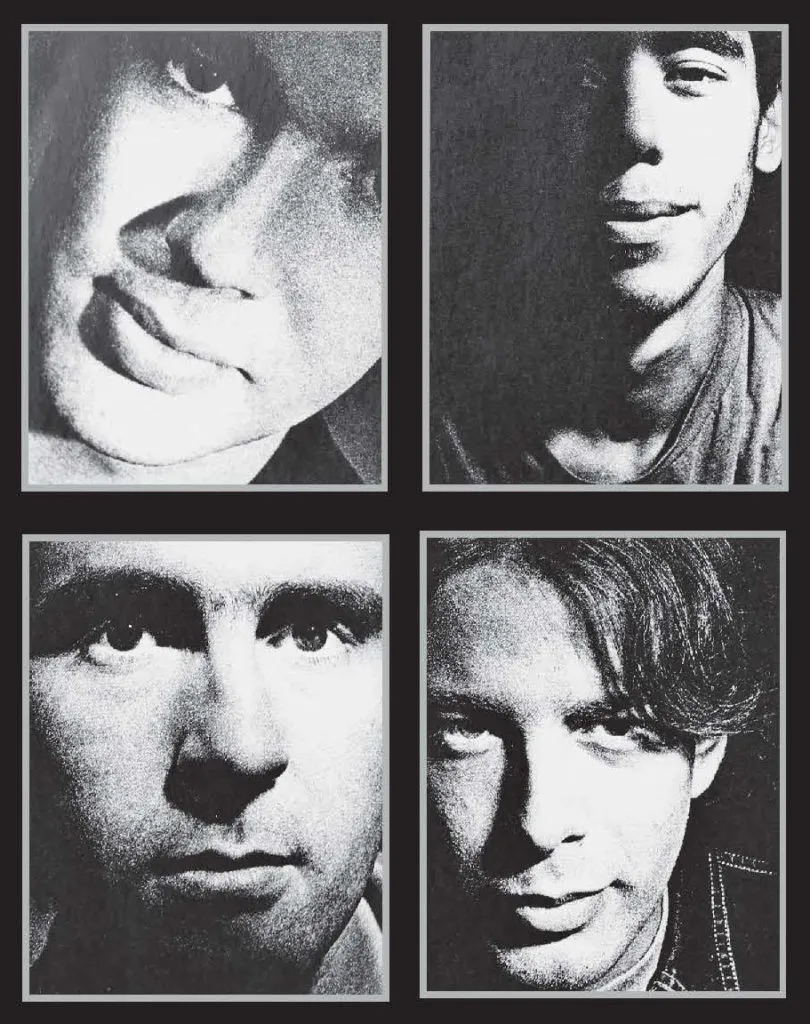
Forty years after its subterranean genesis in the classrooms and damp squats of London, the post-rock vanguard Bark Psychosis remains one of modern music’s most compelling anomalies. Formed in 1986 by childhood friends Graham Sutton and John Ling when they were just 14 years old, the project pioneered a genre before it even had a name. Long before the term "post-rock" became a critical shorthand for atmospheric, guitar-driven, yet structurally unorthodox compositions, Bark Psychosis were busy weaving a curious spell of ambient introspection and intricately detailed power.
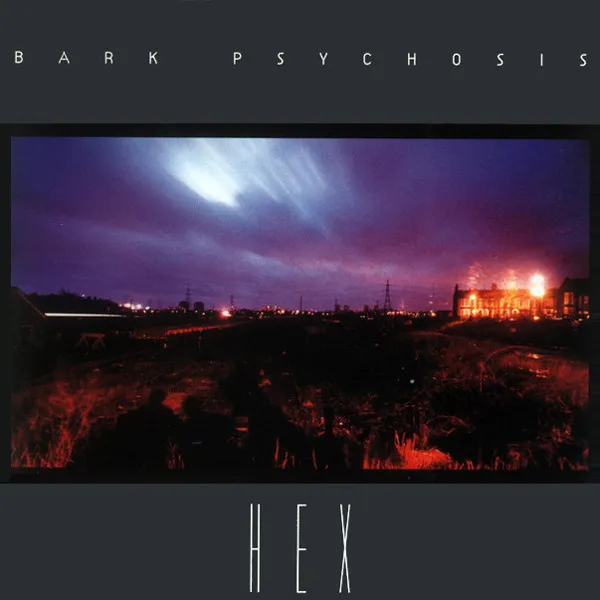
Their 1994 debut LP, Hex, stands as a monumental achievement of the era—a gloomy, glimmering masterpiece that balanced delicate textures with devastating sonic weight. Yet, like many works of singular genius, its creation came at a catastrophic cost, effectively tearing the band apart at the seams. It would take a staggering 20 years for a follow-up, ///CODENAME: dustsucker, to materialize, with founding member and leader Graham Sutton remaining the sole consistent thread.
In a rare and candid retrospective interview conducted by Chris Wheatley, Sutton reflects upon a musical journey guided by a simple yet fundamental desire: an unshakeable compulsion to create, untainted by commercial calculations. Today, Sutton is a highly sought-after record producer, having shaped the sounds of artists ranging from These New Puritans to British Sea Power and The Delays. Yet, the mythos of Bark Psychosis continues to loom large over the landscape of experimental music. This feature explores the dramatic history, meticulous recording methodologies, bitter label battles, and profound artistic ethos of a band that operated entirely on its own terms—for better or worse, driven by the purest of motives.
Detailed Chronology: From Schoolyard Mania to Squat Living and Critical Acclaim
The Genesis: Finsbury Park and Leyton Squats (1986–1990)
Music had always been the central axis of Graham Sutton’s world. Raised in a household where records were foundational household items, Sutton recalls a childhood soundtrack dominated by his mother’s copy of Rubber Soul, which he "played to death," and falling asleep to the immersive sonic architecture of Sgt. Pepper’s Lonely Hearts Club Band.
By age 14, this early appreciation evolved into a consuming passion. Teaming up with schoolfriend John Ling, Sutton experienced what he describes as "mania."
"I thought: this is what I’m here to do," Sutton recalls.
Equipped with little more than a cassette recorder and a rudimentary drum machine, the pair began experimenting with sound. Their live debut was fittingly counter-cultural: a Campaign for Nuclear Disarmament (CND) benefit gig at the Sir George Robey pub in Finsbury Park. Fuelled by adolescent conviction, Sutton made a life-altering choice. After completing his GCSEs, he left school, persuading Ling to fully commit to the nascent band.
To facilitate their ambitions, Sutton relocated from East London to Edgware in North London, though the logistical challenges of commuting soon proved insurmountable. Travelling back and forth to plan rehearsals and secure a rhythm section—their first major objective—became exhausting. They placed an advertisement in a local music shop, successfully recruiting drummer Mark Simnett. To make the project viable, Sutton began squatting with Ling, eventually settling into a notorious squat on Claremont Road in Leyton.
It was within the bohemian, counter-cultural crucible of the Leyton squat that the band encountered singer Sue Page, whose ethereal vocals would grace their earliest recorded output. Crucially, their entry into the independent music ecosystem was similarly serendipitous.
While standing on the platform of South Woodford station, Sutton struck up a casual conversation with a couple named Nick Allport and Vinita Joshi, who ran a grassroots fanzine and a micro-independent label called Cheree Records. Struck by their shared sensibilities, the couple effectively adopted the young band into their creative fold.
The Cheree Singles and the Spaceman 3 Intervention (1990–1992)
In 1990, Cheree released Bark Psychosis’s first two 12-inch singles: "All Different Things" and "Nothing Feels." Both records showcased the group’s rapidly solidifying signature sound—a hypnotic blend of drifting, atmospheric rock, hypnotic rhythms, and textural depth.
The partnership seemed promising, but creative friction was inevitable. "They wanted us to do an album," Sutton explains, "but they brought in some new backers that we fundamentally didn’t get on with."
Faced with a burgeoning impasse, salvation arrived via Gerald Palmer, the manager of legendary space-rock psych-pioneers Spaceman 3. Recognizing the young band’s unique potential, Palmer intervened. "He negotiated us out of our Cheree agreement," Sutton notes.
Newly liberated, Bark Psychosis signed to 3rd Stone Records and welcomed keyboardist Daniel Gish into the fold. This expanded lineup immediately bore fruit with the 1992 release of the Manman EP and the extraordinary single "Scum." Clocking in at a sprawling 21 minutes, "Scum" was a masterclass in audacity, seamlessly bridging experimental noise-rock and sprawling jazzy soundscapes.
Reflecting on this uncompromising period, Sutton observes:
"A lot of it came from being quite wilful, wanting to do something that was our own and nobody else’s. Nothing was guided by any sort of idea of a career; it was just, ‘How does this feel? Do we feel good doing this?’ For better or worse, it was done with the purest of motives."
Hex, The Church Sessions, and the Implosion of the Band (1992–1994)
Buoyed by the critical success of their underground releases, Bark Psychosis signed to Circa, a subsidiary of major label Virgin Records, to record their full-length debut. Emboldened by the atmospheric triumphs of recording "Scum" live inside St John’s Church in Stratford, Sutton engineered a revolutionary, multi-layered recording blueprint for the album that would become Hex.
"I came up with the idea that we’d lay down some frameworks, then there’d be a stage of overdubbing in the church," Sutton outlines. "Then there’d be a further process of sequencing. Finally, there would be touch-ups and vocals, then we’d mix it."
Compounding this rigorous architectural approach was Sutton’s burgeoning fascination with the newly democratized technology of sampling. Integrating early digital samplers into an organic rock framework allowed the band to manipulate texture and space with unprecedented precision.
Released in 1994, Hex was an artistic triumph that utterly redefined the boundaries of alternative music. Garnering widespread critical acclaim, it nonetheless entered the UK Independent Albums chart at a modest number 48—commercial figures that belied its massive long-term cultural impact. An absorbing, deeply affecting listen characterized by haunting melodies and powerfully dark compositions, Hex was a masterpiece born of intense psychological pressure.
The recording process exacted a severe toll on its creators.
"It took such a lot out of us," Sutton recalls. "I felt very strongly that this might be our only shot at this, so I’m going to give it my absolute everything. The process of making it destroyed the band."
Daniel Gish departed midway through the album’s creation, and John Ling exited shortly after its completion. Although Sutton and Simnett attempted to keep the live iteration of Bark Psychosis afloat with further concert dates, the creative core had shattered. Sutton found himself increasingly captivated by the hyper-modern, syncopated rhythms of the burgeoning drum ‘n’ bass movement. Setting rock music aside entirely, he adopted the moniker Boymerang and released the acclaimed 1997 drum ‘n’ bass album Balance Of The Force through Parlophone.
Supporting Context & Metrics
To fully comprehend the cultural footprint of Bark Psychosis, one must analyze the precarious intersection of their artistic ambition and commercial reality.
- The 20-Year Gap: The two-decade hiatus between Hex (1994) and ///CODENAME: dustsucker (2004) remains one of the longest sustained absences in alternative rock history for a primary artist returning under the same banner.
- Chart Realities vs. Legacy: While Hex peaked at a modest #48 on the UK Independent Albums chart upon its 1994 release, its subsequent influence on generations of post-rock, ambient, and modern classical artists has made it a holy grail for music collectors and critics alike.
- The Electronic Diversion: Sutton’s detour into drum ‘n’ bass under the Boymerang alias yielded Balance Of The Force (Parlophone, 1997)—a critical bridge proving that his obsession with micro-editing and spatial dynamics transcended traditional rock instrumentation.
- The Producer’s Touch: Sutton’s transition into high-profile production work expanded across major indie and alternative stables, cementing his reputation as an architect of modern British guitar music. His production credits feature foundational releases for:
- The Delays: Faded Seaside Glamour (2004)
- These New Puritans: Crooked Wing (Domino)
- British Sea Power
Official Statements & Key Reflections
Throughout his career, Graham Sutton has remained remarkably unpretentious about his contributions to music history, prioritizing visceral emotional resonance over commercial viability. Below are key insights and direct reflections captured during his interview with Chris Wheatley:
- On the Purity of Artistic Intent:
"Nothing was guided by any sort of idea of a career; it was just, ‘How does this feel? Do we feel good doing this?’ For better or worse, it was done with the purest of motives."
- On the Cost of Creation:
"I felt very strongly that this might be our only shot at this, so I’m going to give it my absolute everything. The process of making it destroyed the band."
- On the Bizarre Realities of Commercial Production:
Recalling Geoff Travis’s famous request: "Geoff Travis from Rough Trade sent me a postcard, with written in big letters: ‘CAN YOU MAKE ME A HIT?’ It seemed like the most ridiculous, bizarre request."
- On Legacy and Retrospection:
"It’s enormously gratifying that people still ask me about Hex, because I know how much went into it, and it was done for no other reason, no other purpose, than to try and do something as good as we could make it. So, the fact that people get something out of it, well, that’s nice."
Future Outlook: Will Bark Psychosis Return?
Following the arduous battle to reclaim his master tapes from Parlophone—a bureaucratic ordeal that delayed the release of the long-awaited second Bark Psychosis album by years—Sutton finally delivered ///CODENAME: dustsucker via Fire Records in 2004. Retaining the sophisticated, experimental ethos of its predecessor while incorporating decades of technological and personal evolution, the album proved that Sutton’s creative spark had not been extinguished.
Simultaneously, Sutton’s accidental empire as a top-tier record producer took on a life of its own. Following his work on The Delays’ acclaimed debut Faded Seaside Glamour, word-of-mouth recommendations established him as one of the most discerning ears in British independent music, leading to celebrated collaborations with acts like These New Puritans and British Sea Power.
When pressed on whether music fans can ever expect a third official Bark Psychosis album, Sutton responds with characteristic pragmatism and a smile.
"I don’t know," he admits, noting that he is thoroughly absorbed in his current slate of creative endeavors. Pausing, he adds the ultimate logistical deterrent: "Besides, I haven’t got the time!"
As the foundational architects of post-rock look back on four decades since their teenage formation in East London, Bark Psychosis stands untouched by compromise. Whether Graham Sutton ever returns to the moniker or leaves Hex and ///CODENAME: dustsucker as twin monuments in the ether, their legacy remains secure: a testament to what can be achieved when sound is pursued with absolute, unyielding integrity.