Executive Overview
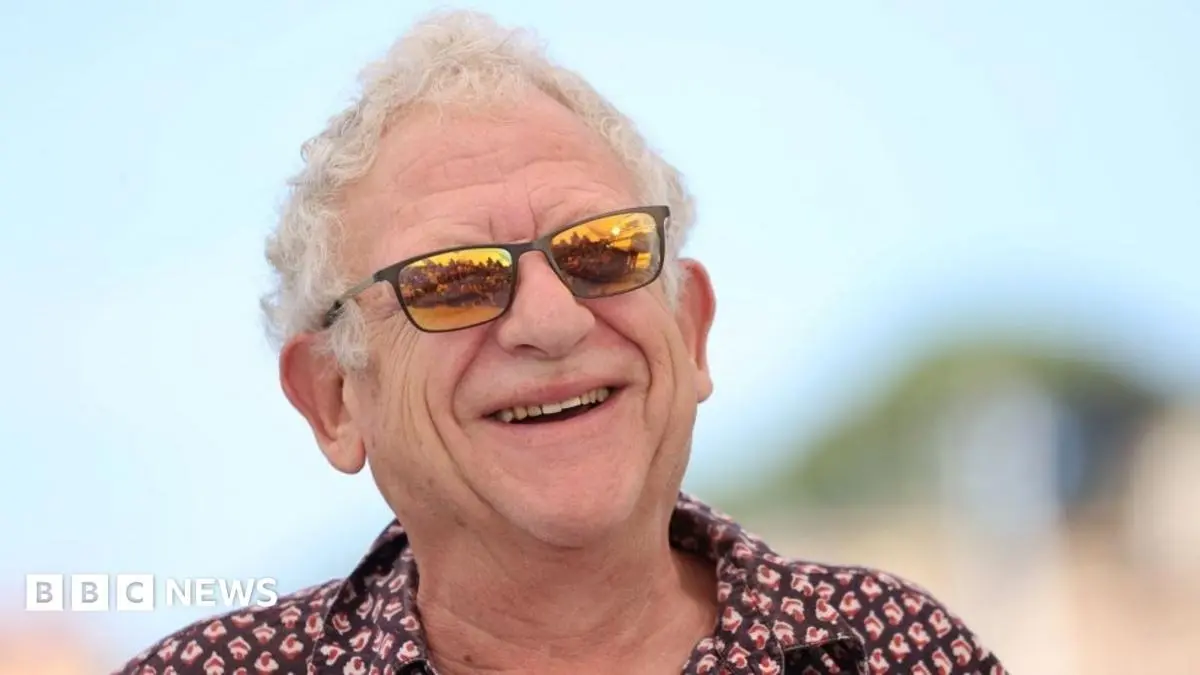
The global film industry is mourning the loss of Jeremy Thomas, the towering British producer whose fearless championing of uncompromising artistic vision, auteur cinema, and international co-productions shaped the landscape of modern filmmaking. Thomas passed away peacefully on Friday at his home in Oxfordshire, surrounded by his family and loved ones, at the age of 77. His publicist confirmed the passing, closing the final chapter on a magnificent five-decade career that redefined what independent cinema could achieve on the world stage.
Over a prolific career that spanned more than fifty years, Thomas forged an indelible legacy as a producer who cared less for commercial formulas and more for cultural resonance. He built an international reputation by collaborating with some of the most daring and iconoclastic directors in cinematic history—including Bernardo Bertolucci, David Cronenberg, Nagisa Oshima, Nicolas Roeg, and Julian Temple—consistently bridging the gap between mainstream critical acclaim and avant-garde exploration.
His crown jewel remains Bernardo Bertolucci’s monumental 1987 historical epic The Last Emperor, a film that swept the Academy Awards, securing nine Oscars, including the coveted prize for Best Picture, and earning Thomas personal glory as the film’s producer. Yet, reducing Thomas’s career to a single night in Los Angeles would be a profound miscalculation. From gritty British crime dramas like Sexy Beast to provocative adaptations of J.G. Ballard’s dystopian novels like Crash and High-Rise, and career-launching collaborations with first-time directors who would go on to define contemporary British cinema, Thomas was a cinematic pioneer.
His passing marks the end of an era for traditional independent production, leaving behind a cinematic canon that challenged audiences, pushed the boundaries of censorship and taste, and elevated visual storytelling to high art. As the global film community processes this monumental loss, tributes have poured in from actors, directors, and industry executives who recognized Thomas not merely as a producer, but as a legendary protector of the cinematic arts.
Detailed Chronology: From the Cutting Room to the Global Stage
Apprenticeship and Early Beginnings (1949–1975)
Born into a rich cinematic lineage—his father was renowned director Ralph Thomas and his uncle was director Gerald Thomas—Jeremy Thomas was immersed in the film industry from an early age. However, rather than coasting on family connections, Thomas chose to learn the mechanics of filmmaking from the ground up, starting his career deep within the cutting rooms of London editing studios.
Working as a film editor and assistant editor during the late 1960s and early 1970s provided Thomas with an intuitive, granular understanding of narrative pacing, visual rhythm, and structural integrity. This foundational experience in post-production imbued him with a rare sensibility: an ability to visualize how disparate pieces of raw footage would ultimately coalesce into a cohesive, breathing narrative long before cameras began rolling on set.
The Breakthrough and International Collaborations (1976–1986)
London-based Thomas made his official leap into feature film production with the 1976 Australian bushranger drama Mad Dog Morgan, starring Dennis Hopper. The gritty production set the tone for Thomas’s career preferences: uncompromising stories set on the fringes of society, driven by complex, flawed characters.
Throughout the late 1970s and early 1980s, Thomas demonstrated a fearless appetite for international co-productions, seeking out visionary foreign directors whose work terrified risk-averse studio executives. In 1983, he produced Japanese auteur Nagisa Oshima’s groundbreaking World War II drama Merry Christmas, Mr. Lawrence, starring rock icon David Bowie and Ryuichi Sakamoto. The film was a critical triumph that established Thomas as a producer capable of navigating complex cross-cultural financing and artistic sensitivities.
During this same period, Thomas formed a creative partnership with visionary British director Nicolas Roeg, producing the psychological thrillers Bad Timing (1980) and Eureka (1983). These early collaborations proved that Thomas was entirely immune to conventional commercial pressures, prioritizing aesthetic boldness and psychological depth over easy marketability.
The Masterpiece: The Last Emperor and the Bertolucci Alliance (1987–2003)
The defining peak of Thomas’s career arrived in 1987 with the release of The Last Emperor. Directed by Bernardo Bertolucci and produced by Thomas, the biographical drama chronicled the extraordinary life of Puyi, the final monarch of China’s Qing dynasty. Lavishly shot by Vittorio Storaro and featuring a haunting score by Ryuichi Sakamoto, David Byrne, and Cong Su, the film was an unprecedented international co-production granted unprecedented access to Beijing’s Forbidden City.
The gamble paid off spectacularly. The Last Emperor became a global cultural phenomenon and a critical darling. At the 60th Academy Awards ceremony, the film achieved a historic clean sweep, winning all nine of the Oscars for which it was nominated, including Best Picture, Best Director, and Best Adapted Screenplay. For Thomas, holding the Oscar for Best Picture cemented his status among the elite echelon of international producers.
Rather than resting on his laurels, Thomas forged a lifelong creative and personal alliance with Bertolucci. He went on to produce a string of the Italian master’s most ambitious subsequent works, including:
- The Sheltering Sky (1990): An existential desert odyssey starring Debra Winger and John Malkovich.
- Little Buddha (1993): A visually stunning exploration of Tibetan Buddhism and modern reincarnation starring Keanu Reeves.
- Stealing Beauty (1996): A sun-drenched Tuscan coming-of-age drama introducing Liv Tyler.
- The Dreamers (2003): An erotic, politically charged drama set against the backdrop of the 1968 Paris student riots.
Championing British Auteurs and Contemporary Edge (2004–Present)
While maintaining his global perspective, Thomas remained a fierce guardian of British cinema. Throughout the 1990s, 2000s, and 2010s, he repeatedly acted as a vital incubator for British talent, lending his prestige, financial acumen, and protective oversight to directors at the very beginning of their feature-film journeys.
Thomas played a crucial instrumental role in launching or accelerating the careers of numerous contemporary British masters, including:
- Stephen Frears: Collaborating on early career trajectories.
- Jonathan Glazer: Providing crucial backing and support.
- Ben Wheatley: Championing his distinct brand of dark, off-kilter British storytelling.
- David Mackenzie: Collaborating on intense narrative features.
His eclectic production slate during these decades also featured provocative literary adaptations, most notably his daring translations of J.G. Ballard’s dystopian novels to the screen. Thomas produced David Cronenberg’s deeply controversial 1996 psychological thriller Crash, which explored the nexus of technology, urban infrastructure, and vehicular eroticism—a film that famously polarized audiences and won the Special Jury Prize at the Cannes Film Festival. Decades later, Thomas returned to Ballard’s universe by producing Ben Wheatley’s nightmarish 2015 high-rise satire High-Rise, starring Tom Hiddleston.
Other notable credits from his later career include Richard Linklater’s biting fast-food industry exposé Fast Food Nation (2006), Julien Temple’s chaotic punk rock documentary The Great Rock ‘n’ Roll Swindle (1980), and David Cronenberg’s psychoanalytic period drama A Dangerous Method (2011). True to form, Thomas was actively working until his final days; his latest collaboration with legendary Japanese director Takashi Miike, Bad Lieutenant: Tokyo, is scheduled to premiere at the upcoming Toronto International Film Festival.
Supporting Context & Metrics
To fully comprehend the magnitude of Jeremy Thomas’s contributions to global cinema, one must analyze the raw scale, critical reception, and institutional recognition of his body of work.
The Statistical Legacy of Jeremy Thomas
| Metric Category | Quantitative Data / Milestone |
|---|---|
| Career Span | Over 5 Decades (1976 – 2025) |
| Total Film Credits | 50+ Feature Films and Documentaries as Producer/Executive Producer |
| Academy Awards (The Last Emperor) | 9 Nominations, 9 Wins (Including Best Picture) |
| Key Directorial Collaborations | Bernardo Bertolucci, David Cronenberg, Nagisa Oshima, Nicolas Roeg, Julian Temple, Takashi Miike, Ben Wheatley, Stephen Frears |
| Major European Honors | European Film Academy Achievement Award (2006); Commander of the British Empire (CBE, 2009) |
| Festival Accolades | Multiple entries and prizes across Cannes, Venice, Berlin, and Toronto International Film Festivals |
The Independent Production Model
In an era dominated by corporate studio conglomerates, algorithmic content generation, and risk-averse franchise building, Jeremy Thomas operated as a throwback to the classical independent producer. He mastered the labyrinthine art of soft-money financing, international co-production treaties, and pre-sales, allowing him to assemble budgets for films that major Hollywood studios would not touch.
Thomas understood that true artistic freedom required financial agility. By keeping overhead low and maintaining strong relationships with European cultural funds, international distributors, and private investors, he insulated his directors from studio interference. This protective shield is precisely why filmmakers like David Cronenberg and Bernardo Bertolucci trusted him implicitly; Thomas was a producer who ran interference against commercial pressures so that the artists could realize their uncompromised visions.
Official Statements and Industry Tributes
Following the announcement of his peaceful passing in Oxfordshire, tributes poured in from across the global film community, reflecting the deep affection, profound respect, and intellectual debt owed to Thomas by generations of filmmakers and industry leaders.
Tributes from Collaborators and Peers
Directors, actors, and long-time colleagues released heartfelt statements highlighting Thomas’s fierce loyalty, intellectual curiosity, and unwavering courage.
"Jeremy Thomas was a giant among producers—a rare breed of gentleman warrior who fought tooth and nail for cinema as an art form rather than a commodity. Working with him on Crash was an education in absolute creative fearlessness. He did not merely produce films; he protected them from the timid world."
— David Cronenberg, Filmmaker"To lose Jeremy is to lose a pillar of international cinema. He possessed an exquisite, uncompromising eye and an unshakeable belief in the director’s vision. Without his courage, tenacity, and deep love for storytelling, masterpieces like The Last Emperor would never have seen the light of day. He was a lifelong friend and an incomparable collaborator."
— The Estate of Bernardo Bertolucci (via close associates)
Institutional and Cultural Tributes
Film institutions and cultural bodies across the United Kingdom and Europe also acknowledged his monumental impact on the global cultural heritage.
The British Film Institute (BFI) released a statement praising Thomas’s foundational role in keeping British independent cinema vibrant and globally competitive:
"Jeremy Thomas was a cornerstone of British and international film culture. His career is a testament to what can be achieved when passion, taste, and absolute artistic integrity guide the production process. From his early days in the cutting rooms of London to his historic triumphs at the Academy Awards, Jeremy championed stories that mattered. The BFI mourns the loss of a true cinematic titan, but his monumental body of work remains eternal."
European film organizations echoed these sentiments, noting that Thomas’s 2006 European Film Academy award for Outstanding European Achievement in World Cinema was merely a modest reflection of his titanic contributions to cross-border artistic collaboration.
Future Outlook: Preserving a Cinematic Legacy
As the film world adjusts to the reality of a landscape without Jeremy Thomas, cultural historians, archivists, and contemporary independent producers are left pondering the future of the art form he so fiercely defended.
Thomas’s passing coincides with a turbulent period for independent cinema. Rising production costs, shifting audience habits toward streaming platforms, and the consolidation of theatrical exhibition into mega-budget franchise blocks have made the kind of bold, auteur-driven international co-productions that Thomas specialized in increasingly difficult to finance and distribute. In many ways, Thomas was part of a vanishing generation of independent producers—figures like Jeremy Thomas, Saul Zaentz, and Lord Lew Grade—who possessed the clout, cultural capital, and sheer willpower to force challenging art into the global cultural mainstream.
However, Thomas’s legacy is far from static. His extensive filmography serves as an enduring blueprint for emerging producers navigating the treacherous waters of independent financing. Film schools, retrospective screenings, and academic institutions continue to study The Last Emperor, Merry Christmas, Mr. Lawrence, and Sexy Beast not merely as entertainment, but as masterclasses in structural production, international financing, and creative protectionism.
Furthermore, his final completed project—Takashi Miike’s Bad Lieutenant: Tokyo, slated for its high-profile premiere at the Toronto International Film Festival—stands as a fitting final testament to his ethos. Even in his final months, Thomas was working with provocative international talent on daring material, refusing to slow down or compromise his lifelong mission.
Ultimately, Jeremy Thomas’s spirit lives on in every independent filmmaker who refuses to water down their vision for commercial safety, and in every producer who steps onto a film set prepared to shield their director from compromise. While the Oxfordshire home where he passed is quiet today, the silver screens of the world will continue to echo with the bold, uncompromising, and transformative visions that Jeremy Thomas spent a lifetime bringing into the light.