Executive Overview
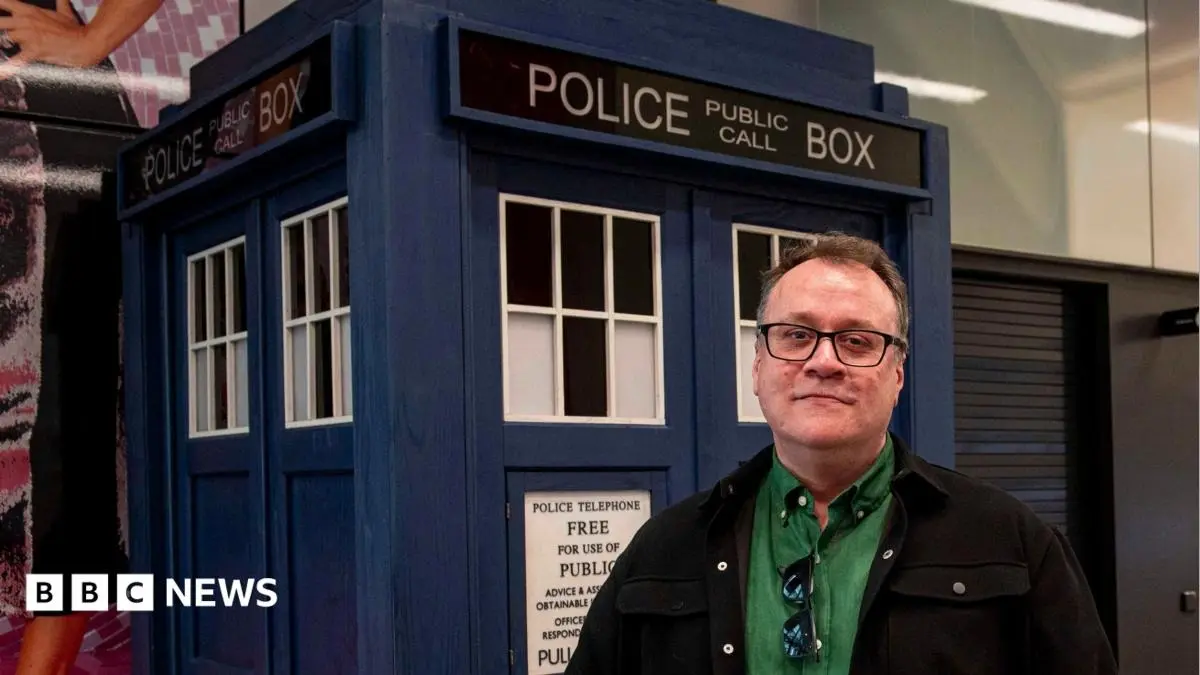
The intersection of artificial intelligence and creative industries has sparked yet another high-stakes controversy within British broadcasting, drawing a sharp line between traditional storytelling and technological disruption. Russell T Davies, the visionary television writer, producer, and architect behind the modern revival of Doctor Who, has issued a scathing public rebuke of the BBC’s leadership following inflammatory remarks regarding an unauthorized, AI-generated episode of the iconic sci-fi series.
The dispute centers on comments made by the BBC’s director general, Matt Brittin, during a Royal Television Society conference in September. Brittin casually mentioned receiving a "pretty good" 50-minute unofficial Doctor Who episode produced entirely through generative artificial intelligence. The comment immediately reverberated through the British creative sector, igniting fears that network leadership was trivializing the existential threats AI poses to writers, actors, and production crews.
Davies, appearing on BBC Radio 4’s The Media Show, did not mince words. He characterized Brittin’s public endorsement as a "clumsy" and insensitive misstep at a time when creative professionals are deeply anxious about the rapid encroachment of automated tools into their livelihoods. Pointing to Brittin’s professional background—which includes a significant tenure at tech giant Google prior to his leadership role at the BBC—Davies suggested that the director general’s relative inexperience in traditional television production may have clouded his judgment regarding industry sensitivities.
The fallout from Brittin’s remarks forced a swift internal and external defense from the BBC executive, who subsequently addressed staff to clarify his position, insisting that he remains a steadfast champion of human-led creativity. However, the controversy has served as a lightning rod for wider anxieties plaguing the entertainment industry. Beyond the immediate clash over generative AI, Davies’ extensive interview offered a candid look at the precarious state of contemporary television production, the ethical dilemmas of writers utilizing AI prompts for early drafts, the rigorous demands of orchestrating high-concept science fiction, and the uncertain future of Doctor Who itself following a turbulent production cycle and shifting global partnerships.
Detailed Chronology of the Controversy
The sequence of events that brought the tension between tech-driven executive leadership and traditional television creators to a boil unfolded across several high-profile public appearances and internal corporate meetings.
The Royal Television Society Conference
In September, Matt Brittin took the stage at the prestigious Royal Television Society conference to discuss the evolving media landscape, emerging technologies, and the future of public service broadcasting. During his remarks, Brittin touched upon the disruptive potential of generative artificial intelligence, offering an anecdotal example that would quickly derail the intended trajectory of his speech. He revealed to the audience that he had recently been sent an unofficial, 50-minute episode of Doctor Who generated entirely by artificial intelligence, describing the unauthorized product as "pretty good."
While Brittin likely intended the anecdote as an illustration of the dizzying velocity at which machine learning tools are developing, the remark was met with immediate dismay by creative unions, guilds, and individual artists. In an industry already grappling with copyright theft, unauthorized scraping of intellectual property, and the looming specter of job displacement, a senior executive of the BBC praising a pirated, AI-generated clone of the corporation’s most valuable intellectual property struck a deeply discordant note.
The Immediate Industry Backlash
Within hours of Brittin’s conference appearance, the digital inboxes of Britain’s most prominent television writers began lighting up with anxious messages and expressions of outrage. Russell T Davies, currently one of the most bankable and respected showrunners in the United Kingdom, described the sudden influx of correspondence as relentless. "My inbox went ping ping ping ping ping, so God knows what his was like," Davies remarked, underscoring the instantaneous and widespread alarm the comments generated among creative professionals.
Critics pointed out the profound irony of the BBC director general—the ultimate custodian of public service broadcasting and British artistic integrity—hyping an unregulated, generative deepfake of a flagship BBC show that bypassed the very writers, actors, and craftspeople who built the franchise’s global reputation.
Damage Control and Internal Staff Meetings
Recognizing the severity of the backlash, Brittin was forced into quick damage control. Confronted by mounting criticism from industry insiders and creative guilds, the director general used a staff meeting to address the controversy directly.
Admitting to colleagues that he had "got into trouble" over his casual endorsement, Brittin sought to contextualize his remarks. He explained that his intention had solely been to highlight the breathtaking "pace of change" and to demonstrate what modern machine learning tools are technically capable of producing. Simultaneously, he worked to reassure anxious employees by offering a definitive commitment to human labor.
"I want to be really clear: Humans are leading, and I believe in human creativity, enhanced by whatever tools," Brittin stated during the internal meeting, emphasizing that human-led innovation must—and would—remain at the absolute core of the BBC’s mission statement.
Davies’ Radio 4 Counter-Offensive
Despite Brittin’s internal clarifications, the friction remained palpable. Speaking at length on BBC Radio 4’s The Media Show, Russell T Davies delivered a pointed critique of the director general’s communication strategy and professional background. Drawing attention to Brittin’s corporate pedigree at Google, Davies implied that tech sector executives often fail to grasp the human cost associated with rapid technological disruption.
"That’s a clumsy thing to say in an industry where he’s got writers and artists and it specifically affects people, they’re the first to take the blow," Davies asserted. He dryly added that because Brittin "hasn’t worked in television for that long," he likely "might not be so fruity with an opinion in future."
Supporting Context & Metrics: The AI Threat to Creative Labor
The friction between Russell T Davies and Matt Brittin is merely a localized symptom of a much broader, global war over the integration of generative artificial intelligence into the creative arts. As large language models and generative video platforms advance exponentially, the foundational economics of writing, acting, and production are facing unprecedented upheaval.
The Mechanics of Creative Anxiety
During his interview, Davies broadened the conversation beyond the specific Doctor Who incident to address how writers themselves are experimenting with—or yielding to—artificial intelligence. His assessment of peers utilizing automated systems was uncompromisingly critical:
"I have heard stories of some writers using AI prompts to do a first draft which I find shocking because I think… What are you paid for otherwise? What are you there to do?"
Davies confirmed categorically that he does not use artificial intelligence to draft his scripts, relying entirely on human imagination, lived experience, and organic iteration. However, he admitted that he is "very much" worried that studio executives, pressed by tightening budgets and demands for increased content volume, will eventually begin replacing human writers with automated systems—a transition he suspects may already be occurring behind closed doors in certain commercial corners of the global television market.
Economic Realities and the Cost of Production
The anxiety surrounding AI is exacerbated by a harsh economic climate within British and international television. High-end television production has historically relied on substantial budgets, meticulous planning, and large-scale practical execution. Davies reflected on the immense physical and mental toll required to bring ambitious projects to life, particularly science fiction of the scale of Doctor Who.
Recalling his time running the show, Davies confessed that there were periods when he "used to dread going on a Doctor Who set." The grueling physical realities—ranging from multi-million-pound special effects sequences and complex pyrotechnics to actors spending hours enduring claustrophobic prosthetics—made the production environment uniquely punishing.
"It’s more difficult than any other set," Davies noted.
It is precisely this human labor—the sweat of makeup artists, the ingenuity of prop makers, the pyrotechnic technicians, and the emotional depth brought by actors and writers—that creative professionals fear will be devalued or entirely circumvented by executives looking to slash budgets through the adoption of generative AI tools.
Official Statements & Institutional Responses
The public debate has forced media organizations, regulatory bodies, and public service broadcasters to articulate clearer policies regarding the boundaries of artificial intelligence in the production pipeline.
The BBC’s Official Stance
In the wake of the Brittin controversy, the BBC has moved aggressively to reinforce its commitment to human authorship. The corporation’s official communications have repeatedly emphasized that while technological advancements will inevitably be utilized to streamline administrative and post-production efficiencies, the core creative engine of the BBC must remain unequivocally human.
Brittin’s assurances to staff—that "humans are leading" and that creative tools should merely enhance rather than replace human ingenuity—reflect the delicate tightrope public service broadcasters must walk. On one hand, institutions like the BBC are under immense pressure to modernize, digitize, and understand emerging technologies to remain competitive against unregulated streaming giants. On the other hand, as a publicly funded entity charged with supporting the British creative economy, the BBC faces a moral and cultural obligation to protect the livelihoods of the nation’s writers, artists, and technicians.
Industry Guild Reactions
Creative guilds across the United Kingdom, including the Writers’ Guild of Great Britain (WGGB), have watched the exchange closely. While union representatives have refrained from personal attacks on individual executives, the collective sentiment aligns closely with Davies’ critique. Industry bodies continue to lobby for stringent contractual protections, mandatory transparency regarding the use of AI tools in writers’ rooms, and ironclad guarantees that intellectual property will not be scraped or utilized to train machine learning models without explicit, compensated consent.
Future Outlook: The Crossroads of "Doctor Who" and Beyond
As the dust settles on the AI debate, the television industry finds itself looking toward an uncertain transitional period, particularly regarding the future of the BBC’s crown-jewel sci-fi franchise.
Production Shifts and Financial Realignment
Doctor Who is currently navigating a major strategic crossroads. Recent operational challenges have included the cancellation of a highly anticipated Christmas special and the notable shift in international financing, with Disney+ stepping back from its co-financing agreement for the series. These developments have led cynical commentators to question the long-term viability of the franchise’s current financial model.
However, Russell T Davies offered reassurance to a devoted global fanbase, confirming that despite his imminent departure from the showrunner role, the machine continues to turn. Another complete series is officially "on the cards." Davies outlined the upcoming production timeline, promising fans that they will begin to see new content roll out with a brand-new incarnation of the Doctor and a fresh companion by the summer of next year.
Davies’ Enduring Legacy and Future Projects
For Davies, stepping away from Doctor Who marks the conclusion of another monumental chapter in a career that has fundamentally shaped British television culture. From his ground-breaking 1999 Channel 4 drama Queer as Folk to critically acclaimed masterpieces like It’s a Sin, Years and Years, and his recent work on Tip Toe, Davies has consistently merged social commentary with compelling, populist storytelling.
Reflecting on his trajectory in his recently published memoir, The Queerest of Folk: A Life in Television, Davies traced his roots back to working in BBC children’s television at age 22 for £50 a day—an experience he describes as "the best training you could possibly have." He later honed his craft during the golden era of Granada Television, producing episodes of Coronation Street when the soap opera was regularly pulling in domestic audiences of 18 to 20 million viewers.
Even as he steps back from the demanding helm of Doctor Who, Davies’ creative radar remains perpetually active. He revealed that inspiration often strikes in the most mundane environments, noting that he routinely records the phone-in segments of daytime talk shows like ITV’s This Morning to listen to them during his evenings.
"All human life is there… just a couple of times a year, you’ll get an extraordinary human story or something very funny," Davies said. He recounted a particularly memorable anecdote about a matrimonial dispute involving a mother-in-law insisting on wearing white to a wedding—a narrative goldmine he intends to adapt into a script. "What a great little problem that is—two women just at war."
Conclusion
The public clash between Russell T Davies and the BBC leadership over artificial intelligence is far more than a passing celebrity feud. It is a defining cultural skirmish that exposes the deep anxieties tearing at the fabric of the modern entertainment industry. As technological disruption collides with traditional craftsmanship, the defense mounted by figures like Davies ensures that the value of human imagination, emotional depth, and authentic storytelling remains front and center in the ongoing debate over the future of television.