Executive Overview
For decades, the narrative of our planetary crisis has been dominated by quantitative metrics. Scientists track escalating carbon parts-per-million, map the terrifying velocity of deforestation, and catalogue biodiversity loss with clinical precision. Yet, data alone struggles to make humanity emotionally apprehend the visceral reality of a changing planet. True environmental awakening hinges on a fundamental shift in language—a vocabulary that dissolves the rigid, historical border erected between the human species and the wider living world.
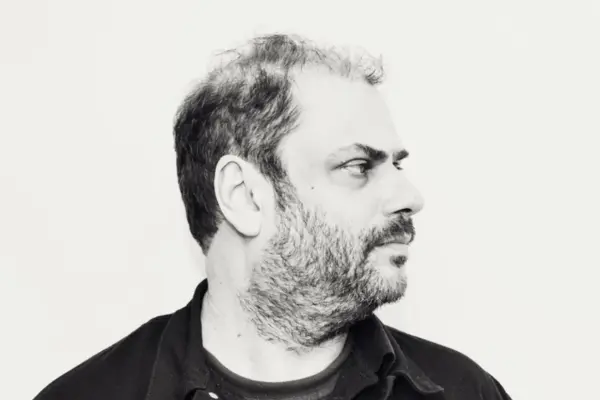
Enter Phoebe Giannisi. Operating as a poet, classicist, performer, architect, and environmentalist, Giannisi has cultivated one of the most radical, boundary-spanning bodies of eco-poetry in contemporary literature. Her work effortlessly bridges ancient Greek myth, site-specific performance art, video poems, and complex field recordings. The result is a transformative lesson in what it means to coexist on a fragile, vulnerable Earth.
By framing human identity not as an independent, sovereign force, but as an ecological "chimera"—a multi-species entity inextricably bound to animal, insect, and geological life—Giannisi’s art challenges the foundational arrogance of the Anthropocene. As her work gains international acclaim with major English-language translations and global performances, she offers an urgent blueprint: survival in an era of ecological collapse demands an imaginative framework where the earth is no longer a warehouse of resources to be exploited, but a shared body to be honored.
Detailed Chronology: The Evolution of an Eco-Poetic Vision
Giannisi’s artistic trajectory cannot be understood through linear literary milestones alone; it is a progressive architectural construction of space, memory, and ecological consciousness.
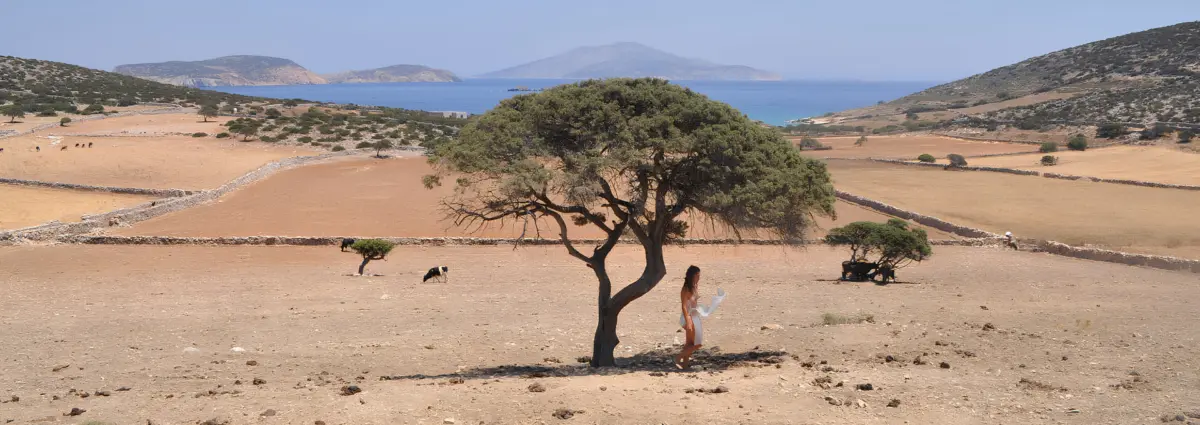
- 2012–2013 (Rooted in the Landscape): Giannisi deepens her site-specific performances, engaging directly with the rugged, untamed landscapes of mainland Greece. By staging readings and artistic interventions directly within forests, mountains, and traditional herding routes, she strips poetry of its ivory-tower isolation, forcing the written word into direct dialogue with wind, soil, and animal life.
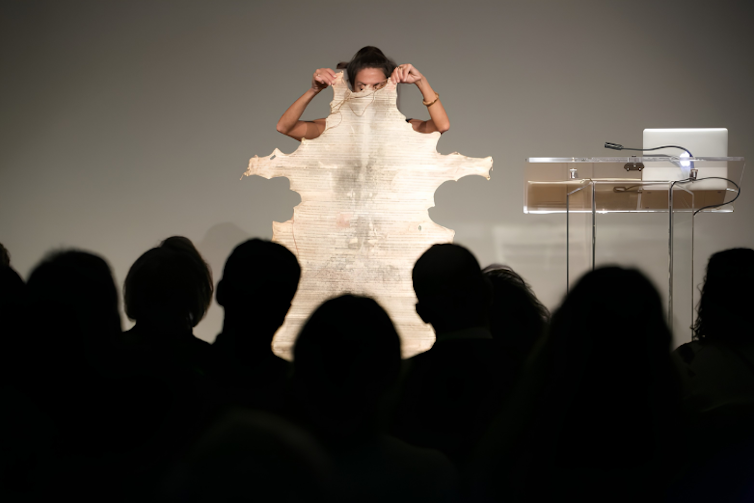
- 2017 (The Materiality of the Aigis): With her landmark installation Aigis II at the Panourgias Museum in Amfissa, Greece, Giannisi materializes poetry onto semitransparent goatskin parchment. By mapping traditional migration paths on one side and verse on the other, she merges text and topography, turning animal hide into an archive of environmental memory.
- October 2023 (Harvard Presentation): Hosting Giannisi at the Center of Hellenic Studies at Harvard University brings her spatial approach to poetry into sharp academic focus. Scholars and students observe firsthand how language moves off the page and occupies a shared, breathing physical space.
- 2022 (The Voice of the Insect in Cicada): The publication of her second major collection, Cicada, shifts the poetic focal point entirely. Using the insect as protagonist, Giannisi layers ancient texts by Plato, Archilochus, and Bashō with acoustic observations of the cicada’s life cycle and mating calls, transforming non-human noise into compelling environmental testimony.
- 2024 (The Biological Reality of Chimera): With the release of her collection Chimera, Giannisi anchors her environmental message in both classical mythology and modern genetics. Tracking the nomadic traditions of northern Greece’s Vlach herding communities, she moves beyond romanticized pastoralism to build an archive of shared, threatened survival.
- 2025 (The Living Ecosystem of Goatsong): Collecting her works into volumes like Goatsong, Giannisi officially abandons the solitary lyric narrator. Her poems operate as living ecosystems where human and non-human voices hold equal, resonant weight.
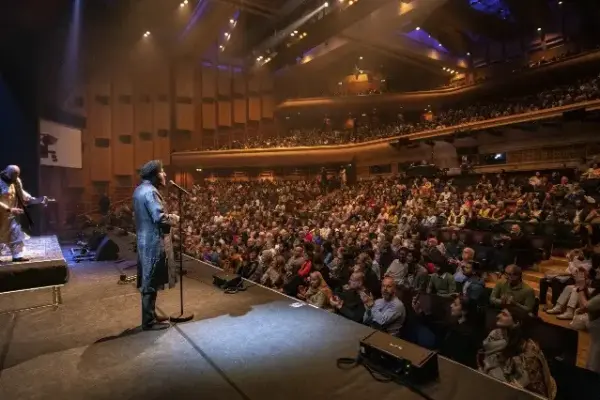
- Late Autumn (The University of Bristol Showcase): Giannisi’s physical performances of environmental memory expand to the University of Bristol, where she collaborates with poet-translator Brian Sneeden. This event demonstrates how ancient Mediterranean textures and contemporary ecological anxieties collide within modern academic architecture.
Supporting Context & Metrics: The Science of the Chimera and the Commons
To fully appreciate Giannisi’s poetic framework, one must understand how she translates hard scientific phenomena into deeply resonant cultural mythology. Her work relies heavily on two interconnected concepts: the classical myth of the Chimera and the biological reality of microchimerism.
From Myth to Microchimerism
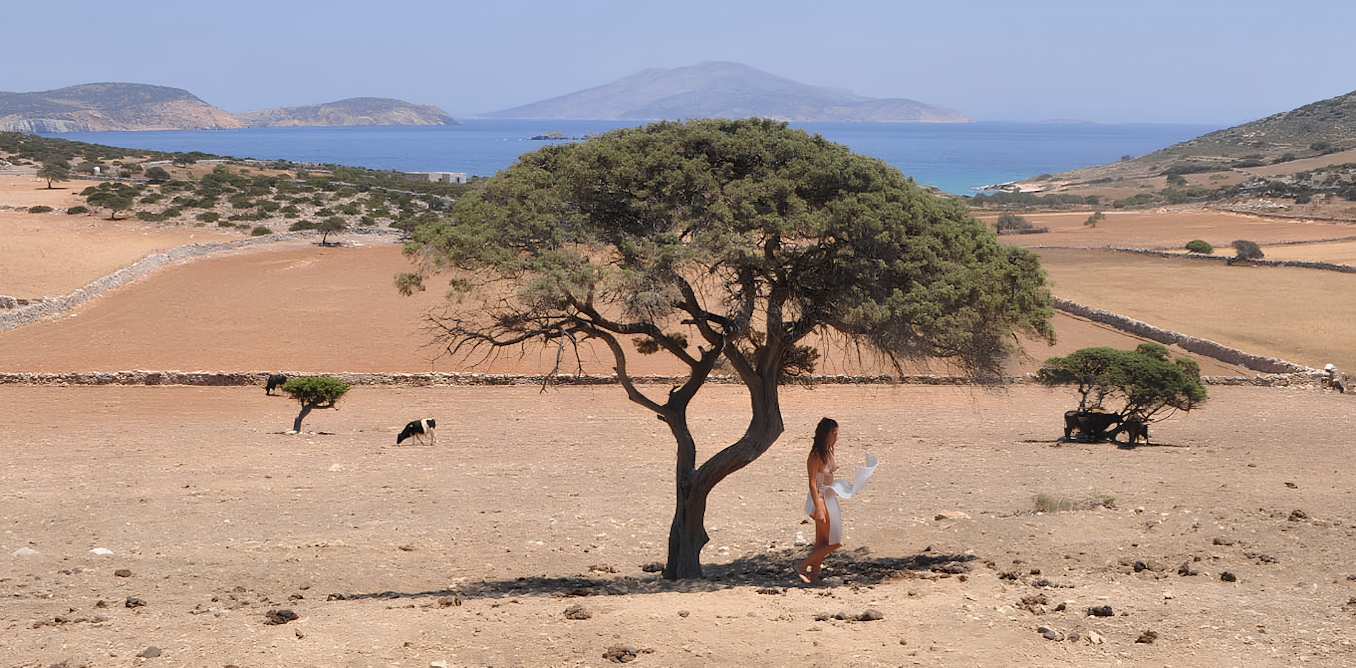
In classical Greek mythology, the Chimera was a monstrous, fire-breathing hybrid composed of a lion’s head, a goat’s body, and a serpent’s tail. For centuries, this creature stood as a symbol of unnatural terror and chaotic abstraction. Giannisi, however, reclaims the chimera as an ethical and biological truth.
In her poetry, she bridges this ancient myth with microchimerism—the scientific phenomenon wherein cells from one organism permanently inhabit and integrate into the body of another (such as maternal-fetal cell trafficking). Humans are, at a cellular level, inherently collaborative beings composed of multiple genetic codes. As she writes in Chimera II:
Call me Chimera.
A being composed of
other beings
A being with different genetic codes
incorporated.
Various genes connected
in one body.
Multiple body.
This scientific framing dismantles the dangerous Western illusion that humans stand apart from nature as masters, stewards, or detached saviors. Instead, Giannisi establishes that to harm the landscape, pollute waterways, or drive species to extinction is, quite literally, to tear apart our own multi-species body.
The Acoustic Archive and the Loss of the Commons
Giannisi’s methodology is deeply rooted in archival research—interweaving state records, regional oral histories, and raw field recordings. In her live performances, she loops the plaintive cries of northern Greek shepherds alongside the bellowing of livestock, the mechanical roar of passing motorcycles, and the harsh, industrial grinding of cement mixers.
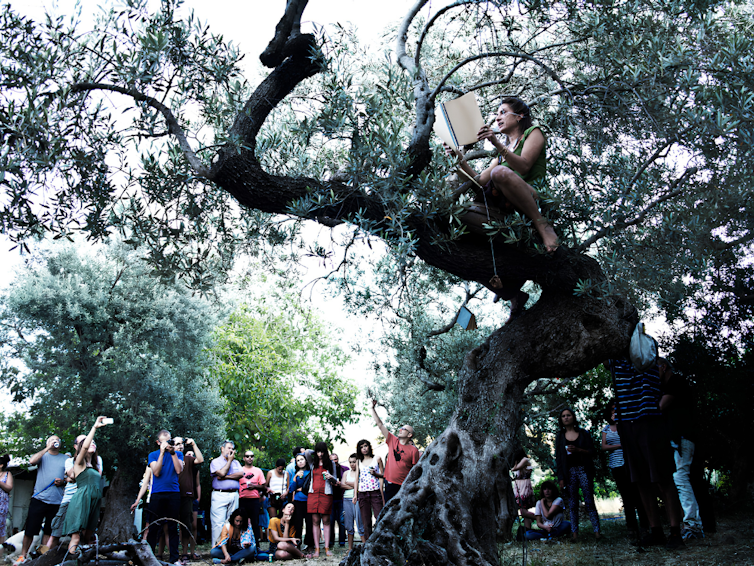
This deliberate acoustic layering forces listeners to inhabit the modern industrial epoch and the ancient, animal landscape simultaneously. It serves as a direct political defense of "the commons"—those shared ecological and cultural resources currently being dismantled by relentless economic profit, industrial expansion, and unchecked climate change. By deploying marine soundscapes and pastoral field recordings, her art bears direct witness to the devastating biodiversity loss sweeping the globe.
Official Statements and Critical Perspectives
The convergence of classical scholarship, environmental activism, and avant-garde performance has drawn high praise from international literary and academic institutions. Scholars tracking the intersection of climate communication and poetry note that Giannisi’s work represents a vital evolution in how humanities scholars respond to the Anthropocene.
In academic seminars ranging from Harvard’s Center of Hellenic Studies to upcoming exhibitions at the University of Bristol, critics emphasize that Giannisi’s training as an architect fundamentally informs her literary output. Language is not treated as an abstract, ethereal medium, but as a physical path to be walked, tasted, and felt.
Brian Sneeden, her primary English-language translator, has frequently highlighted the profound challenge and necessity of carrying Giannisi’s multi-layered Greek texts across linguistic boundaries. By refusing to flatten her complex acoustic and historical references, translations like Chimera and Goatsong allow English-speaking audiences to experience a poetic terrain where ancient myth and modern ecological grief are inextricably bound.
Furthermore, literary analysts place Giannisi within an elite cadre of boundary-crossing European and North American writers—such as the late German poet Barbara Köhler and recent Nobel Prize laureate Anne Carson. Like Carson and Köhler, Giannisi successfully dissolves the artificial divisions separating classical scholarship, rigorous scientific inquiry, and creative writing, forging an indispensable toolkit for navigating our current planetary emergency.
Future Outlook: Reimagining Our Place on a Vulnerable Earth
As industrial development accelerates and global climate metrics continue to flash red warnings, the limitations of purely technocratic responses to the ecological crisis become increasingly apparent. Policy papers, carbon offset markets, and emissions targets are undeniably vital, yet they frequently fail to capture the human imagination or alter our deep-seated cultural alienation from the natural world.
Phoebe Giannisi’s work points toward a necessary cultural horizon. By employing the human body as the primary medium for environmental memory—intentionally de-centering the human gaze during performances by covering her head with woven baskets or animal hides—she models a radical humility. Her poems invite us to taste the earthy crunch of a cicada, feel the sting of sea salt, and listen to the layered chorus of human and non-human voices sharing a single, finite biosphere.
Looking forward, the integration of Giannisi’s performances into major European universities and literary festivals signals a growing appetite for holistic, mythopoetic approaches to climate communication. Surviving the ecological crisis will ultimately require more than technological innovation; it demands a revolutionary framework of imagination. Through the lens of the chimera, humanity is gently yet firmly reminded that we are not solitary masters of a conquered planet, but fragile strands within a vast, living web—where every creature’s song breathes vital life into the whole.