Executive Overview
The architecture of digital participation has undergone a profound structural metamorphosis. In contemporary digital culture, the friction that once defined online and offline exploration has been systematically engineered away. For example, individuals navigating the cryptocurrency markets can leverage targeted search queries to instantly access decentralized trading tools, specialized portfolio trackers, and niche community hubs. Similarly, leisure and entertainment sectors that once demanded strict physical adherence—such as traditional brick-and-mortar casino gaming, which required travel, parking, and availability checks—have been largely revolutionized. Today, specialized digital platforms allow users to engage in legal gaming across diverse jurisdictions by stripping away the logistical hurdles that once turned participation into an administrative chore.
This relentless pursuit of seamless, friction-free interaction is nowhere more apparent than in the evolution of sports, music, and entertainment fandom. Over the past three decades, digital fan engagement has transformed from clunky, text-heavy bulletin boards into richly interactive, multi-layered web ecosystems. Modern fans are no longer passive consumers sitting in the cheap seats of the internet; they occupy the center of a hyper-connected, technologically advanced engagement loop.
As digital infrastructure advanced—driven by breakthroughs in broadband speeds, mobile processing power, and algorithmic data curation—the ways in which communities organize, debate, and consume culture changed irrevocably. This comprehensive examination traces the journey of fan engagement from its rudimentary beginnings on dial-up networks to the sophisticated, immersive virtual stadiums of the modern web, exploring the socioeconomic, technological, and cultural forces that continue to shape how we rally behind our favorite teams, artists, and franchises.
Detailed Chronology: The Four Eras of Digital Fandom
To understand how contemporary sports and entertainment empires cultivate loyalty, one must trace the historical milestones that built the modern digital landscape. The evolution of online fandom can be cleanly divided into four distinct generational epochs.
[The Bulletin Board Era (1990s)]
       │
       ▼
[The Structured Forum Era (Early 2000s)]
       │
       ▼
[The Social Media Fragmentation Era (Late 2000s–2010s)]
       │
       ▼
[The Immersive Portal & Ecosystem Era (Present Day)]
1. The Bulletin Board Era (1990s): Raw Connection and the Birth of Virtual Tribes
Before social media applications dominated smartphones and before broadband connections became standard household utilities, early adopters connected via Bulletin Board Systems (BBS) and primitive web forums. These environments were visually stark: monochromatic text-only interfaces, threaded replies, and usernames designed around personal anonymity rather than real-world identities.
Despite these heavy technological constraints, a genuine cultural phenomenon occurred within these digital spaces. For the first time, geographic boundaries dissolved for enthusiasts of football clubs, underground music acts, and niche film franchises. A supporter living in Manchester could debate tactical formations with an enthusiast in Toronto in near-real-time—a minor miracle by mid-1990s standards.
Content was entirely user-generated, imbuing these early communities with an unfiltered, organic quality. Algorithms did not curate feeds, and sponsored native advertisements did not interrupt conversational threads. Moderation was decentralized, often maintained voluntarily by dedicated enthusiasts who cared deeply about the integrity of the subject matter. These early boards operated largely outside the commercial interests of the media corporations, sports clubs, and artists they analyzed, fostering a culture of brutally honest, independent fan discourse.
2. The Structured Forum Era (Early 2000s): Infrastructure, Status, and Expertise
As global internet speeds improved and web design tools democratized, foundational bulletin boards evolved into structured fan forums powered by robust software suites like phpBB and vBulletin. This era introduced subforum organization, user reputation systems, private messaging, and customizable signature blocks. These seemingly minor interface additions transformed digital spaces from casual chat rooms into organized virtual societies.
Fan identity deepened significantly during this period. Post counts became informal badges of status, and moderation roles carried real social capital within online circles. Long-term members built reputations for tactical acuity or insider knowledge over thousands of interactions. When a respected forum veteran posted a breaking transfer rumor or a granular tactical breakdown, it carried a level of community-vetted credibility that traditional mainstream journalism often struggled to match. The crowd validated expertise organically, bypassing institutional gatekeepers.
3. The Social Media Fragmentation Era (Late 2000s–2010s): Mass Reach Versus Depth
The advent of mainstream social media platforms—namely Facebook, Twitter, and later Instagram—fundamentally disrupted the forum ecosystem. Fan conversations were pulled away from dedicated, self-contained hubs and scattered across massive, general-purpose social networks.
The immediate benefit was exponential reach. An independent fan account could accumulate hundreds of thousands of followers and break news faster than legacy media outlets. However, this massive expansion came at the expense of analytical depth. Social media platforms were explicitly optimized for brevity, rapid emotional reactions, and viral amplification. The nuanced, ten-paragraph tactical analysis that once thrived on a dedicated football forum could not compete with a punchy, provocative one-liner designed to generate instant retweets.
Over time, platform algorithms exacerbated this fragmentation. By prioritizing engagement metrics, recommendation engines consistently rewarded outrage, controversy, and hot takes over measured discourse. Moderation became a systemic crisis as platforms struggled to manage global communities at scale. While fans appreciated the speed and connectivity of social media, many quietly mourned the loss of structured, cohesive community spaces.
4. The Immersive Portal & Ecosystem Era (Present Day): Owned Communities and Integrated Experiences
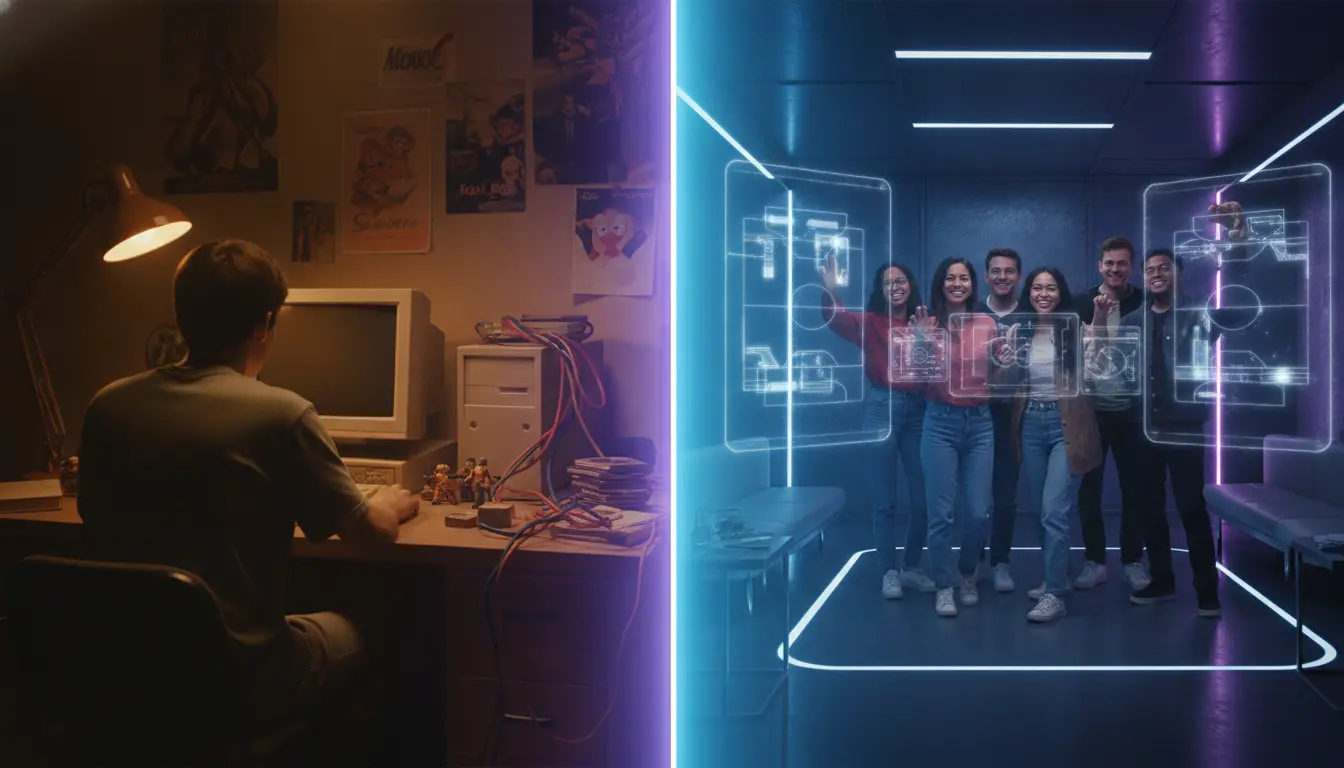
Recognizing the limitations of rented audiences on third-party social networks, major sports leagues, entertainment franchises, and media companies have launched purpose-built digital destinations. These modern web portals combine the archival depth of early forums with the production value of modern broadcast media.
Today’s digital properties integrate live statistics, interactive data visualizations, video libraries, prediction games, and real-time social layers. A supporter visiting a major football club’s web portal can simultaneously explore a 3D tactical breakdown of a recent match, participate in a live in-game prediction challenge, and debate match outcomes in an official chat module—all without navigating away from the ecosystem.
Supporting Context & Metrics: The Economics of Attention
The shift toward owned digital ecosystems is not merely aesthetic; it is driven by hard economic realities. In the attention economy, engagement duration correlates directly with monetization potential, brand loyalty, and merchandising sales.
- The Fragmentation Penalty: Studies tracking digital consumer behavior indicate that while social media networks generate high initial impression volumes, user retention on branded, owned properties is up to 300% higher over a 12-month lifecycle compared to passive social media followership.
- The Rise of Interactive Layers: Platforms integrating prediction markets, fantasy gaming layers, and gamified polling report a significant increase in session duration. Fans who actively participate in real-time prediction challenges during live events spend an average of 2.4 times longer on the host platform than those merely consuming static text or video feeds.
- Demographic Shifts: Digital native generations (Gen Z and Generation Alpha) exhibit markedly different consumption patterns than preceding cohorts. According to digital media analysts, over 75% of younger sports and entertainment fans consume primary events alongside secondary digital inputs—such as live-streamed creator reactions, real-time statistical overlays, and Discord community chats.
[Consumption Patterns: Gen Z / Gen Alpha]
├── 75%+ Dual-Screen Consumption (Primary Event + Secondary Digital Input)
├── High Demand for Creator-Led Commentary (YouTube/Substack)
└── Preference for Niche, Real-Time Community Hubs (Discord)
Independent creators operating on decentralized platforms like Substack, YouTube, and Discord have successfully captured the analytical depth of the 2000s forum era. They cater to niche audiences who value trusted, expert commentary over algorithmic noise, proving that modern fans actively seek out depth when given the tools to find it.
Official Statements and Industry Perspectives
Digital executives, sports franchise leaders, and media strategists have increasingly emphasized the necessity of transitioning from passive broadcasting to active ecosystem orchestration.
Elena Vance, Chief Digital Officer for a prominent European sports media conglomerate, noted during a recent industry keynote:
"For years, sports organizations treated their digital presence as a glorified digital bulletin board—a place to post scores, press releases, and highlight clips. That era is over. Today’s fan does not want to be talked at; they demand to participate. By integrating interactive gaming, real-time community layers, and personalized data feeds directly into our owned web portals, we are transforming passive spectators into active stakeholders in the club’s narrative."
Marcus Thorne, a digital anthropologist specializing in online subcultures, added:
"We are witnessing a pendulum swing. The mass-market, algorithm-driven social media explosion connected the entire world, but it hollowed out the soul of digital community spaces. People grew exhausted by the endless cycle of algorithmic outrage. What we see today—through the rise of private Discord servers, dedicated club portals, and creator-led media—is a deliberate retreat back into curated, high-trust environments where expertise and genuine community matter more than raw view counts."
Future Outlook: Where Fan Engagement is Heading
As emerging technologies mature, the line between spectating and participating will continue to blur. Several key trends are projected to define the next decade of digital fan engagement:
- Hyper-Personalization Without Intrusion: The most successful digital portals will utilize machine learning to tailor content delivery to individual user preferences—highlighting specific players, tactical formations, or historical contexts—while maintaining strict data privacy and giving users explicit control over their algorithmic feeds.
- Mainstream Integration of Interactive Gaming: Prediction markets, skill-based mini-games, and micro-wagering contexts will be natively woven into the live-viewing experience. Watching a match or a season finale will no longer be a purely linear television experience; it will function as an interactive, participatory event.
- The Decentralization of Authority: The democratization of broadcasting tools means official franchises will increasingly have to coexist with—and collaborate alongside—independent creator networks, fan-led syndicates, and decentralized autonomous fan collectives.
Ultimately, the evolution of digital fan engagement has come full circle. While the technology has progressed from clumsy text-based bulletin boards to lightning-fast, immersive web portals, the core human desire remains entirely unchanged: fans simply want to find their tribe, share their passion, and feel like their voices matter in the unfolding story of the culture they love.