Executive Overview
For millions of cinema-goers and television viewers across the globe, the name Dave Lawson may not immediately ring a bell. Yet, his artistry has woven itself into the very fabric of modern auditory culture. As a pioneering force in synthesizer programming, keyboard performance, and musical arrangement, Lawson shaped the sonic landscapes of some of the most iconic films and television broadcasts of the late 20th and early 21st centuries. From the haunting, extraterrestrial textures of The Man Who Fell to Earth and the cinematic majesty of Star Wars, Superman, and The Dark Crystal, to the gripping atmospheric tension of Mississippi Burning and the natural wonder of BBC’s The Blue Planet, Lawson’s prodigious output has left an enduring legacy.
Beyond his contributions to the silver screen, Lawson’s career is a testament to the versatility required of a top-tier British session musician and progressive rock pioneer. Emerging from the disciplined ranks of the Royal Air Force School of Music in the mid-1960s, Lawson transitioned through the thriving London jazz-rock scene—most notably with bands like Web and Greenslade—before becoming an indispensable collaborator for luminaries such as Roy Harper, Bill Wyman, and Chris Squire. Furthermore, as an early adopter and master of complex synthesizer systems like the Synclavier and various analog polyphonics, Lawson served as an informal mentor and technical advisor to a pantheon of artists including Mike Oldfield, Andy Summers, and Sting.
This comprehensive retrospective examines Lawson’s extraordinary trajectory: tracing his formative jazz education under the tutelage of Stan Tracey, his tenure within progressive rock’s most adventurous laboratories, his extensive contributions to the worlds of film soundtracks and commercial jingles, and his enduring, optimistic perspective as an octogenarian navigating the ebbs and flows of a legendary career.
Detailed Chronology
1. Formative Years and the Jazz Apprenticeship (1963–1969)
Dave Lawson’s musical journey began in earnest in 1963 when he enrolled in the RAF School of Music in Uxbridge to further the formal piano studies he had initiated during his school years. Tasked with selecting an instrument to play while marching, Lawson casually suggested the flute or the trumpet. Instead, he was handed a battered, thoroughly worn-out clarinet—an inauspicious beginning for a musician destined to master cutting-edge electronic keyboards.
Despite the unglamorous start, Lawson’s time in the RAF proved pivotal. Through his military service, he crossed paths with session trumpeter Freddie Staff, who was in the process of forming his own big band. Eager to expand his theoretical understanding beyond standard military arrangements, Lawson expressed a strong desire to learn more about jazz harmony and orchestration. Staff responded by connecting him with legendary jazz pianist Ronnie Scott, who promptly supplied the phone number of his house pianist, the incomparable Stan Tracey.
"I arranged to visit Stan for an hour’s lesson on chords, progressions and voicings," Lawson recalls. "I then stayed for some tea and accompanied Stan to Ronnie’s, where I sat enthralled for the first set before finding my way back to RAF Uxbridge. This exercise was repeated as long as the wages permitted. The lessons then progressed to Stan writing out one of his compositions, and it was then down to me to play it back to him. My regular visits continued until I was posted to Singapore."
This rigorous, hands-on apprenticeship with Tracey laid a formidable theoretical foundation, equipping Lawson with the advanced harmonic awareness that would later distinguish his work in both progressive rock and complex film scoring.
2. The Progressive Underground: Web and I Spider (1970)
Several years after concluding his service in the RAF—and sporting a noticeably longer hairstyle suited to the changing cultural tides of the late 1960s—Lawson joined Web (formerly known simply as The Web), a burgeoning outfit operating on the outer fringes of the British jazz-rock movement.
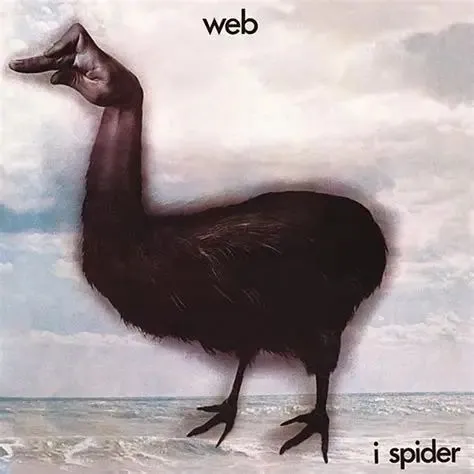
"It had an unusual line-up for a jazz-rock outfit—two drummers, one doubling on vibes and percussion," Lawson notes, describing the group’s unconventional configuration. "We also had a tenor saxophonist. I wrote our album I Spider [1970] and arranged the compositions; the band members were all ‘readers’."
Released in 1970, I Spider stands as an overlooked masterpiece of early British progressive music. While contemporary critics could occasionally detect structural nods to minimalists like Terry Riley or the avant-garde sensibilities of Soft Machine, the album possessed an entirely unique, fiercely original compositional identity. Lawson’s intricate arrangements and sophisticated keyboard work demanded absolute precision from his bandmates, resulting in a dense, rewarding listening experience that remains a cult favorite among collectors of progressive vinyl.
3. The Greenslade Era: A Twin-Keyboard Revolution (1972–1975)
In late 1972, Lawson was approached by keyboardist Dave Greenslade, fresh off his tenure with the influential progressive band Colosseum. Greenslade had conceived a daring, unconventional concept for a new ensemble: a band featuring two keyboard players anchored by a rhythm section, but entirely devoid of a traditional lead guitar.
"It was Dave’s idea to form a band with two keyboard players but without a guitar," Lawson explains. "Our different styles were complementary, the vast array of tonal colours expressive enough, and with Tony Reeves [formerly Colosseum] on bass and Andrew McCulloch [formerly King Crimson] on drums, it was to prove a fruitful union."
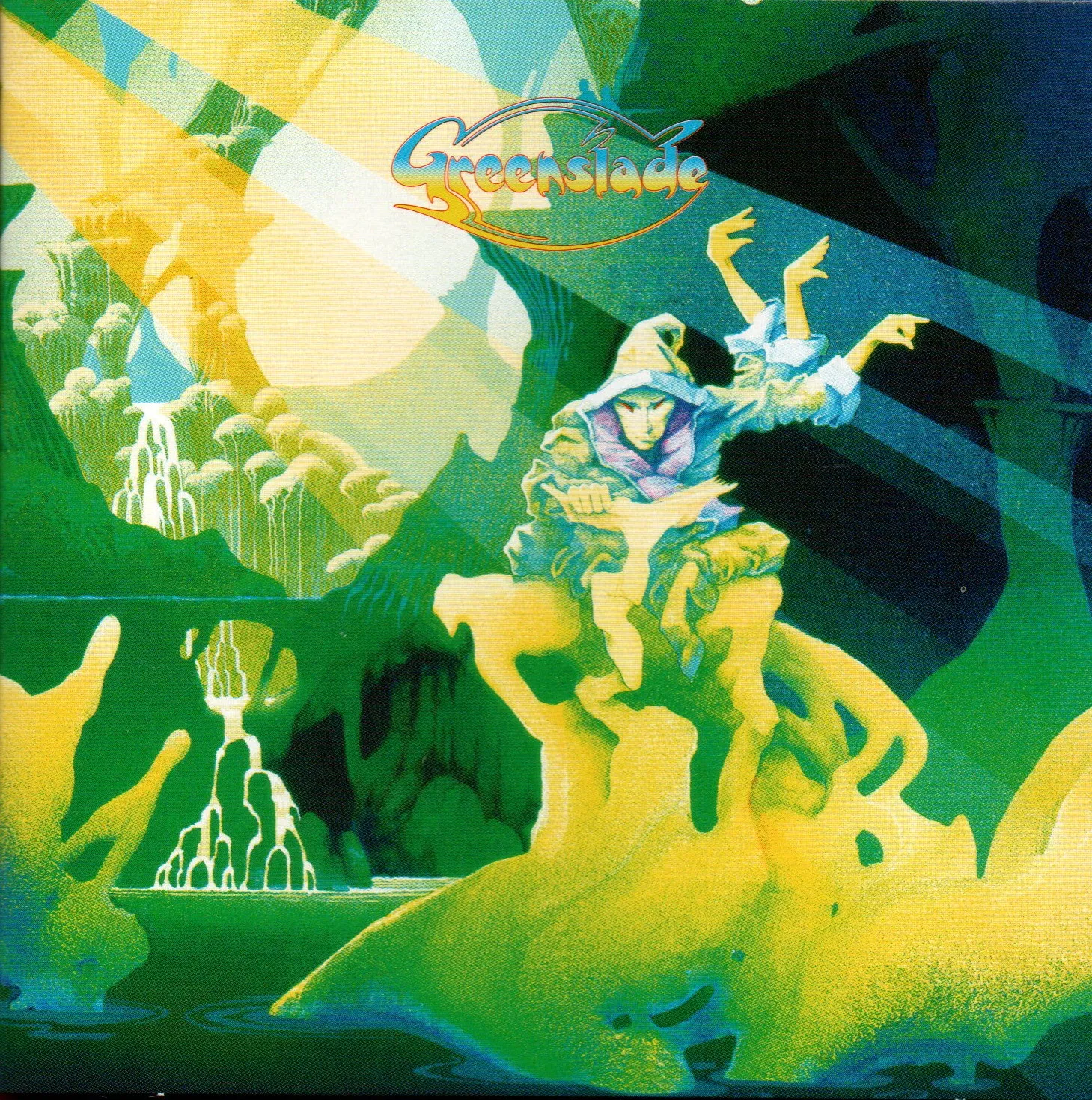
Operating simply under the moniker Greenslade, the quartet carved out a distinctive niche within the crowded 1970s rock landscape. Their intricate interplay of acoustic and electric pianos, organs, and early synthesizers generated a rich tapestry of sound that captivated audiences. During their initial run, the band recorded four critically acclaimed and commercially successful albums:
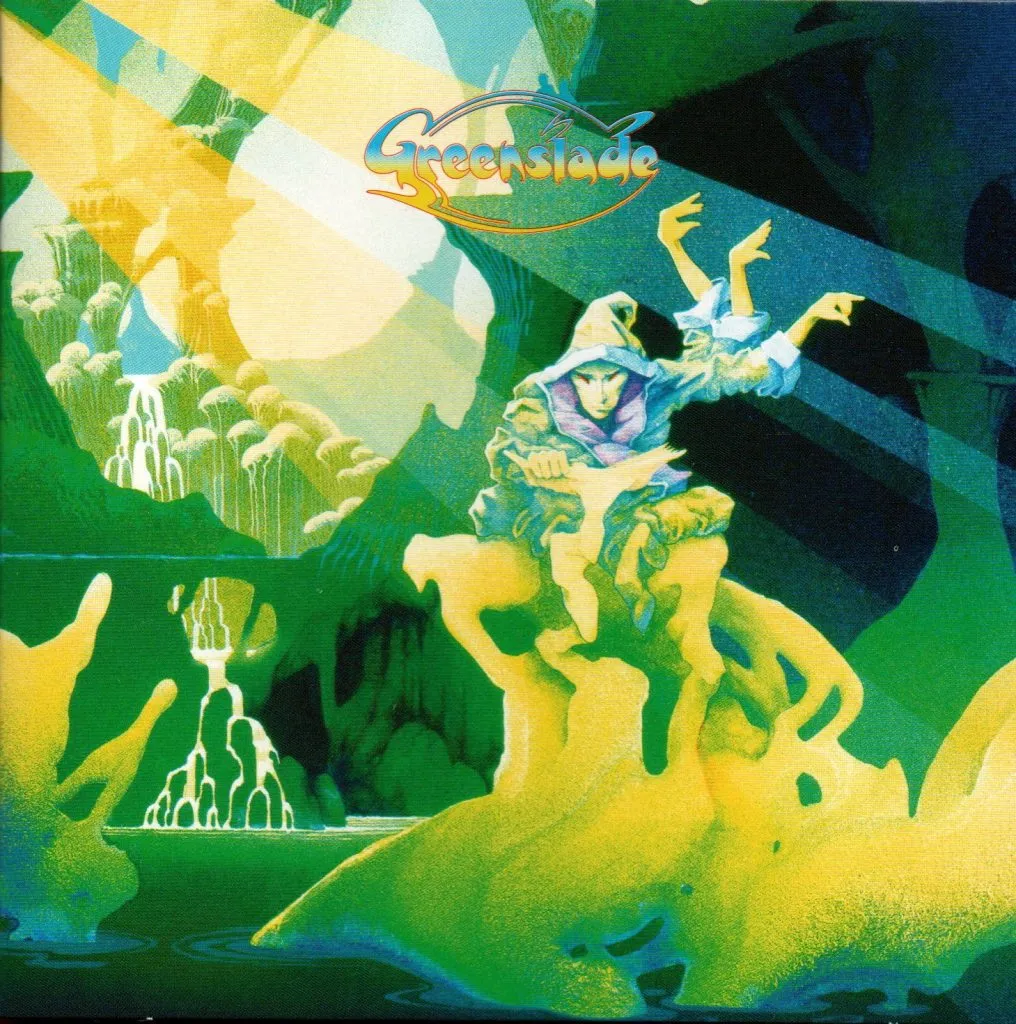
- Greenslade (1973)
- Bedside Manners Are Extra (1973)
- Spyglass Guest (1974)
- Time And Tide (1975)
Despite a burgeoning following and steady artistic growth, internal frustrations and unsympathetic management eventually took their toll, leading to the band’s amicable dissolution in 1975. However, their pioneering approach to guitar-less, keyboard-driven rock continues to be celebrated by genre historians.
4. Session Work, Roy Harper, and Stackridge (1976–1981)
Following the breakup of Greenslade, Lawson spent a brief period moving through various musical lineups before making the strategic decision to establish himself as a freelance session musician. Navigating the competitive London session scene required immense adaptability, but Lawson quickly found steady employment, facilitated in part by guitarist Andy Roberts of the Liverpool Scene.
Through Roberts, Lawson was introduced to the uncompromising British folk-rock icon Roy Harper. Hired to contribute to Harper’s 1977 album Bullinamingvase, Lawson brought an arsenal of state-of-the-art electronic instrumentation to the studio.
"For the album, I used my stable of synths: my trusty Moog Polymoog, a Sequential Circuits Prophet 5, a Micromoog and a Roland synth," Lawson details.
The backing band for Harper’s subsequent promotional tour was a powerhouse ensemble comprising Roberts, guitarist Henry McCulloch, drummer John Halsey, and bassist Dave Cochran. Life on the road with Harper was notoriously unpredictable, marked by intense creative energy and idiosyncratic showmanship.
"There was hardly ever a dull moment, the humour was explosive, but the energy levels were at full throttle," Lawson recalls. "Roy is a one-off, yes, he is controversial. I remember a gig where he stopped playing to argue a point with a member of the audience. He’s a passionate guy, 100 per cent in what he does and what he believes in. He has a caustic wit but a massive heart."
Following his stint with Harper, Lawson was invited to join the inventive art-rock collective Stackridge for the recording of their ambitious 1976 concept album, Mr Mick.
"This I did with great pleasure; they were an excellent bunch of guys," Lawson reflects. "There was a great atmosphere on the sessions I attended, and I still have great memories of working with them."
5. The Phantom Supergroup: XYZ and Bill Wyman (1981)
At the dawn of the 1980s, Lawson found himself on the periphery of one of rock music’s most tantalizing "what-if" scenarios. He was invited to collaborate with XYZ (ex-Yes members Chris Squire and Alan White, alongside legendary guitarist Jimmy Page). The newly formed supergroup recorded an evocative Christmas single titled "Run With The Fox" in 1981. At various points, fueled by Lawson’s growing network within the film and recording industries, the trio came tantalizingly close to permanently cementing Page as their full-time guitarist.
"XYZ—the supergroup that never saw the light of day, I’m sorry to say," Lawson notes wistfully.
Around the same period, Lawson’s path crossed with Rolling Stones bassist Bill Wyman during scoring sessions for the cinematic thriller Green Ice (1981). The collaboration sparked a lasting professional and personal rapport founded on a shared appreciation for dry British humor. The partnership extended well beyond the cinema screen when Wyman enlisted Lawson to contribute to his self-titled solo album. The record yielded chart success and spawned two hit singles, most notably the infectious "(Si Si) Je Suis Un Rock Star" (1982).
6. Soundtracks, Commercial Jingles, and Technical Leadership
While maintaining a robust profile in rock and pop circles, Lawson quietly built a towering empire in the fields of commercial advertising and cinematic scoring. His sonic fingerprints can be heard behind some of the most ubiquitous television commercials of the era, crafting memorable jingles for household brands such as Coco Pops, British Gas, Foster Grant, Texaco, and Lee Cooper.
Simultaneously, his mastery of complex electronic instrumentation positioned him as an indispensable asset for film composers tackling major Hollywood productions. His synthesizer programming and performance work enriched the scores of films such as:
- The Man Who Fell to Earth (1976)
- Star Wars (1977)
- Superman (1978)
- The Dark Crystal (1982)
- Angel Heart (1987)
- Mississippi Burning (1988)
- Clockwise (1986)
- Groundhog Day (1993)
- Multiplicity (1996)
- You’ve Got Mail (1998)
- The Blue Planet (2001)
Having amassed one of the most extensive collections of pioneering synthesizer systems—including elite New England Digital Synclaviers and rare analog polysynths—Lawson became an influential technical consultant for his peers. Major artists frequently sought his counsel on gear integration, patch design, and studio workflow, with Lawson directly advising luminaries such as Alan Hawkshaw, Mike Oldfield, Andy Summers, and Sting.
7. The Blue Planet and Landmark Natural History Scoring (2001)
Among his extensive list of credits, few undertakings rivaled the sheer scale of the BBC’s groundbreaking 2001 marine documentary series, The Blue Planet.
"This was a massive undertaking," Lawson admits, reflecting on the project. "The footage was, at the time, cutting edge; we tried and succeeded as far as I’m concerned with a sympathetic, tailored score married to the superb camera work and sublime narration from the master, Sir David Attenborough."
The resulting score successfully mirrored the awe, mystery, and terrifying scale of the world’s oceans, demonstrating Lawson’s ability to use electronic textures to evoke organic, emotional depth.
Supporting Context & Metrics
To fully appreciate the scope of Dave Lawson’s contributions, it is helpful to examine the quantifiable impact of his career across various sectors of the entertainment industry:
- Cinematic Reach: Lawson’s synthesizer programming and performance work have contributed to over 20 major feature films spanning four decades, accumulating multiple Academy Award and BAFTA-nominated scores within their respective credits.
- Discography: Across his work with Web, Greenslade, Roy Harper, Bill Wyman, and various collaborative projects, Lawson’s studio output spans over 15 full-length studio albums and numerous high-profile singles.
- Commercial Dominance: During the peak era of television advertising in the 1980s and 1990s, Lawson composed and arranged music for dozens of national and international commercial campaigns, helping define the sonic branding of multinational corporations.
- Equipment Mastery: As an early owner of the ultra-exclusive New England Digital Synclavier, Lawson was among an elite handful of British musicians capable of bridging the gap between traditional orchestral arranging and advanced digital sampling/synthesis.
Official Statements
Throughout his career, Lawson has remained remarkably candid about the realities of the music industry—balancing artistic idealism with pragmatic humor. Reflecting on his decades in the trenches of session work and collaborative bands, Lawson emphasizes resilience above all else:
"If I didn’t see the lighter side of our situation, I would be a nervous wreck. Everything will pan out, fingers crossed."
His reflections on eccentric collaborators like Roy Harper further underscore a deep respect for authentic artistic passion, even when it manifests in turbulent or controversial ways:
"Roy is a one-off, yes, he is controversial… He’s a passionate guy, 100 per cent in what he does and what he believes in. He has a caustic wit but a massive heart."
Future Outlook
Today, Dave Lawson is an octogenarian whose health challenges in recent years have inevitably constrained his ability to undertake rigorous, full-time studio schedules. Yet, his creative spirit remains remarkably intact, and he continues to accept the occasional select commission that captures his imagination.
The broader cultural appreciation for Lawson’s body of work is currently experiencing a well-deserved renaissance. With archival releases such as Esoteric Recordings’ comprehensive box set, Greenslade – Temple Songs – The Albums 1973-1975, a new generation of progressive rock enthusiasts and synthesizer historians are rediscovering the dazzling complexity and warmth of his early work.
While the music industry can often be a precarious, unforgiving landscape that threatens to overshadow past triumphs with modern uncertainty, Dave Lawson remains an eternal optimist. His contributions—stitched into the sonic DNA of blockbuster cinema, pioneering jazz-rock, and ambient television masterworks—ensure that his electronic footprint will resonate for generations to come.