Executive Overview
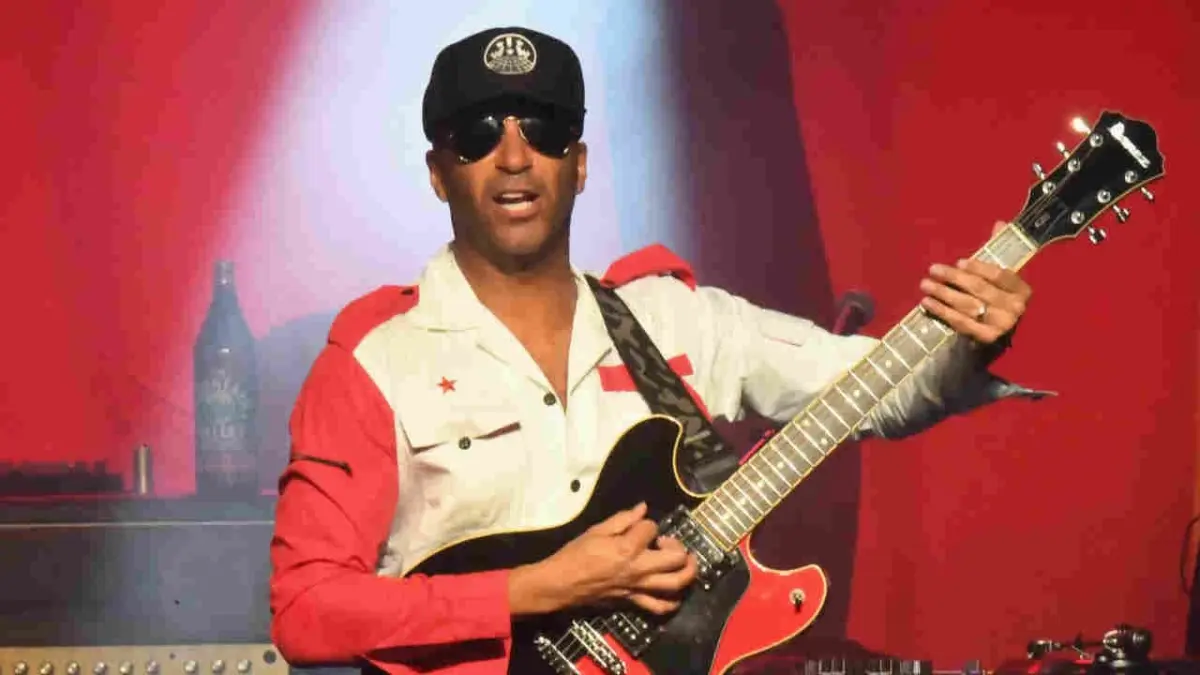
In an extensive and introspective discussion with Classic Rock magazine, Rage Against The Machine co-founder and sonic innovator Tom Morello has pulled back the curtain on the unexpected influences and pivotal moments that shaped his artistic journey. Central to his revelations is an unexpected chapter from his undergraduate years at Harvard University during the mid-1980s, where he routinely frequented Boston’s underground heavy metal scene and found early inspiration in a young teenage prodigy named Nuno Bettencourt—years before Bettencourt achieved international stardom with the multi-platinum hard rock group Extreme.
Beyond exploring his connection to Bettencourt, Morello detailed his personal role in preserving the legacy of another guitar titan: Randy Rhoads. Having served as a key advocate in securing Rhoads’ posthumous induction into the Rock and Roll Hall of Fame, Morello granted unprecedented insight into his rare encounter with Rhoads’ heavily guarded historical instruments. The account offers a rare look at the tight-knit respect among elite guitarists and highlights how early experiences, peer admiration, and archival preservation shape the history of rock music.
Detailed Chronology
[1985–1986] ------------------> [1990] ----------------------> [1999] ----------------------> [Recent Years]
Morello discovers               Extreme releases               RATM 'Battle of Los Angeles'   Morello advocates for
Nuno Bettencourt at             'Pornograffitti';              tour; Morello and              Randy Rhoads' Rock Hall
Boston metal nights             "More Than Words" hits #1      Bettencourt meet in Boston     induction & touches his guitar
1. The Harvard Years and the Boston Club Scene (1985–1986)
While pursuing his academic studies at Harvard University in the mid-1980s, Tom Morello immersed himself in the local music culture of Massachusetts. Every Wednesday night, Morello made a pilgrimage to a downtown Boston club hosting dedicated heavy metal showcases. It was within this local club circuit that Morello first encountered Extreme, a rising local act driven by a teenage guitar prodigy.
Bettencourt, then just 16 or 17 years old, displayed a combination of technical command, rhythm, and bravado that stunned the future Rage Against The Machine guitarist. Morello recognized that despite his youth, Bettencourt was already operating at an elite level, solidifying him as an early hero and point of inspiration during Morello’s formative years as a musician.
2. Parallel Ascents and Commercial Breakthroughs (1987–1990s)
Following those early Boston performances, both musicians embarked on distinct paths that shaped late-20th-century rock music:
- Extreme’s Rise: Signed to a major record label, Extreme skyrocketed to global prominence with their landmark 1990 release, Pornograffitti. Driven by Bettencourt’s complex guitar work and the chart-topping acoustic hit "More Than Words," which reached No. 1 on the US Billboard charts, Bettencourt became widely recognized as one of the definitive guitarists of his era.
- Morello’s Redefinition of Hard Rock: Simultaneously, Morello relocated to Los Angeles, eventually founding Rage Against The Machine in 1991. Blending heavy metal riffs, hip-hop rhythmics, and radical political commentary, Morello forged a completely unique sonic identity, transforming the electric guitar into a vessel for turntable-like scratching, feedback manipulation, and explosive funk-metal grooves.
3. The Full-Circle Encounter: Boston (1999)
Fourteen years after first watching Bettencourt play in small Boston venues, Morello returned to the city in 1999 as an arena-headlining icon during Rage Against The Machine’s The Battle Of Los Angeles tour.
Prior to the performance, Morello reviewed the backstage guest list and noticed Nuno Bettencourt’s name among the scheduled attendees. Requesting an immediate meeting, Morello finally met the guitarist who had inspired him during his Harvard days. When Bettencourt commended Rage Against The Machine’s performance, Morello revealed his long-standing fandom, tracing his admiration back to the local Boston metal nights of 1985. This backstage meeting laid the foundation for an enduring personal and professional friendship between the two guitarists.
4. Advocating for Randy Rhoads and Access to the Vault (Post-2020)
In addition to his connection with Bettencourt, Morello reflected on his work championing the legacy of Randy Rhoads, the legendary guitarist for Ozzy Osbourne and Quiet Riot who tragically died in a 1982 plane crash at the age of 25.
Morello played a instrumental role in advocating for Rhoads’ eventual induction into the Rock and Roll Hall of Fame. Through this effort, he built a relationship with Rhoads’ surviving family, who maintain strict, protective control over his musical artifacts inside a private, undisclosed vault.
Though initially denied permission to view Rhoads’ instruments, Morello was later contacted by Rhoads’ sister while the primary guitar was briefly at her residence following a museum display at the Rock and Roll Hall of Fame. Morello was granted a rare opportunity to hold the instrument—a deeply moving moment made even more tangible by the fact that Rhoads’ leather strap still retained the smell of cigarette smoke from 1982.
Supporting Context & Historical Analysis
+-----------------------------------------------------------------------------------+
|                        CROSS-GENERATIONAL INFLUENCE MATRIX                        |
+-----------------------------------------------------------------------------------+
|  INSPIRATION SOURCE      INTERMEDIARY CHAMPION          CULMINATING IMPACT        |
|  ------------------      ---------------------          ------------------        |
|  Randy Rhoads         -> Tom Morello                 -> Posthumous Rock Hall      |
|  (Neoclassical Heavy)    (Advocate & Preserver)         Induction & Legacy        |
|                                                                                   |
|  Nuno Bettencourt     -> Tom Morello                 -> Lasting Peer Partnership  |
|  (Funk-Metal/Shred)      (Harvard Student Fan)          & Cross-Genre Respect     |
+-----------------------------------------------------------------------------------+
The Mid-1980s Boston Metal Ecosystem
The revelation of Morello’s early admiration for Bettencourt provides valuable context for the evolution of American hard rock in the mid-1980s. Before alternative rock redefined mainstream radio in the early 1990s, regional club circuits like Boston’s served as incubators for technical virtuosity.
Bettencourt’s style—characterized by intricate percussive rhythm work, fluid alternate picking, and funk-influenced phrasing—represented a new evolution in hair metal and hard rock. That Morello, an Ivy League student analyzing music theory and social structures, absorbed these performances highlights how raw live skill transcends genre boundaries.
Archival Preservation and Sacred Relics in Rock History
Morello’s encounter with Randy Rhoads’ guitar illustrates the delicate balance between public historical preservation and private family stewardship. In rock history, instruments often become sacred artifacts representing an artist’s enduring spirit.
- Family Guardianship: The Rhoads family’s choice to keep Randy’s instruments in a secret, climate-controlled vault stems from a desire to preserve his artistic legacy and protect his gear from commercialization.
- Sensory Connection to History: Morello’s observation that the leather strap still smelled of cigarette smoke decades later emphasizes the human, personal side of music history. It serves as a reminder that behind iconic recordings are real moments, preserved in the physical items left behind.
Official Statements & Key Quotes
In his interview with Classic Rock, Tom Morello offered detailed accounts of his early encounters with Bettencourt’s playing and his later experience holding Randy Rhoads’ guitar.
On Discovering Nuno Bettencourt in Boston:
"When I was at Harvard University, on Wednesday nights there was a metal night at a club in downtown Boston. Our favourite band was called Extreme, which featured, at the time, a 16 or 17-year-old-guitar wunderkind, Nuno Bettencourt."
"I remember thinking: ‘This is one of the best guitar players in the world, and he’s a high-school kid.’ I couldn’t believe it. He was one of my guitar heroes. This would’ve been 1985, 1986."
On Reconnecting with Bettencourt in 1999:
"Cut to 1999, and it’s the Rage Against The Machine Battle Of Los Angeles tour. We’re playing in Boston, and there’s a meet-and-greet thing. I’m looking at the names of who’s on the list, and the name Nuno Bettencourt is there. I’m like: ‘Make sure I see that guy.’"
"So Nuno comes up to me and says: ‘Great show.’ I was like: ‘Dude, you have no idea. I’ve been a fan of yours for fifteen years.’ And since that day we’ve been great friends."
On the Legacy and Sacred Artifacts of Randy Rhoads:
"I was instrumental in getting Randy Rhoads into the Rock And Roll Hall of Fame. His sister, who’s lovely, is very protective of all the stuff. It’s sealed away somewhere in a secret vault and no one knows where it is. I’d asked her if I could see it, and she said: ‘Nobody sees it.’ You gotta respect that."
"Cut to about a year later, and she texts me saying the guitar is at her house that afternoon, on its way back from the Rock And Roll Hall Of Fame, and now would I like to go see it? His mom didn’t want anyone else to ever play it again, but I got to hold it. That was pretty emotional for me."
"The crazy thing was that the leather guitar strap still smelled of cigarette smoke. He was performing up until the day he died, so that strap had smoke from 1982 left in it."
Future Outlook & Legacy Implications
Tom Morello’s reflections shed light on how artistic influence, mentorship, and historical advocacy shape the world of rock music. His stories offer several key insights for the future of the genre:
- The Evolution of Guitar Identity: Morello’s deep appreciation for technical players like Bettencourt and Rhoads reveals that even revolutionary musicians who pioneer new sounds draw inspiration from classical technique and shred guitar traditions.
- Preserving Rock History: As early rock icons pass away, the task of managing their physical legacies falls to dedicated families and advocacy groups. Morello’s work with the Rhoads estate sets a powerful example of how contemporary musicians can honor and protect the contributions of past legends.
- Enduring Musical Friendships: The story of Morello and Bettencourt shows how mutual respect between artists from different musical backgrounds can build lasting personal bonds and foster cross-genre collaboration.
As Morello continues his active role as both a performer and an advocate for rock history, his stories remind us that behind every iconic artist is a foundation of fandom, reverence for the past, and an enduring respect for the craft.