Executive Overview
In late August 1991, the rock music landscape underwent a seismic shift. Amid a wave of release activity that included Nirvana’s Nevermind, Soundgarden’s Badmotorfinger, and Alice in Chains’ Facelift, a newly formed Seattle outfit called Pearl Jam unleashed their debut studio album, Ten. Released via Epic Records on August 27, 1991, Ten did not achieve instant commercial dominance; instead, it embarked on a slow, relentless burn that eventually propelled it to the upper echelons of rock history. Certified Diamond by the Recording Industry Association of America (RIAA) for sales exceeding 13 million units in the United States alone, the album established Pearl Jam as one of the defining bands of the alternative rock era.
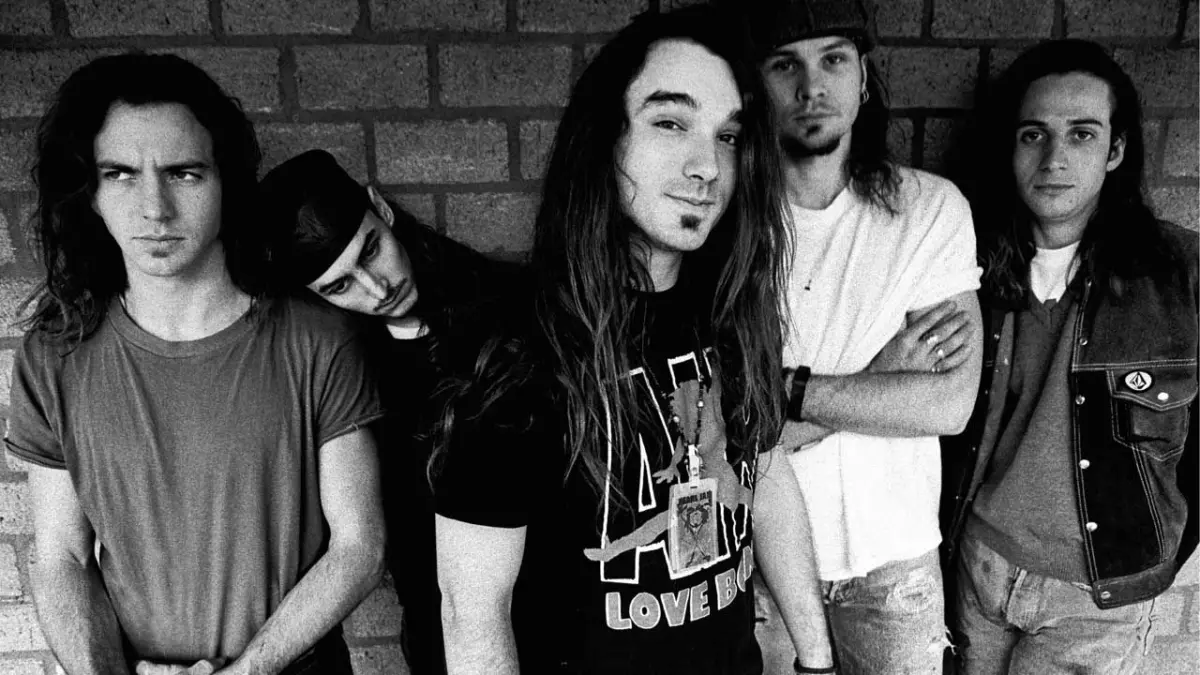
Driven by the heavy, groove-laden riffage of guitarist Stone Gossard, the fiery lead work of Mike McCready, the fluid basslines of Jeff Ament, the driving rhythm of drummer Dave Krusen, and the uninhibited vocal intensity of frontman Eddie Vedder, Ten bridged classic 1970s arena rock dynamics with the emotional weight of grunge. Decades after its release, Ten remains a benchmark for debut albums. This comprehensive analysis re-examines the historical context, recording lineage, commercial metrics, and definitive track-by-track ranking of Pearl Jam’s landmark release.
Detailed Chronology: From Tragic Ashes to London Bridge Studio
The story of Ten is rooted in tragedy, rebirth, and serendipity. Following the fatal heroin overdose of Mother Love Bone frontman Andrew Wood in March 1990, rhythm guitarist Stone Gossard and bassist Jeff Ament found themselves at a crossroads. Seeking to rebuild, they began jamming with Seattle lead guitarist Mike McCready. The trio recorded a five-track instrumental demo tape dubbed Stone Gossard Demos ’90, aiming to recruit a lead singer and a permanent drummer.
       [ Mother Love Bone ]
   (Andrew Wood passes away, 1990)
                 │
                 ▼
     [ Gossard, Ament & McCready ]
       (Form instrumental core)
                 │
                 ▼
      [ "Momma-Son" Demo Tape ]
  (Passed via Jack Irons to Eddie Vedder)
                 │
                 ▼
    [ London Bridge Studios Sessions ]
      (March–April 1991, Seattle)
                 │
                 ▼
    [ "Ten" Released: August 27, 1991 ]
Through former Red Hot Chili Peppers drummer Jack Irons, the tape made its way to San Diego, California, into the hands of a 25-year-old gas station attendant and surfer named Eddie Vedder. Inspired by the instrumental tracks, Vedder recorded vocals and lyrics for three of the songs—forming a dark mini-opera later known as the "Momma-Son" trilogy (Alive, Once, and Footsteps). Vedder mailed the tape back to Seattle; impressed by his baritone delivery and poetic lyricism, the band flew him to Seattle for auditions in October 1990. Within days, the foundation of Pearl Jam (initially named Mookie Blaylock) was locked in place.
In March 1991, the band entered London Bridge Studios in Seattle with producer Rick Parashar. Over six weeks of recording sessions, the group laid down the 11 tracks that would comprise Ten. While the Seattle music scene was heavily influenced by punk aesthetics, Pearl Jam brought a classic rock sensibility to the studio, drawing inspiration from Led Zeppelin, The Who, Neil Young, and Jimi Hendrix.
Following the recording, mixing duties were handed to British engineer Tim Palmer at Ridge Farm Studios in Dorking, England. Palmer introduced subtle atmospheric touches, including the ambient instrumental piece Master/Slave, which framed the start and end of the record.
Definitive Track-by-Track Analysis & Ranking
While Ten stands as a cohesive artistic statement, evaluating its 11 tracks reveals the dynamic range of a young band balancing raw hostility with anthemic songwriting. Below is the definitive ranking of every track on Ten, evaluated from least essential to the album’s definitive masterpiece.
+-----------------------------------------------------------------+
|                    "TEN" TRACK RANKING                          |
+----+-----------------------+------------------------------------+
| #  | Track Title           | Primary Key/Signature Element      |
+----+-----------------------+------------------------------------+
| 11 | Deep                  | Heavy Wah-Groove / Dark Lyricism   |
| 10 | Porch                 | High-Tempo Hard Rock / Live Jam    |
| 9  | Garden                | Eerie Arpeggios / Shamanic Vocal   |
| 8  | Release               | Shimmering Drone / Emotional Finale|
| 7  | Why Go                | 12-String Bass Drive / Dynamic Fury|
| 6  | Oceans                | Open-D Tuning / Marine Atmospheric |
| 5  | Alive                 | Iconic Riffage / Classic Guitar Solo|
| 4  | Even Flow             | Funk-Grunge Groove / Social Critique|
| 3  | Jeremy                | 12-String Bass Intro / Narrative   |
| 2  | Black                 | Heartbreak Balladry / Emotional Peak|
| 1  | Once                  | Aggressive Opener / Vocal Force    |
+----+-----------------------+------------------------------------+
11. Deep
- Composers: Eddie Vedder, Stone Gossard, Jeff Ament
- Key Musical Elements: Wah-drenched guitar motifs, drop-tuned riffing, heavy rhythm section.
Functioning as a gritty exploration of urban despair and addiction, Deep features a wah-pedal motif from McCready and a pummelling rhythm section laid down by Ament and Krusen. Vedder delivers a vocal performance that matches the track’s bleak subject matter. While musically competent, on an album filled with generational anthems, Deep serves primarily as a heavy album cut, lacking the distinct melodic payoff found elsewhere on the record.
10. Porch
- Composers: Eddie Vedder
- Key Musical Elements: Fast punk-edged tempo, extended instrumental midsection.
Penned entirely by Vedder, Porch is a high-velocity, two-chord rocker that captures the band’s live energy. During the 1991–1993 Ten tour cycle, Porch served as the climax of Pearl Jam’s stage shows, routinely extended into ten-minute jams while Vedder climbed stage rigging and dived into festival crowds. On record, however, the track feels relatively straightforward compared to its expansive live renditions.
9. Garden
- Composers: Eddie Vedder, Stone Gossard, Jeff Ament
- Key Musical Elements: Arpeggiated clean guitars, dark basslines, swelling chorus.
Built around a clean, minor-key intro riff that became a staple for guitarists in the early 1990s, Garden showcases Pearl Jam’s ability to manipulate dynamic tension. The song moves from quiet verses into a sweeping, dark chorus powered by Vedder’s baritone vocals. The track’s moody arrangement underscores the influence of Seattle’s gothic grunge aesthetic.
8. Release
- Composers: Eddie Vedder, Stone Gossard, Jeff Ament, Mike McCready, Dave Krusen
- Key Musical Elements: Open-tuning guitar drones, slow-burn crescendo, cathartic vocal improvisation.
Born out of an improvised jam at the band’s rehearsal space, Release stands as one of the most emotionally charged closers in alternative rock history. Built upon Stone Gossard’s shimmering, drone-like guitar figure, the track allows Vedder to address the ghost of his biological father, whom he never truly knew. The song gradually builds to an intense vocal climax, providing a fitting conclusion to the album’s turbulence before fading into the ambient Master/Slave reprised loop.
7. Why Go
- Composers: Eddie Vedder, Jeff Ament
- Key Musical Elements: 12-string bass drive, aggressive rhythm guitar, indignant vocal delivery.
Positioned between the album’s colossal singles, Why Go delivers high-velocity social commentary. Inspired by a true story of a young girl institutionalized by her parents for minor rebellion, the track is propelled by Jeff Ament’s custom Hamer 12-string bass tone. McCready’s fiery guitar fills and Vedder’s raw vocal delivery make Why Go a fan favourite that has retained its energy over decades of live performances.
6. Oceans
- Composers: Eddie Vedder, Stone Gossard, Jeff Ament
- Key Musical Elements: Open-D tuning, acoustic textures, rhythmic percussion.
A deviation from the hard-rock heavy instrumentation of the rest of the album, Oceans highlights Pearl Jam’s subtlety. Built around an open-D acoustic tuning from Gossard—who noted the track was constructed using simple two-finger chord movements—the song mimics the ebb and flow of ocean waves. Vedder’s vocal performance utilizes soaring falsettos and layered harmonies. Ament later remarked that inclusion of Oceans was vital to establish that the band possessed the musical width to explore non-traditional rock territory on future records.
5. Alive
- Composers: Eddie Vedder, Stone Gossard
- Key Musical Elements: Stadium-sized main riff, autobiographical narrative, Kiss-inspired guitar solo.
The single that introduced Pearl Jam to the world, Alive remains one of rock music’s most recognizable tracks. Based on Gossard’s demo titled Dollar Short, the song features an autobiographical lyric from Vedder detailing the revelation that the man he believed was his father was actually his stepfather. Musically, the song builds to a blues-rock climax featured in Mike McCready’s sprawling guitar solo—a lead section McCready openly credited as being inspired by Ace Frehley’s solo on KISS’s She, framed through a Jimi Hendrix-style wah-wah execution.
4. Even Flow
- Composers: Eddie Vedder, Stone Gossard
- Key Musical Elements: Synchronized funk-grunge groove, prominent chorus hook, empathetic lyrics.
Anchored by Stone Gossard’s syncopated main riff, Even Flow balances heavy rock dynamics with a funk-infused groove. Lyrically, Vedder offers an empathetic portrait of an illiterate homeless man navigating urban isolation. Despite its commercial success, the band struggled to capture their preferred performance of the song in the studio, reportedly executing dozens of takes during the Ten sessions. The final album track features Dave Krusen’s tight drumming and McCready’s classic lead work, solidifying its place as a staple of 90s rock radio.
3. Jeremy
- Composers: Eddie Vedder, Jeff Ament
- Key Musical Elements: Chime harmonic 12-string bass intro, narrative arc, dramatic vocal scale.
Inspired by the tragic news story of Jeremy Wade Delle—a 16-year-old high school student from Richardson, Texas, who took his own life in front of his English class in January 1991—Jeremy is a masterpiece of narrative songwriting. Jeff Ament opened the track using a 12-string bass, creating a distinctive harmonic intro that gives way to a driven, complex rhythm section. Vedder’s vocal delivery ranges from quiet verse storytelling to an intense chorus outburst. Accompanied by a controversial, award-winning music video directed by Mark Pellington, Jeremy pushed Pearl Jam into international stardom.
2. Black
- Composers: Eddie Vedder, Stone Gossard
- Key Musical Elements: Soulful electric piano/guitar arpeggios, dynamic crescendo, emotional vocal breakdown.
Black is one of alternative rock’s quintessential heartbreak ballads. Tracing the pain of lost love and fading youth, the song transitions from delicate verse instrumentation into a raw, stadium-filling chorus. Vedder’s vocal delivery reaches an iconic peak during the song’s outro:
"I know you’ll be a star in somebody else’s sky, but why can’t it be mine?"
Despite intense pressure from Epic Records to release Black as a commercial single and create an accompanying music video, Pearl Jam refused, seeking to protect the song’s intimate nature from over-commercialization. This decision helped cement its status as a timeless piece within the band’s catalog.
1. Once
- Composers: Eddie Vedder, Stone Gossard
- Key Musical Elements: Explosive dynamic transition, aggressive drop-rhythm, vocal characterization.
Following the quiet, ambient fade-in of Master/Slave, Once kicks off the album with unmatched intensity. Serving as the second chapter of Vedder’s "Momma-Son" trilogy, the track explores a protagonist’s descent into instability and violence. Stone Gossard’s heavy, syncopated riffage and Dave Krusen’s driving beat provide a powerful foundation for Vedder’s aggressive vocal delivery. As an album opener, Once established Pearl Jam’s identity right out of the gate: raw, musically tight, and emotionally uncompromising.
Supporting Context & Commercial Metrics
Upon its initial release in August 1991, Ten did not enter the charts at a high position. It took nearly a year of touring, word-of-mouth exposure, and heavy rotation of the Alive and Jeremy music videos on MTV for the album to break into the mainstream.

By late 1992, Ten had reached No. 2 on the US Billboard 200 chart, held off the top spot only by Billy Ray Cyrus’s Some Gave All.
+-----------------------------------------------------------------------+
|                       ALBUM METRICS & CERTIFICATIONS                  |
+----------------------------------+------------------------------------+
| Peak Chart Position (US Billboard)| No. 2 (1992)                       |
| RIAA Certification (US Sales)    | 13x Platinum / Diamond (13M+ units)|
| UK Chart Position                | No. 18 (BPI Gold certified)        |
| Total Weeks on Billboard 200     | 250+ Weeks                         |
| Primary Singles Released         | "Alive", "Even Flow", "Jeremy",    |
|                                  | "Oceans"                           |
+----------------------------------+------------------------------------+
Production Variations: The 2009 Ten Redux Remix
Over the years, members of Pearl Jam expressed minor reservations regarding Rick Parashar’s original 1991 mix, specifically the heavy use of digital reverb effects characteristic of early-90s production styles. In 2009, long-time Pearl Jam collaborator and producer Brendan O’Brien was brought in to remix the album for the Ten Super Deluxe Edition.
Titled Ten Redux, this version stripped away the heavy 1990s echo effects, bringing out a drier, punchier, and more direct sound that closer resembled the band’s live mix. Both mixes remain available, giving listeners a choice between the original 1991 production and the drier, modern alternative.
Official Statements & Band Perspectives
Reflecting on the album’s creation and its sudden success, the members of Pearl Jam have shared key insights into the record’s history:
-
Eddie Vedder on the emotional weight of Release and Ten‘s personal nature:
"With ‘Release,’ it was just a matter of saying things I hadn’t had the chance to say… I was addressing someone who wasn’t around anymore. Writing those songs was therapeutic; I didn’t know millions of people would end up eavesdropping on that process."
-
Jeff Ament on the band’s decision to refuse releasing Black as a single:
"The label was coming down hard on us to make ‘Black’ a single. We felt like that song was too personal. If we put a video to it and pushed it on pop radio, it would take away what that song meant to us and to the kids who were connecting with it."
-
Stone Gossard on the musical chemistry during the March 1991 sessions:
"When Ed came up to Seattle, everything moved incredibly fast. We went into London Bridge Studio with a lot of energy. We were coming off the loss of Andy [Wood], so there was a real drive to throw ourselves into music again."
Future Outlook & Enduring Legacy
More than three decades after its release, Ten stands as one of the defining albums of the 1990s. Its success helped alter the trajectory of commercial rock music, shifting mainstream radio away from 1980s hair metal toward more introspective, emotionally direct songwriting.
Tracks like Alive, Jeremy, and Even Flow remain staples on modern rock radio, while deep cuts like Black and Release serve as emotional highlights during Pearl Jam’s ongoing stadium tours. Ten did not just introduce a new band; it established an enduring musical foundation that enabled Pearl Jam to navigate decades of industry changes while retaining a dedicated international fanbase. Through its balance of hard-rock riffs and lyricism, Ten remains a benchmark for alternative rock.