Executive Overview
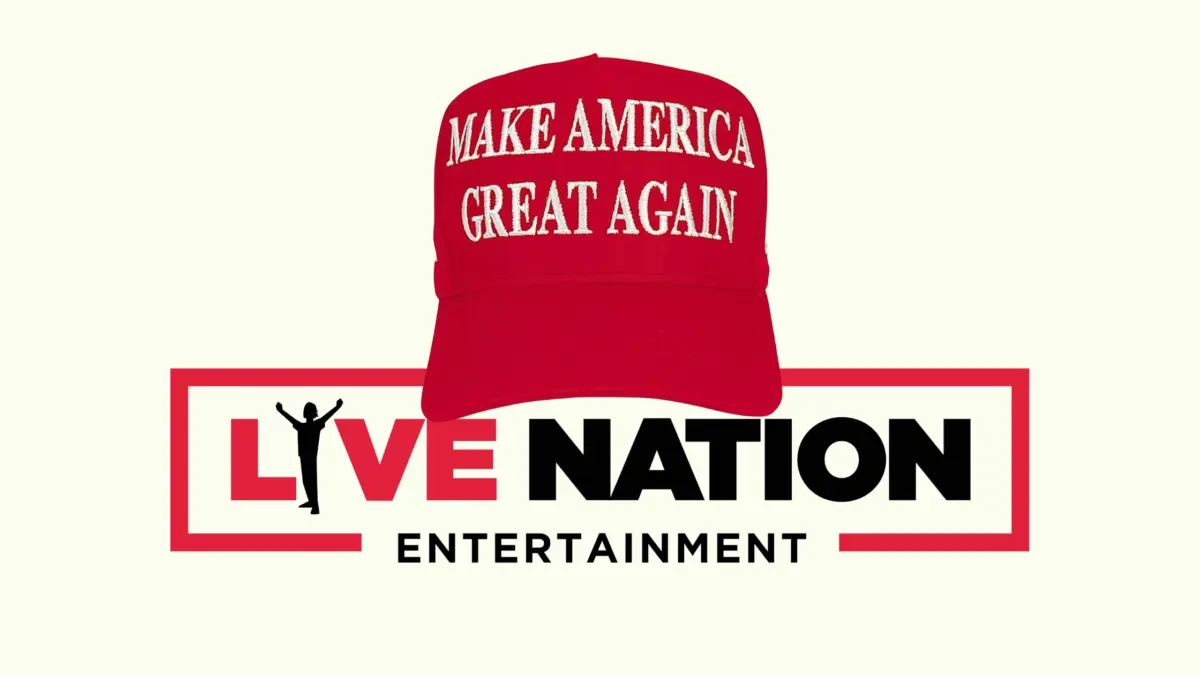
In the high-stakes theater of American antitrust enforcement, corporate lobbying has long been a formidable tool. However, the playbook deployed by live entertainment juggernaut Live Nation Entertainment and its subsidiary Ticketmaster during their recent federal legal battles has redefined the boundaries of political influence. A landmark investigative report published by The Wall Street Journal has blown the lid off an aggressive, multi-layered strategy that saw Live Nation bypass standard regulatory channels entirely, embedding itself within the personal and professional network of President Donald Trump to secure a favorable resolution to a monumental Department of Justice (DOJ) lawsuit.
At the heart of this controversy is an intricate web of political access, high-powered legal representation, and White House intervention. While the DOJ’s Antitrust Division was aggressively prosecuting a landmark case accusing Live Nation of maintaining an illegal monopoly in the live events sector, the company’s leadership was orchestrating a parallel campaign inside the West Wing. By recruiting seasoned attorneys and lobbyists with direct, personal ties to President Trump—including lawyers who had defended him in personal legal matters—Live Nation managed to secure an audience at the highest levels of government.
The strategy culminated in a March DOJ settlement that abruptly short-circuited a trial already underway. Crucially, the federal settlement allowed Live Nation to dodge the government’s most devastating demand: unwinding its 2010 merger with Ticketmaster. While Department of Justice officials privately condemned the political interference as "extreme," even by the standards of an administration known for blurring the lines between law enforcement and executive power, Live Nation’s leadership maintained that bypassing recalcitrant career prosecutors was a necessary maneuver.
Yet, the company’s political insulation has limits. A coalition of individual U.S. states refused to back down, pressing forward with their own parallel litigation to secure a landmark jury verdict confirming that Live Nation and Ticketmaster do indeed operate an unlawful monopoly. As federal Judge Arun Subramanian prepares to rule on the controversial DOJ settlement and determine appropriate structural remedies, the live music titan finds itself at the epicenter of a constitutional and regulatory storm—one that exposes the raw mechanics of corporate power meeting presidential influence in modern Washington.
Detailed Chronology of an Oval Office Intervention
The unfolding saga of Live Nation’s legal survival is best understood through a chronological lens, tracing the path from the initial filing of the antitrust lawsuit to the frantic backroom negotiations that reshaped the regulatory landscape.
1. The 2024 Antitrust Lawsuit and the Road to Trial
The legal showdown began in 2024, when the Department of Justice—joined by a bipartisan coalition of state attorneys general—filed a sweeping antitrust lawsuit against Live Nation and Ticketmaster. The government’s complaint alleged that the corporate giant leveraged its dominance over concert venues, ticketing software, and artist management to stifle competition, penalize rival promoters, and extract exorbitant fees from consumers.
From the outset, the DOJ’s primary strategic goal was structural relief: forcing Live Nation to spin off Ticketmaster and effectively undoing the controversial 2010 merger that created the world’s most dominant live entertainment conglomerate. As the case proceeded toward trial, settlement talks between Live Nation and career antitrust officials stalled. Frustrated by what they viewed as an unyielding prosecutorial team demanding the company’s structural dismemberment, Live Nation executives decided to shift their strategy from traditional legal defense to high-level political diplomacy.
2. The February White House Meeting and the Kennedy Center Connection
The turning point in the executive-level campaign occurred in February, when Live Nation CEO Michael Rapino secured a face-to-face meeting with President Donald Trump inside the Oval Office. According to The Wall Street Journal, the meeting was initially requested by the President himself for an entirely different purpose: to discuss how Live Nation could assist in improving artist bookings and operations at the Kennedy Center, the federally owned Washington, D.C., cultural landmark that the administration had actively sought to reshape.
However, the conversation quickly pivoted to the elephant in the room—the ongoing federal antitrust trial. While Live Nation has consistently maintained that no substantive settlement terms were formally negotiated during this initial presidential audience, the political friction was palpable. Trump reportedly expressed bewilderment and frustration over why the high-profile antitrust dispute with his own Department of Justice had not yet been resolved. Shortly after this direct dialogue with Rapino, sources indicate that the President placed calls to DOJ leadership, making his desire for a settlement unmistakably clear.
3. The March Settlement and the Sullivan & Cromwell Connection
Capitalizing on executive momentum, Live Nation intensified its legal and political outreach. Back in December, the company had retained the elite corporate law firm Sullivan & Cromwell, bringing on James McDonald. While Sullivan & Cromwell deployed seasoned antitrust practitioners to handle the technicalities of the case, McDonald possessed a distinct and potent qualification: little to no antitrust experience, but a deep, trusted history of representing Donald Trump in his personal legal battles.
By March, as the trial was actively underway, Rapino returned to Washington for a high-stakes summit at the White House and the DOJ. He was joined by Attorney McDonald, alongside then-DOJ head Pam Bondi and White House Counsel David Warrington.
The meeting yielded the desired result. The DOJ abruptly agreed to settle the case. The terms of the agreement required Live Nation to make several operational concessions and regulatory adjustments. However, the settlement conspicuously omitted the DOJ’s crown-jewel demand: the forced divestiture of Ticketmaster.
Following this successful representation, President Trump nominated McDonald to serve as Manhattan’s top federal prosecutor, further cementing the close alignment between the administration and the legal architects of Live Nation’s defense.
4. Boris Epshteyn and the Shadow Legal Team
McDonald was not the only figure orbiting Trump’s inner circle to take a proprietary interest in the Live Nation litigation. Investigative reporting revealed that DOJ officials discovered that Boris Epshteyn, Trump’s private legal coordinator and a fixture in his political operations, had also been closely monitoring and attempting to influence the resolution of the case.
According to internal accounts, career prosecutors and DOJ officials were repeatedly left in the dark regarding Epshteyn’s precise legal standing, noting that it remained entirely unclear whether he was acting on behalf of the White House, Live Nation, or both. This blurring of public duty and private political coordination underscored what many department veterans described as an unprecedented level of external interference in an active antitrust prosecution.
Supporting Context & Metrics: The Anatomy of a Monopoly
To understand why Live Nation’s political maneuverings were so aggressive, one must examine the staggering market dominance that the company commands within the global live entertainment ecosystem.
- The Market Share Reality: Live Nation controls an estimated 70% to 80% of the primary ticketing and live performance market in the United States. Through Ticketmaster, it services thousands of venues, ranging from massive outdoor amphitheaters to elite arena spaces.
- The 2010 Merger Legacy: Approved under the Obama administration with structural conditions that critics long argued were toothless, the merger fused the world’s largest concert promoter with its most dominant ticketing platform, creating an integrated powerhouse capable of dictating terms to artists, venues, and independent promoters alike.
- The State-Level Rebellion: While the DOJ folded its hand under executive pressure, the state attorneys general who co-authored the initial 2024 complaint refused to abandon the fight. Following the DOJ’s March settlement, the remaining state plaintiffs pressed forward, ultimately convincing a federal jury that Live Nation and Ticketmaster do indeed operate an unlawful, exclusionary monopoly.
- Current Judicial Review: The fate of the DOJ settlement now rests in the hands of U.S. District Judge Arun Subramanian. During the court-mandated disclosure process in June, Live Nation was forced to submit a comprehensive summary of its communications with the government, pulling back the curtain on Rapino’s meetings with Trump and the deployment of politically connected legal counsel. Judge Subramanian is currently weighing public comments, evaluating the adequacy of the DOJ’s settlement terms, and considering the states’ aggressive demands to force a structural breakup of the company.
Official Statements and Corporate Defense
Faced with mounting scrutiny from federal judges, media investigations, and public watchdog groups, Live Nation has pushed back aggressively against allegations of corrupt political cronyism.
Defending the company’s decision to bypass career antitrust prosecutors and appeal directly to political leadership, Dan Wall, Live Nation’s Executive Vice President of Corporate and Regulatory Affairs, offered a candid justification in a public statement:
"The only reason we went above the antitrust division to senior DOJ leadership is because no one there would speak to us. When you’ve been unable to get a meeting for six months, you have every right to try something else."
Wall also launched a fierce defense of the March settlement, dismissing critics who claim the agreement is little more than a slap on the wrist. He argued that public dissatisfaction stems from an unrealistic baseline expectation:
"Critics are mainly disparaging of what was agreed because they are comparing this settlement to the irrational hope of breaking up Live Nation and Ticketmaster. But in fact, given the actual claims in this case, the DOJ settlement got as much or more out of the company as they could have expected to win in court."
Conversely, career prosecutors and legal ethics experts view the intervention through a much darker lens. Within the halls of the Department of Justice, the handling of the Live Nation file has been widely cited as an extreme manifestation of political pressure. Independent antitrust advocates point out that the settlement allows Live Nation to preserve its core business model intact, neutralizing the primary threat to its corporate empire through executive-level lobbying rather than legal vindication.
Future Outlook: The Road Ahead in Judge Subramanian’s Court
As the calendar turns toward the autumn months, the legal war over Live Nation’s corporate structure enters its most critical phase. The immediate future of the live entertainment giant hinges on several overlapping legal decisions:
- The Judge’s Verdict on the DOJ Settlement: Judge Arun Subramanian is expected to rule in late September or early October on whether to formally approve the DOJ’s negotiated settlement. While judges rarely block government-sanctioned settlements outright, the unique circumstances surrounding political interference and the parallel jury verdict against Live Nation give this review extraordinary weight.
- Post-Trial Remedies and the State Plaintiffs: Regardless of what Judge Subramanian decides regarding the federal settlement, he must also address the remedies demanded by the state attorneys general. Armed with a definitive jury verdict establishing that Live Nation operates an unlawful monopoly, the states are doubling down on their call for structural separation—specifically, a court-ordered divestiture of Ticketmaster.
- Motions to Overturn the Monopoly Ruling: Live Nation’s legal team is concurrently fighting to invalidate the jury’s monopoly ruling, filing post-trial motions that challenge the evidentiary basis of the state-led prosecution.
The outcome of these proceedings will reverberate far beyond the music industry. It will serve as a definitive stress test for American antitrust law in an era where corporate titans can leverage direct access to the Oval Office to navigate regulatory perils. Whether the courts will allow political settlements to override structural antitrust enforcement remains the defining question for the future of competition in the American economy.